
Translated material
There is landing, there is no effect
The demonstrative struggle of the Russian authorities with corruption did not convince business and experts: in the global index of Russia at the level of Honduras and New Guinea
Russia's positions in the corruption index (Corruption Percraction Index, IVK), the annual ranking, which is the international organization of Transparency International, are more stable than ever. As noted in the report on Wednesday, the Transparency report for 2017, for the third time in a row, Russia is gaining 29 out of 100 points.
The index is compiled on the basis of surveys of experts and entrepreneurs, the countries of the world are built on a scale from 0 to 100 points, where zero is the highest level of perception of corruption, and 100 is the lowest.
In the index, our country occupies 135th place out of 180. In 2015, Russia ranked 119th, in 2016-131st. But these changes were associated not only with changes in other countries, as noted by the authors of the report, but also with the inclusion or exclusion of some countries from the index.
In IVK-2017, Russia has as many points as the Dominican Republic, Honduras, Kyrgyz, Laos, Mexico, Papua-New Guinea and Paraguay.
In IVK-2916, Georgia showed the best result among the republics of the former USSR-44th place. Belarus took 79th place, Moldova-123rd, Tajikistan-151st, Turkmenistan-154th, Uzbekistan-156th.
This time, Georgia was awarded the 46th place. Ukraine, which added one score, is 130th with 30 points.
In IVK-2017, Russia has as many points as the Dominican Republic, Honduras, Kyrgyz, Laos, Mexico, Papua-New Guinea and Paraguay
The group of IVK-2017 leaders also did not undergo significant changes: the first place was taken by New Zealand (89 points), the second-Denmark (88 points), followed by Finland, Norway and Switzerland (85 points each). Somalia (9 points) and South Sudan (12 points) were again recognized as outsiders. In the 2016 index, Denmark and New Zealand were shared with 90 points, then Finland (89 points) and Sweden (88 points) followed.
According to the compilers of IVK-2017 in their press release, a number of high-profile corruption cases in Russia, including the trial of the former Minister of Economic Development Alexei Ulyukaev and the former governors Nikita Belykh and Alexander Khoroshavin, were not impressed by the respondents who did not noted any progress in the fight against corruption.
Alexey Ulyukaev was found guilty of receiving a bribe of $ 2 million. In December last year, the court sentenced him to eight years in prison with serving in a maximum security colony, as well as a fine of 130 million rubles.
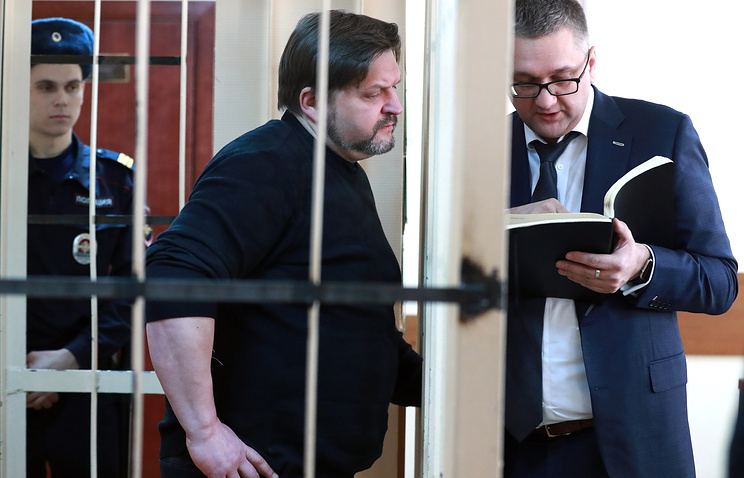
In early February, the former governor of the Kirov region Nikita Belykh, accused of bribery, was sentenced to eight years in a maximum security colony and a multimillion -dollar fine. A few days later, 13 years in a maximum security colony and a fine of 500 million rubles were assigned as a punishment to the ex-governor of the Sakhalin Region Alexander Khoroshavin. Khoroshavin was detained on March 3, 2015. Belykh was detained in June 2016.
In general, according to the compilers of the index, the best results in the fight against corruption were achieved in Western Europe. Here is the average score 66. The worst results in the African countries located south of the Sahara desert (average score 32) and among the states of Eastern Europe and Central Asia (average score 34).
According to the authors of the report, in 2017, authoritarian trends intensified in Eastern and Southeast Europe-representatives of civil society and independent media have less opportunities to criticize those who make decisions.
But it is precisely civil activists and the media that can play a decisive role in the fight against corruption, I affirm the compilers of the index. The report also formulated the relevant recommendations. Transparency International believes that the authorities and business circles should contribute to the development of freedom of speech, independent media and civil society. At the same time, governments should minimize the restrictions for the work of the media. The introduction of legislation that provides free access to information is also fundamental - whether it is about state budget, owners of companies or party cash desks.