
Translated material
Trade unions of Europe and the USA
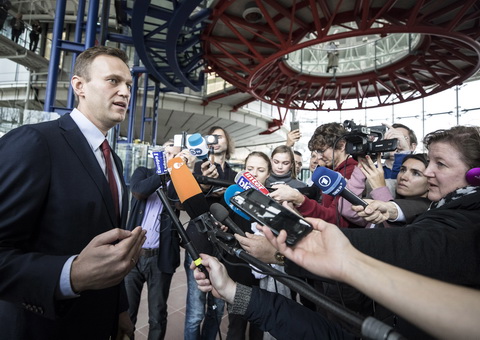
The intention of Alexei Navalny to organize the trade union of state employees caused a surge in interest in the trade unions: "What is it and what is it eaten with?" What is called trade unions (FNPR) is special institutions where officials appointed by the authorities who serve the authorities and the concept of "trade union" are sitting in any way. Yes, they give up the favorites for the favor of the rest houses, but to advance to increase the salaries of workers - God forbid! Then, all the more, we are interested in knowing what real trade unions are.
Digest publications
The right to unite in the trade union includes: “The right of employees without any resolution of state bodies and bureaucratic formalities to create unions and join them under the only condition for submission to their charters; the right to form federations and confederations; the right of members of the trade union to freely elect their representatives, participate in the regulation of the internal life of trade unions (inside the trade union autonomy); The right to freely, without any intervention of state authorities, to carry out trade union activities. ”
The trade union work involves the “political and financial independence of trade unions from the state, political parties, entrepreneurs, church”
The independence of trade unions from entrepreneurs is ensured, in particular, by the prohibition of unification in one trade union of workers and administration. In the United States, for example, as established in the legislation, “if the trade union includes in its compositions related to the administration, even the lower level itself, it is not entitled to act as a representative of employees in collective negotiations.” In Denmark, to the management personnel of enterprises, "it is forbidden to enter the trade union uniting ordinary workers"
The dissolution of trade unions is allowed only by a court decision for a gross violation of the law. The acquisition by trade unions of the rights of a legal entity cannot be subordinated to restrictive conditions. In most countries, the constitutions proclaimed the right of citizens to unite (association); In a number of countries (France, Italy, Japan, Spain, Portugal), the right of workers to unite in the trade union has a rank of specially established constitutional law.
The right to unite into a trade union is usually interpreted in such a way that it includes the so -called negative right to coalition. Legislative and other legal acts regulate issues regarding the internal structure and functioning of trade unions, the order of their relations with each other, with their members, entrepreneurs and the state. They include both norms that provide trade unions with law, powers and benefits, and norms that establish the obligations of trade unions to the state. The legislation of Western countries admits "pluralism of trade union relations, i.e. The employee's right to join any trade union by his choice "
It is possible to conditionally divide trade union rights to two groups: the rights of trade unions outside of enterprises (in the industry or national scale) and the rights of trade unions within the enterprise. The rights of trade unions outside of enterprises provide for the “free creation and functioning of trade unions, the stability of existence”
In a number of countries, for example, in France, Spain, Portugal, Italy, any actions that were “prevented by trade union rights are declared illegal, criminal punishment for their violation has been established, and the imposition of arrest on trade union funds is prohibited”
In Sweden and Finland, entrepreneurs should “consult with the trade union, before introducing changes in production leading to the dismissal and movement of workers”, and in Sweden “even suspend their decision to introduce production innovations in the absence of the consent of the trade union”
It is important to emphasize that in the absence of the consent of the parties, that is, in the failure of negotiations at the local and national levels, the entrepreneur ultimately retains the right to make a decision at his own discretion. Thus, here we are talking about the right of trade unions to temporarily suspend the decisions of the administration (before the completion of negotiations at the local or national levels), and not about the right to cancel them (veto law).
In Italy, the law stipulates that in the “case of the anti -and -union activity of the entrepreneur, Praetor, at the request of local trade union bodies, issues a preliminary order to prohibit such activities and eliminate its consequences. This order is valid until the final decision was made as a result of the trial. ”
In the United States, “trade unions in case of violation of the rights established in the law (intervention of entrepreneurs in trade union activities, discrimination of the members of the trade union, etc.), has the right to apply to the administrative authority - the National Department of Labor Relations (Nuto) with a complaint about“ dishonest labor practice ”by the entrepreneur and achieve a court order that suppresses the entrepreneur illegal actions.”
In the legislation of a number of countries (France, Belgium, Italy, Spain) there are rules relating to the provision of some, most numerous and influential trade unions of the status of the “most representative trade union” that receive certain advantages, benefits and powers in the implementation of employees to state bodies during collective negotiations, labor disputes, during elections to the bodies of working representative office, etc.
The trade unions have been granted certain rights to enterprises: “The powers necessary for the normal implementation of organizational activities: to post an announcement on a special board regarding trade union affairs; disseminate propaganda materials (within non -working hours), collect memberships within non -working hours and outside workplaces, recruit new members, conduct trade union meetings (in France, Germany, Spain - outside of workplaces, in Greece - at an extraordinary time at workplaces), and in Italy, Portugal - within the established maximum of the clock and in working hours and in the working hours time (i.e., with payment of lost working hours). At large and medium -sized enterprises, a separate room is transferred to the disposal of trade unions.
Unlivimated trade union workers at enterprises are provided with a paid time to perform their functions, and in some countries, in addition, paid (or unpaid) leave for trade union studies or participation in the work of industry or national trade union bodies.
In many countries, employees elected to the trade union bodies of enterprises are used by additional protection for dismissal. In these cases, the consent of the administrative body (labor inspector), or the trade union, or the employee himself is required.
Trade Unions “are responsible for their violation, for any anti -zacon actions; They are subject to property liability, and their functionaries are administrative and criminal liability. ”
The ban on discrimination for belonging to the trade union and trade union activity is important. This applies to dismissals, to incentives and punishments, to wages. In a number of countries, for example, in France, legislation prohibits such a discrimination when hiring. Typically, consultation with trade unions is provided for the implementation of collective dismissals.
The legislation of individual countries (for example, Great Britain) enshrines the rights of trade unions in the field of labor protection. There are countries where special procedural rights have been granted trade unions. So, “in France, trade unions on their own initiative or at the request of the employee can represent him in court and even replace him in trial. The trade unions are given the right to protect the collective interests of the professional category in court. ”
State supervision and control over the activities of trade unions is carried out by registering them in the state body and providing it for verification of trade union documentation and information regarding the activities of trade unions. Registration of trade unions is carried out in almost all countries. The difference lies in the categorical requirements for registration, in the order of its implementation, in the nature of the reporting of trade unions, in the amount of benefits that the registered trade union uses. In most countries, the registration of optional, but not subordinate to the established procedure, the trade union does not receive certain benefits. These benefits are different depending on the country: for example, the “status of an“ independent ”trade union and tax reliefs, the right to be recognized by the only representative of this category of employees in collective negotiations, to force the entrepreneur to conduct collective negotiations, the right to conclude any collective agreements or agreements that have compulsory force, the right of a legal entity, access to state bodies to resolve labor conflicts.” In the USA, however, state registration of trade unions is strictly required, and its violation entails the criminal liability of trade union managers.
The political weight of trade unions is largely determined by the percentage of the number of union members and all employees. It develops under the influence of historical, national, economic, cultural factors and varies noticeably depending on a particular country. So, “in France, the trade unions covered 9%of the amateur population from among the employees, in the USA - 17%, in the UK - 38%, in Germany - 39%, in Sweden - 90%.”
The unity of the trade union movement is objectively affected by structural changes in the economy caused by shifts in the technology and the system of population needs. In a number of developed countries, the mining industry sector and, therefore, the number of employees occupied in it is noticeably reduced. A similar trend is also observed in the secondary sector - the processing sector, as well as in heavy engineering, oriented to these sectors and related to industrial technologies. But more important in the economy of developed countries is a tertiary sector - trade and services. It is here that the released employees from the first two sectors “shimmer” “shimmer”.
However, in a number of European countries, this circumstance does not interfere with the unity of workers, which is characteristic, for example, for Germany, where the unification of German trade unions covers more than 6 million members. The trade union unity is also characteristic of the UK, where members of the British Congress of the thread of the unions make up the majority of the Labor Party. In other countries, for example, in France, trade unions are disconnected.
Significant in their representativeness and uniform in the requirements trade union organizations have great opportunities for influence. Both the owners of enterprises and the government who can no longer rely on internal disunity or on excessive promises that can weaken the participants in the trade union movement are considered to be. However, trade unions lose their role and influence in many countries. For example, in the United States, the number of trade union members has significantly decreased over the last quarter century, and today less than 10% of the private sector in America consists in them.
Photo: 11/15/2018. France. Strasbourg. Oppositionist Alexei Navalny gives comments to the media representatives near the building of the European Court of Human Rights, where the case of Alexei Navalny against the Russian Federation was considered. The Great Chamber of the European Court recognized the detention and arrests of Navalny politically motivated. Jean-Francois Badias/Ar/TASS