Date
Author
Материал подготовила Любовь Цуканова
Source

Preserved copy
Translated material
Without censorship
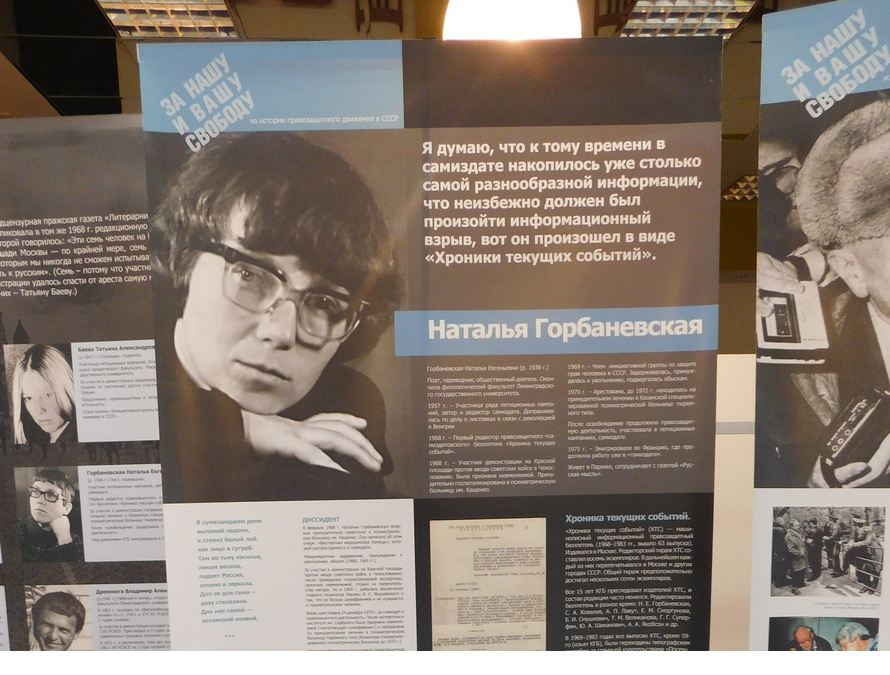
Unusual spring in 1968 - half a century ago - was not only in Paris and Prague. In Moscow, on April 30, the first issue of the human rights bulletin of the “Chronicle of current events” was released - the only non -certificate periodical in the USSR at that period
40 years later, in the spring of 2008, human rights activists gathered as the New Times-the authors and editors of the Chronicle. About how the “chronicle” determined the fate of many people what role played in the life of the country, what a trace left in history, recalled the actors of those years and those events. Echoes of old disputes that remain relevant today are heard in their speeches.
Dossier
Yuri Alexandrovich Shikhanovich , mathematician. For a number of years, he played a significant role in the releases of the ballot. He was arrested twice-in 1972 (aimed at compulsory treatment at the “psychiatric hospital”) and 1983 (he was serving a sentence in the camps until 1987).
Sergey Adamovich Kovalev , deputy of the State Duma 1-3 convocations, human rights activist. One of those who participated in the resumption of HTS in 1973-1974. In December 1975, he was sentenced to 7 years in maximum security camps and 3 years in exile.
Yuri Lvovich Freudin , doctor, literary critic. Episodically helped in organizational work.
Elena Mikhailovna Smorgunova , philologist. Participated in the preparation of the materials "Chronicles".
Leonid Davydovich Vul , philologist. I prepared many HTS numbers for release.
Boris Isaevich Smushkevich , programmer. He was engaged in the replication of issues and participated in the preparation of materials.
Personal story
Yuri Freudin : I probably the only one of those present saw the “chronicle” before she came out of the hands of her editor. I still did not know that this was the first issue, and did not know at all that it was a "chronicle of current events." I went to Natasha Gorbanevskaya, she had at that moment Pasha Litvinov. He left, I went in, and on the table lay papers. And Natasha told me: “You have never seen him here. And you have never seen anything either. ” For the first time since then I remember.
Yuri Shikhanovich : I don’t remember who gave me the first numbers to read me, but from some point Tanya Velikanova began to give them to me, and I, according to my indestructible editorial habit, made all sorts of remarks. Every time she said that she would give. At some point, she was tired of it, and she said: do you want to take part yourself? Well, I said that I want, it was in January of the 72nd.
Sergey Kovalev : I knew about the “chronicle” from the moment it was decided to issue it, although I did not participate in the decision, and even did something periodically, guessing why. There was no question for me, I want to do it or do not want to. Well, you have to do it, that's all.
Freudin : There is a well -known formula for Hemingway in the Fifth Column: they begin to trust you, and you are gradually getting involved. I think it was a very common way.
Elena Smorgunova : You do not decide whether to participate in this or not. In fact, the answer is this: I cannot help but participate. It was also when they approached with some letter and said: sign it. They trust you, they came to you, so you cannot say no.
Boris Smushkevich : When in the spring of the 74th, after the resumption of release, I printed the manuscripts for the first time, it was still so-they asked to print, well, printed. But in the fall of the 74th I was given a couple of sections to form. From this moment, one might say, there was already a conscious beginning.
Leonid Vul : If you reflect on this subject and try to understand why I was doing this, I would bring a quote from Hemingway, but from an earlier source: if not me, then who? Biographical circumstances were superimposed on this: my grandfathers were employees of the NKVD system, well, some responsibility for building that they built, and lies on my shoulders. But all this, of course, you understand only retroactively.
Soviet anti -Soviet
Kovalev : Generally speaking, I could start this side of my biography since 1944, from the seventh grade. Then there was the first episode of my relations with the Soviet regime, which I did not suspect, - believed that this was my relationship with the teacher of the constitution. I entered into a dispute about Article 125 on human rights. For me, it almost ended badly. I can’t say that I immediately began to engage in anti -Soviet activities, but when I graduated from school and had to choose further education, but I was drawn to law or history, I decided: no, these specialties should not be accepted in our country.
Smorgunova : There was no such concept “anti -Soviet activity”.
Shikhanovich : I believe that the question is completely wrong. But I understood, of course, that what I am doing did not like the authorities and that you can rattle for this.
Kovalev : And I perfectly understood that the Soviet government and the Soviet government, so as not to observe the Constitution. And the current constitution in this sense is no different from the Stalin. This is part of the imitation. In our country, power not only achieves its absolutiness, but also creates an image for itself.
Vul : “Chronicle” was, in a sense, a reference point in a human rights movement. But I do not think that it was an anti -Soviet publication. There was nothing in it that would contradict the then constitution. But as in Stalin's times, as in Brezhnev times, as today, the constitution is not respected. This means that they, who violate this law, are engaged in anti -Soviet activities, not us. We are just trying to act in accordance with this law of the country. For example, I was asked to give out all the anti -Soviet literature that I have at home. I explained that I have no anti -Soviet literature.
Kovalev : I, too, when I had a search, asked: "What are you looking for?" They said: slanderous anti -Soviet literature. I said-as much as I wanted, here is the mezzanine, there are stenographic reports on the processes of the 30s, as well as stenographic reports on the session of the Vascular of the 48th year. But I perfectly understood that these were my attempts of wit, and nothing more.
Saving business
Smorgunova : What did all this matter? There was an amazing magazine that has no equal accuracy, in fidelity of facts, in fullness and literary virtues. And it was an enterprise that saved many people, families, allowed children to grow up and generally be. It’s just saved a lot of life.
Kovalev : Are you saying that someone was really “chronicle” saved? Vul: “Chronicle” reported on the persecution of people, this had a resonance in the West, thanks to which many avoided arrests, they were able, for example, to leave, they were not planted, but sent.
Kovalev : If we talk about motives, then I did not pursue any social or political result at all. I was engaged in purely personal business - saved my own sense of self -esteem. I now understand that those efforts eventually participated in a positive shift in history. As for the meaning of the “chronicle”, I want to remind the words of Andrei Dmitrievich Sakharov: “Chronicle” is the most important thing that is happening now. ” What was its historical significance? If in a nutshell, a wonderful event in world history occurred: world public opinion is sharply, just before our eyes, in a short period of time completely changed. The West, which for a long time turned a blind eye to what was happening in the USSR, suddenly noticed that Sinyavsky and Daniel were imprisoned for literature! And this is indecent! And much more indecent is happening.
Smushkevich : Indeed, the “chronicle” influenced public opinion, but the sharp change of West came only after the US President Carter said that he would put human rights in the first place.
Crystalline lattice
Smorgunova : Seryozha all the time speaks of ideas, but it was just human. These people were different. No one around knew what they were doing, but they were crystals - at work, at school, in the yard. With such human nuclei ...
Vul : “Chronicle” made a very large number of people. If one copy fell into the city, 9-10 copies were first made from it and was heard to friends, acquaintances, each of whom also printed it. The circulation reached several hundred copies.
Kovalev : That was the time in a sense is much simpler than now. Naum Korzhavin very accurately said about him: “And everything will be clarified by an open struggle: /Enemies - before you, and friends - followed by you ...” I remembered these verses, because now completely different people act as “banners of our banners”.
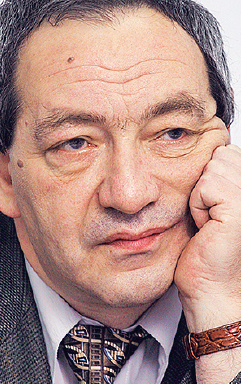
"The history of the free press of modern Russia began with this homemade brochure"
Alexander Daniel
It was a typewritten information ballot, which for one and a half decades was produced by activists of the protest movement against political repression in those years (usually called human rights). The “Chronicle of current events” collected and recorded the facts of political persecution in the Soviet Union, reported the speeches in defense of the persecuted, independent (“dissident”) civil, political, religious, cultural activity; It announced new texts that appeared in Samizdat. Information was regularly published, leaking into the wild from political camps and prisons.
"Chronicle" was released from 1968 to 1983. At first, 5-6 numbers were produced annually, each with a volume of 10 to 30 pages of dense machine. Later, the intervals between the releases increased, and the volumes grew: in the early 80s there were 2-3 numbers per year, up to 150-200 pages each. In just 15 years, 65 numbers have been prepared. At the end of 1972, the KGB with blackmail and threats achieved the suspension of the publication. But on May 7, 1974, three famous dissidents, Tatyana Velikanova, Sergey Kovalev and Tatyana Khodovich, presented three new “retrospective” numbers to foreign journalists, the contents of which filled the publication.
Natalya Gorbanevskaya was the founder and compiler of the Chronicle until the arrest in December 1969; She almost solely prepared the first 10 numbers of the ballot. In the future, a small team or even several groups worked on the compilation of the Chronicle, the composition of which often changed. After the arrest of Gorbanevskaya, Anatoly Jacobson, Sergey Kovalev, Tatyana Velikanova, Alexander Lavat, Yuri Shikhanovich played a decisive role. The organizational functions related to the preparation and distribution of the “chronicle” from the beginning of 1970 and until the arrest in November 1979 have been performed by Tatyana Velikanova.
On charges of involvement in the manufacture and (or) the spread of the ballot in different years, Natalya Gorbanevskaya, Yuri Shikhanovich, Peter Yakir, Viktor Krasin, Gabriel Superfin, Sergey Kovalev, Tatyana Velikanova were arrested and condemned in different years.
“Chronicle of current events” is the most complete and accurate set of historical information about dissident activity and political persecution in the USSR in 1968–1982.
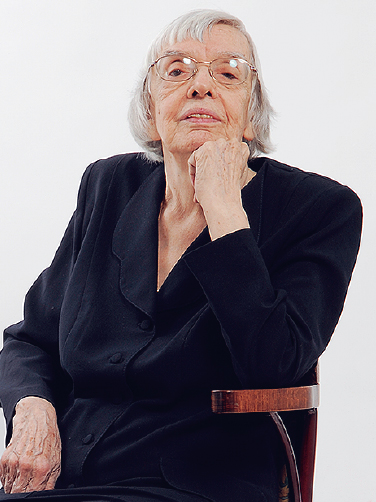
Lyudmila Mikhailovna Alekseeva - Chairman of the Moscow Helsinki Group. She was engaged in the replication of issues and collection of materials for the “chronicle” until emigration in 1977. In May 1990, she received permission to return to the USSR.
Lyudmila Alekseeva: "It turned out that we have a huge amount of information completely unknown to our fellow citizens"
I was not at the meeting where the decision was made on the release of the “chronicle”, I found out about it when I was already in the 72nd began to carry on interrogations and, like woodpeckers, to hammer the same thing: “Have you been at this meeting?” I said this to Larisa Bogoraz, and she already told how they gathered at someone in the country, and then it was about the fact that human rights performances somehow became known to a fairly wide circle of people not only in Moscow, but also in different cities through camps, through the spread of samizdat. And people were looking for meetings, said that they were happening in national movements. And it turned out that if we add up to the awareness of each of us, we have a very large amount of information completely unknown to our fellow citizens. And it is already not enough to talk about this to each other, one must have a periodic body that would accumulate this information. They decided that this would come out at the frequency of once every two months and determined that Natasha Gorbanevskaya would be the editor. She turned out to be a brilliant editor and newspaper. It was she who came up with the name - "Chronicle of current events." She came up with the first name of the 19th article of the Universal Declaration of Human Rights: a person has the right to search, receive, disseminate information regardless of state borders. The editors changed further: some did it better, some are worse, but everyone sought to preserve Nathan style. This style consisted of factual: as little emotions as possible, even assessments, nothing personal, only a fact.
The first number, literally after Natasha printed it on a typewriter, brought me Pavel Litvinov. The “chronicle” was intended for distribution, and everyone knew that I was quickly printing, almost like a professional driver. (In the samizdat, by the way, I got scared: I love poetry, and I bought a machine when Gumilyov, Tsvetaev, Mandelstam was tanned from somewhere in the Chulans.) Further, when the case of Yakira and Krasin and the Chronicle case began, and there were cheap searches throughout the country, we ourselves were amazed: the “chronicle” was found in Riga, in Vilnius, in Vladivostok, in Vladivostok, in Vladivostok, in Vladivostok, in Vladivostok, in Vladivostok, villages of the Krasnodar Territory, in Arkhangelsk. Every copy read a lot of people, it was transmitted from hand to hand. Because it was a jewel. It was a tremendous work and a tremendous danger. For the printing and distribution of the Chronicle, they gave the full term according to the 70th article-7 years of camps and 5 years of exile. They even gave those who read. And to fly out of work if they find out that I read the Chronicle, this is necessarily.
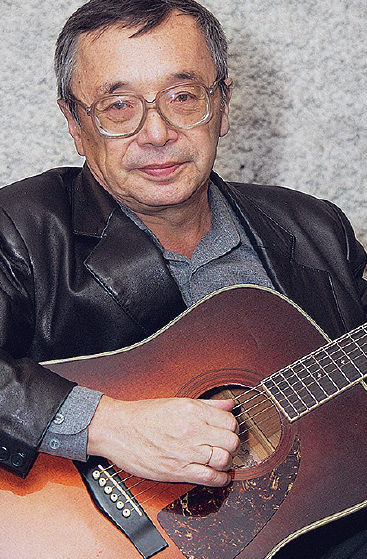
Julius Chesanovich Kim - poet, bard, playwright. He took part in editing the 11th, 15th and 18th “Chronicles of current events”. His wife Irina Yakir was engaged in the collection of materials, the distribution and transmission of the “chronicle” to the West throughout its existence was, according to Julia Kim, one of the “invisible heroes of this business”.
Julius Kim: “To defeat the block of universal fainting, which is called a socialist ideology, was not so simple”
It is incorrect to think that everyone who was related to the “chronicle”, to the human rights movement, were heroes. For me, the charm of this movement and its deep dramatic meaning in the fact that these were the most ordinary people, like you, yes, and the whole world. The heroes were few. I probably would have called 3-4 names: Alexander Isaevich Solzhenitsyn, Andrei Dmitrievich Sakharov, Vladimir Konstantinovich Bukovsky and Anatoly Tikhonovich Marchenko. And, of course, Tatyana Mikhailovna Velikanova and Larisa Iosifovna Bogoraz. As for the majority - these were teachers, journalists, engineers, candidates of sciences, students, such a heterogeneous intelligentsia. As stated in one of my poems, "although for a year, for a day, for an hour, for a moment - there was still a scream." When a person could not resist and put his signature. I knew one of one that I read all samizdat, sympathized with all my heart, but nevertheless considered these actions a senseless pounding forehead against the wall. But once, when Ilya Gabay was arrested, he said: “Although I understand that I am making the greatest stupidity and acting against my nature, but here I simply cannot but put a signature,” it was a protest against this arrest. By the way, troubles rained down on him, he was safely pushed from Moscow, he was forced to click for some time. That's how some were among the persecuted. And there were people like Bukovsky who put all their strength and time on this business. And Andrei Dmitrievich was engaged in science and dissidentism. Alexander Isaevich once united writing with this action. But when he categorically renounces dissidentity, he is right in only one thing - that he spoke little with other dissidents. Although I must say that a considerable number of them helped him in his work, like Garik Superfin or Volodya Gershuni. He was dissident alone. But still dissident, because I personally call the human rights activist who consciously went to the criminal article by the dissident.
To defeat the huge block of universal fainting, called a socialist ideology, in one and a half years that passed after the death of Stalin, was not so simple. And today we need to talk about a swoon that has hundreds of years. About a thousand -year habit of obeying their leaders and agreeing from birth with what they think for you. Here, however, I agree that only strong societies can afford democracy. In weak societies, dictators begin to use it instantly as a weapon.
More details with the history of “Chronicle of current events” can be found on the * website of the Society “Memorial” ; The texts of all newsletters of the ballot *** are also placed there
First published in NT No. 17–18 of April 28, 2008