
Translated material
How WordPress in 2015 has become the most popular platform for creating sites
WordPress is a platform for applications with a flexible approach to development, support for modern technologies and an active community. What was 2015 for WordPress developers and what surprises are prepared next year, says the expert and developer of the social technology greenhouse and an active participant in the WordPress community Anna Ladoshkina.
WordPress in 2015 - how it was
A quarter of sites in the world
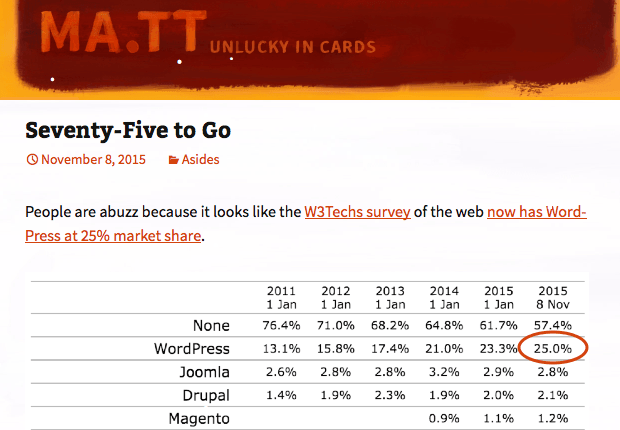
In November 2015, according to W3TECHS , the share of sites working on WordPress reached 25%, which Matt Mullenweg announced immediately in his blog .
10 years WordCamp
The first WordCamp was held in August 2006 in San Francisco. In the anniversary 2015 - already 89 conferences in 34 countries (including in Russia ). The central event of the year - WordCamp US - refuses to permanent registration and will take place annually in different cities, uniting WordPressers from the USA, Europe and Asia. This year, the conference started on December 4 in Philadelphia, where Matt Mullenweg summed up the results in his traditional State of the Word performance.
4 releases
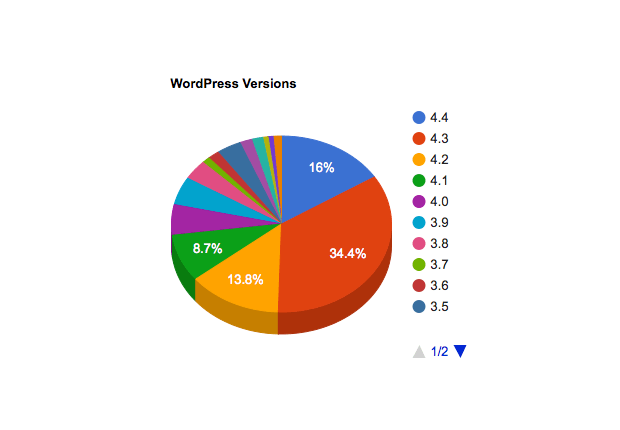
From December 2014 to December 2015, 4 major releases WordPress were released - 4.1 , 4.2 , 4.3 , 4.4 . The last update from the moment of the release of December 8 was downloaded by more than 5 million people .
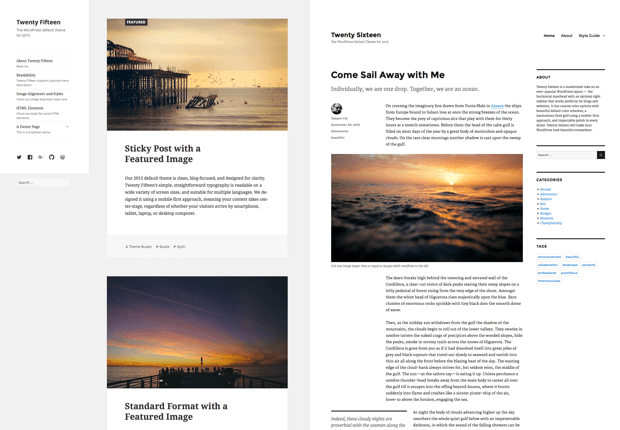
New versions brought to users two starting topics, improving the administrative interface, updating the data structure and internal APIs, simplifying the process of translating the core, and plugins.
Of the latest innovations: WordPress now supports adaptive images , allowing you to change the size of the image file depending on the type of user device and the connection speed, and becomes the OEMBED provider-publications on the WordPress School can be built into another site in the form of standard blocks.
Under the hood of WordPress, focuses on supporting modern development tools-pre-Processors ( SASS ), Task Managers ( Grunt ), JS Frames ( BackBone.JS ). One of the first WordPress announced support for the AMP mobile pages standard for Google, which is implemented for WordPress.com users, and WordPress.org developers can use free plugin .
CALYPSO
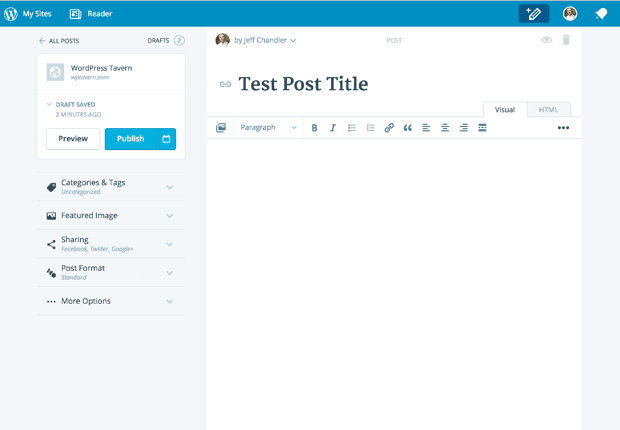
The administrative interface WordPress has not undergone serious changes from 2009 - with all the pluses, this state of affairs restrains the development of the system. Therefore, Automattic decided to experiment by launching the Calypso project, which uses Node.js , React , Rest API and Electron shell.CALYPSO is a separate application that allows you to control the site from the computer (there are versions for Mac OS, Windows or Linux).
The project code is published on GitHub . To use the WordPress.com users, it is enough to authorize it in their account, and users of their own WordPress.org installations need to use the Jetpack plugin created by Automattic.
It is too early to talk about any results, but the fact of the existence of Calypso is a serious step towards WordPress modernization as a technological platform.
REST API
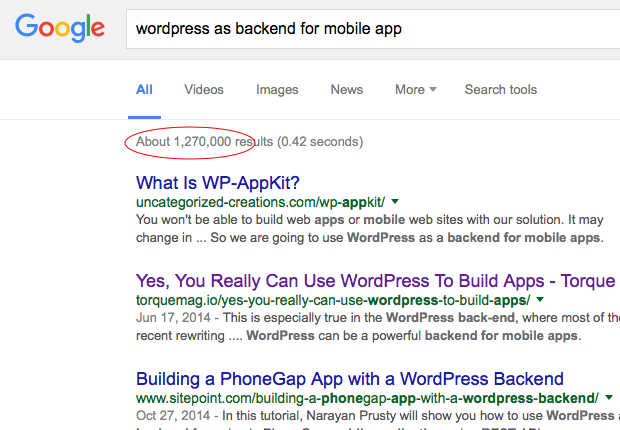
Implementation of projects like CalyPSO based on WordPress was made possible due to the presence of WordPress of an open external API. WordPress REST API is a standard protocol of interaction with third -party services or other sites.
Work on this protocol was carried out for two years in the format of the plugin, but the release of 4.4 already includes infrastructure functions . And although a plugin is still necessary for the full use of the API, the possibilities of using WordPress as a backend (Backend) have expanded significantly to create applications.
WAPUU
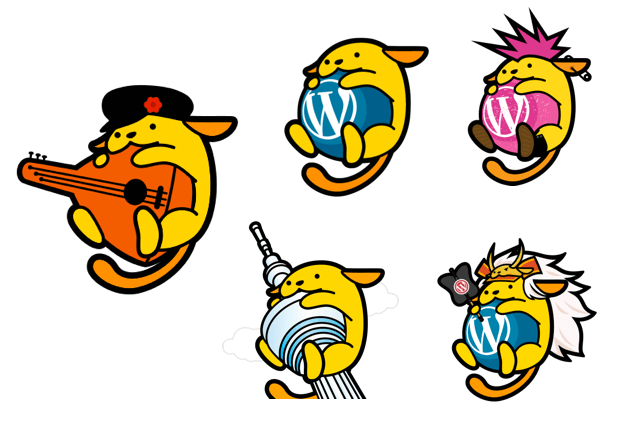
A few years ago, in Japan, with the blessing of Matt Mullenweg, the official wardpress wapu (わぷー) mascot was born, the original image of which spreads under the GPL license. The organizers of WordCAMP have eagerly picked up the initiative and in the WAPUU collection already more than 60 options for images, and in 2015 the talisman also appeared in the Russian WordCAMP. He wears a cartoon, plays on a balalaika (although there is no consent on this item, and some authoritative persons say that this is Domra ) and received the name Wapuu -shkin.
A11y
WordPress developers in 2015 paid constant attention to ensuring accessibility and compliance with the WCAG standard:
- the introduction of special tools, for example, WP-A11Y.JS , to improve interaction with screenships;
- Each update is tested by the A11Y command - in 2015, 80% more tikets (Tickets) are closed on problems with accessibility than in 2014;
- Accessible-fear is promoted for those in the official repository, it is planned that it will become mandatory;
- Programming standards for WordPress (Code Style) are complemented by accessibility standards .
- If your organization is just starting to work on the network, get acquainted with WordPress and make sure that using this system you can create a simple but completely functional site that will be a useful working tool (start with the introductory course of the social technology greenhouse);
- If your organization is growing and developing, choose WordPress for the implementation of new projects - application based on geodata, collecting donations, coordination of volunteers and other tasks of NGOs can be solved on the basis of this platform;
- Explore the capabilities of services and services for WordPress to help optimize work on the network for non -profit organizations, in the near future we can expect a large number of effective innovations.
WordPressers began to more often share practical experience in solving the problems of accessibility on WordCAMP-Ah-WordPress.tv for 2015 published twice as many records on this topic than in 2014. The greenhouse of social technologies contributed by telling the WordCamp Russia 2015 about the development of an online cinema for the visually impaired.
WordPress in 2016 - what to wait
In 2016, WordPress will adhere to the previously scheduled course to turn into a full -fledged application platform.
Modernization of the code base
The practice of developing new functions as plugins, followed by integration into the core, has proven itself well and will continue. The three subsequent releases for 2016 are already planned, and their leaders are named - Mike Schroder , Dominik Schilling , Matt Mullenweg .
The specific composition of updates in each release is not yet known, but the work begun in 2015 on modernization of the main internal internal API WordPress will continue - shortcodes (Shortcodes API), support of the metadata and the development of a unified interface for custic fields (Custom Fields), support of multiple ties between objects, refineries of REST API, etc.
Support for modern technologies
In 2016, WordPress compatibility with PHP7 will be achieved, so that the WordPress sites will work faster. In addition, it is planned to support Let's Encrypt certificates. Let's Encrypt is an open project that provides free SSL certificates that allow the owners of sites to switch to support for the safe HTTPS protocol with lower costs. If the common WordPress will allow its users to set such “out of the box” certificates, this will significantly increase the percentage of HTTPS.
JavaScript interfaces
In his state of Word, Matt Mullenweg claims that the future in the interfaces written on JavaScript. The appearance of projects like Calypso shows that modern JS tools, such as Node.js , React , Angular JS , can be used in tandem with WordPress. The market will change.
In 2016, it is expected to arrive fresh forces to the WordPress community in the form of JS developers armed with modern tools for creating interactive client applications. This will be the dashing time of the appearance of new experiments, products and solutions. However, traditional market participants - developers of topics and plugins - will have to be squeezed.
WordPress for NGOs
How can all help NPO? Choosing WordPress as a platform for its sites or projects, a non -profit organization supports open software, helps to spread the ideas of technology and information accessibility: