
Translated material
Apocalypse in interiors
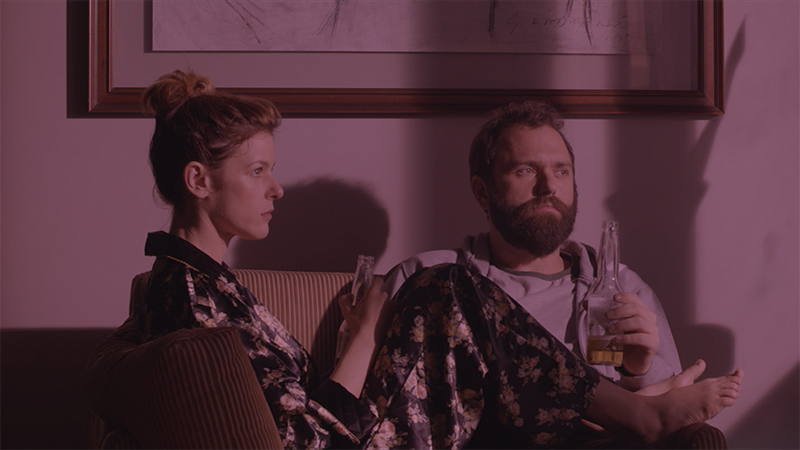
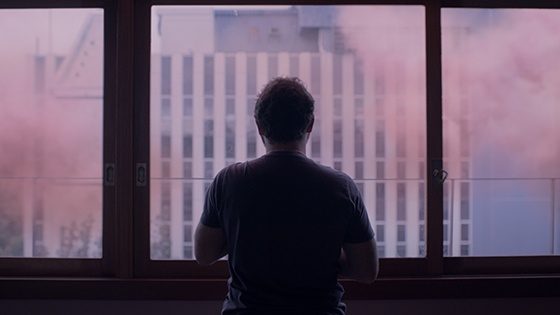
In early foggy morning, delicate pink clouds came to the city - killing a person in less than a minute. Humanity hid in apartments, dormitories, public buildings, supermarkets - in general, where this inexplicable natural phenomenon was caught by whom. And Giovanna and Iago cloud caught on the veranda of his two -story apartment in the morning after an accidental acquaintance. Now they are doomed to conclude together: for days, months, years.
The invented and shot to any coronavirus, the film by Brazilian Julia Zherbazi looks strange and terribly. On the one hand, this is a typical “slow cinema”, measuring its viewers, accurately balanced portions of boredom in the same way as grocery rations - tasteless juice, noodles and ghosts - through a transparent pneumatic pipeline. How can heroes locked in four walls have entertain themselves and us? Sex scene, scandal, conversations with relatives in the video. Somewhere there, the dramas are more serious about the plot of the plot: the Father Iago begins to hate a social worker locked with him, dreams of killing him-after a while the corpse of the orderly lies in his kitchen. Daughter Giovanna was caught by an element at a party in a girlfriend’s house, from adults in an apartment - only her father. A few years later, the girls get pregnant one after another.
 © Magic Film Company
Gazovanna is pregnant. The Son, their son,-the insofar generation that has grown locked up-considers the home universe a reality and is very worried that the mother begins to spend time in illusion- 3D-symptoms of the past, the big world, it seems, is forever lost to humanity. The pink shadow again and again falls on the faces of the heroes - and this hopelessness imposed on the eternity of kitchen drama turns the film into a kind of deconstruction of the genre of television soap opera in Brazil (for nothing that the money for the film was not given by the Globo studio). The characters of such a show (not only Brazilian) also lived the season in the season exclusively in interiors - but were not burdened by this. As if a transcendental melodramatic plot made them blind to the real irreplaceable pavilions apartments. Zherbazi, on the contrary, as if he liberates his characters from the dictatorship of the plot-“Pink Cloud”, undoubtedly, a movie about the relationship of a man and a woman, but these relations are expressed rather symptomatically, as in the films of the Berlin school: microsts, facial expressions, some kind of biomechanics.
Even a political dimension - and it, of course, is here - exists in the film at the level of bodily experiences. The heroes of the film, devoid of the ability to work and the need to work, are left alone with their real personal leisure time - almost the same as leisure in our time: gadgets, VR , TV. Deprived of analogue, offline existence, it is joyless and unbearable.
 © Magic Film Company
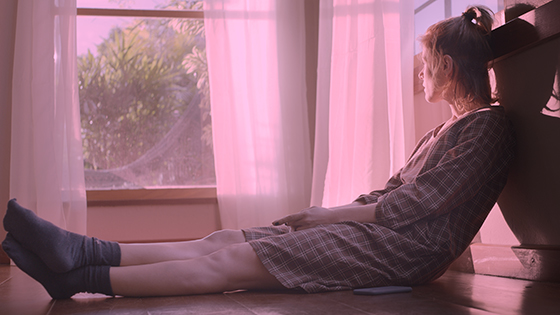
However, the intonation of Julia Zherbazi is far from the Alarmism of anti -utopia. This is precisely that the observation, contemplar cinema: the camera peers into the faces of two actors, at the same time elusive and obviously changing as they are shaking the term of domestic imprisonment, glides along the stylish gray-brown interior, so beautifully recovering pink when clouds approaching, looks at the same landscape outside the window. The audience irritation of monotony and lack of being grows parallel to the heroine's frustration, and the final of the film, quite predictable, becomes a relief for both.