
Translated material
Return to Helsinki?
-Firstly, I am incompetent to discuss the foreign policy of Russia. The Russian authorities should give a response to your claims if they consider it necessary. And, secondly, as an expert must state that these accusations are unproven and based on fictions ...
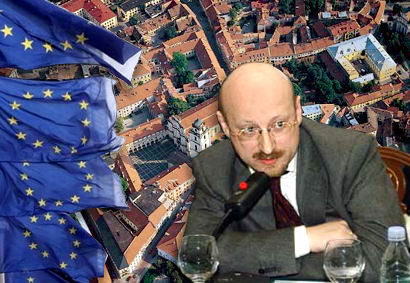
Agree, dear readers, it is quite funny to observe when a person who considers himself an expert begins to speak with a message about his own incompetence. The situation becomes quite comical, given that the Modest Koights, the head of the administration of the Presidential Administration of the Russian Federation on interregional and cultural ties, was in the role of the aforementioned expert. It was in Vilnius, where at the end of the last week the II International Forum "Europe - Russia" was held. And Mr. Kolrov considered it necessary to react to the discussions that flared up on it.
At the event that gathered politicians, political scientists, representatives of public organizations from our country and EU countries, it became obvious how much the tone of our dialogue changed. More recently, speaking of the situation in Russia, foreign politicians and experts proceeded from the fact that, at an extremely difficult transition from totalitarianism to democracy, retreats periodically occur, to which they considered it necessary to gently indicate Russian colleagues. Now we are talking not only that Russia is less and less like a democratic state. It is about the fact that, in the words of Pierre Lelush, the chairman of the NATO parliamentary Assembly, with any crisis, "Russia is part of the problem, and not part of the solution to the problem." Therefore, with all diplomacy had to say goodbye. The French parliamentarian gave a correct, but highly tough analysis of Moscow policy in the post -Soviet space. He talked about economic pressure on Georgia and Ukraine, about the distribution of Russian passports in South Ossetia and Abkhazia, and the support of dictatorial regimes in Uzbekistan and Belarus. And he quite honestly noted that each time it turns out that in any direction Russia acts against the consolidated policy of the West.
It was this performance that caused the angry and not very coherent Philippics of a senior Kremlin official who accused Lelush of incompetence and bias. However, except for the story of a certain video filming of Andijan events, which should convince Karimov’s correctness, Modest Kingov did not bring any arguments. All this vividly recalled the very beginning of the Gorbachev era, the first teleconference and meetings of specialists, during which the Soviet side sought not so much to discuss the problem with foreign colleagues, but to repulse in any way. In a word, "And you have blacks hung."
I must say that during other discussions that took place on the forum, there was a feeling that had not visited me for a long time, the feeling that Russian participants were talking in another language. Here is, for example, a discussion of the problem of the continuity of power in Russia. Domestic sociologists and political technologists (relatives, as I understand it, to the presidential administration) with varying degrees of persuasiveness prove that the Russians would most like Vladimir Putin to stay at their post, and if it doesn’t work out, they are ready to approve any successor. The speaking deeply and with knowledge of the case spoke of the difficulties that Putin would arise in the transfer of power, about the upcoming struggle of the Kremlin clans, which, preparing for the battle, concentrate economic and power resources. They argued whether the successor could receive the presidential power completely or he would be forced to share it. But the word takes Marie Mandras, a well -known French political scientist, and as if he asks an obvious question: “Why has it never been mentioned in your reasoning, gentlemen, the institution of elections has never been mentioned?” And the present becomes clear how far our country has gone in its political development. After all, any Russian now knows firmly (or, at least, vaguely feels) that the election to the problem of continuity of the authorities has absolutely nothing to do.
It is necessary to state that today in the Western expert community no one is already wondering who Putin is and in which direction Russia is developing. Everything is clear to everyone. The fact that Russia is moving towards authoritarianism is already talking in direct text. And not only on forums like Vilnius. In the days when he passed, in the news programs “SIN-EN” and “BBC”, two topics dominated. The first is the acceleration of the opposition in Minsk, when each of the commentators considered it his duty to emphasize that the Lukashenko regime enjoys the full support of Moscow. The second is a story about how the Russian ambassador to Baghdad shared with Hussein agent information about American military plans on the eve of the invasion of Iraq. In the same story, Moscow did not look like a partner of the West.
“It may seem to someone in Russia that the opinion of the public, press, parliamentarians is one thing, and the real foreign policy of the West is different. But Moscow should not be deceived by the remnants of the goodwill that Washington or Paris is still demonstrated, ”a high -ranking European diplomat told me in Vilnius. - This is only the inertia of the policy pursued by Berlusconi, Bush or Shirak. After a year or two, others will take their place. And they will speak as Lellyush said. "
A certain moment of truth was a performance at the plenary meeting of Kimo Kilunen, a deputy of the Finnish parliament. In an effort to find at least some points of contact between representatives of official Russia and the EU, he did not find anything better than recalling the “spirit of Helsinki”-that is, about the Security and Cooperation meeting in 1975 in Europe, which, in the context of the most severe confrontation, developed the principles of relations between the systems opposed to each other. This is a refusal to use military force to resolve controversial issues, and the inviolability of borders, and the search for common economic interests. And, to be honest, this appeal to Helsinki's spirit upset me the most. After all, in fact, this means a return to the confrontation.