
Translated material
Political confusion
In the opposition
 Political confusion
October 7, 2010 Harry Kasparov
 The message about the creation of a new liberal coalition caused an extremely positive, if not an enthusiastic reaction from the supporters of this political flank in our country. Liberal -minded journalists in the most rainbow tones paint her prospects. And such euphoria can be given a completely rational explanation.
The idea that the unification of democratic forces is a panacea from all troubles and misfortunes that our country faces is not at all new and originates from the time of the endless history of the unification of the ATP and the “apple”. Naturally, with tightening the regime under Putin, talking about the unification of the opposition gained strength. And a common argument: they say, how can you trust the management of the country to people who cannot agree among themselves are still popular among both supporters and opposition opponents. For some reason, these conversations are mainly conducted in relation to the liberal opposition, although the scatter among the left and national-patriotic opposition forces is no less serious.
It is quite understandable the desire of people far from the policy to express dissatisfaction with the existing state of affairs by simply lowering the ballot into the election urn. However, the exclusion of the column “against all” makes the voter look for an alternative to an acceptable alternative to him in the Vegetarian Political menu proposed by the Kremlin. Therefore, a public request for the emergence of new ingredients in the Russian political cuisine occurs periodically. And with the same constancy, the Kremlin cooks continue to keep their not very demanding clientele on a lean diet.
The New Times magazine has recently published an article on the pre -election situation in Venezuela. The whole pathos of this article is that the opposition in this country several years ago made a serious mistake, boycotting the elections, and now she has changed his mind and intends to participate in them. Such a peculiar reproach for Russian oppositionists. But at the same time, the fact that the opposition in Venezuela is not prohibited is ignored, is officially registered and can participate in the elections, but in Russia there is no. By the way, the obvious success of the opposition in these elections was due to the unification of a variety of political forces, which left their disagreements on social and economic issues in the name of the creation of the Unified Anti -Madgles Front.
In our Russian reality, the game on the feelings of people seeking to unite to confront the regime leads to the creation of dangerous mythology that contributes not to weakening, but, on the contrary, to strengthen power.
The substitution of concepts is carried out when, speaking of the current coalition of four famous democratic politicians, many liberal -minded people sigh with relief - well, this time without lemon and “left”. Forgetting that the idea of joint actions of various political forces against the regime, which proposed the FFF as the basis of the activity of “other Russia”, became the mainstream and no longer surprises anyone. Now the coalition interaction in protests is the main key to the success of large opposition rallies. In Kaliningrad, the largest action of recent years took place under the banners of all colors of the ideological spectrum. It is also worth noting that it is the leadership of the Communist Party - the main party of the system opposition - by all means trying to prevent the unification of the efforts of various ideological groups in the organization of protest actions.
The question of how much such interaction can apply to large-scale political projects, such as presidential elections, is still open. It is obvious that it is possible to break the regime or at least make it reckoning with the opinion of people only by combining the most wide ideological spectrum. This was generally well written by Alexei Kondaurov and Andrei Piontkovsky in a recent article . But, unfortunately, many do not realize that completely different political forces can unite for the time of paramount problems. The experience of the successful implementation of such projects was already in the history of countries that opposed authoritarian and totalitarian regimes. It is enough to recall Chiles of the late 80s, where there was a unification throughout the political spectrum to win the referendum and return the country of free elections. The same wide coalition, although in the absence of pronounced political groups, was “democratic Russia” in 1990-91.
The unification is purely ideological, even including some competing, but related to one part of the group spectrum, in the context of an actual ban on participating in the elections of independent organizations, is a thing in itself. Already in 2007, it became obvious that official participation in the political life of Russia is possible only with the permission of the Kremlin and only when fulfilling the appropriate condition - bringing a vassal oath. The refusal to register the parties of Ryzhkov and Kasyanov clearly determined the direction in which political life in Russia is developing. It is important to note that it was not at all extremist organizations, but about people who themselves left the current government. For all their criticality, only in the inflamed imagination of the Kremlin propagandists they could be attributed to radicals and extremists. Therefore, the numerous failures of the Limon Party should not even be talked. A recent attempt to register the “front of the front”, without any effort rejected by the Ministry of Justice, also shows that no changes in the Kremlin’s position occurred. But such unification projects, which have recently been activated both on the liberal flank, and in the left, and national patriots, undoubtedly carry a positive charge.
In the historical perspective, such associations can become the core of the future political system. And in this regard, the emergence of “solidarity” in 2008 was a huge step forward, because for the first time it made it possible to form a liberal -minded organization that did not have any connections with the Kremlin. The role of such organizations, both right and left, can primarily be reduced to the development of software provisions for the future, work with citizens of the country, educational activities, constant pressure on power, conducting street actions, that is, to be tactical, and not strategic. In today's opposition, deprived of the opportunity to influence the media, to fully participate in political life, the strategic planning horizon is extremely limited.
All euphoria about the incidental coalition process is distracted from reality. The task of forming a political party looks at least strange, because its fate seems to be clear to everyone. In the current conditions, the opposition organization cannot receive any registration. At the same time, repetition, like mantras, thoughts that when this registration is refused, everything will become obvious to everyone, it resembles a fairy tale about a white bull and endless walking in a circle. Or an exorbitantly protracted performance before the doubting audience (either domestic, or foreign), which must once again clarify the anti -democratic essence of the current regime.
Maybe some participants in the coalition hope for a sharp change in the situation and the appearance of the same “Medvedev majority” in which there is a place for this structure. But no one tells us openly about this. The point is that you need to go once again to collect signatures and submit documents to the Ministry of Justice. Thus, despite the meaninglessness of this procedure, they are trying to convince us again to play according to existing rules. If this idea is doomed, it is completely incomprehensible to whom and what we prove. And if someone believes that registration is possible, then I would like to hear where such optimism came from.
Question: What to consider as a change in the situation? What in the Kremlin will suddenly consider it necessary to get pocket liberal power or what will still go to the liberalization of the law? A change in the situation does not mean the mercy of the Kremlin, but the consent to change the rules. And this is a fundamental difference. The situation will change when a normal law will act in the country, and not when they let someone in, but not let someone out. There is also a purely practical question. The collection of signatures, if this is not a drawing that people who want to register usually resort to, this is the divert of the asset energy.
After signing by Nemtsov, the “solidarity” begins to participate in the draft coalition, and the main, if not the only project of the coalition is the creation of a party structure. In accordance with the rules approved by the Ministry of Justice, the Constituent Congress of a new party should take place already in December. This means that “solidarity” will be pulled almost in full force from the congress on December 11 to the congress on December 14. At the same time, a decision on the transformation of movement into the party was never made inside the “solidarity”. Such respected members of the organization as Bukovsky and Piontkovsky are categorically against. Many of those who did not object to such a transformation have always insisted that the formation of a party project should not be accompanied by mandatory collection of signatures. The planned congress of “solidarity” should solve these issues, and it is obvious that if the decision to start the party project is made, it will not be mandatory for those who are not going to join the party structure. "Solidarity" will remain in the format of the social movement. This position remained unchanged.
But today's history with the coalition, which began long before the congress, puts our organization in a strange position. Such a split of the organization seems extremely dangerous to me. The idea of party construction through the coalition from the very beginning seemed to me unpromising and threatening the existence of "solidarity" as the main opposition force on the liberal flank. It is interesting that another idea - the nomination of a single presidential candidate from liberal forces - safely dissolved in party rhetoric.
Although it is this idea that has at least some practical justification. Obviously, the power in the country is the president, and not the parliament, which, as you know, is not a place for discussions. It is also obvious that the candidate from the unsystematic opposition will not be registered. But such an idea is more understandable and opens up the opportunity to negotiate with other opposition ideological associations, to cover more people. I will return to the article by Kondaurov and Piontkovsky again. They propose the holding of the general democratic congress and well describe the terminologically that the “general democratic” means today not at all an ideological consistency, namely the attitude to the procedures for choosing power. Therefore, people of not only liberal ideological views can take part in such a congress.
Understanding that the future of “solidarity” as an independent organization is at stake, I in no way want to counteract those who are going to be part of the Coalition to party. But at the same time, I have no desire to become part of this project in the form in which it is presented to us. Now it is extremely important to continue cooperation with all opposition forces in the political space independent of the Kremlin. This position will continue to adhere to the OGF.
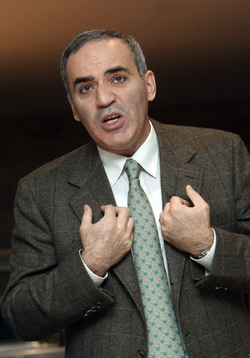
Photo by RIA Novosti