
Translated material
Zeropolis
Is the world cleared so much that animals returned to the cities? What will happen to them when people go out again
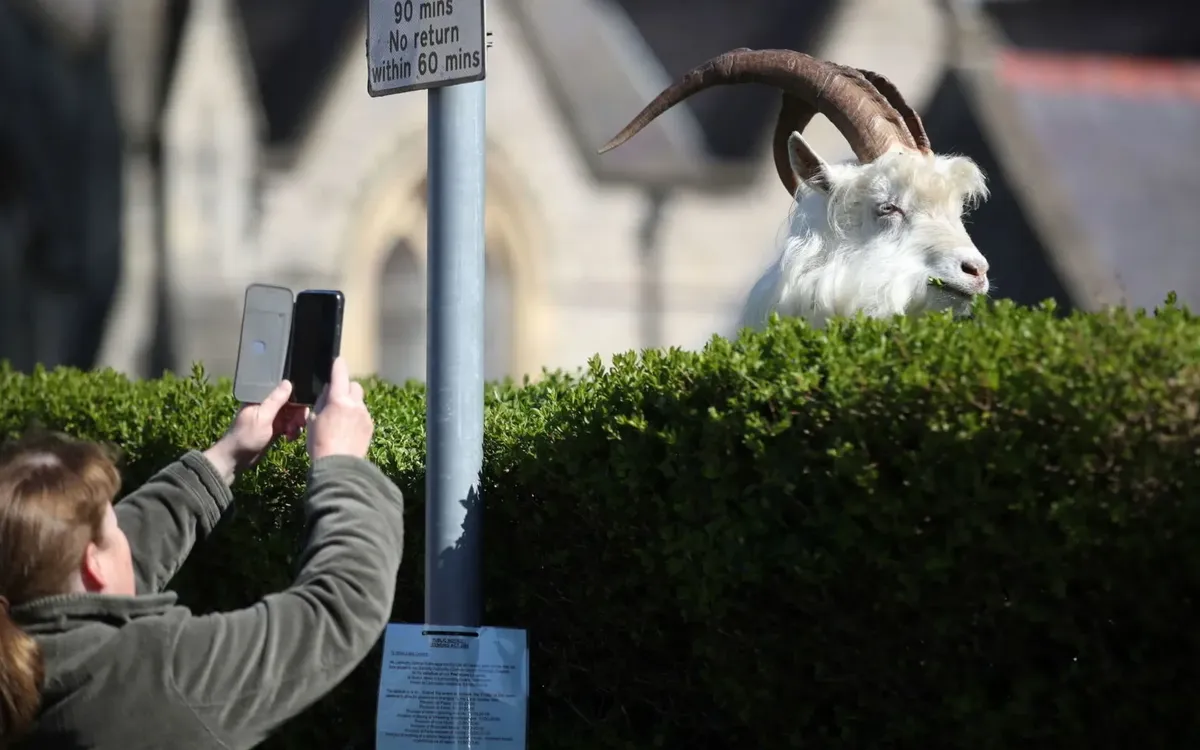
While people sit on isolation for weeks, animals and birds occupy empty cities. This is partly true. Although many of us probably exaggerated the ability of “wildlife” to capture the space left by man. Two months of quarantine is only for a person eternity, and for the “dolphin in Venice” (recall, the dolphin turned out to be a duck)-after all, probably, it is still not enough. But still, some adventures of wild animals in the cities managed to happen. "New" gathered stories from different parts of the world and talked with zoologist experts about what the quarantine for the animal world would turn out.
FRANCE
Ducks went for tickets to the Comedy Frances?
Here are two young deer walks in the afternoon along the empty Parisian suburbs of Buassi-Sneg-Lege on April 12. In the 16,000th town, it is extremely boring, there is absolutely nothing to do young people. The deer approached the pizzeria, but it turned out that this focus of the food culture was closed to the castle. Shook the horns, the deer left the city.
À bois st léger ds le 94.
? Fic.twitter.com/rv1gb2twsj
- Mathilde Larrere (@larremathilde) April 12, 2020In Reims, the photographer France-Presse filmed a deer on a football field. You can understand the junior: FC Reims, who had recently lived in the first league, this season was among French football leaders. On April 1, when the newcomer entered the field, it was not yet known that the championship would be completed ahead of schedule (30th) and Reims would not be destined to rise to the winners.
On April 17, the young roe deer decided to move around the city of Tour. But being in the center, she was confused, she began to rush through the streets. The police drove the poor thing into the building. Then they called the huntsmen. Then they reported: Kosul was returned back to the forest. “Very condescending police officers did not fined this roe deer, which nevertheless walked without a mandatory evidence of leaving the house,” the police prefecture on Facebook joked.
A wolf was spotted on the ski track in Curshell.
Apparently, unlike the Russian “bears”, the wolf on the Kurchevo descent is exotic (even if it descends without skis). Several media wrote about the wolf.
For those to whom Curon is a native house, I’ll clarify: they saw a wolf on the Chapelets highway. Russian sites assure that "the track enjoys authority among experts."
Well, excuse me, experts, a wolf uses by authority for a time of quarantine.
Confiniment, Jour 7: un lup Vagababonde sur las pistes de ski déesertées de courchevel 🐺 pic.twitter.com/rajmz97
- Clément (@Clementrse) MARCH 23, 2020In Ayaccio, the capital of Corsica, the so-called “wild” wild boars behave in a businesslike way. Only if in peacetime they preferred to come to high -rise buildings, when it gets dark - and already at dusk, it is not woking in front of the tourists dinner on balconies, interrupting food, now these pigs are walking through microdistricts in white day.
I was once in Ayaccio in the fall, and, too, violating local prohibitions, in terms of kindness of sincere, I fed wild pigs with my homemade pizza. But then it was still in old antediluvian times, when people could fly on vacation, sunbathe on the beaches ...
Now all the approaches to the sea in France are closed for citizens - at least until the beginning of June. But here is not far from Ayaccio, at the famous resort of Porticchio, on the white sand of the beach Mar e Sol are located, I am not afraid of this word, some two cows. In Cannes on the night of May 10, the police accompanied a wild boar on the famous Kruiset embankment. Usually at this time they are preparing to receive film stations.
On the beach in Normandy, he landed the seal. Newspapers wrote about this under the heading "Unusual".
In the Kalanki National Park (next to Marseille) on April 7, the sea patrol was not far from the shore of two whales-stripes. Their name is diminutive, but actually these are giants what to look for. The press service of the park noted that the arrival of stripes in this zone, usually densely occupied by spa resort, an event from the ordinary.
2 rorquals ontété Observés dans le @parcalanque🐳
Des Images Rares Capturées Par la Patrouille Ulam13. Cette Observation Du 2ème Plus Grand Animal Au Monde Undice de + Sur Un Potentiel Effet du Confinement Sur Le Comportement de la Faune Sauvage. https://t.co/ywpadl0dxh pic.twitter.com/ynpbaobegc
- Parc des Calanques (@parcalanques) April 8, 2020In Parisian reservoirs, there are other sizes - there are many wild ducks. But these ducks, it seems, had never felt so free in modern history in modern history. Look at this video shot by the “new” on the Affel’s Avenue at the Eiffel Tower, once noisy. But the cars almost disappeared, the noise disappeared - and the ducks walk along the sidewalk along with the large, fussy two -legged creatures, which are now almost all the time in masks.
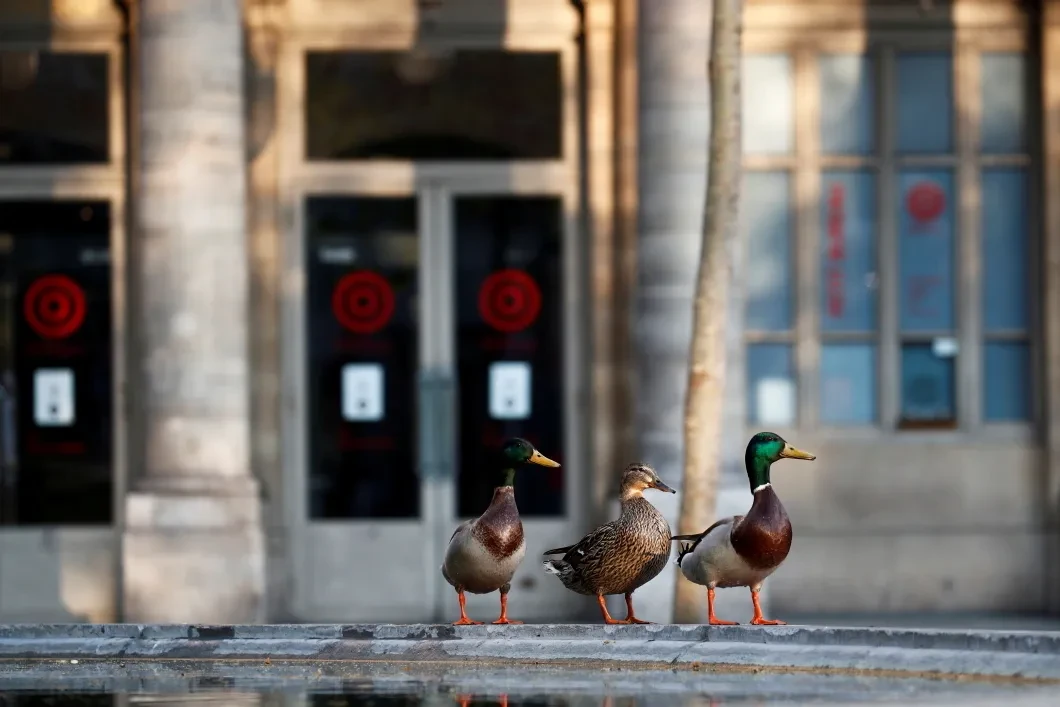
But the AFP journalist photographed how two ducks walk at the entrance to the Comédie Française Theater. And this is completely unheard of liberty - not because ducks do not have the right to reach for the beautiful, but because at this intersection it is usually as noisy as on Tverskaya near the city hall.
Alors Que La France Continue Son Confinement, La Faune Reprend Sa Place Dans La Capitale. Les Canars Ne Restent Plus Sur Les Quais de Seine Mais Seisormais Dans Les Rues Calmes de Paris En Début de Soirée, Près de la Comédie Française Par Exemple #Afple #Afp #covid_19 pic.twitter.com/my2obzyub
-Agence France-Presse (@Afpfr) MARCH 28, 2020“There are ducks in all reservoirs of Paris, it is not surprising here,” says the ornithologist Frederick Malerin the air of the LCI television channel. “The new one is that now they go to the Comedy Francas for tickets.”
“We now see foxes and martens in Parisian parks and gardens during the day. Despite the fact that the fox is rather a night animal, ”says Xavier Klipo, a naturalist, expert of the Paris of Biodiversity in an interview with AFP. “And the roe deer go to Parisian forests during the day - because now there are fewer walking and running.” On May 10, the Paris City Hall officially stated: the Fox family (dad, mother and four foxes), who during quarantine settled in the Pere-Lashez cemetery, was decided to leave alone. They will not be transported red warders to the forest.
Klopo emphasizes: of course, animals did not come to the city, which were not here before. No, here are all the same 1600 Parisian species. Only they boldly and began to allow themselves a little more.
During human quarantine, they became inhumanly pleased to live.
I myself noticed: the birds in the city began to sing as well as never before. Perhaps this will be later confirmed by experts who already write scientific works on the behavior of birds and animals in the conditions of empty cities.
“The birds have become better. It can be assumed that now there are more insects in the parks, because they are less caring for them, they are treated less. And flowers are better blooming, ”said Bruno David, president of the National Museum of Natural History, in an interview with France Culture radio station.
And in an empty city, it became easier for people to notice other lives.
“I saw hares at the house of the disabled. Inhaledly walking along the paths past the Cathedral of St. Louis, ”I wrote a line for the material.
He showed his wife. “Pull the pathos,” he says. - These are rabbits. They have been living in this park for years. They were populated according to the City Hall program. ”
Well, rabbits, okay, settled on the patronage of the city executive committee. But mom with a brood is duckling on the Paris Ring Road (and this is like a Moscow third ring) someone had seen before? But on March 25, only eight days after the start of quarantine, the ducks went out for a walk along the highway. The procession was noticed - and they reported where it should. As a result, the mission to protect the walking ducks took over a detachment of motorcyclists of the Paris Police Prefecture.
There is a stronger example-in the town of Shampini-Sur-Marn, a step away from Paris, on the public roads on April 10, three launching three: zebra and two ponies. And now let us know that they just went into a self -wolf from the zoo, but who will prove that they would have decided on this step if people had not “sat down” for isolation?
And quarantine saved a lot of lives in the wild, says Yves Verilak, the head of the French animal protection league: “A lot of dies every year under the wheels, especially in the spring, when the animals perform small migrations.” Here is only one shocking example: the Le Monde newspaper in 2017 wrote that
Every year in France, about 2 million hedgehogs die.
On May 11, the people's insulation mode has ended - and further for animals everything can be even worse than before quarantine.
Many animals have a sense of danger, says Bruno Riotton-Ru, a specialist in the French Bureau Bureau.
Animalist photographer Emmanuel Roger told the France 3 channel about her meeting with wild boars on April 28 on a lively (at normal) road near the city of Bourge. The photograph slowed down and began to signal to give the boars the opportunity to leave. But the animals did not leave the road, neither cars nor signals were afraid, and she took them calmly for a long time.
“Woundwashing, deer, roe deer-they forgot that asphalt is a space for cars, they learned a bad habit of slowly crossing the road,” Riotton-th fears.
Now, animals and birds may need time to understand that people have not changed - they were simply isolated for a short time.
But who will give the beasts this time? Hungry hunters will also return to the forests-reminds Mark Giro, vice president of the French Association of Defense of Wild Animals.
By the way, will we survive until the time when the hunters will be sent to the cells?
In the meantime, there are too many of them everywhere. In France, 1 million people have hunting tickets.
So the time has come to the animals to go to self -isolation - away from sin.
Yuri Safronov, observer of "New", journalist RFI,
ParisUSA
"And in my yard, Puma sleeps on a tree!"
Quarantine can influence the wildlife in an unexpected manner, according to Page Warren, an ecologist from Massachusetts University in Amhert. “I will be interested in whether creatures such as coyots and foxes will behave more boldly in American cities,” she said. According to the researchers, the changes will probably be insignificant. City foxes and coyots can get out of their shelters, and birds can wander more boldly through the streets.
Defenders of nature in Florida reported that sea turtles with leather shells felt much bolder at a time when the beaches and parks were closed. Now they open again.
In March, when the Chicago Aquarium SHEDD was closed to the public, the penguins had the opportunity to inspect their house, because there were no visitors around.
The penguins left their homes in the aquarium and went for a walk.
This penguin named Wellington met Kita Beluha in the Shedd aquarium in Chicago.
Small mammals, such as proteins, mice, rats, skunks and opossoma, have always lived in American cities. Most of these animals lead a night lifestyle, spend their days, sleeping in bushes, basements or sewage, and then go hunting or collect food at night. The new one is that larger animals that once lived only in the desert are more and more in the cities.
Deer in search of food flows into cities to chew shrubs, lawns and gardens. They resort, escaping from PUM (or kuguars, they are also called mountain lions). Experts note that it is precisely deer that kill and injure more Americans than any other animal - and not their horns, but rushing to cars, which leads to numerous accidents.
Bullets love deer, like people - ice cream.
But they are afraid of people, so they follow deer in cities only when they are really hungry. Red foxes are almost not afraid and are now more concentrated in cities than in the wild. And bears regularly visit cities to raid garbage baches. Puma once tried to penetrate the hotel in Renault, Nevada, and the other lived in Gryffit Park in Los Angeles, California, almost five years. Black bears wintered under the houses in the suburbs in the state of New Jersey and sometimes burst into houses or cars in many towns located near the mountains.
Coyotes can be the most daring four -legged migrants in cities and towns. They were seen a few miles from the White House and are now inhabit some of the largest cities in America. There are a lot of beds in Chicago, Illinois, and they were even noticed in the large, crowded Navy Pier entertainment park. They hunt for food (mainly mice and rats) every night after sleep in the bushes.
Raccoon, in which the paws are a little like human hands, were repeatedly discovered, opening cans and doors of refrigerators in search of food in houses.
The world's largest city colony of bats is located in Austin, the capital of Texas. About 1.5 million of them live under a bridge on Congress Street, and every summer hundreds of thousands of people observe their mass flight at sunset.
Alligators are found in Miami and other cities of Florida, but, despite their reputation, they rarely attack people. Residents of Florida find alligators in their garages and pools. Many types of snakes love water, so they often slip into hydromassage baths. In Miami, the fire department repeatedly pulled pythons from the pool, the length of which could reach 12 feet - two human heights.
The slopes of the hills that the coyots once ruled are now covered with houses, and the swamps that once patrolled alligators were drained to become golf fields. Some animals simply refuse to leave their homes after people entering. Since cities and farms occupy more and more of the Earth, wild nature is reduced, forcing wild animals to go to cities in search of food. The contents of garbage tanks and sewer pipes for them are all that can be eaten. The most intelligent, most adapted animals find that even during drought in cities there are water, where the lawns are still watered, and golf ponds remain complete.
Wild animals that seem shy and harmless can bite or hurt you if you come too close. To give food is also a bad idea, because they will return. Pets are at greater risk than people. Cats and small dogs should be kept at home at home if you live next to the coyots, and you should avoid walking dogs next to the reservoirs of Florida, where alligators can be hidden.
Wild turkeys were seen vagrant in the suburbs in several cities of North America, including Baton-Rozh (Louisiana) and Austin (Texas).
It is unclear when exactly the threat of coronavirus will pass, but
These turkeys may not want to stay on the streets when, at the end of November, thanks will come.
Bruce Borovski, a video operator in Boulder, Colorado, walked along the main pedestrian strip of a student town last week, when unexpectedly on the top of a tree, next to the building, he saw a sleeping Puma. On Pearl Street, which is usually full of visitors to restaurants and shops and students of the University of Colorado, deserted. Nothing will wake the Puma in the "ghost city".
“I have been living in Boulder for 30 years, and I have never seen Puma before,” said Borovsky. - But I am a director and constantly shoot on the street. Animals feel that there are not so many people, and they come to us more and more. We are waiting for the bears to leave the winter hibernation, and we will see how impudent they are. ”
Alexander Panov , sob. Corr. "New",
WashingtonUNITED KINGDOM
Wild goats are interested in why people have ceased to spoil nature
At the end of March, the largest television companies in the world bypassed the frames of the “raid” of the wild Kashmir goats to the small Welsh city of Llanduno.
Wild goats live on the Great Ormas - limestone Cape on the coast of North Wales since Victorian times. They do not like people and go down from the Big Orma only in windy weather, entering only the very outskirts of Llander.
But a week after the announcement of quarantine, they entered the city under the cover of the night, as reconnaissance, and were brought by the police. The next day they appeared again, some amateur counted 122 goals!
The "looting" of the city lasted several days.
The goats pinned hedges and flowers in the gardens. Residents were touched -
Rating turned into entertainment and a reason for jokes.
Not only goats became interested in why people suddenly stopped spoiling nature. In early April, about two dozen deer - adults and kids came to the town of Harold Hill in Essex, reported The Sun. In England, quarantine, subject to social distance, is allowed to walk or play sports once a day, so the guests received treats from rare passers -by and were not afraid to take it. Deer came, probably from the National Park of the Dagnams Park located nearby in the northeast of the Greater London.
The other day, in the county of Kent near the village of Anderriever, the tiger was noticed. Armed police and a helicopter immediately went to meet the “guest” by alarm, BBC said. It immediately became clear that
For a predator, vigilant citizens took a sculpture from wire and epoxy resin,
Which 85-year-old artist Juliet Simpson put up in the forest behind the house 20 years ago.
In Britain and before all quarantine right in London, one could meet protein, fox (she herself saw a couple of times in Greenwich) and hares. During the quarantine of foxes, hedgehogs, badgers, deer became even less bully. Social networks and the press report the appearance of ermineians, martens and even beavers.
In the country, wildlife protection is actively encouraged at all levels, starting with the government. My friend, living near London, was an employee of the municipality under the glorious name "District of Three Rivers" fed ants last year.
This was directly included in his duties: to feed with bread soaked in water with honey of the inhabitants of two anthills transferred from the neighboring district.
Не все, впрочем, наши «меньшие братья» наслаждаются преимуществами локдауна. Вороны стоят перед вызовом стать вегетарианцами: движение на дорогах острова сократилось как минимум на 75%, соответственно, на обочинах дорог стало меньше сбитых животных.
Евгения Диллендорф , соб. Corr. "New",
LondonBELGIUM
Через сто лет вернулись волки
Во двор дома, где я живу, хоть он и в зеленом спальном районе, но все же в городе Брюсселе, часто по ночам заходит лис. Он даже привык к фонарю, что зажигается от присутствия всего движущегося, и не боится.
А недавно я видел, как молодая лисица, высунув язык, перебежала через большой паркинг супермаркета и засеменила по тротуару смежной улицы. Эта смелость вовсе не связана с приходом коронавируса, она была и до него. Здесь в городах не редкость дикие зверушки: лисы, белки, ежи, а на окраинах, в примыкающих лесопарках, косули и даже кабаны. Не говоря о всяких там диких утках и прочих лебедях.
Страна как за увлекательным сериалом следит за судьбой единственного волка-самца Акелы, обосновавшегося в Валлонии.
А министр окружающей среды Фландрии объявил, что единственная волчья пара, «прописавшаяся» в этом регионе — Ноэлла и Август, ожидает приплода. Волк вернулся в Бельгию, где его не было более ста лет.
Не сказать чтобы сожительство человека и животного в густонаселенной европейской стране было абсолютно бесконфликтным. Но если человек тратит многие миллионы евро на строительство зеленых экодуков через скоростные автомагистрали, то можно быть более или менее спокойным за судьбу местной фауны.
Экологическое сознание появляется не сразу, а воспитывается десятилетиями, если не веками, сравнительно обеспеченными людьми. Прошло сто лет, прежде чем бельгийцы решили, что и волков не надо убивать.
Сюжеты о появлении диких животных в опустевших городах приходят из разных мест, хотя сам я здесь такого не видел. Где-то в этом смысле пандемия дала дикой природе передышку от обременительного соседства с человеком.
Но старший менеджер программы Всемирного фонда дикой природы (WWF) по Южной Африке Джо Шоу сообщает, что
коронавирус представляет серьезную угрозу для природных парков и охраняемых территорий по всему миру.
Туризм служит основным источником финансирования для многих из них.
«Мы обеспокоены последствиями этой потери доходов для нашей работы по защите дикой природы, — написал он на сайте WWF. — Существует риск потери работы и ослабления поддержки со стороны местного населения, живущего вокруг парков. Эта поддержка важна в борьбе с бедностью, браконьерством и давлением на природные ресурсы».
Природоохранный туризм — это живительный источник средств к существованию, он способствует равновесию интересов людей и природы. Площадки наблюдения за дикой природой, содержание сафари-домиков, проживание туристов в семьях и продукция ремесел обеспечивают множество рабочих мест, помогают воспитывать экологическое поведение.
24 апреля Джо и его коллеги с ужасом узнали о жестоком преступлении в национальном парке Вирунга. Зверски убиты двенадцать экоохранников, водитель и четверо местных жителей. По данным конголезской организации, которая управляет парком, нападение совершила группировка DSOR («Силы освобождения Руанды»). Она получает финансирование от незаконной добычи и контрабанды угля из парка Вирунга. Этот бизнес угрожает как парку, так и обитающим в нем гориллам.
Браконьерство и разрушение среды обитания — это главные угрозы выживанию многих видов во всем мире. По оценкам, мировой оборот дикой природы составляет от 5 до 23 миллиардов долларов в год. Экологическая охрана — это профессионалы, которые ограничивают эти риски. WWF опасается, что экономический спад и отсутствие туристов ослабят природоохранный сектор. Снижение доходов отразится на управлении парками и охраняемыми территориями, на зарплате экоохранников и оплате услуг местных жителей. Организация ищет пожертвований частных спонсоров, но и это на фоне глубокого всемирного кризиса проблематично.
Alexander Mineev, sob. Corr. "New",
Brussels
Expert comments
«Все это абсолютно обратимо»
Никита Чернецов, доктор биологических наук, член-корреспондент РАН, директор Зоологического института РАН:
— Я думаю, что большая часть этих историй — о животных, которые и так живут в городе. Ежики не пришли в города. Лисы тоже не пришли в города. Они там живут, только по-тихому. Что их привлекает? Здесь есть ресурсы — пища. В городе можно неплохо поживиться. Город генерирует огромное количество всякого съестного, особенно сейчас, когда люди живут достаточно богато и выбрасывают много того, что еще можно съесть. Прежде всего, это, конечно, помоечные животные, которые в состоянии рыться в мусоре. Например, еноты, куницы, да много еще кто. В городе не так мало диких животных — много больше, чем заметно невооруженным глазом. Они живут в парках, прячутся по подвалам, выходят ночью. Днем их не видно, потому что днем много людей, которых они все-таки побаиваются и стараются на глаза не показываться.
Так вот, когда количество людей на улицах резко сократилось, они начали высовывать свой нос и днем тоже, стали исследовать, что тут есть. Поэтому их и видят. Есть, конечно, истории, которые на это не спишешь, но это отдельные случаи. Бегемоты, например. Или когда горные козлы ходят по улицам Эйлата в Израиле. Тут они действительно пришли из пустыни, зашли, как говорится, посмотреть, что здесь такое происходит. Они дикие и очень боятся людей, а тут вот прошли рано утром по городу. Но это, скорее, исключения. А вот аллигаторы во Флориде всегда были проблемой.
Обнаружить аллигатора у себя на заднем дворе в некоторых районах Флориды — дело вполне обычное и без карантина.
И на улицах они не редкость. Там даже есть специальные фирмы, которые ловят их на вашем дворе и перевозят в ближайшее болото.
What will happen next? Карантин закончится, люди снова заполнят улицы, а животные опять попрячутся. Кто-то уйдет совсем из города — тот, кто сюда действительно случайно зашел. А тот, кто в городе живет, так и будет жить. О каких-то изменениях в поведении речи нет. Все это абсолютно обратимо. Принципиально это ничего не изменит. То, что рекреационная нагрузка несколько уменьшилась. Ну, понимаете, чтобы были серьезные изменения, нужно, чтобы она уменьшилась лет так на десять. Но столько мы в карантине не просидим. Три месяца, шесть месяцев — ничего не изменят. Животные прекрасно знают, где в них стреляют, а где не стреляют. И гуси будут прекрасно кормиться в одних местах и высоко летать в других местах, это известный пример.
Ну да, можно сделать прикольные фоточки, набрать в интернете много лайков, но это ничего не изменит. Это не то, что животные узнали, что у человека появился страшный вирус, и теперь захватывают человеческие территории. Нет, такого не будет.
Записала Екатерина Гликман, «Новая»
«Природа не терпит пустоты»
Михаил Блинников, профессор биогеографии Сэнт-Клаудского государственного университета, Миннесота, США:
— В последние два месяца накопились наблюдения над природой в городе (в первую очередь, над млекопитающими), позволяющие предполагать, что ограничения в передвижении людей, вынужденных сидеть дома, освобождают городскую среду для диких животных. В мировых СМИ появились рассказы о варанах, плавающих в опустевших бассейнах отелей Таиланда, бегемотах на пляжах Мозамбика, дельфинах в каналах Венеции и так далее.
Что касается России, то однозначно ответить на этот вопрос нельзя, не установив некоторые параметры. Во-первых, идет ли речь о статистически достоверных изменениях во встречаемости конкретных видов в городских условиях? Для этого нужно проводить активный мониторинг в течение нескольких месяцев и даже лет. Во-вторых, если мы находим подобные зависимости в некоторых случаях, связано ли появление подобных результатов действительно с эффектом карантина, или это случайная корреляция? Вкратце, ответы на оба вопроса для городов России пока отрицательные.
Российская самоизоляция совершенно не сравнима по жесткости с изоляцией, бывшей в Китае, но значительно жестче, чем во многих западных странах, по крайней мере, по сравнению с большинством стран Европы и особенно с США. Опрошенные нами эксперты в Москве и Новосибирске сообщили, что влияние карантина вряд ли еще заметно статистически, так как требуется более длительное время наблюдений и значительно более драконовское применение законов о нарушении карантина для выявления заметных трендов. Коллеги из Татарстана и Алтайского края также не заметили значительных изменений в поведении фауны в этих регионах, кроме охотничьих видов, так как весеннюю охоту запретили.
В смысле изучения заметных изменений парадокс ситуации в том, что ученые и интересующиеся любители не могут официально продолжать наблюдения в природе по причине введенных ограничений на передвижения по городу и в регионах. Сейчас набирает популярность сбор данных на платформе iNaturalist (и подобных ей) с помощью смартфонов. В идеале любой заинтересованный гражданин может загружать свои фото природных объектов (растений, животных) в своем районе в глобальную базу данных с указанием их географической привязки и систематической принадлежности и таким образом отслеживать изменения в распространении тех или иных видов. Однако в условиях домашней изоляции и слежки за нарушителями режима по геокоординатам любые вылазки на природу становятся рискованными. Проведение акции Cities Naturalist Challenge в этом году оказалось сильно усложненным эпидемией коронавируса, однако многочисленные волонтеры выявили сотни популяций редких видов по 18 городам России.
Так что, пока научно подтвержденных результатов влияния карантина на живую природу городов России мало. Некоторые интересные наблюдения: например, широкое распространение лис и исчезновение воробьев с придомовых территорий в Москве отмечалось задолго до карантина и связывалось с изменением экологии города в процессе массовой застройки (лисы вытесняются с застраиваемых пригородов в город) и тотальной замены традиционных луговых газонов на монокультурные европейские (исчезает корм для воробьев). Опрошенные эксперты выразили скепсис по поводу того, что замедление темпов строительства и ухода за газонами сильно изменят ситуацию на промежутке в несколько недель.
Значительно более беспокоит их продолжающиеся разговоры о грядущем капитальном строительстве в Москве и ближнем Подмосковье в черте лесопаркового защитного пояса по программе реновации. Хотя работы приостановлены, уже с 12 мая ожидается возобновление некоторых строительных работ, включая постройку юго-восточной хорды через могильник радиоактивных отходов у платформы Москворечье. В Ивантеевке общественность встревожена возможными якобы санитарными рубками в самый разгар карантина и в период максимального гнездования птиц.
В любом случае, природа не терпит пустоты, и наши потомки спросят с нашего поколения, кто допустил столь безответственное нарушение общей городской природной среды.
Записал Андрей Заякин, «Новая»