
Translated material
Brishing fortress
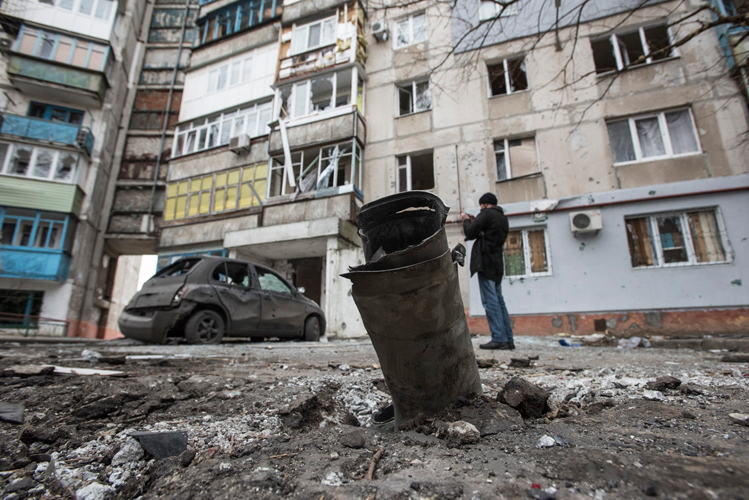
The most cruel way that happens, the world studies the geography of Ukraine. Slavyansk, Odessa, Donetsk, Torez, Volnovakha, now - Mariupol. It was with him that a new stage of full -scale hybrid war in Ukraine began. But Mariupol is a special city in this whole story.
The port and industrial heavyweight of the Ukrainian South, a strategically important point capable of paving the corridor from Donbass to Crimea, first ended up at the sight of May 9. In the center of the city, near the building of the Ministry of Internal Affairs, there was a clash of people who were then called the lightweight word “separatists”, with the National Guard and the Azov battalion. As a result of a shootout, about forty people were injured, 11 people were killed. After that, literally the whole of Mariupol was configured against the Ukrainian authorities and on May 11 together went to vote to the referendum on the independence of the “Donetsk People’s Republic”. These were still carefree times when people believed that they were voting for independence, and not for the war, which unfolded shortly after the referendum.
For nine months spent in confusion and fear, the Mariupols learned to distinguish between shades of gray and understand who the predator is and who is the victim.
On June 13, a new revolution occurred in Mariupol: the security forces, led by the Azov battalion, staged an anti -terrorist operation in the city center. They destroyed the headquarters of the “separatists”, who were already armed then to call them militants, entered into a street battle with them and won this battle by the end of the day. Then many civilians found holes from bullets in their windows and walls.
“Look how much it got into our yard,” a local resident showed me a full handful of bullets. Then he could not say whether he supported one of the parties to the conflict. He only said that if the bullet hurts someone from his family, he himself would pick up the machine gun and go avenge. And so many said.
For a few days, Mariupol plunged into shock, and left it with another: waking up, matured.
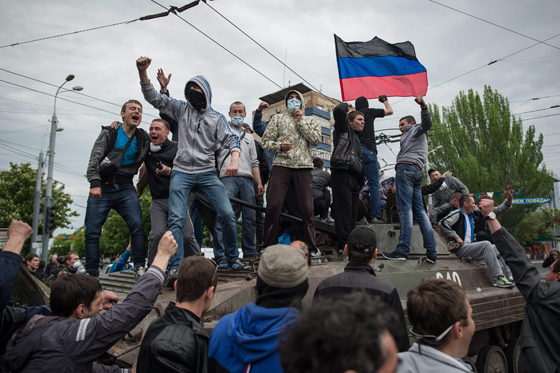 © Alexey Furman / TASS Mariupol, May 9, 2014
After the war from Slavyansk spread to Donetsk, the Mariupol residents began to take to the streets with Ukrainian flags, openly condemn the policy of Russia, and massively help the army and volunteer battalions that undertook to guard the city. In just a month, from an amorphous, shaky in political moods, the city turned into the eastern flagship of Ukraine, an informal capital of the Donetsk region. The whole team of Governor Sergei Taruta, who fled from Donetsk, who was filled with militants, moved there, journalists and activists, who entered the DPR into the “shooting lists”, thousands of forced immigrants, hundreds of the military. The war placed everything in its place: seeing how dozens of civilians die in Slavyansk, how Boeing is knocked over over Torez with 298 people on board, how Donetsk and Lugansk are shot, the Mariupol residents tried to forget that they once seriously thought about independence in the DPR. This independence has already been sustainably associated with the war.
At the end of the summer, the safety of the key Donbass city was again in question: from Russia, troops entered the Ukrainian army from the border in Novoazovsk. Since then, the Mariupolites have not left the feeling of impending siege. In some fifty kilometers from the outskirts of the city, the militants captured Ukrainian volunteers who tried to leave the Ilovaisky boiler. There were also elections to the so -called DPR government, which was won by Alexander Zakharchenko. From the same regions they got to Mariupol “Grad”, who killed 30 civilians and wounded about a hundred people. Zakharchenko cynically called all this “liberation” - during the memory of the victims shot in the Donetsk trolley, apparently, by his own orders.
In the current defeated, immobilized Mariupol, almost no one doubts that the Grad shells flew from the eastern side. Because the Mariupol residents themselves have repeatedly seen heavy equipment under the flags of the DPR when they went towards Novoazovsk. Because they are used to distinguishing the types of weapons and determine the funnel from the projectile with which side it arrived. Because for nine months spent in confusion and fear, they learned to distinguish between shades of gray and understand who the predator is and who is the victim. Because ultimately for nine months now Mariupol itself is like a sacrificial stone on which the innocent die.
These are murders for the sake of murders, meaningless, peremptory, ingenuous.
“Soon we will return to ourselves Mariupol, and I finally bathe in salt water right in the tank,” 34-year-old Andrei Malyutin with the call sign “Matvey”, who commanded the DPR group in the Starobeshevo area, not far from Mariupol, told me in early September. He proudly showed the brilliant medal “For Military Merit”, given to him by Igor Strelkov, and the tanks of the Ukrainian army, seized upon exit from the “Ilovaisky boiler”. After a couple of months, Matvey fled, accused by the leadership of the DPR of looting. Plans for the “return” of Mariupol then did not grow together. By some miracle, the small forces of volunteer battalions and volunteers, who dug dozens of trenches around the city with their own hands, managed to protect him.
In June, the Mariupol entrepreneur and politician, one of the main assistants to the local volunteer movement, Yuri Ternavsky, explained to me why Mariupol would never obey the DPR: “We have a different standard of living, there is no hard mining labor, it has long been said that Mariupol is not Donbass, and there are not so much ethnic Russians - there is no particular Russian propaganda.” But now, after military equipment moved to Mariupol, it became obvious: the Mariupol residents may not obey the DPR, but Russian propaganda is no longer necessary to cling to anything in order to justify the murders. The war entered the level when reasons do not need to come up with the name. These are murders for the sake of murders, meaningless, peremptory, ingenuous. In Mariupol, civilians are buried, and the cargo of 200 military personnel who died from the response of the Ukrainian army set off to Russia. It is unlikely that, of course, their loved ones learn the truth about what they were doing near Novoazovsky.
Now in Mariupol is quiet. Shots are occasionally heard - shootings sometimes go outside the city. For more than a hundred kilometers, in the Donetsk airport, fierce battles continue. In the Debaltsevo area, not far from the Russian-Ukrainian border, a new “boiler” is formed, in which several thousand Ukrainian military were formed. For all points where, after the signing of the Minsk agreements on the ceasefire on September 5, the confrontation slept, the war resumed. Endless Counter Strike continues. And this stage of his will be even more cruel and meaningless.