
Translated material
Marx and emigrants
In Salzburg, one of the most important festivals in the world ended. Tyrants, refugees and collapsed time determined his poster
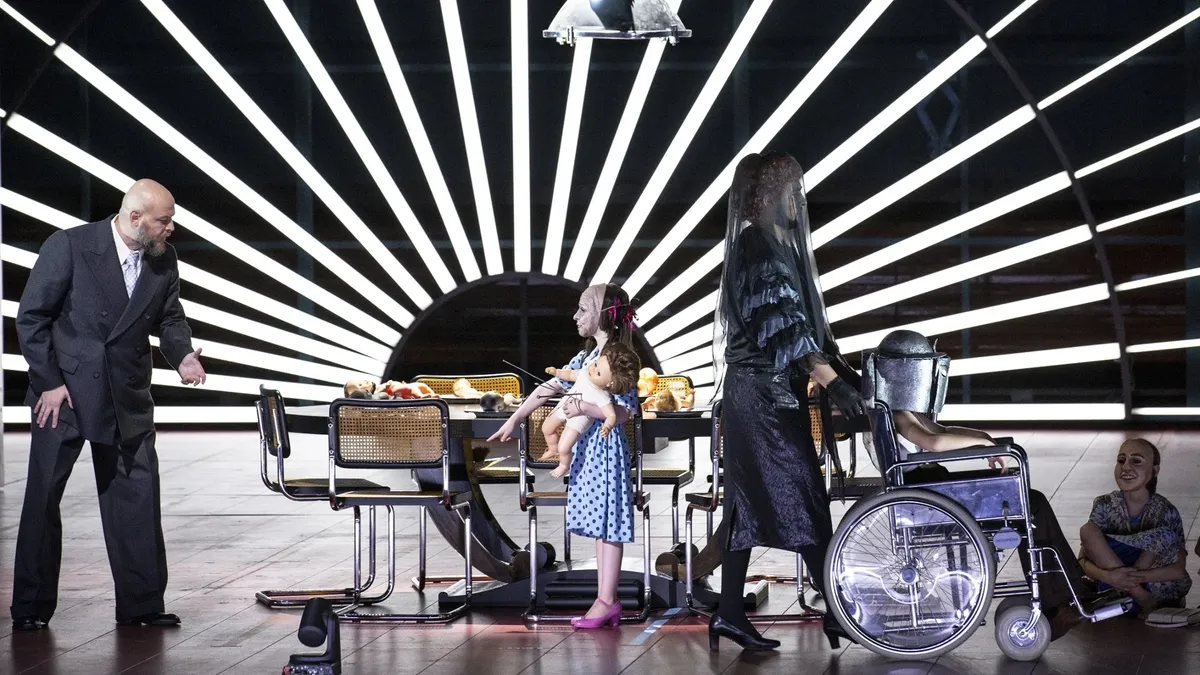
"Macbeth." Photo: Bernd Uhlig
Is it true that festivals of classical music are an exclusively bourgeois phenomenon for music lovers and escapists? Or are they made smart people who think and talk about modernity, and not only the language of art?
One of the main events of this summer in Salzburg was the symposium “The connection of the times” - a quote from the Shakespearean “Hamlet” served as the motto of the festival as a whole, more precisely, not even with a motto, but, according to the Executive Department of Marcus Kh Integuser, a direction for reflection. The symposium lasted two days, writers and economists, people of theater and journalists, as well as a deputy of the parliament from the Green Party and the local bishop, participated. In the center of the discussion is the future that it is seen from different prospects: from environmental to economic. The phrase of one of the speakers can be considered winged-“And although Marx said this, it is true ...”-after all, the attack against Marx is again perceived as humor, not satire.
Cinema came to the stage
It is difficult to imagine such festivals, especially from us, where at the same time with the operas of Mozart and Verdi there are similar meetings, and even collecting full halls of a local university. But Verdi, the 200th birthday of which is celebrated by the whole world, of course, also collects a full house. This year, two operas were placed in Salzburg. Christof Marthalier transferred the action of the Falstfa to the film site - it turned out fun, and then sad. The absurdity of what was happening on the stage was added in the finale a lonely knight in black armor, apparently wandering from a neighboring film vocabulary. It is a pity, of course, that such characters from other people's films did not pop up on Falstaff and in previous scenes, this would dynamized them, but without Barbie and Godzill, the Verdievskaya opera reached a rare intensity, according to thought, as no one’s thoughts of aged wise guy, and a melancholy, as a fantasy of a resettled life of her labeles.
Even more intensity in Macbeth, set by the winner of the “Golden Mask” of 2012, Krzyshtof Varlikovsky, along with the permanent co-author, the artist of the Malgozhi Scheshnyak, is not the first time he was amazingly controlled with the endless spaces of the Big FestSpilhaus, building an empire from different fragments, which will be collapsed due to the revived forest.
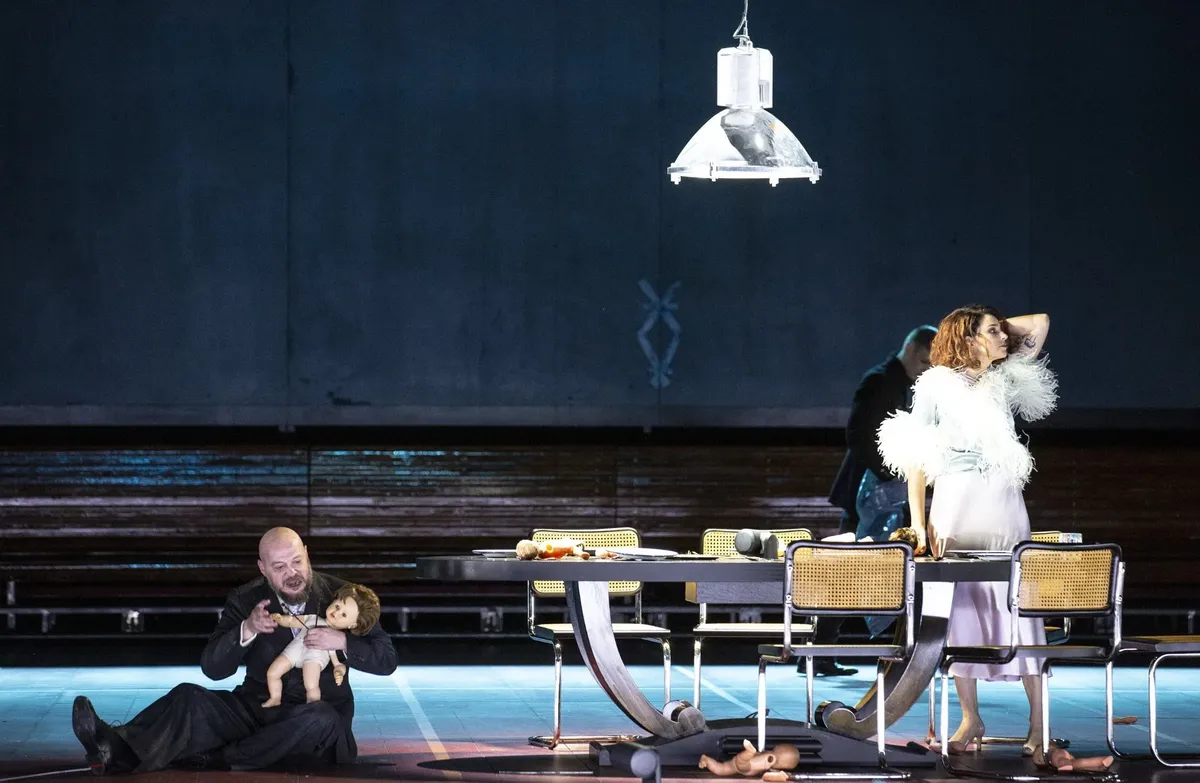
Varlikovsky tells the story of how often power and madness are inseparable; Shakespearean characters for him is an opportunity to create a psychogram of violence, to connect the public evil and the idea of a fix about his own impunity.
Vladislav Sulimsky and Asmik Grigoryan in the main parties draw this psychogram with unique vocal accuracy.
Opera and refugees
In the center of the musical Salzburg program were two emigrants - Dierge Liegoti (1923–2006) and Boguslav Martin (1890–1959). The first in 1956 fled after the suppression of the anti-Soviet uprising in Hungary to Austria, the second left Czechoslovakia before the war, he traveled around the world for most of his life, lived in Paris and America, died in Switzerland.
Liegety dedicated the concerts cycle, which was called “Time with Liegoti”, his music was played in dialogue with the authors of the past and his contemporaries.
Like Schnittke, he knew and appreciated the music of his predecessors, he often changed styles and even directions, was engaged in electronic music, and in many ways a revolution in this area is connected in many ways, but at the same time, Liegoti has always remained himself.
“Greek passions” of Boguslav Martin in the production of Simon Stone do not appear so often on the opera stage, but this does not indicate the musical quality of the work, but about the slopiness of theaters.
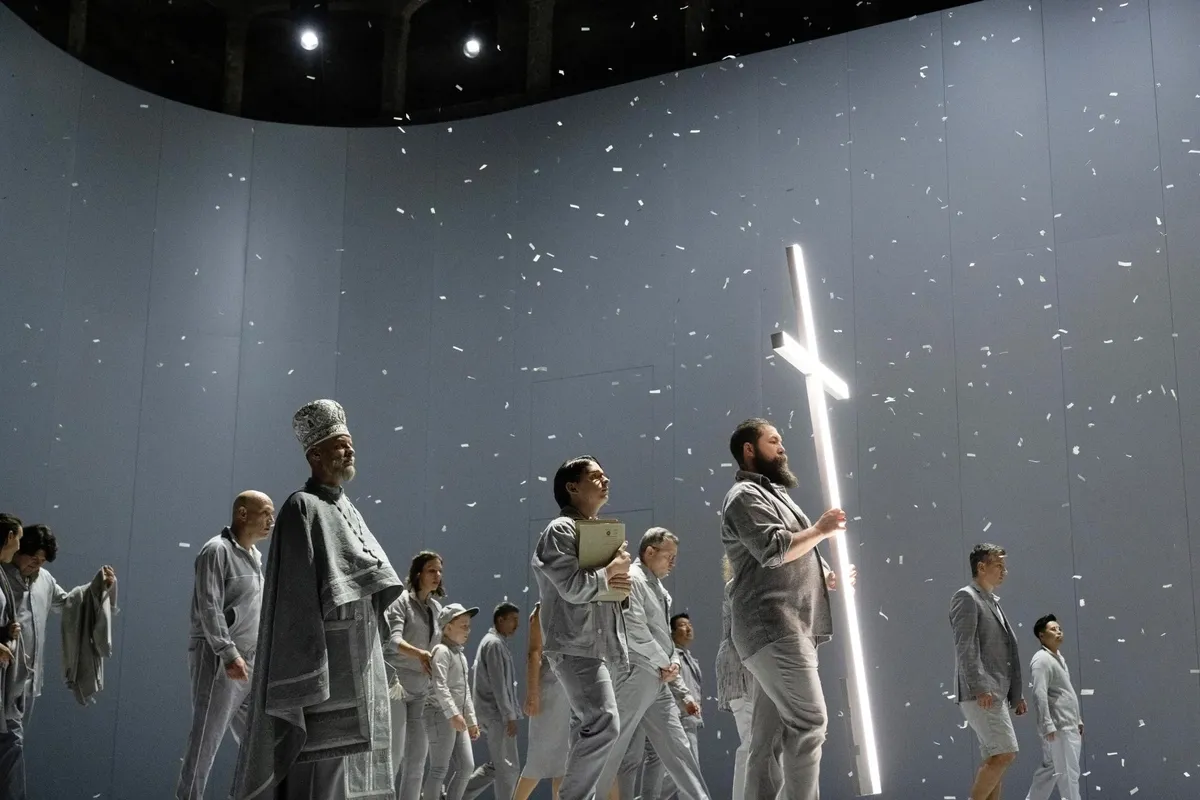
Nikas Kazandakis wrote a libretto in his own novel, which, together with the “last temptation”, caused the church’s hot dislike of the Church - the writer was even forbidden to bury in the Orthodox cemetery, he was given a place at the city wall. The point is in the position: in the "Greek passions" we are talking about a priest who refuses refugees in the shelter and actually incites the flock to the murder. The conductor Maxim Pascal finds many shades in Martin to convey the tragedy musically; One of the best directors of our days Simon Stone saturates it with a scale, psychologically and visually.
Non -holiday moods
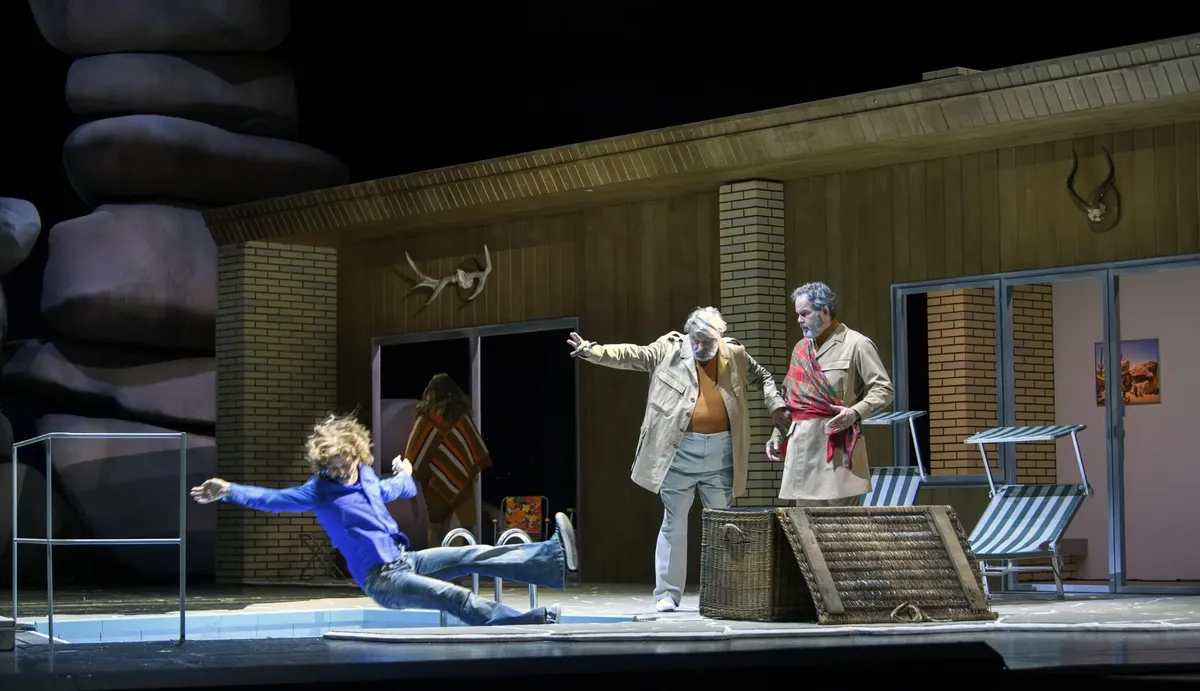
In the drama program, much was associated with compassion. These performances have different plots. Karin Henkel put “Love” according to the famous film by Michael Hanek, who received an Oscars for him at one time. If you do not know about it in advance, it is almost impossible to guess: the story of the extinction of the neighbor, illness and destruction of his body, the desire to help him, dividing the last months of his life, is more likely in sick leave than home interiors (artist Muriel Gertner). Giving tribute to films in the theater, Henkel translates the plot into stage language. She also collapses the ceiling, the mouth of a bunch of earth - can also be perceived as a metaphor for the upcoming burial; Then the unexpectedly funny games around the chair-rings begin. The text and context are very important here, in the European theater, aesthetics are secondary in relation to the problems, we have a different situation.
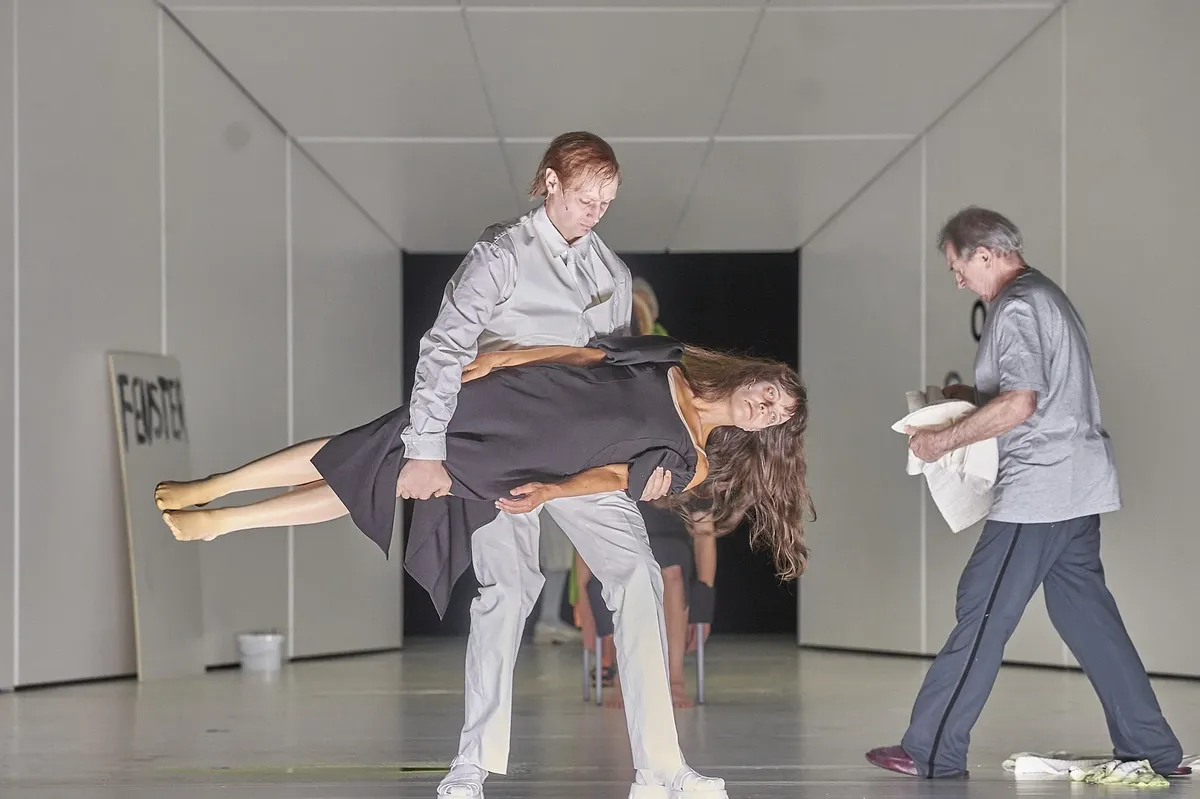
The topic of mercy was not so long ago popular in Russia, but today it somehow came to naught, it was replaced by other topics, another mercy. The question of dying old people, of help, about the right to euthanasia, is now interested in few, the phrase "worthy death" has been updated by other meanings.
The performance “Caucasian Cretaceous Circle” will also penetrate compassion. Helgard Haug, one of the directors of the Rimini Protokoll association, staged the last play by Brecht along with the actors of the Hora theater.
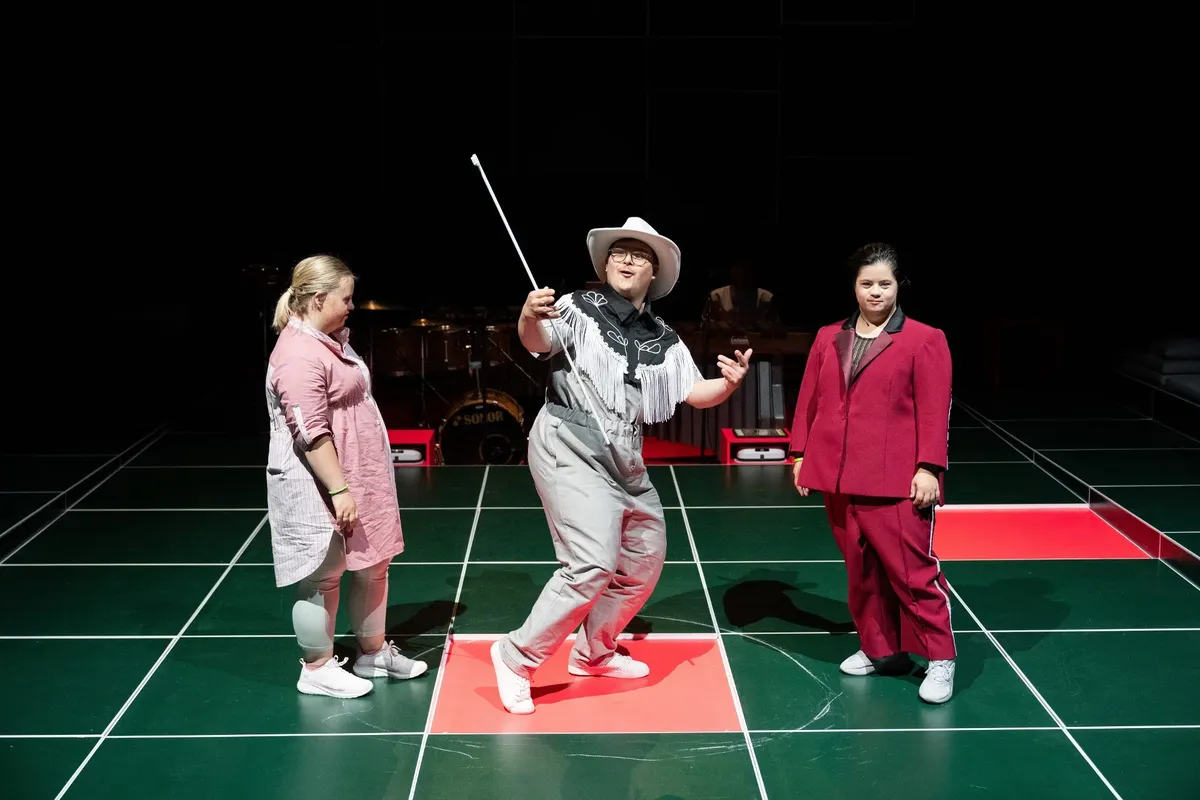
In this small Basel troupe, people are busy with developmental features, with Down syndrome. They do not play the whole text, but they are concentrated on rehearsals of the only scene where their mother, along with the reception, is divided by the decision of the judge of a small child - they are divided literally, dragging each in their circle in their direction. As a result, the reception room releases a hand so as not to hurt-she really loves.
From the circumstances of the scene-the Georgian post-war reality of the 1940s and the mythological time of parables-nothing remains, this is the story of the actors about themselves, about why they chose their role;
Right during the performance they offer to read a book about the theater and its actors, where the theme of patients with Down syndrome occupies an important place. Books must be returned, but something after such performances becomes yours forever.
Non-Stanislavsky
Among the founders of the Salzburg festival was an outstanding German director Max Reinhardt - his figure in the history of the European Theater is comparable to Stanislavsky. In addition to the artistic revolution, Reinhardt was also interested in politics, this is reminded by the exhibition in Salzburg, which is now taking place on three sites.
Reinhardt led the festival up to Anschlus, his traditions were not revived immediately. In the Karayan era, music lovers reigned here - many emotions, few thoughts. Everything changed after the appearance of Gerarara Mortier in the 90s, Marcus Kh Intchoizer also does not allow the social. In pairs with a unique artistic level, this gives rise to a striking result.
In Russia, there are no such large -scale projects, except for the “registered” festivals of the performers themselves - the holiday is supplanted by the thought, in search of talk about modernity, you are increasingly turning to the stage or museum hall, but to Dostoevsky or YouTube.