
Translated material
Free the future
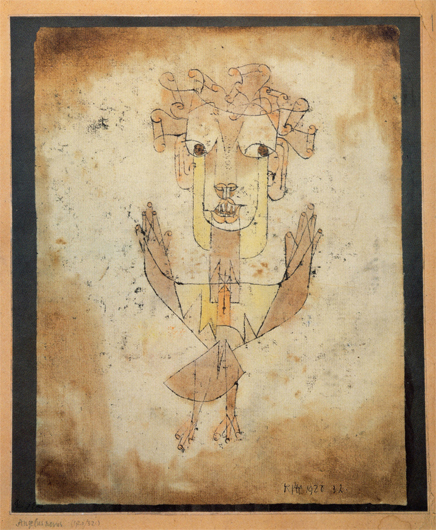
The Gloomy Antiopia is a favorite cliche of the media and public speakers, when it comes to the current suppression of freedoms. “Housing Games” or “1984” , “The story of the maids” (if we are talking about reproductive freedoms) or “451 degrees Fahrenheit” - everything is suitable to describe the current political situation. Culture carefully suggests this formula. Following her, the necessary picture is: statehood, dressed in uniform or suit, armed with a club or a new version of labor legislation. The genre, which initially served to model options for the future, is now used to describe the present. But did he not become a self -intake prophecy or even a grandmother's fairy tale? A lot of serious theoretical works have been written about this, but it is household anti -utopism - the line of modern Russia.
“Future” is a concept on which modern politicians so often speculate that it is just right to introduce additional meanings for him. The crisis of electoral democracies of recent years (whether to the USA, France or Brazil) raised the question of what a “real” future is and whether it includes a choice. The protests of the "yellow vests" in France are partially initiated by an additional environmental collection-that is, at first glance, the struggle of the progressive macron for the "best future" again. Schoolchildren on Fridays for Future promotions also demand to return the future to them. These mirror examples are nevertheless built around one claim: people do not give people over this, but offer to remain spectators. This is bored with some.
An important emotion in these stories is a sense of deceived expectations. The progressive project of the twentieth century, armed with the Hegelianism, quite successfully convinced the person that history makes sense and even a bright goal in front. It was all the more painful to discover that some promises were hasty. And there was a sea: the promise of the XXII Congress of the CPSU “Live under Communism”, and the appearance of “new left” with their projects of renewed socialism, and the second wave of feminism, and the struggle for the rights of blacks, who appealed to the impudent dream of a “bright future” ( “ I have a Dream” by Martin Luther King). King was killed, the Parisian May 1968 was choked, the thaw “renovation” of socialism stuck in the bureaucracy, then his campus camp was also revealed, and feminism of the second wave stuck in class contradictions, which are formulated only now. This disappointment is like a destroyed marriage, when people not only understand that the word “forever” is an exaggeration, but also discover some unpleasant, vile lies. Now only nostalgia remained, which is noted by Sigmund Bauman in Retrotopia and Irina Kaspe in the book “In the Union with utopia”, and entire schools of cultural researchers. This period remained in the rhetoric a special “youth” (not without reason they recall the Parisian students on May now), which I want to urgently inject myself, like a saving Botox.
For Russia, this disappointment became all the more crushing: behind the sweetest of the utopias (communism), the worst lack of freedom (gulag) was hidden. A thoughtful historian will object that in the USSR there were different periods, ambiguous achievements and losses (and will be right), but the general emotion is just that - bitter resentment and a huge injury: it is enough to recall the most popular Duddy film. Therefore, it can be assumed that for the Russian cultural consciousness of utopia and anti -utopia they are especially felt “our own”: each time, passing with schoolchildren, the novel “We” or “1984”, you can hear that this is about the USSR.
From the 1960s, a form was learned, but not a method, although it was he who gave hope for social transformations. Then, along with the slogan, “all the power of imagination”, a new sample science fiction poured into culture, dedicated to the not achievements of progress as such, but social experimentation. The new anti -utopia inherited the old one, but more carefully worked with the images of the future: “Brotherhood No. 5” Kurt Wonnegut (1969), “Water World” by James Ballard (1962), “Man in the High Castle” by Philip Dick (1962), “The Left Hand of Darkness” by Ursula Le Guin (1969), in the Soviet Union - the early novels of the Strugatsky brothers; A little later, like a mockery of the fantasies of this decade, the “futurological congress” of Stanislav Lem (1971). The phrase “mental experiment” here is very important - with the help of intellectual constructions, it shifts the horizon of the imaginary, expanding the number of possible options for the future.
At this point, conditionally Hollywood anti-utopias (in English-dystopia, but the difference is small)-from the “matrix” and “ecvalibrium” to “Hunger Games” arrived and multiplied. In the 1970s, science fiction became an integral genre of the mass film industry-from the “Cosmic Odyssey of 2001” Kubrick to the first series of “Star Wars”-and gradually, as it was disappointed in the principle of experiment, it turned mostly into a set of finished plots. This is a movie of the "fermented genre", which offers paradoxically the same plot: the lone hero seeks, rises and with a burning heart in his hand leads to the assault on the citadel of monotonous evil. Entertainment anti-utopia ends with the happy removal of all the contradictions-even the gloomy “matrix” for the sake of cash register ended with an absurd rainbow in a fresh digital concentration camp (literary anti-utopias of the twentieth century in this sense were more careful and almost never led the reader to heroic chepp-end, leaving him puzzled and unsatisfactory). Another common way with which mass culture thinks the future from modernity is post -apocalyptic plots, where only chaos and a scorched desert are possible behind the current social formation.
Karl Manngame, speaking of utopia, divided it into conservative and liberal. Conservative relies on the existing order of things, turning, first of all, to history, to what is legitimate only because it was . Liberal utopia, according to Manngame, is just anti -utopia, because it warns about the dangers of the future, but modern anti -utopia is also conservative: it describes the “universal good” clash of the “state of universal good” and individual persons taken from the past. For the most part, anti -utopia offer the path of individual struggle. This is understandable: the classic anti -utopias of the twentieth century were created in the era of the crisis of individual subjectivity, during a collision with new state orders, and only offered options for individual resistance.
In this sense, plot models of the past, exclamation "Yes, this is Orwell!" They played the role of a self -exploring prophecy. What was described by the anti -utopian canon in the twentieth century as the future has already been realized: in the form of targeted advertising, big data and more and more alienation. The gloomy future has long been disgusting present, and the struggle with it - a party with explosions (as in the favorite film of the generation of thirty - “Fight Club”). The assumption that most of the people are submissive machines that are unable to see the true conditions of their existence, and only a single hero (and his faithful friends) is capable of a riot, turned out to be convenient for manipulating political consciousness and continuing the two-tint logic “liberalism vs conservatism”, because for the splash of vague discontent, ready-made plots work best. For example, "if not Putin, then who?" And the “beautiful Russia of the future” - two contradictions of modern Russian politics - show that the injury of unfulfilled promises is still alive, and the principle of the experiment is not yet available.
We are still afraid of mass, even when it comes to organizing human masses. We are scared by the ghost of the gloomy collectivism of the twentieth century, which Zamyamin and Haxli were afraid of, although in theory it should be much more unpredictable than the individual will of charismatic leaders. Disappointment in the design also gives rise to a characteristic fashion for the so -called black swans. Low -predictable events still want to take control. Locked in a utopian/anti -utopian cage, we choose between pre -predicted freedom and free arbitrariness of power as between two versions of evil. Anything, if only not a new experiment!
The fundamental duality or multiplicity of truths, options for the future and social projects, which was proposed by the century of social fiction, in the mass version was cut to simple and understandable schemes that maintain the current state of things. This is the difference between the forecast and the experiment: the latter leads to unexpected results, because it includes the active action of the experimenter. This is a path of hope: if you constantly and actively interact with history and simultaneously study in all ways, in all projections, heat, freeze and receive some feedback from it, then running time and our sensation in it will become completely different. Ernst Bloch spoke about this dimension, calling him a "principle of hope."
His hope grows from the "darkness of the moment of the moment" - the moment when we do not know who we are, or when we lose the interpretations tied to the past. The future is possible only when it is unknown. Famous utopias and anti -utopias, with rare exceptions, describe societies where there can be no surprises, to good or to thin. An ever -same future is no future. It's all about our tendency to look for meaning. Therefore, in the "old" literary anti -utopias, the motive of loss of reason is so often repeated - in forced drug intoxication, "correction" of the psyche, dullness: after all, losing mind means losing the ability to see meaning.
Surprise opens up more scope for interpretations, and the original darkness of the future makes it meaningful. From the point of view of the theory of information, the meaning increases from the unknown to the famous one - it is logical, because robots or modems do not know how to dream, but see only what is revealed to them. A person is different: hope is an operation to increase the meaning, an attempt to imagine a variety of probabilities and opportunities, and the wider they are, the more meaning they acquire at the time of their implementation. Having met a neighbor on the way home, I won’t be surprised at all when I saw Fidel Castro at the entrance, I will seriously revise my ideas about the world.
The same applies to politics. This is not about meeting Fidel in the middle of the street, but at least about returning the future meaning, making it at least a little unpredictable. The surprise is not in the next anthropogenic disaster, which have long acquired regularity under capitalism, and not in the next heroic anti -utopian struggle, now firmly stitched in cultural code, but in sometimes boring things, in consistent design of social benefits or garbage processing plants.
Perhaps Hegel is still right and history makes sense. But he is the richer the more unexpected the future.
Author - teacher
Subscribe to the COLTA.RU channel in Yandex.Zen to miss nothing