
Translated material
Memory. Sofya Kovalevskaya
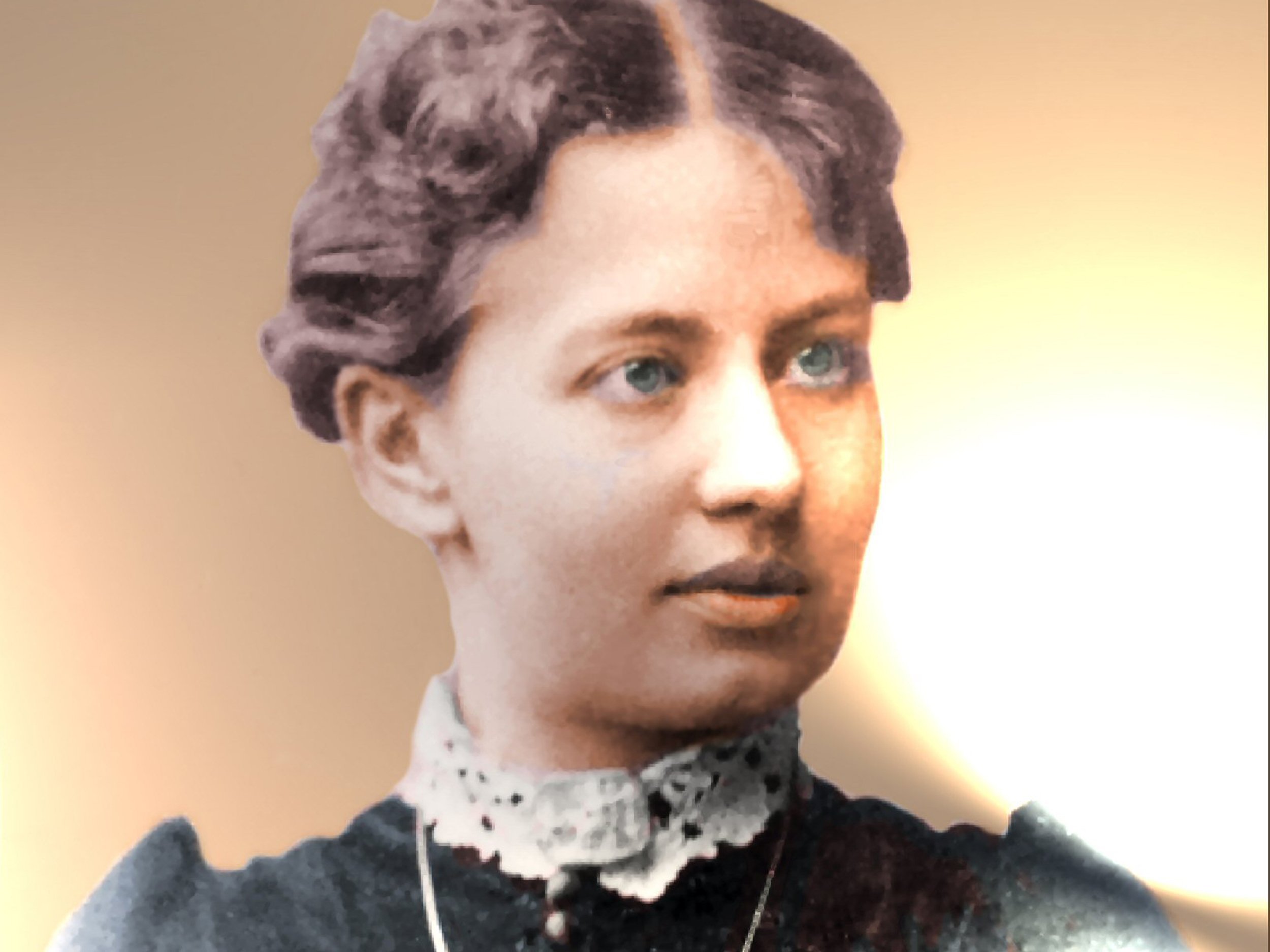
January 15, 1850, a mathematician and writer Sofya Kovalevskaya was born
Personal business
Sofya Vasilievna Kovalevskaya (nee Korvin-Krukovskaya, 1850-1891) was born in Moscow in the family of artillery colonel Vasily Korvin-Krukovsky. In childhood, she lived in the family estate of the Polybino of the Vitebsk province (now in the Velikoluksky district of the Pskov region). Education received at home, but her interest and ability to mathematics was so strong that at the age of fifteen, to give her private lessons in mathematical analysis of a mathematics teacher from the Maritime School and the famous teacher Alexander Strange -Lyubsky.
Since women were not admitted to the universities of the Russian Empire, Sofya Kovalevskaya, wanting to continue education, had to go abroad. This was allowed only if there was permission from his parents or from her husband, but his father considered it unnecessary to the further education of his daughter and refused to give permission. Then Sophia entered a fictitious marriage with a young paleontologist Vasily Kovalevsky. This marriage later became actual. The couple went abroad in 1868. Sofya Kovalevskaya was engaged in mathematics at the University of Gettingen, and since 1870 she became a student of Karl Weerstrass at the University of Berlin. Although women were also not accepted to the University of Berlin, Weershtrass, having met Kovalevskaya and appreciated her mathematical giftedness, began to engage in a frequent order with her. Soon, under his leadership, Kovalevskaya completed the first study "On the bringing of a certain class of Abel integrals of the third rank to elliptical integrates."
In 1871, Vasily and Sofya Kovalevsky visited the besieged Paris, where Sofia Anna's sister was. They participated in the activities of the Paris Commune, and after her fall, they helped to save from the prison of her husband Anna Kommunar Victor.
In 1874, the dissertation of Sofia Kovalevskaya “to the theory of differential equations in private derivatives” was represented at the University of Gettingen. It consisted of three separate works, each of which, according to Weerstraz, was worthy of receiving a doctoral degree. As a result of discussion of the dissertation, the university awarded the Kovalevsky degree of Doctor Cum Magna Laude.
After defending the dissertation, Sofya Kovalevskaya returns to St. Petersburg and temporarily leaves mathematics. In 1878, Kovalevsky had a daughter Sophia. Since 1880, Kovalevskaya has been living in Moscow. She is trying to become a teacher at the university, but she is not allowed even to master's exams. Behind her, only the right to teach arithmetic in the female gymnasium was recognized. The failure graduated from the professor at the universities of Berlin and Paris, they did not allow Kovalevskaya and to teach at the highest female courses. Kovalevskaya began to publish articles on science and theatrical reviews in the newspaper New Time, but left there in 1877, when the newspaper changed the liberal rate. In 1881, Sofya Kovalevskaya was elected to the Moscow Mathematical Society.
The attempt of Vasily Kovalevsky to engage in commerce ended with ruin, and in 1883 he committed suicide. Sophia suffered severe depression. For some time she lived in Berlin in the house of her teacher Weiestrass. In 1884, Weerstrass learned that Stockholm University was ready to become the first of the universities to give a woman the position of professor of mathematics.
Sophia goes to Stockholm, and the university leadership really agrees to accept it, but on the condition that she will give lectures in German only in the first year of work, and in the future she will teach in the Swedish language. The development of the Swedish language did not cause Sophia Kovalev’s serious difficulties, and until the end of her life she was a professor at Stockholm University (since 1889 - an ordinary professor). She, again, again the first woman in history, became the editor of the mathematical magazine-Acta Mathematica, published by the Swedish Royal Academy of Sciences. In the future, she wrote to Swedish both journalistic articles and works of art.
In 1888, Sofya Kovalevskaya finished the work “The task of the rotation of the solid body around the motionless point”, joining the two movements of the gyroscope, open Euler and Lagrange, one more. For this discovery, the Paris Academy of Sciences awarded her Bordena. The next year, the second article by Kovalevskaya on this problem received the Prize of the Swedish king Oscar II and the Swedish Royal Academy of Sciences. At the insistence of Paphnutia of Chebyshev and other mathematicians on November 7, 1889, Sofu Kovalevskaya was elected a corresponding member of the Physics and Mathematics Department of the Russian Academy of Sciences.
In January 1891, Sofya Kovalevskaya, returning to Sweden, caught a cold. The cold grew into pneumonia and, after a short disease, Sofya Kovalevskaya died in Stockholm on February 10, 1891.
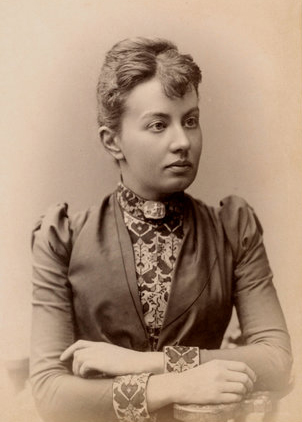 Sofya Kovalevskaya. 1880 Dahloff of Stockholm - Institut MitTag -Leffler/Wikimedia Commons
What is famous
The first woman-professional in Russia and in Northern Europe and the first woman in the world is a professor of mathematics.
Sofya Kovalevskaya is the author of a number of significant works in the field of mathematical analysis, equations in private derivatives and theoretical mechanics. The Koshi -Kovalevskaya theorem sets under what conditions the system of differential equations in private derivatives is permitted. The outstanding achievement was the work of Kovalevskaya, dedicated to the description of the rotation of the gyroscope. The description of the movement of the solid around the motionless point was at that time an urgent problem of mathematics. Two cases of movement were open and described by Lagrange and Euler. The Paris Academy of Sciences twice announced a competition of works on this topic, but the prizes remained unprofitable. Finally, in 1888, the work of Kovalevskaya received the prize, where the third case of the gyroscope movement was described when it was asymmetric.
What you need to know about
In 1887, she, along with Anna Charlotte Leffler, wrote the drama “Struggle for Happiness”. The play was transferred to Russian and staged in the Korsh Theater in 1894. In 1889, the family chronicle of the Kovalevskaya “Raevsky sister” was published, in the Russian translation it was published under the name “Memories of childhood”. The story of the Kovalevskaya “Nigilist” is dedicated to the fate of a Russian girl, she marries an unfamiliar to her previously convicted nihilist and leaves him for hard labor. The story was based on the story of Vera Goncharova, who became the wife of the Narodnik Isaac Pavlovsky. The novel "The Family of the Vorontsovs" and the memories of the Polish uprising of 1863 were released only in the Swedish language. The story was published after the death of Kovalevskaya in Swedish and in Russian. Sofya Kovalevskaya also wrote poetry in Russian, French and Swedish.
Direct speech
Many who have never seemed more to know mathematics more, mix it with arithmetic and consider it a dry and aride science. In essence, this is a science that requires the most fantasy, and one of the first mathematicians of our century speaks absolutely true that one cannot be a mathematician, not being at the same time a poet in the soul.
Sofya Kovalevskaya
I personally, without any hesitation, would allow each of these works as a dissertation for the degree of a doctor. But, due to the fact that this is the first time when a woman wants to get a degree for mathematical work, the faculty not only has every reason to put strict requirements, but this is necessary in the interests of both the graduate student and mine. Therefore, I convincingly ask for the issue not to take into account that I am also interested in it. What generally concerns the level of mathematical education of Mrs. Kovalevskaya, I can say with confidence that I had very few students who could compare with her in regard to her abilities, judgments, diligence and love for science.
From a letter from Karl Weerstrasse Professor Berlin University Lazaru Fuchs
Speaking about these first my contacts with the area of mathematics, I cannot but mention one very curilatal circumstance, which also aroused interest in this science in me.
When we moved to live in the village, the whole house had to be finished again and glue all the rooms with new wallpaper. But since there were many rooms, there wasn’t enough wallpaper for one of our children's rooms, and it was necessary to write out the wallpaper from St. Petersburg, it was a whole story, and it was strongly worth writing out for one room. Everyone was waiting for an occasion, and in anticipation of his offended room, it stood for many years with one wall pasted with simple paper. But, by a happy chance, it was the sheets of the lithographed lectures of Ostrogradsky about the differential and integral calculations acquired by my father in his youth that were bucked up to this preliminary pasting.
These sheets, dotted with strange, incomprehensible formulas, soon attracted my attention. I remember how in childhood I spent the whole clock in front of this mysterious wall, trying to make out at least individual phrases and find the order in which the sheets should follow each other. From a long daily contemplation, the appearance of many formulas crashed in my memory, and the text itself left a deep mark in the brain, although at the very moment of reading it remained incomprehensible to me.
When, many years later, already a fifteen -year -old girl, I took the first lesson of differential calculus from the famous teacher of mathematics in St. Petersburg, Alexander Nikolayevich Strannolyubsky, he was surprised how soon I covered and learned the concept of the limit and about the derivative, “I certainly knew them in advance.” I remember that he put it that way. And the point, indeed, was that at the moment when he explained these concepts to me, I suddenly remembered that all this stood on the sustained sheets of Ostrogradsky, and the very concept of the limit seemed to me long ago familiar.
Sofya Kovalevskaya "Memories of Childhood"
Twelve facts about Sofya Kovalevskaya
- Sofia Kovalevskaya on the maternal line was Fedor Schubert-the Squege-Geodesist, infantry general, director of the military topographic and hydrographic depot, and the first head of the corps of topographers, and great-grandfather-the outstanding astronomer, academician and director of the library of the Academy of Sciences Friedrich Theodore Schubert.
- In Switzerland, her friend Julia Vsevolodovna Lermontova (1846–1919), the first Russian chemista, chemistry (1874, University of Gettingen) studied with Sofia Kovalevskaya.
- In Sweden, Sofya Kovalevskaya used the name Sonya (Sonja Kovalevsky).
- In 1892, Anna Charlotte Leffler, a friend of Kovalevskaya, published the book "Sonya Kovalevskaya: what I experienced with her and what she was talking about herself." Another biography of Kovalevskaya was written by her acquaintance Swedish writer and public figure Ellen Kay.
- Sofya Kovalevskaya was buried in the North Cemetery (Norra Begravningsplatsen) in the Stockholm region Solno.
- When discussing work on the rotation of the gyroscope, members of the Paris Academy of Sciences decided to increase the bonus from three to five thousand francs, as they considered the results very important.
- Work for the competition of the Paris Academy of Sciences was provided anonymously. The article by Kovalevskaya was presented under the motto: "Say what you know, do what should, be what will happen."
- The name of Sophia Kovalevskaya is named the lunar crater and asteroid.
- In 1986, the Museum of Sophia Kovalevskaya was opened in the village of Polibino.
- Canadian writer Alice Manro, the 2013 Nobel Laureate, dedicated Sofya Kovalev’s biographical story “Too much happiness”, which included in the 2009 collection of the same name. The collection has been translated into Russian.
- Sofya Kovalevskaya is also dedicated to the book “Voruschushki: Portrait of Sophia Kovalevskaya” Don Kennedy (1983) and the documentary novel “Outside” Joan Spytszi (2002), based on the letters of Kovalevskaya. In Thomas Pinchon’s novel “Against the Day” (“On the Day of my repose”) Sofya Kovalevskaya is one of the secondary heroes.
- A movie (1956) and a three -part television movie (1985) were shot about Sofya Kovalevskaya in the USSR, and in Sweden the film “Hill on the dark side of the Moon” (1983).
Materials about Sofya Kovalevskaya
Article about Sofya Kovalevskaya in Russian Wikipedia
Sofya Kovalevskaya in the project "Chronos"
Collection of scientific papers Sofya Kovalevskaya (1948 of the publication)
Family works by Sofia Kovalevskaya in the library of Maxim Moshkov