
Translated material
The most important thing is the weather in Sochi
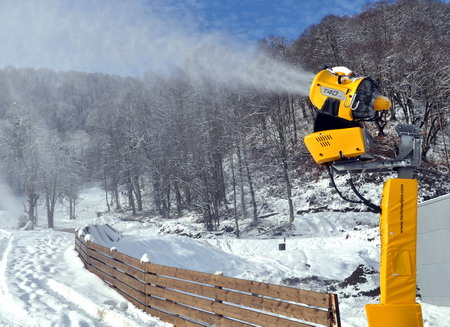
On the instructions of the editorial office, I tried to delve into the problems of the weather during the future Olympics in Sochi - otherwise the people are afraid that it will be, as Alexander Ryklin wrote, the first spring Olympiad in history. And what do you order to do when there are less than a year left, everywhere they talk about how we are preparing together, how we are looking forward to, worried about the success of the enterprise, and in the weather forecast, not just plus temperatures appear all winter, but something like +12, +15, +17. Biathlonists will not drown with guns on the way to targets? Ski are not rushing down the green grass? But just skiers will not run skate instead of riding move?
I, as a person who followed sports for a long time and quite closely, immediately warned my colleagues in response to the editorial office that the weather is not the main danger and misfortune. And, in any case, by no means specific our problem. I don’t know if there is actually a global warming or these are inventions of cunning climatologists mastering grants, but in the last winter seasons they have encountered the weather problem everywhere. Rarely in what winter form the program is able to withstand the schedule of competitions without transfer to other dates, to other cities and countries - and even without a complete abolition of competitions. This was in Italy, France, the Czech Republic, Norway, Germany, Switzerland. I will tell you more: not only in Europe, the battle with the weather was led, say, in previous games in Vancouver. And this winter, when test competitions were held in Sochi in all types of the Olympic program without exception, we also had problems.
The main possible trouble is the lack of snow. Because of this, the competition is most often not just tolerated for a day or two, but transferred to another place or cancel, if, say, the stage of the World Cup is not ready to conduct another promptly. It happens, of course, that in the mountains suddenly such a snowfall begins, which is worse than any snowless. Due to the snowstorm, it is impossible to prepare the tracks or safely conduct competitions. But such a blizzard is still a rarity.
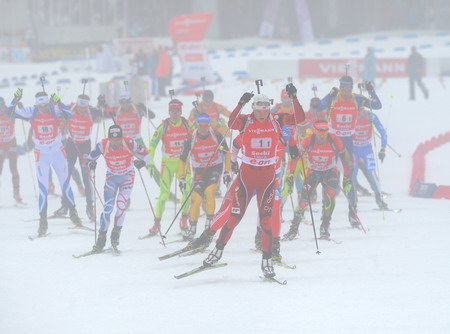
The second great difficulty is fog. Like a blizzard, it is dangerous primarily for skiers, jumpers from a springboard and a variety of freestylers. That is, for those who compete in the mountains and for whom visibility is also security. Although you will not envy the fans, if not a fig is visible, and the athletes are hidden somewhere in a veil. On the other hand, fogs do not hang in a row for two weeks, and the experience of past Olympiads shows that in the framework of the competition, sometimes they moved a day or two and there was no trouble.
It is more difficult with snow. The problem is solved in two ways. Either artificial snow is produced, or they are stored natural. In general, our ancestors were able to keep the cold and ice, who did not know what the refrigerator was. And for example, for several years in May, sometimes at temperatures at 30 degrees, under Moscow on a gesture, the May Skiya is held. 3000 cubic meters of snow are stored in a secluded place from the end of winter under a thick layer of hay, sawdust and spruce spruce. On the eve of the competition, the track is laid, and the athletes in T -shirts and shorts under the scorching rays run in real snow.
As far as I know, they have developed a whole program to create such snow reserves in Sochi and not only sawdust will be used, but also something more modern, corresponding to technologies of the 21st century. Plus a whole battery of units that will produce artificial snow. Artificial snow is also not some new invention. Apply it for a long time and everywhere. And not only in cases where there is no natural snow. A certain mixture of real and chemical snow can be formed on the slope. And some competitions are specially held on artificial routes in order not to depend on the weather and provide the predictable and the same coating for all athletes.
In this sense, snow disciplines follow the path of ice disciplines. After all, a long time ago, neither hockey nor Kerling is played on natural ice. Skaters and skaters also compete on artificial paths. And we must understand that for a significant part of the Olympic program in Sochi, it does not matter at all what the weather overboard will be there. These competitions will be held under the roof. Well, +10 on the street and +10 - what's the difference if you are sitting in the sports palace?
Another thing is the air competition. They will take place in a mountain cluster, at a greater height, where, of course, the temperature is different. As they say, “according to many years of observations of meteorologists” in February in these places, depending on the height, a temperature of +1 to - 6. True, this year turned out to be very warm even for Sochi. Accordingly, there were more problems also because test competitions were held, as they say, from scratch, when the objects were just handed over, the staff was only recruited and people did not have a corresponding experience. In addition, the tests stretched from November to March, and in November, say, it was warmer here than in February. But due to lack of snow, there were no global failures.
And in the last weekend, the Biathlon World Cup was held, and with all the same spring weather numbers, the participants on the snow track were running and firing on the background of snowy landscapes. The background, by the way, is also an important thing. There is such a thing as the Olympic atmosphere. And one of the inconveniences associated with the competition in warm conditions in artificial snow is precisely in an unpresentable picture: narrow skiing, and along the edges, dirty, yellow-green soil, naked, gray trees-it is the artificiality of what is happening that is very striking. But even if it will be even warmer than now, artificial snow or natural stored should be enough in any case. 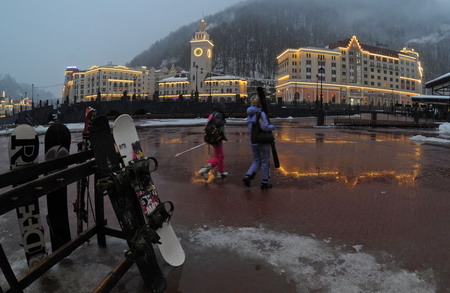
Why, then, is the competition sometimes tolerate? Because artificial snow and its production cost money. Not some space, but for the organizers of some competitions and such amounts can be very significant. For example, they are ready to produce such and such a volume to maintain the tracks in working condition, but if everything has melted at all and with a man-made snow, you need to fall asleep the whole area, they can say: no, thanks, we will not go to such spending. But on artificial snow, they never saved for the Olympiads - but we will not save more. Sochi does not save on anything at all, let's say.
In short, the warm climate during the Olympics can present surprises - and will surely present them. Everyone who competes in the open air will have to take into account the constantly changing temperature, periodically raining, the heterogeneous structure of snow, which is important for those who prepare skiing and paraffin. Everyone who is connected with these really high technologies today will have to suffer great. But the problems that the competition as such cannot be held will probably not arise.
There will be no problems with the surrender of objects. And there should be no problems with their quality - at least, during the Olympics itself, nothing will fall apart and will not crawl into the sea.
The problems will be different. Cosmic prices for hotels with controversial quality of service. There will be nowhere to eat and drink for human money. Service problems in a broad sense. There will be thousands of glorious, good volunteers, but there will be a local population who does not speak in foreign languages, but related to foreigners either as a source of super -profit, or as spies, which can greatly “please” guests. Well, the problem of postolimpye use of objects. There are many examples when they turned into “white elephants”. The stadiums of Athens and Beijing or the “winter” Turin to the mass were useless.
And I do not touch the problems of cuts and kickbacks here at all, because this, to put it mildly, is a separate conversation and, strictly, not at all sports.