
Translated material
His own distributor
Director Ruminov shows a movie without intermediaries
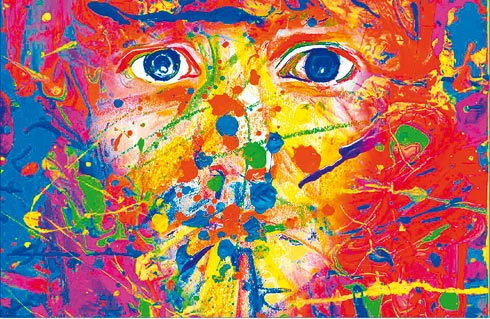
The image of the rebellious protagonist (Mikhail Krylov) was used in the “Two hours” of the movie around the corner. Pavel Ruminov’s film “Two hours”, first shown in Moscow as part of the modern cinema festival for the elect 2 in 1, proves that the XXI century cinema has become fundamentally different. There was a radical film revolution. What is its essence - we analyzed The New Times we will not idealize Ruminov. This 35-year-old director is strange in every sense. He is a marginal - already because he works on the verge of cinema and video art, whose audiences are almost in contact. This creates difficulties for the elementary promotion of the film for rent. At the same time, there is always a lot of PR around Ruminov, which, for example, set up film critics against his most famous and commercially successful project - the artistic horror "Dead Daughters" (although some, including the film recreation of The New Times, like the film). But let's leave it out of brackets. More importantly another: it is Ruminov with his “two hours” that convinces that the movie can now be done and function differently than before. That it gains a different social status. Cinema will soon become an art for everyone.
Take off when you can “two hours” - a verified psychological film, for nothing that it was shot in just two days, without a script: the actors improvised as part of the task. Classic tie: guests gather. They go to the housewarming, open the bottles of wine and train: they recall student relationships, discuss the family problems of the hostess with a late husband-an actor-loser.
The appeared husband behaves too extravagant. Strangers are brought to a meeting of friends: the improviser meeting in the underput, an actress from her theater, whom the director deprived the main role, and even a certain young singer, who, it turns out, is his mistress. All lines of the film will combine an unexpected denouement.
The actors on the screen are true and natural, as if they do not know about those three chambers that recorded each of their word and movement. Most of all, Ruminov’s film resembles the tapes of the Danish “Dogma”, but it contains interspersed species of wildlife, as if borrowed from the sad Sokurov.
On that we will forgive the essence of the film, because this picture is more interesting for us as a cultural phenomenon. Firstly, she has no credits (neither the manufacturer, nor the director, nor the actors are indicated, although there are very famous ones among them, including the actress and performer Elena Morozova), and secondly, the film was not intended for any movie theatrical shows. It turns out that it was shot three years ago, and in 2010 was posted on the Internet, on the professional resource of Vimeo -and it is there that he gradually gains his own, including the international audience.
Two Hours (a Christmas Story) from Pavel Ruminov on Vimeo .
Down with producers and studios
Whether Ruminov wanted it or not (rather, he probably wanted: he, judging by his statements, was enough), but he implemented the Dogma project in an ideal “dogma” of the version itself. Lars von Trier and his comrades, when the project “Dogma” was up to the second half of the 90s in order to create a film revolution and create a new super-shaped movie, were initially also going to create anonymous films. They believed that they would not mean who exactly the film shot. But they broke: the author’s ambitions defeated the initial intention. “Triumph” (“Dogma” No. 1) was released as the film of Thomas Winterberg. “Idiots” (“Dogma” No. 2) were advertised as the film by Lars von Trier.
But in the case of the “two hours” of Ruminov there is something more important.
The cinema differed from literature in that it is impossible to create it without material support and, accordingly, material dependence from the outside. From the studios. Producers. Patrons. States. You can sit down and write a novel without demanding anything from anyone, interrupting from bread to water. You can put this novel on the table, hoping for the future recognition. But the cinema could not be done on the table. Even a short film required costs - and, accordingly, a sponsor. After all, it was necessary to rent an expensive movie camera. The directors were dependent on studios and producers.
In 2000, the English director Bernard Rose, the adore of Tolstoy, who had previously made a strange, not accepted by many, but curious in the concept (primarily the concept of Russia) “Anna Karenin”, went to the world festivals with the avant-garde film version of the Tolstoy Death of Ivan Ilyich and a loud manifesto that the directors no longer depend on producers and studios. It was then that the first digital cameras appeared that allowed you to make a full -fledged cinema that could be bought at a divine price (film chambers that are usually shot, are unthinkable), and Rose said: spit on studios and producers, withdraw what you want, no more money is required!
But only now Ruminov became the first, at least with us who spent this slogan into life (by the way, Ruminov knows about Rose). He states that life is short, that he does not want to wait for his film to receive real financing - he is ready to shoot not a film, but a sketch of the film (“Two hours”, which we are talking about, he also refers to the sketch). He does not crave rental - he himself spreads his picture, putting it into the network.
This is a very sound move. The course for the movie of the future. Not for those, it is clear who welds grandmas on the cinema. Not for Mikhalkov. But we may well get a situation where exactly Ruminov will win.
The movie will begin to be born - and ride - on the streets and in private houses. Cinema will become the lot of everyone - good, and mobile phones gain an increasing resolution. This is the movie of the future. Yes, ninety -nine and nine tenths of such a percent of such films will turn out to be garbage. But true talents, such as rumin, will gain genuine movie dependence.
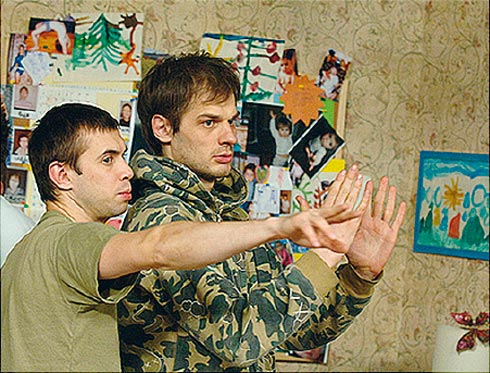
Pavel Ruminov (on the right) was born in 1974 in Vladivostok. Main films: 2004 - Deadline 2004 - “The Man who was silent” 2007 - “Dead Daughters” 2008 - “Circumstances”. Plus, a huge cycle of short -sectioned Naked Cinema, which can be found on www. Vimeo.com “Two hours” are recognized by the Texture cinema festival in Perm (September 2010) “Russian Film Today” (such is an official wording).
“Two hours” are recognized by the Texture cinema festival in Perm (September 2010) “Russian Film Today” (such is the official wording).