
Translated material
Nikolai Greek
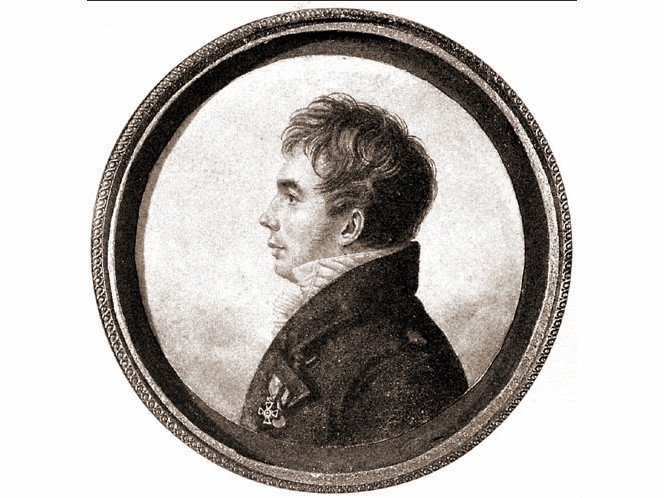
On August 14, 1787, a writer, philologist and journalist Nikolai Greek was born
Personal business
Nikolai Ivanovich Greek (1787-1867) was born in St. Petersburg in the family of a helpless nobleman who served as an official. At the end of his career, his father was the chief secretary of the Senate Appeal Department and had the rank of an abuse of adviser. Primary education Nikolai Greek received at home. He dreamed of studying at the verbal department of Moscow University, but at the insistence of his father entered the Junker Law Institute under the Senate. There he spent 1801 - 1804. Then Grech managed to overcome the resistance of the relatives and become a freedom of the newly opened main pedagogical school.
Since 1804, he begins to teach Russian and literature first in private boarding houses, then the main German school of St. Peter, in the Tsarskoye Selo Lyceum and in the St. Petersburg gymnasium, and the Page Corps. In 1806 - 1815 he was the secretary of the censorship committee. From 1811 to 1814 he also served as a caretaker of county and parish schools in St. Petersburg, in 1820 - 1821 he was the director of regimental schools of the Guards Corps, and over the next three years - managing schools for soldiers' daughters.
In parallel with work in educational institutions, Nikolai Greek acts as a publicist and translator. He made his debut in the press already in 1805 with an article in the "Journal of Russian Literature". In 1808 - 1809, together with Fedor Schreder and Ivan Delacroix, he published the magazine “Genius of the times”, where news, viewing of the political state of Evropa, articles on trade, statistics and military forces of European states, biographies of politicians, information from the history of European countries, as well as a critical evaluation of events. One of the goals of the magazine was "the application of events of the present -time incidents." The magazine had a liberal direction, but in September 1809, in connection with “unforeseen circumstances, the use of which was not in power” the publishers was renamed the “journal of the latest travels” and promised instead of “political articles” to publish “extracts and extracts from the latest and most important travels to all countries of the world”. In September 1810, the magazine closed. In 1811, Nikolai Greek edited the “historical, statistical and geographical magazine”.
After the outbreak of the war of 1812, Nikolai Greek founded the magazine "Son of the Fatherland." Initially, the magazine was supposed to publish news of military operations and the responses of Russian writers, and after the end of the war became the leading Russian literary magazine. G. R. Derzhavin, I. A. Krylov, N. M. Karamzin, A. S. Griboedov, K. N. Batyushkov, V. A. Zhukovsky, P. A. Vyazemsky, N. I. Gnedich, A. S. Pushkin were published in it.
Greek and his magazine "Son of the Fatherland" had a liberal reputation. Many future Decembrists were published on the pages of the magazine. But by 1825, Nikolai Greek, according to him, “sobered up from liberal ideas” and his publication acquired a conservative orientation. The second publisher of the magazine was Thaddeus Bulgarin. At the same time, the Greek collaborated in the Bulgarian magazine "Northern Archive". In 1829, both magazines were united by the name “Son of the Fatherland and the Northern Archive. Journal of literature, politicians and modern history. ” In 1837, Greek and Bulgarin sold the magazine to the publisher Alexander Smirdin, leaving the functions of editors.
In addition to the “son of the Fatherland”, Nikolai Greek often acted as an editor of various publications: “Journal of the Ministry of Internal Affairs” (1829-1831), “Reading Library” (1834-1835, together with Osip Senkovsky), “Encyclopedic Lexicon” (1833-1836), “Military Encyclopyclopedic Lexicon” (1836-1840), “Russian Russian) Bulletin ”(1841 - 1844, together with Nikolai Polev). Acting as a writer, Nikolai Greek created the novels “A trip to Germany” (1830) and “Black Woman” (1834), as well as a number of books of traveling essays about traveling in Europe.
In 1849, the Greek began to write the memoirs of “Notes about my life” (remained incomplete, published in 1886). In 1855-1857, he also wrote “Memoirs of an old man” dedicated to the Decembrist movement without calculation for publication.
Nikolai Greek died in St. Petersburg on January 12, 1867.
What is famous
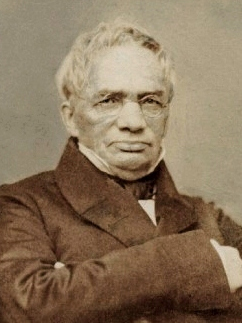 Nikolai Greek. 1856. RND
The most important contribution of Nikolai Grech to Russian culture was the magazine of the Son of the Fatherland he created, where the best Russian authors were published in 1812 - 1825. During the heyday, the circulation of the “son of the Fatherland” reached 1200 - 1800 copies, which is a huge value for the Russian press of the early 19th century. In the 1820s-1830s, “Thursdays” were regularly held in the Greek house, where writers, artists, musicians gathered. Thanks to the magazine and his lecture courses, Greek also became one of the leading literary critics, introducing a new critical genre into everyday life - a review of new works for the year. As a critic, he was one of the first to appreciate the “grief from the mind” of Griboedov and the “gypsy” of Pushkin. In 1840, the Greek called Lermontov's “Hero of our time” “The excellent work”, contrary to the negative perception of the book by many critics. The reputation of Nicholas Grech negatively influenced his many years of cooperation with Faddei Bulgarin, as a result of which in recent decades of his life he was in creative isolation and published only excerpts from memoirs.
What you need to know about
Nikolai Greek also became famous as the author of Russian grammar manuals, published in numerous publications under the names that are changing over time (“Practical Russian Grammar”, “Initial ...”, “Brief ...”). Thanks to his works, progress was achieved in streamlining Russian spelling, establishing its unified rules, and resolving difficult issues of Russian writing. Some articles of Greek were also devoted to Russian spelling.
Direct speech
“If it would be necessary to talk about people, after their death, only good, it would remain either not to write stories, or burn all historical books. This is the advantage of small and weak people over the great and strong. A small villain will die - he will be buried with the same prayer as a good person: repose, Lord, the soul of the deceased slave! - And then they will forget. During him, during his life, he turns after death in silence, and sometimes in praise with the wish of the Kingdom of Heaven. Another goes to the share of the kings and the great world. During life, they are praised, they are surprised, servile, not only to write and talk, they don’t even dare to think about them badly. But as soon as they will come down with a disgrace, there is an inexorable story and vomit their double -edged sword. A light green mound above the grave of a simple person; The corpse of the nobleman burden the marble tomb. And not one story torments their memory. The immediate offspring of them blacishes them, as if wishing the current ingratitude to make amends yesterday ... In total, it is better in this regard to writers, artists, etc. Creators: During life, they are judged by the most bad of their creations, by death by the best. Who, for example, now scolds the poems of Count Khvostov, and who does not give justice the only quatrain of the Ruban! ”
From the book of Nikolai Greek "Notes about my life"
“Supplying a pleasant duty to tell the public news of the noble, heroic exploits of Russians during the current war, we ask all lovers of Russian glory and virtues to deliver the right information about cases in which our compatches managed to prove that they are Russians. With pleasure we will also place all sorts of patriotic thoughts, historical excerpts, poems ... If they are consistent with the purpose of our magazine. ”
Announcement "From Publishers" in the fourth issue of the magazine "Son of the Fatherland"
“Mr. Greek wrote two novels and one story; But nevertheless, we read it completely alien to the sphere of poetry, understanding art, creativity, art by this word; But this does not prevent us from looking at his novels, as a pleasant gift to the public, as an essays with great literary dignity. In general, in our opinion, Greek Greek is not a poet, not a scientist, but a writer who occupies one of the prominent places in our literature and providing it with great services. What is a writer? - a publicist, a literary factor in the public, a person who, having not produced anything durable, unconditional, having an everlasting price, writes a lot of things that have the price of modernity; Without teaching, it gives the means to learn; Without delighting, it gives pleasure. He writes an article about a modern event, gives a book report, publishes a magazine or participates in it; He is a historian, speaker, translator, traveler, commentator, publisher of other people's works with his preface, participant in literary enterprises, corrector; He writes books that do not belong to the field of learning, but to which everyone refers and which everyone uses as auxiliary ways for their own works, even scientists. In a word, a writer is everything you want, and nothing actually, because, having become something, he is done either by a poet or a scientist in some field of knowledge. But this does not at all humiliates the title of writer: the writer is a necessary person, a real person, and if he has gained influence on the public, he plays in modern times a historical role, to a greater or lesser extent. His name belongs to the history of the literature of the people, and, consequently, his enlightenment, the submissive of literature is the expression, the consciousness of the mental life of the people. Mr. Greek wrote several grammars, of which although no one destroys the lively needs of the best training books, but which all belong to the best works in this kind. Let's say more: its grammar is important phenomena in the history of our language, and its most important study begins with them. Previously, when presenting the rules of the Russian language, attention was paid to the language: G. Greek drew attention to the Russian language, to its species specialists, and therefore its grammar is a precious treasurer, an inexhaustible mine for studying the Russian language and composing grammar. This is his most brilliant merit, his most important participation, in the case of domestic education. Mr. Greek published the “Educational Book of Russian Literature”, in which a school rhetorical theory was left for the first time and an attempt was made to give the concept of all kinds of works so that the youth could judge the literature not by the school form of thoughts, but by the one that dominates in society, and give the rules guided by which youth could be learned to write both a letter and business paper and business paper and business paper and business paper and business paper and business paper and business paper and business paper and business paper and business paper and business paper and business paper and business paper and business paper and business paper and business paper and business paper and business paper and business paper and business paper and business paper and business paper and business paper. A note, in a word, everything that is required in life ... "
V. G. Belinsky.
9 facts about Nicholas Greek
- The ancestors of Nikolai Greek came from the Czech Republic. In the middle of the 17th century, his great -great -grandfather moved to Germany among the Protestants pursued by Catholics.
- In the 1730s, the grandfather of the writer, Johann Ernest (Ivan Mikhailovich) Greek, who graduated from the University of Leipzig, was invited to Russia by the Courland Duke Biron as a secretary. He was a teacher of the gymnasium in Mitava, a professor of history and moralizing the land gentry cadet corps, and in the last years of his life he taught the history and policy of the future Empress Catherine II.
- The first published article by Nikolai Grech was devoted to the analysis of Russian synonyms (“Synonyms. Happiness, prosperity, bliss”).
- The name of the magazine “Son of the Fatherland” was the words of the writer’s brother - Alexander Greek, a lieutenant of artillery, mortally wounded in the Battle of Borodino: “I will die - but I will die as the true son of the Fatherland!”
- During the war of 1812, fragments of F. N. Glinka, as well as the fables of I. A. Krylov “Wolf on the PSARN”, “West”, “Crow and China”, were first printed in the magazine “Son of the Fatherland”.
- According to his memoirs, he refused the proposal to join the secret society of the Greek, but retained the secret entrusted to him.
- Nikolai Greek actively participated in the development of the censorship of the Charter of 1828, which became more liberal than previous ones.
- In 1844, in agreement with the third branch, the Greek published a brochure in German and French, designed to refute the book by Marquis de Custine “Russia in 1839”.
- Nikolai Greek was a member of the Literary Society "Arzamas", societies of lovers of Russian literature at universities in St. Petersburg, Moscow, Kazan, geographical and mineralogical societies. In 1827, he was elected a corresponding member of the Academy of Sciences in respect for “useful works ... in the field of Russian literature,” was also a foreign member of the Ubsal Academy of Sciences, the Washington National Institute for the spread of sciences, the Frankfurt philological society.
Materials about Nicholas Greek
Article about Nicholas Greek on Russian Wikipedia
Nikolai Greek in the project "Chronos"
Nikolai Ivanovich Greek "Practical grammar of the Russian language" (1827)
Works of Nikolai Grech in the library Maxim Moshkov
Nikolai Greek on the website of the Russian National Library