
Translated material
About Pushkin
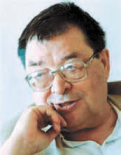
The text is published in the author's edition
Before the revolution in Russia, the bearer of high culture was the noble intelligentsia. Its classic representatives were Pushkin, Tolstoy, Dostoevsky and so on. In Stalin's times, the intelligentsia began to understand the people of educated, who received higher education, and the country of the party and the Soviet elite. The creative intelligentsia worked in conditions of strict control and suffocated in the arms of the authorities. Before the revolution, the structure of society was quite determined, the noble class dissipated, the capitalists gained strength, a poor working class clearly stood out and the peasantry came out of the slave state, a colorful layer of rabbits grew.
At the present time, a layer of bureaucrats, including corporate bureaucrats, judges, officials and omnipotent employees of law enforcement agencies, is rapidly growing. In recent years, noble, Cossack, merchant communities are beginning to arise slowly, interest in a more detailed acquaintance with the history of the country, there is an understanding that without knowledge of the past, a person will not become a patriot of his homeland. It is always necessary that, starting from school, the child has an experience that needs to be imitated and to which you need to strive. Such images are born under the influence of great literature, the outstanding representative of which was the great poet and writer, playwright, historian, outstanding representative of the noble intelligentsia Alexander Sergeyevich Pushkin.
At the present time, a tangible rise in interest in the fundamental and natural sciences began: physics, chemistry, biology, genetics. Unfortunately, I found it, and it was discouraged that computer science allowed to take chews and bleached information from external memory very easily and quickly - "the fish is caught without difficulty." As a result, the memory is not trained and the mental abilities disseminate. The possibility of acquaintance with any literary work was affected by the loss of real interest in the literature of all genres and in history. Interest in other types of art is lost: visual and serious music. There is a rapid declturization of the people. In parallel in the philosophy and understanding of the essence of human progress, the role of culture is put forward in the first place. In view of the culture in the general sense of the word. Culture, which includes the spiritual mentality of the people or nation, religion, all kinds of arts and science.
Karl Yaspers, the greatest thinker of our time, introduced the concept of “axial time”, calculated by millennia to modern times. At this time, there was a transition from polytheism to monotheism and as a result there were Judaism, Christianity, Hinduism, Vichism, Buddhism developed Confucianism and faith in several other thinkers. The general name of faith or teaching in Chinese is Tao. Different teachings arose: the doctrine of love - Tao of Love, Tao about respect for age and so on. In Japan, syntosism has traditionally developed, which is based on either admiration or fear of the forces of nature. Hence the Japanese people, mentality is saturated with aesthetics.
The amazing difference in religions, due to various climatic and historical conditions, gave birth to a completely different attitude towards technical progress. Among the peoples of the white race, their future was determined mainly by technical progress and already in our time, starting with the Roman Empire, violent technological progress made it possible not only to survive, but also to conquer the whole world, pumping all their wealth from the same India, China and South America. Christianity and the late form of Protestantism became the foundation of the desire for profit, rapid enrichment and rapid development of new technology - such as steam engine and other types of energy mass building, and so on, up to the transition to the world of computer science. In the world of leading countries, a new society is already building a knowledge society and information society. However, there was a loss of interest in most of the population in spiritual values and many types of arts. Show business arose.
In pre-industrial time, the priority of culture dominated the Russian nobility. The culture was generated by the noble intelligentsia. Until the revolution, the layer of the creative intelligentsia in Russia concentrated in the noble environment, in the upper layer of industrialists, merchants, clergy and educated people of other classes. According to the majority of social scientists, the noble creative intelligentsia began with Pushkin and included Tolstoy, Lermontov, Turgenev, Gogol, Goncharov, Dostoevsky, Baratynsky, Zagoskin, Aksakov, Grigorovich, Fet, Tyutchev, Nekrasov. At the end of the nineteenth century, a powerful layer of writers from the clergy, merchants, and the philistine environment was born: mother-Sibiryak, Assumption, Chekhov, Gorky, Andreev.
With Pushkin, a sunrise of domestic culture began and its exit to the world level. In all libraries of the world, in all languages you will find Pushkin, and Tolstoy, and Dostoevsky, and Turgenev, and Chekhov, and Pasternak, and Bulgakov, and Solzhenitsyn, and Brodsky. For each of the greats, the genius of Pushkin always stood in the first place. Pushkin essentially gave birth to Russian literature in all its types and Russian. The modern literary Russian language and the language of Pushkin are the same language. Any of his work can be read and re -read. At each re -read or listening, you are affected by the breadth of the knowledge of this genius. He was familiar with the basics of the economy - the teachings of Adam and Smith, knew the teachings of modern philosophers - Didro and others and, of course, modern literature.
For me, Pushkin’s comparison with Byron, as is done in England, is incredible. Pushkin published several thousand poems and fourteen poems, six tragedies and so on. The influence of his drama on Russian theater culture is also huge. And now the opera "Boris Godunov" with the music of Mussorgsky is amazing. Opera Eugene Onegin has not gone from the scenes of the whole world for centuries. The operas and ballets put on all his large poetic works, starting from the opera Ruslan and Lyudmila to the Bakhchisarai Fountain. The Queen of Spades revealed the falsity and the viciousness of the desire for rapid enrichment at all costs. The psychological subtlety of portraits of Herman and a wealthy old woman, it was not for nothing that the magnificent dramatic opera of Tchaikovsky formed. Gambling in different forms always undermined the Russian nobility. The estates and conditions were played, and despite all the efforts that limit, game chaos led to instability, which affected the fate of millions of people. Almost all forms of Pushkin’s creativity had the influence on classical music, for example, Dargomyzhsky wrote music for the “mermaid”, “stone guest”, “bacchu”.
I personally have a desire to re -read or listen to all his prose at least once a year. Absolute masterpieces for me are all works from the collection "Tale of the late Ivan Petrovich Belkin." It affects their modernity. It is easy to imagine how from a “shot” you can make a remake on revenge. From the "Combator" is a horror film, and from "Cross Bars" and "Blizzard"-a melodrama.
His historical prose is also amazing. Many people imagine Pushkin’s personality as a brilliant windman, in whom poems were born on their own. Alexander Sergeyevich wrote the history of Pugachevsky rebellion for several years. He worked in the archives of Moscow, St. Petersburg, Kazan, Orenburg, towns and villages of Bashkiria, which he visited and where he tried to understand the psychology of the Yaitsky Cossacks (lived on the banks of the Yaik River, the current Urals), Bashkirs and other representatives of the indigenous population. Based on this huge material, in addition to the history of the Pugachevsky rebellion, he created a brilliant little novel “Captain's Daughter”. From this story, in the flesh, provincial nobles arise with their devotion to the state, their nobility and fidelity to duty. We clearly imagine the life of these people. In his works, Pushkin, of course, poetized the life of the nobles, and only in the last masterpiece - “Dubrovsky” did Troekurov arose as a classic image of a provincial despot, neglecting all religious, moral principles, principles of nobility. In Dubrovsky, Alexander Sergeyevich created for the first time in Russian literature a romantic hero-mostizer, loved by peasants, somewhat reminiscent of Robin Hood. Robin Hood, which arose in numerous ballads and the gives in England in the fifteenth century, first appeared in the literature with Walter Scott. A noble robber from the nobility also appears in a number of chapters of Gogol's Dead Souls. This is Captain Kopeikin, the hero of the Patriotic War, who takes revenge on St. Petersburg officials for bureaucracy and contempt for his military merits.
The last few years of life, Pushkin has been the official historiographer of Nicholas the Great. On behalf of the emperor, he had to create a work of art, the image of Peter the Great as his great ancestor. Peter the Great always occupied a huge place in the thoughts of Alexander Sergeyevich. Pushkin was a classic Wester, brought up on the memoirs and stories about the brilliant campaign of Russian troops in Europe, the deep knowledge of French and German literature gave birth to his philosophy about the need to merge with European culture on the basis of preserving Russian self -awareness and Russian nationality. His respect for the cultural achievements of mankind and Europe was not idolatry. He believed and wrote that the internal spiritual power of Russia would enrich spirituality with the mercantile world of Europe and the United States.
You can’t turn a blind eye to the fact that Pushkin worked continuously not only because he tried to express his genius, but also because he was always in debt. He undertook to act as an official historiographer to a large extent because his debt by this time reached thirty thousand rubles. The historiographer had a salary of a dozen thousand rubles and this greatly helped Alexander Sergeyevich. This work gave him access to archives. Pushkin’s performance can be realized only when reading his blanks to his work “Arap Peter the Great” and to the novel about Peter the Great. The personal archive of Alexander Sergeyevich to create these works includes thousands of extracts and different documents: letters, articles, and remember different people. From the prepared material, the Great Peter arises as a powerful converter - “the whole Rus'”, as Pushkin described it. Alexander Sergeyevich idealized the image of a great converter. Pushkin does not have a hint of his cruelty, an amazing desire to change the appearance of the Russian army, boyars and nobility.
In the classical novels of Zagoskin, recreating the life of the provincial nobility and the boyars of that time, a naivety is shown to approach the west through violent cutting beards and borrowing officer and soldier's uniforms with replacement of warm shoes and warm caftans with shoes and stockings with shortened blouses. It is amazing that the great man did not take into account the climate, mentality, clergy and harm from these changes, up to the emergence of rumors that the emperor was replaced and at the head of the empire stands Satan. The post -Peter's lawlessness in the management and state of the Russian Empire is associated with the names of Catherine of the first and two Elizabeth, and is laid down by the refusal of Peter the Great, even to try to understand what is happening in Russian provinces, in the thoughts of both nobles and peasantry.
Pushkin wrote all his works, including fairy tales, always focusing on the education of Russian patriotism in our children. And only for this reason, any Russian person needs to read and re -read Pushkin. This reading is not boring, it is always interesting and allows us to educate a truly cultural person who will be interested in living.
What role can A.S. Pushkin in the life of Russia now?
The moral of all sections of society changed indistently after the revolution in Russia. The noble intelligentsia disappeared. I have already listed the great names of its representatives. The main features of morality were nobility, respect for each other, loyalty to the word. At least it was the ideal that was taught in gymnasiums, schools, and so on. Literature taught the same. For merchants in those days it was enough to give a word and the promised was fulfilled. For other classes, such as philistinism, some restrictions have always been imposed by religion-faith in God.
The restoration of the class of real creative intelligentsia, the creation of sites for their communication, can help the names of our great ancestors, such as A.S. Pushkin, L.N. Tolstoy and so on, great composers, musicians, scientists and artists. Novosibirsk is replete with people of the highest intellectual level, creating the highest patterns for imitation in science and culture. But we do not communicate. There used to be “open houses”, clubs for communication. Theaters were visited simultaneously and people not only saw the action of the production, but also communicated. Then it was called the "light" of society, now - the "VIIS TUSOV". They didn’t even miss the smell of the so-called “Khabal region”-I was an enormous impression by the film “Co-Ko-ko” Avdoty Smirnova, where a layer of militant philistinism and the current creative intelligentsia are faced. The creative intelligentsia does not look the best. Hypocrisy, the absence of real spirituality is characteristic of them.
To restore spirituality in society, ideals, idols are needed. Recently, in the current show of Pozner, the great opera singer Hvorostovsky, answering the presenter’s question, which of the great ancestors he would like to meet, replied after a second pondering: “With Pushkin of course” I would really not want me to look like a mentor, a resoner who wrote an instructive sermon.
I have no doubt that people over the age of forty have read and know Pushkin’s work very well. Now, communicating with a rather large circle of young people - graduate students, students, researchers, I found in horror that many of them, except Ruslan and Lyudmila, and fairy tales, do not know the works of the great poet. His children will not know him and their other great ones, but this is the destruction of our future spirituality and self -destruction of the Russian people as a great people.
I would very much like to ennoble, cultivate and the highest and average wealth of the class due to the appeal to history, the great past and cultural heritage. However, in our highest political elite, the opinion of Pushkin is ambiguous. Russian Patriot Zhirinovsky said:
“If Alexander Pushkin lived in our time, he would become an activist of the opposition and support those who are gathering in Bolotnaya Square. The poet needs freedom and does not give a damn about any state. So, careful with Pushkin! If the children read it well, then they will not be very good about you and me. Pushkin, if he had been alive now, would support Bolotnaya Square, ”said Vladimir Zhirinovsky during the discussion of the State Duma statement in connection with the celebration of the Russian Language Day. (according to information on the eve.ru)
“The man opposed the king and against the existing orders,” he added. Zhirinovsky also called on all representatives of the press to take care of the Russian language and not to use foreign words in publications "
Pushkin was never really a supporter of tsarism, he was friends with all the Decembrists without exception. He did not interrupt the connection with them during the link. At the same time, Peter I was Peter the Great for Pushkin, and Catherine II - the Great Russian Empress, as well as Tsar Nicholas I, although he was one of the most tyrannical representatives of the Romanov imperial house and his rule for several decades sharply slowed down Russia's movement towards spiritual and cultural progress.
I will give a statement about Pushkin of another political figure in Russia G.A. Zyuganova:
“ - Pushkin is not only a great poet, a genius of the Russian word. This is an amazing person, thinker and citizen. It can be called a prophet. In my opinion, in his work, he answered many questions that are faced with humanity today.
And for Russia, in my opinion, he became the highest embodiment of her national idea. From fairy tales, where the essence of the Russian character, to the brilliant, exorbitant depth of philosophical poems, in which the very meaning of the existence of Russia is comprehended, is remarkably revealed. In my youth, all this conquered and struck me. I do not stop thinking about it now.
In fact, if you want to understand the very difficult ratio of the sovereign and social problems of the “little man”, read the “Copper Horseman”. If you want to imagine what Peter is great as a commander, read Poltava. If you want to understand the tragedy of the ruler of Boris Godunov or the historical role of Pugachev and his uprising, again contact Pushkin ... "
The role of Pushkin in the life of the Russian people was expressed in the statement of these two extremely opposite leaders of Russian politics. Пушкин неожиданным для себя образом стал символом русского народа и политики, хотя никогда и не помышлял об активной политической жизни и государственной службе.
Однако не удержусь заметить, что Зюганов при апофеозных высказываниях о Пушкине лишь следовал за Сталиным. Когда определялся самый великий гражданин России за все годы, Зюганов на первое место ставил Сталина — губителя русской интеллигенции, разрушителя национальной русской культуры.
Пушкина нужно просто читать и воспринимать его как глубоко русского поэта, писателя и историка, поддерживая свой моральный уровень и воспитывая детей и внуков.
Vladimir Narryakov,
академик РАН