
Translated material
Paris management system
Around Russia
 Paris management system
August 26, 2018 Mikhail Gorny
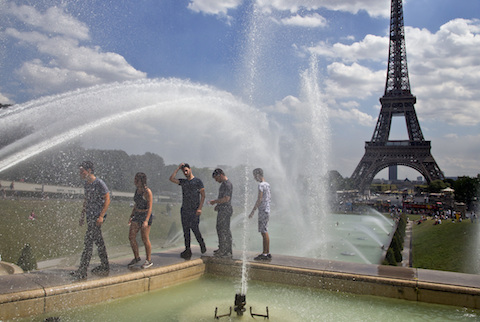
Paris is the capital of France, where the MSU continental model with strong state control (Napoleonic model), a millionaire city with district division is widespread. Paris is simultaneously the municipality and the Department (Seine Department), and is also part of the Greater Paris region. The city has a two -star management apparatus: political and administrative bodies. The districts of the city are subjects of the MSU, but with limited rights, just as in Berlin and Hamburg. Although the continental model has in France, and in Germany mixed, their capitals control systems are very similar, which indicates the stability and effectiveness of such management.
Paris Previously, he was controlled by a special system that provides strict control by the government. The mayor did not exist, the city was ruled by the Prefect of Paris and the Police Prefect, which were appointed by the government. Since 1975, both the city and the department, which has been led by the Paris mayor at the head of the Paris Council, sitting 11 times a year, while his sessions can last two days and open to the public. The first mayor of Paris was elected only in 1977. The mayor has broad powers, but still Paris remains the only city in France, where the municipal police directly obey the mayor, but to the police prefect appointed by the president of the republic.
In 1982, an additional level of management was created in France-the regions, the boundaries of one of them ( Lle-de-France ) coincided with the borders of Greater Paris. Along with Paris, it includes seven other departments with the total number of communes 1279. Moreover, various levels are not subordinate to each other, a list of powers and sources of income of each of them are legislatively fixed.
The authority of the region includes the development of general realgiment programs and planning economic, social and cultural development, as well as the provision of a number of services of regional significance, including: co -financing road construction, development of programs to improve environmental quality, ensuring the educational process, maintaining gardens and parks, etc.
Regions also distribute financial assistance from the central government between municipalities and departments.
The departments are enshrined in the maintenance of the maintenance of roads under their jurisdiction, the maintenance of secondary schools, the organization of events in the field of culture and art, etc.
In addition, the authority of the regions and departments includes coordination of the activities of the Ministry of ESS, located on their territory.
The Paris Council has 163 deputies elected by the population. Deputies participate in the work of the municipal council (solving city problems) and the General Council (solves the problems of the department).
The newly elected Paris Council, in turn, elects the mayor of the city and about 40 of his deputies, responsible for the specific sector: the economic development of the city, transport, international relations, the equality of sexes, schools and the environmental care. The mayor also becomes the President of the General Council.
The municipality (commune) since 1964 has an official name Wil de Paris. In 2005, he totaled almost 40 thousand employees engaged in 3 thousand municipal services of the city. The city municipality has the city halls and 20 City Halls, museums, libraries, sports facilities, schools, kindergartens, etc., the main powers of the Paris municipality include: the development of local land use plans, the construction of local roads, the provision of transport services to the population, the provision of preschool and primary education, and the provision of services in the field Cultures, the content and development of municipal libraries, museums and archives, the creation of sports centers for young people, the provision of police services, gas, electricity and heat supply.
The city is divided into 20 districts, each of which also has a district council and mayor. The councils of the districts consist of 20 people, 2/3 of their members are elected according to the proportional system, the rest are members of the city council elected in the district. The mayor and his deputies are elected by the Council, while the mayor himself and one of his deputies must be members of the city council.
The competence of the Soviets is not clearly defined: in accordance with the principle of negative regulation acting in France, they can engage in any activity not prohibited by law, in the interests and the benefit of residents (as in Hamburg). The own powers of the districts include the coordination of plans for the development of the region and the conditions for admission of the population to various institutions of the social sphere. Councils can also intervene in the solution of all issues of local importance, their representatives have the right to speak at meetings of the municipal council and send written appeals in the name of the mayor of the city. The areas can also be carried out by powers delegated from the city level.
The budgets of the districts are an integral part of the city budget, from which the funds for financing the activities of the districts are allocated in the form of grants. The size of the grants is determined in the process of negotiations between the city council and the councils of the districts.
A distinctive feature of the Paris Management System is a fuzzy differentiation of competence of various MSU levels. Local problems are solved in the process of mutual discussions. Officials and deputies of all levels of the MSU are involved in the process of discussing projects and plans. The management system mainly prevails joint activities, partnerships are combined with hierarchical.
The budget of Paris in 2016 was completely balanced and amounted to 11.9 billion dollars in the United States, which is more than two times less than the Moscow budget.