
Translated material
Naughty Central Bank
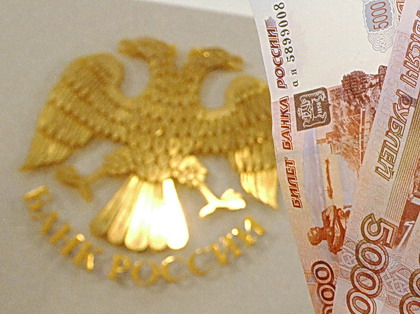
Unlike most of the previous yesterday, a meeting of the Russian Central Bank carried some kind of intrigue in itself. The arguments were both in favor of raising bets, and in favor of their reduction. On the one hand, recently, the Bank of Russia has been regularly criticized by the government, which is trying to shift responsibility for economic failures on the Central Bank, stubbornly not wanting to get involved in the “currency wars”, reduce rates, reduce the cost of loans, and weaken the national currency. In a word, move in the line of global trends. On the other hand, Russian inflation does not want to fit into the framework established by it for this year-5-6%, and here the bets cannot be reduced, but to increase. Especially when you consider that a few years ago the Bank of Russia headed for inflationary targeting, recognizing price stability with its main priority.
The Central Bank, who turned out to be in between the two lights, preferred to inactive: the refinancing rate remained at the same level - 8.25%. In the subsequent statement of the Bank of Russia, it is noted that in January inflation was 7.1%, which significantly exceeds the target range, and the situation will not change throughout the first half of the year. Prices, if they stop growing an accelerated pace, is not earlier than the second half of the year. The forecast of the Ministry of Economic Development for February confirms this conclusion and the forecast for the year will accelerate in annual terms to 7.3-7.4%.
However, in the ministry responsible for the pace of economic growth, they are even unhappy with the restraint of the Central Bank, which did not tighten politics. Deputy Minister of Economic Development Andrei Klepach said: “In my opinion, it is necessary to reduce the interest rate, but the Central Bank, apparently, will not go to this.” Earlier, the Ministry of Economic Development wrote to the premiere that even to stabilize the growth rate of GDP in 2013 at least 3.5-3.6%, the increase in the lending portfolio of the non-financial sector should be at least 18.0-18.5%. Meanwhile, last year, lending to the non -bank sector grew by only 12.7%.
And since the Central Bank is in no hurry to respond to the aspirations of officials from the Ministry of Economic Development, and there is a clear task to achieve at least 5 percent growth, stimulation programs appear in the bowels of the ministry one after another. According to some estimates, the total cost of these programs already exceeds 4 trillion rubles. It is supposed to stimulate familiar methods: state investments in priority and infrastructure projects, transferring the third of the National Welfare Fund (so that the VEB has credited with private co -investors of the state participating in the same priority projects), financing for the preparation for the World Cup, and the development of a mortgage.
At first glance, the constant pressure of the government on the Bank of Russia, which requires stimulating the growth of industry lending, as well as more and more new programs for the state support of a slowing economy, is really not very different from what is happening somewhere in the USA or Japan. But this is only at first glance. To take the same Japan, which today everyone (and is not unreasonably) is accused of unleashing the "currency war". There, the government initiated the change of the head of the Central Bank, setting the task for the new leader - attention! - overcome deflation and achieve inflation at 2%. The Japanese printing machine has not yet brought the results that has not been brought from overloads. Unless the Japanese national currency collapsed a third to the dollar, causing the rapid growth of the Japanese stock market, full of optimism regarding the prospects of the Japanese export sector. In Russia, we are not talking about deflation, but to collapse the ruble in order to stimulate domestic raw materials exports at a price of $ 118 per barrel, it would be strange.
Or take the United States, where a super-furry monetary policy is designed to fight unemployment and stimulate the creation of new jobs. In Russia, the unemployment rate has been demonstrating the minimum values since 2007. And the problem is not so much in the absence of jobs as in the absence of workers. Shortly before the President Putin’s inspection trip to the pre -Olympic Sochi, a number of reports appeared that there was simply no one, which is also delayed, and the Olympic objects. However, as it turned out, the delays are associated not only with the lack of a sufficient number of workers, and the problems of preparing for the Sochi Olympiad are not only (and not so much) with the disruption of the construction time. There is no doubt that in the near future the country will witness new high -profile “cases” against officials and businessmen who “sawed” the Olympic budget.
Meanwhile, the Olympic construction sites are a active model of how the Ministry of Economic Development intends to stimulate the Russian economy. Gosinvestia in infrastructure, conditionally private-in objects that are potentially capable of someday paying off. Conventionally by private, these investments are for one simple reason: the state VEB is lending to private partners at preferential rates-there are priority projects. And if VEB loans are completely stolen, “private” state -owned banks are connected, which take over the costs of bringing “priority” projects.
The effectiveness of this model is also easy to evaluate. Even according to official estimates, preparations for the Olympiad will cost the country 1.5 trillion rubles. More than a trillion has already been spent. The stimulating effect for the Russian economy is not even zero - negative, since the “construction of the century” pulled away resources (including labor), which did not get more effective private projects. The same can be said about preparing for the APEC summit, which ended with a grandiose corruption scandal. And there is no reason to believe that preparations for the football championship or other state projects will be radically different from the Olympic construction projects.
With such an economic model, in principle, it does not matter what bets the Bank of Russia establishes. It is beneficial to “sawing” state funds at any rates, and other, “unreasonable” business is not able to compete with a private-state cut.