
Translated material
Go out with a smartphone!
In Russian schools, they plan to ban mobile phones: what is wrong?
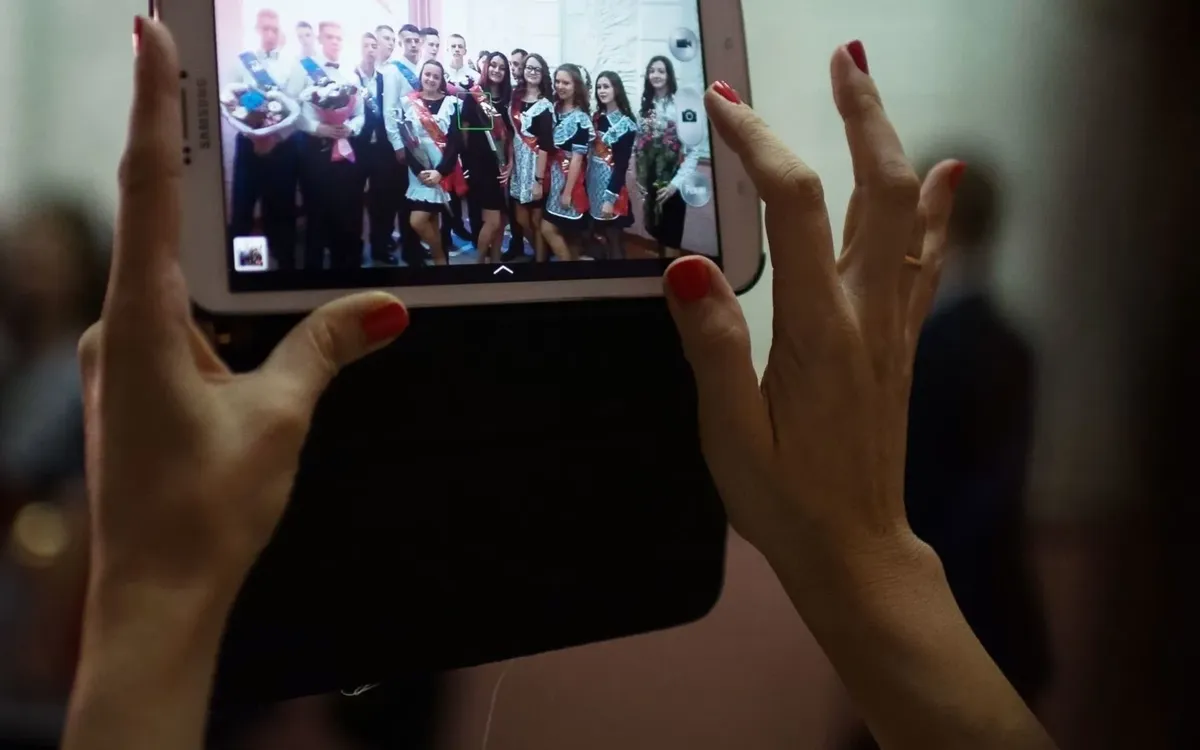
In Russian schools, they are going to ban mobile phones. Such an initiative was made by the Chairman of the Federation Council Valentina Matvienko at a meeting of the Presidential Council of State Pillar in the field of protection of families and children. Rospotrebnadzor, according to his head Anna Popova, will create a working group and will prepare proposals for the ban on phones in schools within a month.
The Vesti correspondent, telling about this, told the television to the television and the smartphones in which the student spends life for a long time and steadily became a threat to the school information space. " The teacher’s and parental public, according to the news, almost unanimously requires a ban, and this ban has been discussed for a long time. However, a year ago, the Minister of Education Olga Vasilieva, commenting on a similar ban in France, said that she did not consider this measure necessary: let the phones be better for communication, but during the lesson they lie somewhere in the locker.
Indeed, the phones distract children in lessons and at breaks, and every teacher knows this.
In addition, children shoot each other, teachers, tasteless food in the dining room, and then put it on the network.
Some hope that the ban on phones will help protect the teachers and children from bullying. Others notice that this is the only remedy for the child to protect himself from teacher's arbitrariness.
And there are nowhere to store smartphones. There are no locking lockers in most Russian schools, which means that the phone can be pulled. Collecting phones in the lesson in a box on the teacher’s table is also not a way out: one will call, the third is awkward to the other - who should answer?
The school does not want to be responsible for expensive gadgets.
Therefore, the easiest way, in fact, is simply banned at all.
But parents are not enthusiastic. They need phones to communicate with the child - and for the safety of this very child. If something happened to the school with the child, he should have the opportunity to contact his parents. If parents suddenly have something unforeseen, and they should warn the child, they should have the opportunity to do this directly, and not through the class teacher, as proponents of the ban offers. The class teacher can be in the lesson, and his phone is turned off.
A colleague told a difficult story with the participation of a smartphone that occurred this year in one Moscow school. The girl was bored in the lesson and leaned on Instagram "Storiz". And she saw that her girlfriend, a student of the same school, would post photographs from the house, testifying to suicidal intentions. The girl took a chance from the lesson, ran to the school psychologist, she contacted her parents - and they managed to save the child.
And not all teachers are supporters of a definite ban on smartphones in the classroom. For example, I am a literature teacher.
In the lesson we work with texts. But the child may not have the right material at home, parents are far from always happy about the idea of buying all software works for the child, not everyone has e -books, and in the school library there may not be enough copies of Faust in the right translation or “Figaro's marriage” to the whole class. Putting volumetric works is also not a way out. There may not be an interactive board in the classroom, and the city content-filtration system for schools unpredictably blocks sites with texts. Therefore, ask the class to open the desired text on the phones is really a way out.
Many teachers give the class in the lessons to google the assignments, find information about this, look for answers to questions. At the same time, they teach the basics of information literacy: which sites can be trusted, which is not, how to check and double -check information, how to distinguish reliable sources from inaccurate.
I allow you to write cool works, using any sources on the Internet:
It is important for me to teach schoolchildren to use them correctly and correctly refer to them - instead of stealthily to roll out of the unknown work written. This is part of the training, these are the skills that I need to train students, if I want to teach them to think and work with information, and not copypage.
If we talk about world experience, then it has not only prohibitions that are easiest to adopt. In some countries, organizations engaged in the provision of school Internet offer typical solutions in the field of information security. Schools are offered by professionals a document developed by the norms of behavior on the Internet for everyone who is related to school and access to its Wifau (from the procedure for resolving conflicts of parents with teachers to plagiarism in student work, from different degrees of admission to school computers and addresses to the use of documents that can be blocked by the Content-Filtration school system).
For example, such a typical document developed for British schools by South West Gridfor Learning (SWGFL) can be found here.
A flexible system with different levels of solutions is one for younger students, the other for the elders, the third for teachers is more complicated than a clear ban, but gives much more degrees of freedom. To develop a school course, teaching children to responsible behavior and security on the Internet is also more difficult than simply banned. The idea of what to do if you are poisoned in social networks, and how not to catch on the phishing is no less important for tomorrow's citizens than information about how to determine where the north is lost in the forest. In the end, most city schoolchildren on the network get lost much more real. And this is quite worthy of OBZh and computer science courses.
Here, for example, you can find ready-made lessons for a 12-year course in school training in Digital Citizenship, developed by the American organization Common Sense Education.
This experience is available, children can be taught to behave in cyberspace in a civilized way. The spontaneous telephone freight can be inserted into the boundaries of the rational.
But while adults are scared, they consider new technologies a threat, and the ban is the best measure to cope with this threat, no digital civilization threatens us. And the children will find a way to get around the ban, do not hesitate.