
Translated material
Code de Vinci
One of the classified "Belarusian list" of executed Polish citizens was discovered
One of the classified "Belarusian list" of executed Polish citizens was discovered
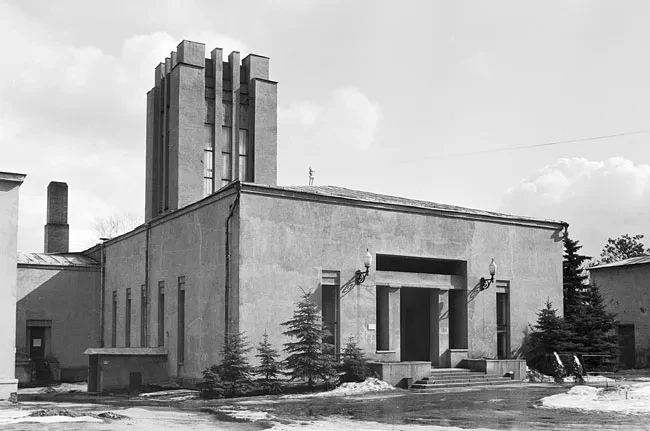
The Belarusian List is one of the secrets not disclosed in the history of the mass execution of Polish citizens in the spring of 1940. What was supposed to be investigated and studied in the framework of the “Katyn case” remained without due attention to the main military prosecutor's office of Russia. In fact, from time to time, historians and publicists recall about the “Belarusian list”, but neither new facts, nor at least some clues that allow you to clarify the situation appear. Is he preserved and where should it be to look for it?
According to the decision of the Politburo of March 5, 1940, as can be seen from the general note of the KGB chairman Alexander Shelepin (prepared in 1959), 7305 Polish citizens arrested in the period from September 1939 to April 1940 on the territory of Poland, seized by the Red Army, were shot in prisons. Their fundamental differences from prisoners of war of Polish officers, concentrated in three camps (Kozelsky, Ostashkovsky and Starobelsky) and executed in Smolensk, Kalinin and Kharkov, was that the NKVD citizens were detained in the NKVD administrations in the western regions of Ukraine and Belarusian.
Both arrests and reprisals against them were due to the Stalin theory of "class enemies." According to the decision of the Politburo of March 5, 1940, members of various "counter-revolutionary spy and sabotage organizations, former landowners, manufacturers, former Polish officers, officials and defectors were subject to execution. According to exactly the same criteria and class characteristics during the years of large terror in 1937-1938, reprisals against citizens of the USSR and foreigners took place. That is, Stalin again resorted to his favorite method of mass execution, but now on the new Western territories captured by the USSR. The Sovietization of these lands in the Stalinist performance certainly included social selection, and cleaning through arrests and executions, and mass deportations of “class-fingered elements”.
In the spring of 1994, in Kyiv, in the Archive of the Security Service of Ukraine (SBU), Polish Prosecutor General of Poland was discovered and transferred to the captive alphabetical list 3435 of the western regions of Ukraine, indicating the numbers of the requirements, according to which they were sent for execution. It was published in Poland, and the name: "Ukrainian list" was fixed after it. What was this multi -page document? First of all, this is a cover letter dated November 25, 1940 to the list of 3435 personal prison cases, which were sent for permanent storage to the accounting and architects of the NKVD in Moscow. The letter was attached to the list of cases, which contained the names of the executed and the numbers received from the NKVD of the requirements, according to which they were executed in the spring of 1940.
Of course, there was a similar “Belarusian list”, because the cases of executed Polish citizens in Belarus were also sent to Moscow for permanent storage. And this list should be 3870 people. But this list is still not found in the archives. The question of where and in which cities these executions took place are not clarified. Today it is safe to say that some, perhaps, is a very small part of the executions of Polish citizens sentenced to death based on the decision of the Politburo of the Central Committee of the CPSU (b) of March 5, 1940, was carried out in Moscow.
In fact, the exact answer to the question whether the “Belarusian list” has been preserved should be contained in the multi-volume case of the investigation of the Katynsky crime (case No. 159), which until 2004 was conducted by the Main Military Prosecutor's Office of Russia. But is there this answer there, whether the main military prosecutor’s office took the necessary steps to search for the “Belarusian list” - we still do not know. Alas, the most important documents of this case are still listed secret. And this is contrary to the promises given after the Smolensk catastrophe at the highest level in April 2010. Russia sabotes the declassification of the remaining 35 volumes from the 183-volume.
Today we have a gloomy result. Case No. 159 on executions in 1940 of Polish citizens was closed by the main military prosecutor’s office, the most important issues, and there are many of them-remain unclear.
Nevertheless, the archival search gives some hints and clues that allow not only to make assumptions, but also gradually unravel the thread leading to the “Belarusian list”, find the names of the executed people.
The count is interested
In the summer of 1940, the Minister of Foreign Affairs of Italy Count Galeazzo Chiano asked the ambassador to the USSR Augusto Rosso to find out from the Soviet leadership the details of the fate and location of the former colonel of the Polish army, Tadeusz de Vinci, an Italian with whom Chiano was personally familiar. The official request from the Italian Embassy on August 8 was sent to the chairman of the Council of People's Commissars and the Foreign Foreign Affairs of the USSR Vyacheslav Molotov. The message stated that, according to the information available in Italy, De Vinci was arrested, and a request was contained about his release.
Having familiarized himself with this letter, Molotov sent him to the NKVD Lavrenty Beria, writing a short resolution on him: “Comrade. Beria. What can be said about this. ” In turn, Beria handed over the request of Italians to the deputy chief of the 5th department (intelligence) of the State Unitary Enterprise of the NKVD Pavel Sudoplatov to clarify all the circumstances with the note “comrade. Sudoplatov! Urgently enter all the necessary certificates and report to me. L. Beria. 9/VIII-40 ". Understanding that we were talking about the former Polish officer, Beria immediately felt that the matter was wrong, because by decision of the Politburo of the Central Committee of the All-Union Communist Party of Bolsheviks (b) of March 5, 1940, mass executions of Polish military and civilians had just passed. At the same time, the corresponding request to the NKVD of Belarus was sent from Moscow.
The next day-August 10, 1940-from the NKVD of Belarus by telegraph, clarifications came that a person named Tadeusz de Vinci is not listed in the accounting files of the NKVD of the BSSR, but at the same time, according to the information, on September 20, 1939, Vinci Faddey Ivanovich, a native of the Huture of the Glutoksky volost, was arrested by Vinci Prevli. county [1]. The telegram reported that Vinci, the landowner and former major of the Polish army, was arrested by the NKVD operating system for anti -Soviet activities and was held accountable under Art. 72 (anti -Soviet activity) of the Criminal Code of Belarus. And further about him was reported: “The case is completed. On May 3, 1940, he was sent to a special meeting of the NKVD of the USSR. The arrested together with the investigation No. 56344 was transferred to Moscow on May 22, 1940. " From this answer it is clear that at the end of the case in the NKVD of Belarus, they believed to say Vinci to the camp time.
This is obvious, if only because a special meeting (person) at the NKVD did not have the authority to pass out death sentences at that time. But it is strange, why was the arrested was transferred to Moscow? A special meeting at the NKVD considered cases in absentia, the presence of the accused was not required at all. According to the rules, the cases sent to a person were considered in absentia, and the decisions made on them were sent to the periphery for execution (that is, for sending a prison or camp - according to the one who was discharged in the Gulag). It can be assumed that in Moscow, having received primary information about the Vinci case in early May 1940, they decided his fate differently.
Having kept a message from Belarus and having a certificate in the central apparatus of the NKVD, Sudoplatov wrote a short phrase at the request: “The addict has reported that Tadeusz de Vinci was shot in May 1940. Sudoplatov. 10/VIII-40 g "". What organ, how and when he sentenced him to be shot - was not reported. But this is precisely what allows us to draw an important conclusion that the information about how and why Vinci was shot was super -secret. To such an extent that Sudoplatov did not even entrust them with paper. This fact and the fact that there is no information about the execution of Vinci in the archival materials of the fund, which collects acts on the execution of death sentences (Foundation 7-OS FSB), allow us to conclude that it is shot by the verdict of the NKVD triple, specially created by decision of the Politburo of March 5, 1940 for reprisals of Polish citizens (officers and civilians persons). Indeed, at the in the spring of 1940 in Smolensk, Kalinin and Kharkov, Polish officers and the Polish citizens shot in Belarus and Ukraine, these shot acts were stored separately and did not enter the general array of execution documentation (they were not even reflected in the general statistics of repressions).
Consequently, it is safe to say that Vinci was shot by decision of the Troika of the NKVD (as part of Vsevolod Merkulov, Bogdan Kobulov and Leonid Bashtakov).
Probably, Molotov and Beria did not upset Count Chiano and hid Vinci’s tragic fate from him. And most likely, they generally denied the very fact of his arrest and being in conclusion. For the Kremlin customs of those times - very characteristic. After all, usually the Soviet side answered such requests and petitions simply and unpretentiously-we do not have information about such and such.
Echo of great terror
But why was Vinci shot? Is it only because he was listed at the time of arrest, albeit a former, but Polish officer and fell into an arrest campaign and reprisals with Polish citizens in 1940? What Kremlin could have personal scores for him?
There is an answer. Vinci had his own background, which was not known about in the NKVD of Belarus, but they knew well and remembered in the central apparatus of the NKVD in Moscow.
In the 1930s, a commercial attache of the Italian embassy worked in Moscow in Moscow (so then his surname was written in the papers of the NKVD). The modest embassy attache involuntarily was destined to play a role during the Stalinist purges in the system of the NKVD apparatus. In the first half of the 1930s, the Moscow Chekists (as it seemed) managed to make de vintci as his agent, assigning him a pseudonym of guilt. In the future, he was listed as an agent of the Special Department of the NKVD, but he was not completely trusted. And it all ended that most of the Chekists associated with de vintci were shot in 1937-1938.
If the agent is not trusted until the end, then in the end the shadow of suspicion inevitably falls on those who are connected with him. In May 1937, accepting the NKVD and GRU intelligence managers in the Kremlin, Stalin said that the reconnaissance-wrapped-off “fell into the hands of the Germans”, bearing in mind that Soviet intelligence and counterintelligence are influenced by “double agents”. Consequently, it is worthwhile to treat all the employees of the NKVD with proper suspicion, whose agents do not inspire trust. So who recruited whom? The question is far from idle in conditions of spy on the limit. The new Stalinist installation demanded arrests and revelations. The further development of events took place in this line. The testimony of the arrested assistant to the head of the Special Department of the NKVD Lazar Perclin, who in April 1938, during the investigation, stated that he was actually guilty was a double agent and recruited Perlin to work for Italian intelligence. At the same time, Perlin also testified to his immediate superiors when they were working in the Special Department of the OGPU-NKVD: the State Security Commissioner of the 2nd rank of Leo Zalina (executed in 1940) and the senior majors of the state security of Ansus Shopter and Semen Gendin (both were shot in 1939) that they were all residents of French intelligence. Perlin was shot in September 1938. Fictional "French intelligence agents" after him. The point is ending. Well, de vintci, most likely, safely left the USSR without any consequences for him.
And then there was 1939 and the invasion of Soviet troops in Poland. There is almost no doubt that Vinci, arrested on the farm farm, and the former attache of the Italian embassy is one person, and it becomes clear why Moscow in May 1940 corrected the “unacceptable softness” of the Belarusian NKVD, which prepared his business only for a special meeting. According to the many Moscow Chekists, Vinci deserved more. He was transferred to Moscow, most likely, for additional clarification and interrogation, after which the case was immediately sent for consideration by a special three (Merkulov, Kobulov and Bashtakov). Surely Vinci was included in those three protocols where Polish citizens arrested and executed in Belarus, the list of which has not yet been found.
Vinci's case reveals the veil of secrets. Now we can say that, at least, we know a lot about one name from the “Belarusian list”.
But who personally gave the command to include Vinci in the shot list? The one who had authority, the one to whom Beria turned to a certificate of the fate of Vinci, is Sudoplatov. He disposed of fate, gave orders to transfer to Moscow the department of Polish officers who interests him, promising for use for intelligence purposes. And then, beyond unnecessary-the recommendation of the inclusion of people in the lists for execution, through the three, in the order of the decision of the Politburo of March 5, 1940.
Katynsky trail in Moscow
It is safe to assume that Vinci's execution took place in Moscow. It is unlikely that he, delivered to the capital at the very end of May 1940, would be transferred to Minsk for execution. There was no need for this. But so far nothing has been known about such examples. It was believed that in Moscow there were no executions of Polish citizens in the framework of the Katynsky case. Most likely, this is not the only case when the Poles shot on the basis of the decision of the Politburo of March 5, 1940 were killed in Moscow.
If so, then according to the procedure adopted in those days, their bodies were burned in the crematorium in the Don cemetery and the ashes were buried there. This means that in Moscow, in the Donskoy cemetery, a memorial sign about the Poles killed in 1940 in 1940 should be established.
[1] In 1939, the Gluboksky and Disnensky districts were included in the Vileysk region.