
Translated material
Debe
What actually happened in the Syrian province of Deir ez-Zor and what conclusions the military and the USA can draw. The version of Pavel Felgenhauer
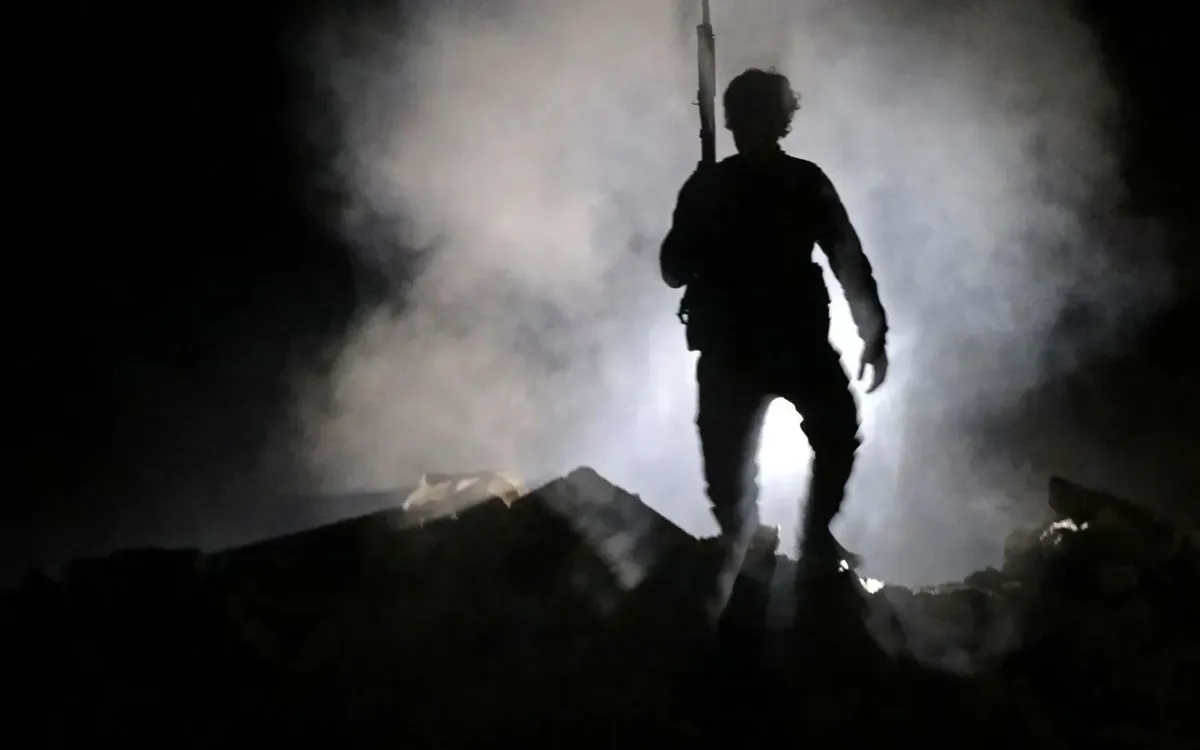
The defeat of the consolidated group into approximately one mechanized tactical battalion group (TBG) from contract fighters of the so-called “PMC Wagner” in a night battle on February 7 on the left bank of the Euphrates near the city of Deir Ez-Zor seemed to haven’t seriously changed anything in the local and regional military-political situation.
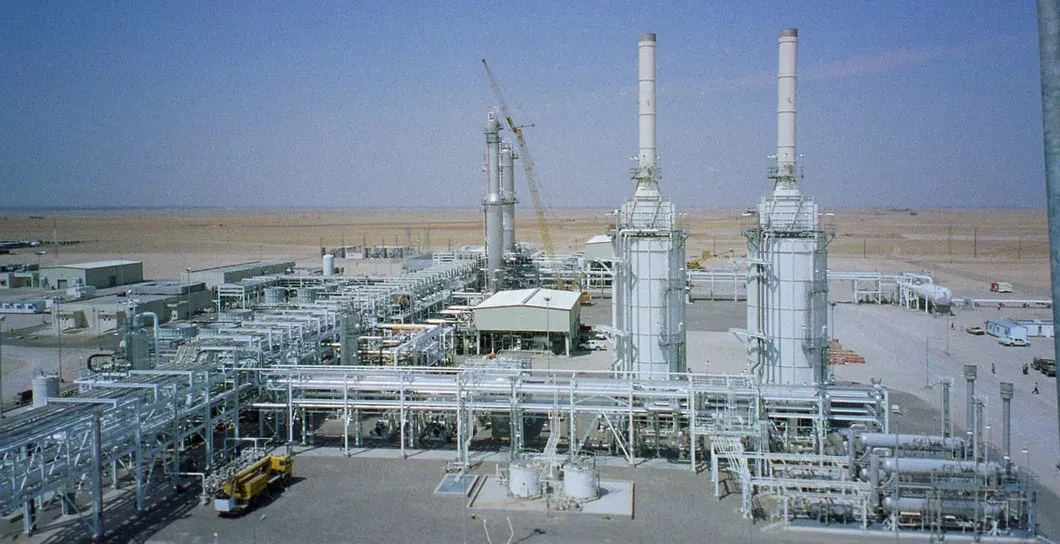
The oil refinery, built once in peacetime by the American company Conoco, which was like the main goal of Vagner fighters, who moved together with a certain number of local Syrian allies-supporters of the president of Bashar al-Assad, remained more like a unilateral massacre, under the control of the fighters of the Syrian Democratic Forces (SDF) and their American advisers.
(According to some reports, at the Conoco factory, in addition to the Arab-Kurdish SDF fighters and Americans, there were English special forces.)
General losses of different sources are estimated from a couple of tens of to several hundred people. But no one pursued the defeated TBG, and the line of the Euphrates section on the “American” and “Russian” zones of influence, which the Wagner detachment tried to move “slightly east” on February 7, remained almost unchanged.
Russian-American relations, which are already worse than nowhere, the battle of Deir-ez-Zor did not externally significantly worsened. The Americans shot Wagner from the air, and the losses themselves have one lightly wounded Kurdish militia.
It seems that in the Pentagon somewhat frightened such a vastingly disrespectful victory - as if there were no escalation and a big war, and until they officially admit that they were struck by the Russians, they say, we do not know who it was. Their Russian colleagues scored water in their mouths.
Initially, it was announced that in Deir ez-Zor the Prosadov forces attacked the Kurds from SDF, without mentioning the Wagner PMC. But the relations between the Kurds and the Assad regime were not affected either. On the contrary, in Damascus, the official agency of Sana reported on February 19 that some “folk forces” of Assad’s supporters will help Kurdish troops of folk self-defense-Yekineen Parastina Gel (YPG) to protect Canton Afrin in the north-east of Syria from the Turkish military attacks along with Syrian opposition detachments, which began a month ago.
The Turks announced YPG with a terrorist organization, but in Damascus, terrorists call just the pro -Turkish Syrian opposition, and the Turkish operation in Africa The Olive Branch was declared aggression. Turkish President Recep Tayyip Erdogan urgently called Vladimir Putin and, as reported in Ankara, threatened Damascus’s authorities “consequences” if they help the Kurds defend Afrin. In Damascus, they urgently got reverse and have not yet been sent to Afrin to the Afrin, but they definitely strive to agree and conclude an alliance with the Kurds. Since SDF and YPG are by and large the same thing,
The Syrian leadership had no reason for giving a go -ahead on the campaign of the Wagner PMC to squeeze a non -working plant with potential allies.
The Russian side presents the case so that some Syrian militias acted on February 7 on their own initiative and "inconsistent with the Russian command." The fact that the Russian departments are usually very lively at PR for so long and hopelessly quiet and do not expose the brutal blows of nasty Yankees, arouses suspicion that there was still some kind of coordination, and now the military department solve eternal Russian issues: “What to do?” And "who is to blame?" And the main one - what to report to Putin and to whom to blame the consequences of the defeat?
There is an unconfirmed version that in the area of the operation on February 7 behind the “PMC Wagner” there were fighters of the forces of special operations of the RF Armed Forces, who might have gone in time and did not fall under the destructive American fire. There are also reports of the presence of proofs in this area. It is possible that the true goal of the operation was not at all the plant in itself and not Kurdish fighters from SDF, but the Western advisers-spectacles at the factory.
The captivity or liquidation of the fighters of the American special forces by “Syrian militias” with an indispensable demonstration of corpses would cause a powerful blow to the American prestige in the region,
What could ultimately lead to the complete withdrawal of American forces from Syria. This, obviously, is part of the strategic line of Moscow.
The American people really do not like it when their best sons die, it is not clear where and it is not clear for what. There were precedents.
In October 1983, two suicide bombers with 5 tons of TNT were blown up by the headquarters of the Marine Corps in Beirut: 241 marines and 58 French paratroopers were killed. The attack was allegedly organized by the proofs. And in February 1984, the USA, France, Italy and the UK withdrew their troops from Lebanon.
In October 1993, 18 Americans and 1 Malaysian were killed in a battle in Mogadisho in the course of an unsuccessful operation of the American special forces. As a result, until the end of March 1994, all American troops were withdrawn from Somali. Congress voted unanimously.
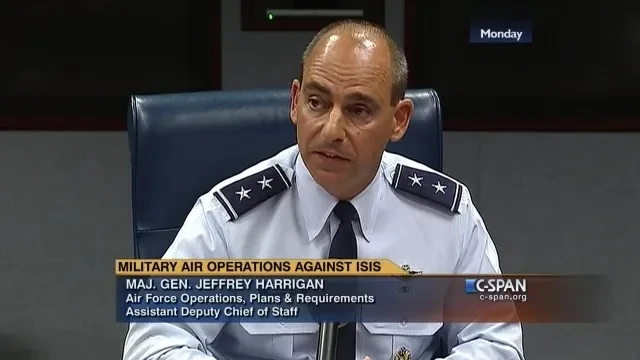
From the briefing of General Jeffrey Harrigyan, the head of the Air Force of the Central Regional United Command of the United States (Centcom), responsible for the air cover of operations in Syria, Iraq and Afghanistan, it is known that a week before the start of the operation on February 7, the concentration of the Wagner PMC on the Euphrates, where last September during the last September The Russian sappers gathered and installed a small road, collapsible bridge (marm) with a length of 210 meters in a couple of days. On February 6, the water level in Euphrates suddenly rose several meters, and the flow rate of the current doubled.
On February 7, the bridge was demolished, and the Vagner shock group was cut off, but still the operation began.
The Russian military believe that the discharge of water came from the Hydroelectric Power Station reservoir Tabka above, the dam is controlled by SDF units, and that the Americans are behind this, who, however, officially rejected all the accusations.
According to General Harrigan, the coalition on the established communication lines told the Russian command that SDF and Americans are holding positions at the ConoCo plant somewhere 8 km from the bridgehead. The stream of water, washing marm, could be another warning. But the collected group of “Wagner PMC”, perhaps the largest for the entire Syrian war - tanks, other armored vehicles, heavy artillery, mortars, volley fire systems, a couple of assault mouths, mobile groups - was ready and advanced, and our Americans seemed to know that they did not know anything and there are no Russian military there.
The offensive of the TBG "Wagner" began when it was already dark. Obviously, it was supposed to quickly get closer to the enemy, so that the American Air Force could not answer with a counterattack due to fear of getting in the dark in their own when the battle formations were mixed. Perhaps it was assumed that the Kurds would retreat, showing symbolic resistance.
Those who planned the operation showed dense incompetence: the US military has been preferred for many years to conduct a combined arms battle, both offensive and defensive, in the darkness, since they have the best comprehensive night equipment in the world.
The experience of the Donetsk and Syrian wars played a cruel joke with the “Wagner PMC”, substituting them, blind and helpless, under an American thresher. There was also no complete understanding of what the consequences of a massive blow were possible with high -precision weapons.
Initially, in the air over the battlefield, there were American shock-reconnaissance drones of the MQ-9 Reaper and the “invisible” 5th generation F-22 fighters, which seemed to expect whether Russian combat aircraft would rise from the Khmeimim base. But aviation did not fly, and after the last warning through special communications channels, the American military opened fire to defeat.
Our military stubbornly do not want to understand, no matter how much intelligence on the GRU (GU) of the General Staff, the American decision -making system and control of hostilities is radically different from ours. On February 7, the whole combined -arms battle on February 7 was uniformly ruled by the commander of the American special forces from the Conoco plant, and he did not coordinate anything with the upper headquarters.
This is an iron American (Western) principle - the commander on the battlefield knows the situation better, and he sets the tasks to everyone else.
The commander, in particular, clearly outlined his advanced, deploying his fighters and SDF into a chain and entering into fire contact with the upcoming enemy. There was no mixture of battle formations, and it was clear to everyone where the free fire zone. Through controllers (gunners) of the Air Force, who were part of the detachment, the American commander set combat missions of a heterogeneous group of shock aviation and long -range heavy artillery, which fired.
The execution lasted three hours. Since they were waiting for the offensive, and the Americans could determine the approximate time in advance, their shock air groups were already ready. And when the offensive began, F-15e Strike Eagle fighter-bombers, MQ-9 Reaper drones, AC-130 and AH-64 APACHES, B-52 bombers derived from strategic aviation under the SNV-3 agreement and transferred to CENTCOMOM To perform tactical tasks - most likely they were already in the air.
The basis of this group was the AC-130U SPOOKY AC-130U special operation aircraft, which are equipped with a radar and optical target tracking systems, a multi-layer automatic protection system from anti-aircraft missiles of all types of guidance and on the left side of the 105-mm howitzer, as well as 40-mm and 25 mm automatic guns. About forty years ago, six AC-130A were knocked down in Vietnam, but no one succeeded as new modernization of the aircraft. The M102 howitzer allows high -precision on -board fire per kilometers from the target, without entering the zone of defeat of anti -aircraft means. Since the aircraft is made on the basis of the transport S-130, it can carry a lot of ammunition for long continuous fire, and it has a powerful stationary station of electronic warfare (PEB). According to Colonel General Leonid Ivashov, all the controls and communications of the Wagner TBG were suppressed.
They write a lot about the fact that Wagner did not have MANPADS, but in the darkness they are almost useless-the zenist shooter should see the target and put the system so that thermal fuel and lubricants take the target.
The base is Khmeimim 500 km west of the battlefield with its radars, aircraft and air defense systems could not help when it became clear that Wagner was in a fatal trap.

Different parts of the detachment suffered differently from American fire, all the equipment and heavy weapons were knocked out in the first place, and now it is not clear whether the wounded were carried out in the dark or left someone to die, and whether all the bodies, torn and burned along with equipment were collected. Since there is no bridge, the bridgehead, from where the offensive began, obviously ceased to exist. For a thorough examination of the former battlefield, you need to negotiate with the American command, but it is not clear whether the Russian bosses are ready for this.
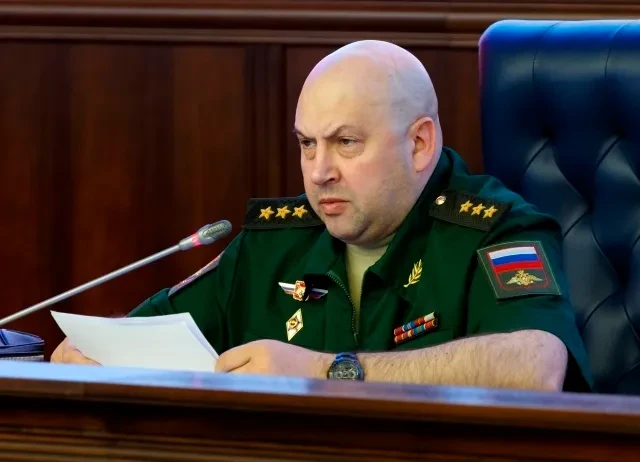
It is reported that the “tank” colonel General Sergei Surovikin, who was appointed by the commander-in-chief of the VKS only in November, seemed to be not in line to urgently send the commander to Syria again. Surovikin was already commanded there from March to December 2017, after which he was replaced by Colonel General Alexander Zhuravlev, who has been commanding the second time in Syria and was nominated as a reward to commanders of the Eastern Military District. Surovikin is considered the favorite of Putin and has a reputation as a person who is ready to take the most mercilessly decisive measures. It seems that the situation in Syria after the defeat under Deir ez-Zoro is evaluated as critical, and perhaps the Kremlin believes that Zhuravlev does not cope.
The defeat without a single loss of the enemy of the well -prepared and armed “Wagner” TBG - like those who successfully destroyed the Armed Forces near Ilovaisk and Debaltseve in the Donbass even without aviation support - undermines the morale in all the armed forces and casts doubt on the results of the trillion program of re -equipment and the general readiness of the troops and staffs.
The consequences of the battle on February 7 can be much more serious than a tactical defeat in a distant river in a foreign desert in itself.