
Translated material
The agent of the influence of Dodik
The results of the elections in the Republic of Serbian can be regarded as good luck for the Kremlin
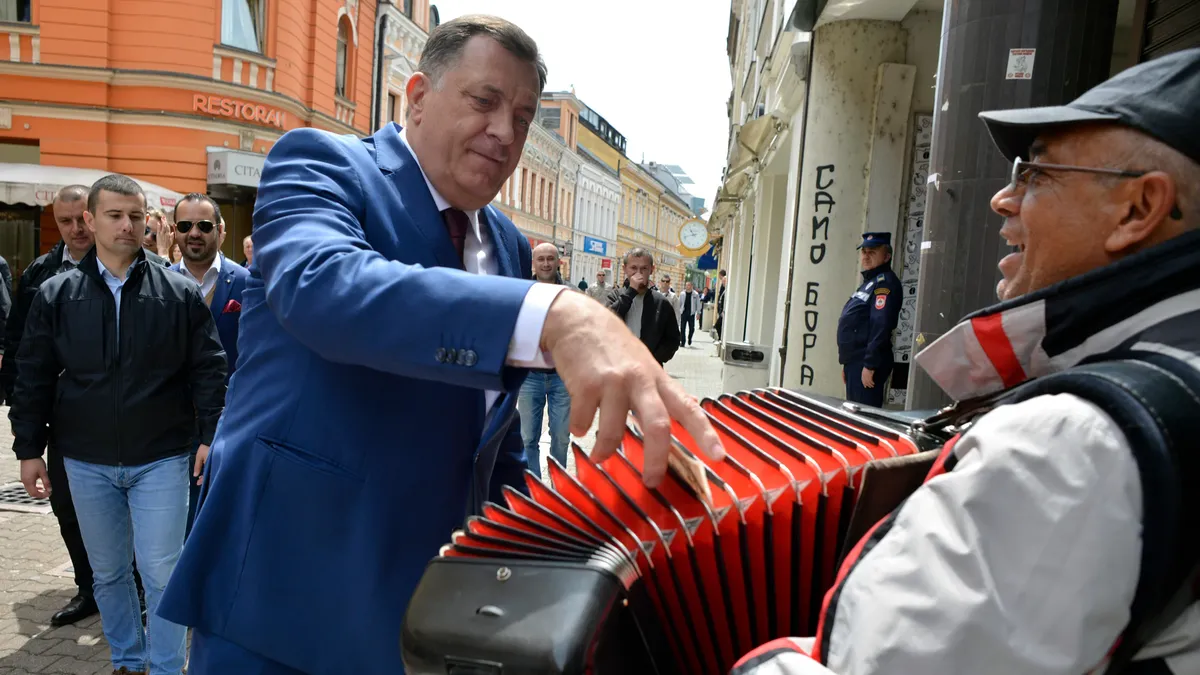
In the elections in the Republic of Serbian, Milorad Dodik won. He won with the scandal - he was accused of theft of votes of voters. He positions himself as an agent of the influence of Moscow and takes a definitely pro -Russian position. The patchwork blanket of the state Bosnia and Herzegovin will again try to break.
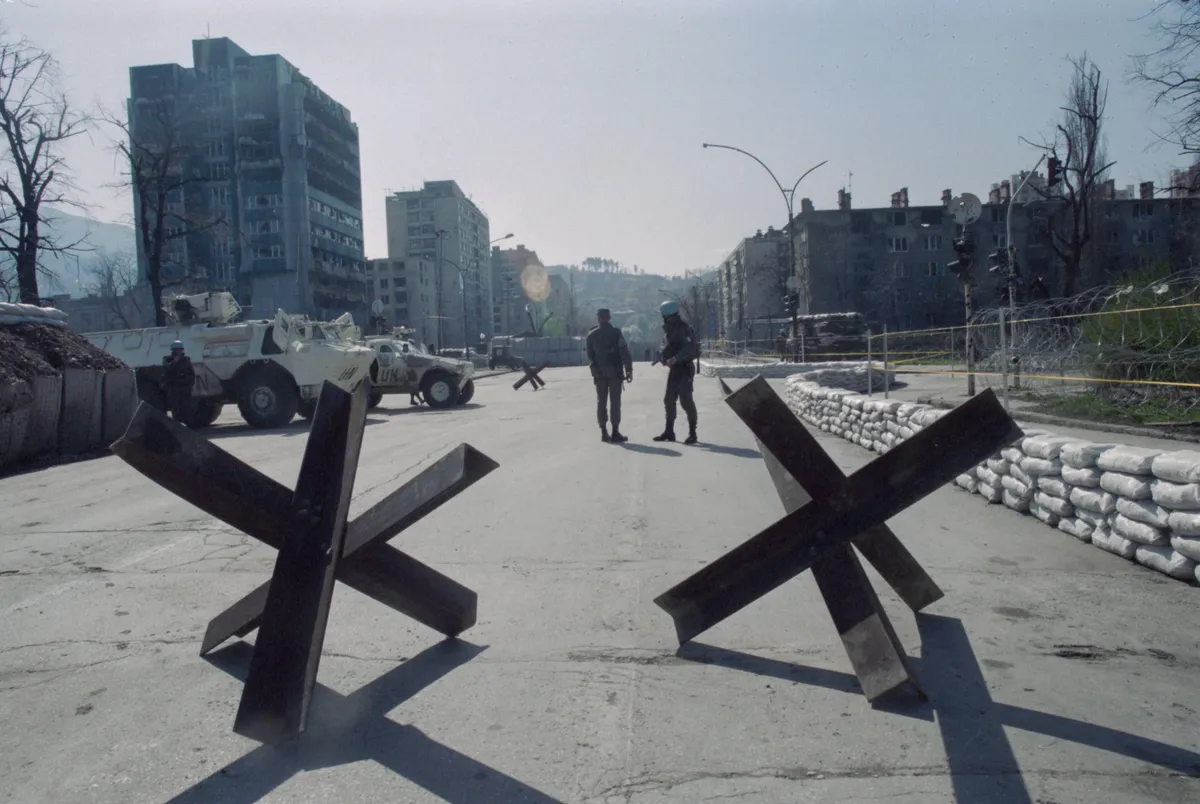
For the Western world of the first half of the 90s, Sarajevo became a symbol of suffering. The city was in the operational environment of the military forces of the Republic of Serbian, who at their disposal did not have enough soldiers to take the city storm, but regularly fired at it from artillery attitudes and even sniper fire. Before this meaningless war, the Winter Olympic Games were held in Sarajevo, the city was the center of the Yugoslav rock scene, and people lived in it of different faiths and nations.
From 1945 to 1992, Bosnia was considered little Yugoslavia, because there were Serbs peacefully coexisted (the South Slavic people with an Orthodox heritage), the Croats (the South Slavic people with a Catholic heritage) and the Bosnyaks (the South Slavic people with a Muslim heritage). These peoples spoke one language, which was then called the Serbian-Khorvat (or Croatian-Serbian). Of course, these three peoples today speak the same language (in a linguistic sense), but it is politically divided into three languages - Serbian, Croatian and Bosnian. These artificial language divisions indicate a deep political break, as well as the breakdown of identity.
The Civil War in Bosnia has been the most bloody in Europe since the Second World War: about 110 thousand people were killed (data from the Hague Tribunal), more than 2 million people became refugees
(almost half of the population of Bosnia and Herzegovina). More accurate figures (Sarayevsky Research and Documentation Center) indicate 97.207 killed: 65% of them were bosom, 25% - Serbs and 8% - Croats. Mass war crimes were committed, ethnic purges were carried out.
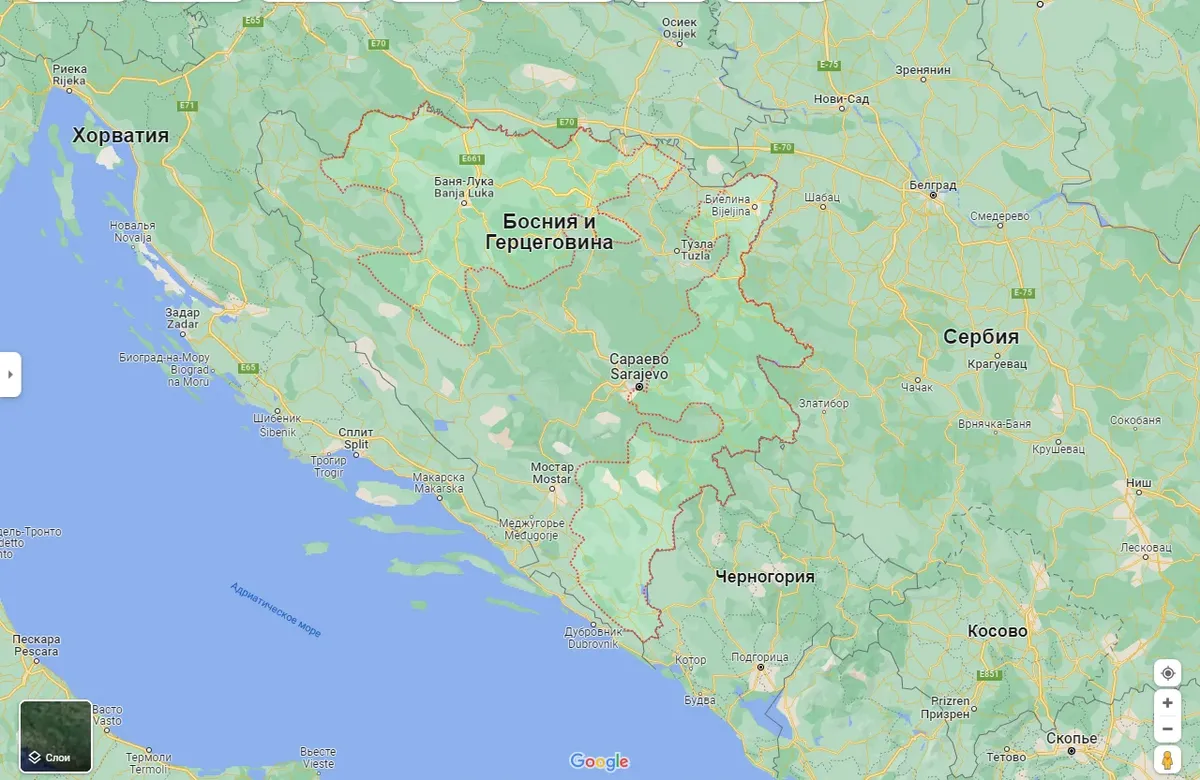
The plan of the leadership of the Republic of Serbian was as follows: to create two corridors in order to physically connect the western and southern regions of Bosnia and Herzegovina, where the Serbs lived compactly, one of them was located in parallel with the Drina River, which separates Serbia from Bosnia (there were Bosnyatsky settlements), the other passed in parallel with the river Savoy, which separates Bosnia, which separates Bosnia. From Croatia (there were Croatian settlements). Using the advantage in military force (the weapons and officers of the army of the Republic of Serbian provided official Belgrade before the conflict began), the army of the Republic of Serbian managed to conduct ethnic purge along these two rivers, only the Bosnyatsky enclaves remained, one of which turned out to be a notorious cut.
While the soldiers of the Army of the Republic of Serbian carried out ethnic purges for the sake of obtaining a single territory, ordinary Serbian citizens from the Bosnian municipalities, who were not controlled by the army of the Republic of Serbian, were forced to escape to the territory under the control of the army of the RS.
The conflicts between the Bosnyatsky Army and the military units of the Bosnian Croats also took place.
This excursion into the history of the Civil War was needed to understand how the society in Bosnia is still deeply divided. The political system of Bosnia and Herzegovina is a product of a peace agreement signed in the American city of Deuton. The BIG Constitution is directly and inextricably linked with a peace treaty.
The Bosnia system is based on the ethnic division, which remained after the Civil War, the echoes of the post-communist nationalist hysteria of the early 90s and the memory of the support of the war by the official Belgrade and Zagreb (the Croatian side agreed to the truce with Bosnyatskaya in 1993, and international sanctions were imposed against Serbia because it did not cease to support the republic. Serbian). In the end
Bosnia and Herzegovina remained frozen in a post-conflict state, it is divided between the Republic of Serbian and Bosnyatsko-Korwat part (inside which an ethnic confrontation also boils).
Political forces in Serbia and Croatia are influenced by the Bosnian node of contradictions, which all the time feeds nationalism in Belgrade and Zagreb (even the Presidents of Serbia and Croatia, and not representatives of the Bosnian Serbs and the Croats) signed the Deatho Agreement itself). For decades itself, parties with ethno-nationalist ideology (SNSD of Milorad Dodik in the Republic of Serbian, Khdz in the Croatian part of the Bosnitsa-Muslim Federation and the Bosnitsa-Muslim federation have been dominated for decades.
Bosnia does not function as a single state, because it is saturated with fear. Bosniks are afraid of Serbian and Croatian separatism, which will doom them to life in a territorially small and economically unstable enclave, and the Serbs and Croats are in fear of centralizing the state itself, since the bosses exceed them in number (according to the latest census of 2013 - Bosnyakov 50.12%, Serbs 30.83%, and the Horvata 15.43%). These fears explain the behavior of a large part of the electorate in Bosnia, which prefers ethno -nationalist parties.
Theoretically, there are two ways to solve the problem of dysfunctionality of BIG: centralization or victory of civil liberal parties in all parts of the country. The collapse of the state is not discussed for obvious reasons: the Deyton Treaty does not provide for the process of secession of any of the components of the Big; If you start changing the borders in the Balkans, this will lead to a chaotic situation in which any ethnic group living in any state will achieve independence or joining the neighboring state.
Imagine the situation in which the Serbs from the BIG are separated-and what then to do with 200 thousand bosses in Serbia, which live compactly in the south-west of the country (historical region of Sanjak)?
The centralization scenario is hard to implement in practice, because it also contrives with the Deyton Agreement and would cause great resistance from the Bosnian Serbs, as well as the Bosnian Croats. A high representative*who has broad powers may try to change the structure of the political system itself, but this is illegitimate and non -combustible. The actual high representative Christian Schmidt is not ready to break the entire state system, but demonstrates the willingness to make point changes, especially in the electoral sphere, to ensure the functionality of the most important state institutions.
The only feasible scenario of the BIG reform is the transit of the electorate itself from the ethno-nationalist paradigm to the civil-liberal. The process has already been launched: the Bosnyatsky and Croatian representatives are the leaders of moderate civil parties, but in the Serbian part, Big continues to dominate Milorad Dodik.
Dodik is already openly positioning itself as an agent of Putin's influence in the Balkan region and connected to a geopolitical battle, which is currently shaking Europe.
In this, he largely surpassed President Serbia Vucich, who is trying in every possible way not to conflict with the USA, EU and NATO. Dodik has been the main functions in the Republic of Serbian since 2006. His regime is often associated with unlimited corruption. In the light of this, it becomes clear that for him there is no way to simply give in to the power of any other party: the fear of judicial persecution is quite real for him.
In the last couple of weeks, in the administrative center of the Republic of the Serbian Bath-Luke, the protests of the Serbian opposition parties against Milorad Dodik are underway. Parties that organize rallies - the Serbian Democratic Party, the Party of Democratic Progress and the movement for justice and order - accuse Dodik of the theft of the presidential of the Republic of Serbian (in the same elections on October 2, moderate representatives of the Bosnyaks and Croats in other parts of the BIG won). On the night of October 2 to 3, the opposition candidate Elena Trivich had significant superiority in the number of votes, and the next morning the results radically changed in favor of Milorad Dodik.
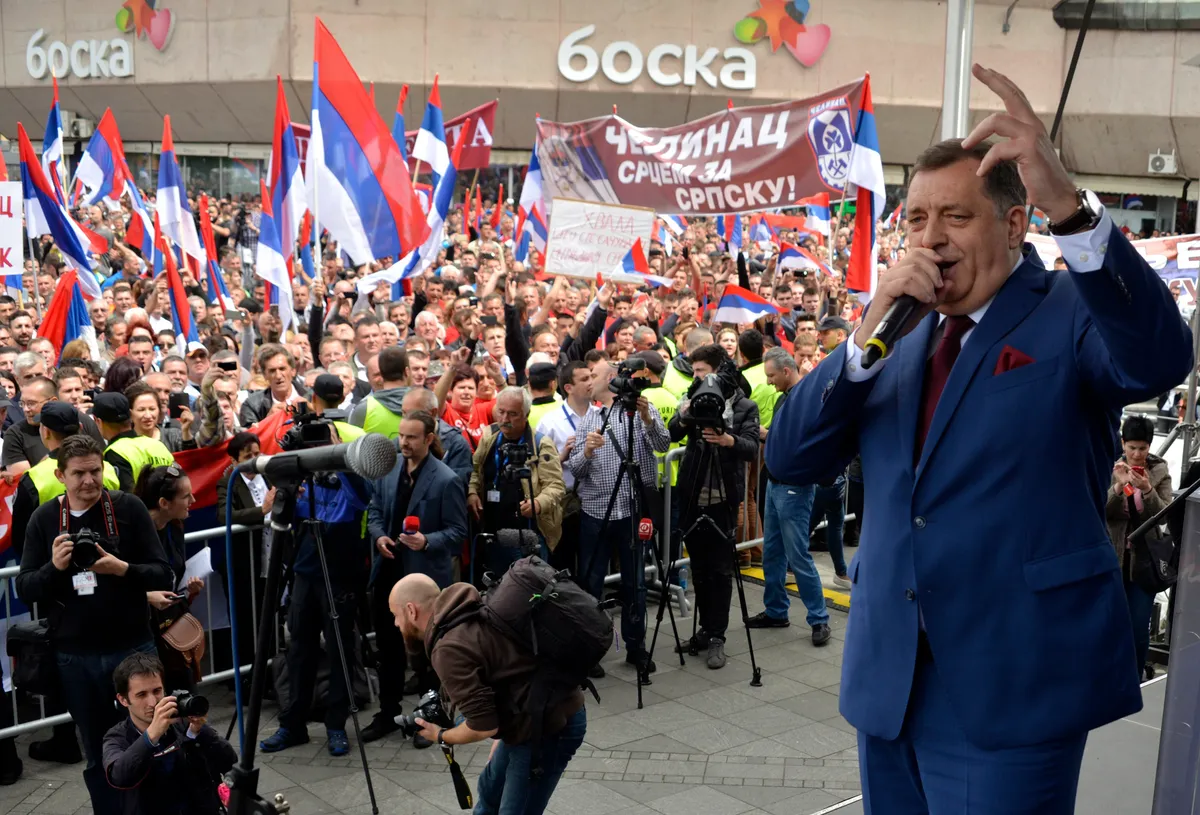
The Central Electoral Commission is located in Sarajevo - this is the Central Institute of BIG outside the influence of Dodik. The CEC BIG only on October 22 completed the verification of the declared violations in polling stations in the Republic of Serbskaya and announced Dodik the winner of the presidential election in the RS. Dodik, in turn, accused Sarajevo and the West of an attempt to remove him from power illegally and organized a counter-scenting in a bathhouse (countermathy-a warned tool for the struggle to preserve the power of many East European dictators, for example, Yanukovych, Lukashenko, Milosevich). In brackets, we note that at the rally Dodik spoke with a speech, director Emir Kusturika.
The expectations that the CEC BIG will decide the regional election commission of the Republic of Serbian to repeat the presidential election at least in certain areas. Since this scenario has not come true, the political confrontation between the authorities and the opposition in Banya-Luke is unlikely to reach the boiling point, and the new “velvet” revolution in Eastern Europe is almost completely excluded.
And Dodik announced that his party would propose in the RS parliament the law, according to which the bodies of the Republic of Serbian would resolve the issues of the electoral process, and added that he did not support the introduction of sanctions against Russia, and proposed a referendum on this issue.
Dodik tightly tied his boat with the ship of Vladimir Putin and is trying to cover all his mistakes with household Russophilism.
With his intervention in Putin’s conflict with the West, he jeopardizes not only himself (which is his personal problem), but also the Republic of Serbian, only because of his own selfish interests.