
Translated material
Mikhail Chekhov
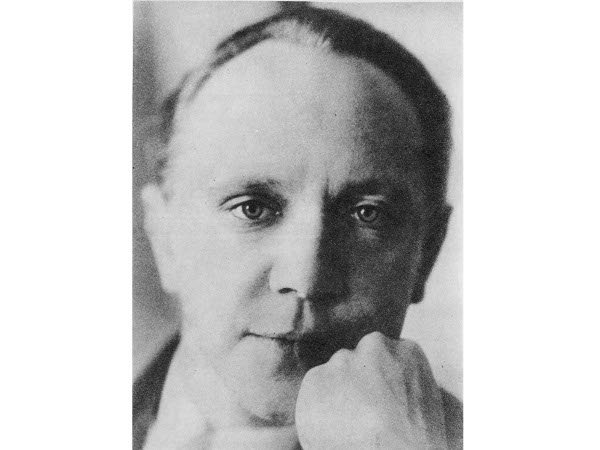
On August 29, 1891, an actor and theater teacher Mikhail Chekhov was born
Personal business
Mikhail Alexandrovich Chekhov (1891 - 1955) was born in St. Petersburg in the family of writer Alexander Chekhov, the brother of the famous writer. Since 1907, he studied at the theater school named after A. S. Suvorin under the theater of literary and artistic society. Even during the exercise he successfully played in the performances. After graduation, he was admitted to the troupe of the Suvorinsky Theater, where he performed from September 1911 to April 1912.
On April 26, 1912, Mikhail Chekhov met with Konstantin Stanislavsky and read to him the monologues of Fedor from Tsar Fedor A.K. Tolstoy and Marmeladov from Crime and Punishment. Stanislavsky invited the actor to the Moscow Art Theater. On June 16, Mikhail Chekhov was enrolled in the Moscow Art Theater troupe. His first role in this theater was Vaska in the play of Turgenev “Nakhlobnik”.
In the second half of 1912, the first studio was organized at the Moscow Art Theater as “a collection of believers in the religion of Stanislavsky” (according to Mikhail Chekhov). The studio was led by Leopold Sulerzhitsky and Evgeny Vakhtangs. G. Gayermans, “Kaliki cross -country” by V. Volkenstein, “Crumpus on the stove” according to Ch. Dickens, “Feast of the World” by G. Gauptmann, “Flood” of G. Berger, were placed there. It was the small hall of the studio, where one hundred spectator seats were as close as possible to the stage, which required the actors of special psychological detail and even nervous aggravation of feelings, that became the place where Mikhail Chekhov played most of the roles. On the main stage of the Moscow Art Theater, he was busy mainly in mass scenes, the most noticeable role in his “Cherry Garden” became its most noticeable role.
In 1916, the Seagulls rehearse began, in which Mikhail Chekhov was supposed to play the role of Treplev. At this time, the actor began severe depression caused by the divorce and suicide of the cousin Vladimir. As a result, he could not play in the "Seagull". Mikhail Chekhov was able to restore mental strength thanks to the private acting studio, which he opened in his apartment in Gazeta Lane. In 1919, Mikhail Chekhov published the first articles on the preparation of the actors “On the Stanislavsky system” and “The actor’s work on himself”. The next year, he began to teach in the studio of the Proletcult and the Studio named after Fedor Chaliapin.
Also in 1920, Mikhail Chekhov successfully played Malvolio in the Twelfth Night. And two years later, two performances appeared at once, which brought the actor the glory: “Eric XIV” by A. Strindberg, where he played the title role, and the “Examiner” in which he played Khlestakov. About Khlestakov performed by Mikhail Chekhov, actor Vasily Luzhsky recalled: "... a huge success that no actor on the Moscow Art Theater has yet seen." Soon, Chekhov with the troupe of the Moscow Art Theater Studio went on tour in Estonia, Latvia, Germany and Czechoslovakia. After returning to Moscow, he headed the first studio, which in August 1924 was transformed into a separate theater-the Moscow Art Theater of the 2nd. Mikhail Chekhov began to use his own exercises that he developed in his studio during rehearsals with actors. The outstanding productions of this period were Hamlet (1924) and “Petersburg” by A. Bely (1925). In 1927, Chekhov played Khlestakov with artists of the Leningrad Bolshoi Drama Theater, then with the troupe of the Maly Theater, staged a play by A. Sukhovo-Kobylin, in which he played the role of Murom. The next year was printed the first book of Mikhail Chekhov, The Actor's Way.
In May 1928, Mikhail Chekhov received a two -month vacation for treatment in Germany. A little later, he sends a letter to the publicity with a request to extend the vacation for another year. In Berlin, Max Reinhardt as an actor and director is working in the Kammershpile Theater, is trying to organize its own theater in Czechoslovakia, but this project fails due to a lack of funds. In 1931, the theater building in Paris, where the “Eric XIV” was opened for the gathered donations, opened the “Chekhov Theater”. In 1932, Mikhail Chekhov staged performances at the National Theater in Riga, and himself played on the stage of the Riga Theater of Russian Drama. Then he conducted classes on the technique of acting at the Lithuanian State Theater in Kaunas, where he staged a number of performances based on Shakespeare's plays. In 1935, the Chekhov Theater made a touring trip to New York. Then Mikhail Chekhov transfers his theater and a studio to England, to Dartington Hall, where he has been working for three years. Then the Chekhov Theater moves to the United States.
After the war, the “acting workshop” of Mikhail Chekhov opens - a training center for the preparation of actors, which exists today. First in Russian, and then in English, the book of Mikhail Chekhov “On the Technique of the Actor” is published. Mikhail Chekhov died in Beverly Hills on October 1, 1955.
What is famous
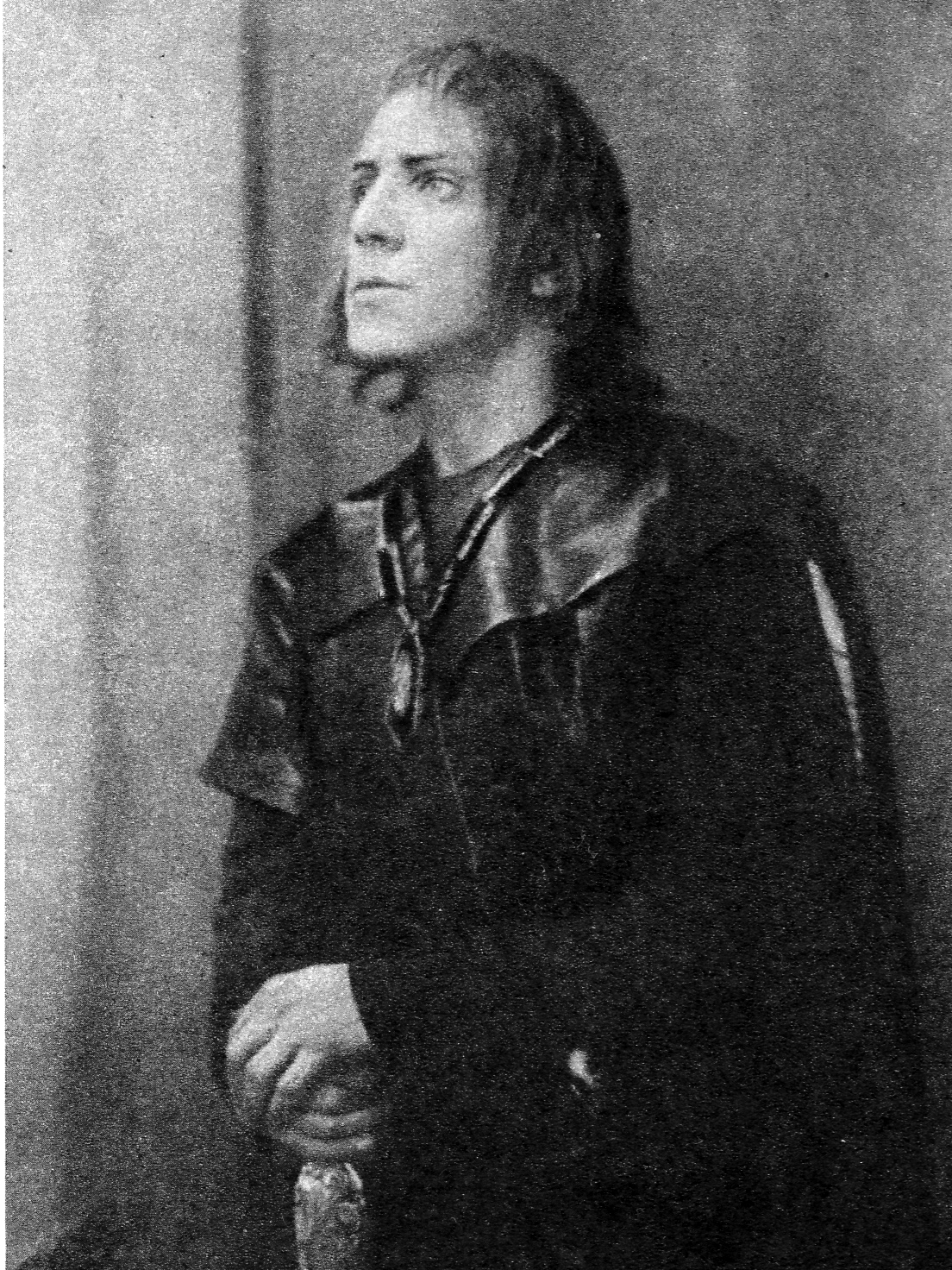 Mikhail Chekhov in the role of Hamlet. Moscow Art Theater, 1924
Although many theatrical roles of Mikhail Chekhov were successful, he entered the history primarily as a great theater teacher who brought the Stanislavsky school to the United States and developed on its basis his own acting technique. His students were Gregory Pek, Marilyn Monroe, Ingrid Bergman, Anthony Kuin, James Dean, Anthony Hopkins, Clint Eastwood, Harry Cooper, Jack Nicholson. The study of his heritage and the propaganda of the method of preparing actors is engaged in the Association of Mikhail Chekhov .
What you need to know about
In the early 1910s, Mikhail Chekhov learned about the Anthroposophical teaching of the Austrian philosopher Rudolf Steiner and soon became his convinced follower. In the works of Steiner, in particular, a new approach to acting and dramatic art was proposed, which Chekhov used to create his own system of training actors. Some researchers believe that anthroposophy helped Chekhov overcome the spiritual crisis and open new ways in art.
Direct speech
“Five or six years ago, I experienced burning shame! I could not tolerate myself as an actor, I did not put up with the theater as he was at that time (he remained so now). I definitely and clearly realized that it was in the theater and in the actor that acts as ugliness and untruth. As a huge organized lie, I perceived the theater world. The actor seemed to me the greatest criminal and deceiver. The whole theatrical life seemed to me a sphere of enormous size, and in the very center of this sphere, like a spark, a lie flashed. The spark flared up at a time when the auditorium was filled with the public, and the scene - actors. A lie flashed between the stage and the auditorium! In the enormous sphere of theatrical life, there was an unceasing work, a boiling work: books about the theater, about the actor, about the director, “searches”, “experiments”, studio, school, lectures, critics, judgments, discussions, disputes, disputes, enthusiasm and disappointment, pride, great pride and next to it, goodness, fear, fear of all over allocated, dispelled buildings. the territories of the country, the states, and among them faces are venerable, half -consumed and not at all venerable ... All this lives, moves, worries, screams (shouts loudly!), quickly flies from various points of the periphery of the sphere to its center and is allowed there with outbreak, spark, lodge! ”
From the book "The Way of the Actor"
“Exercise 1. Choose a simple item. Consider it. To avoid the “look” for the subject - describe for yourself its appearance.
Do internally (psychologically) all four actions that make up the process of attention: keep the object, attract it to you, rush to it, penetrate it, as if trying to merge with it. Do each of these actions first separately, then together, connecting two, three, etc..
Continue the exercise, making sure that neither the organs of your feelings, nor the muscles of the body are excessively strained.
Change the objects of your attention in the following sequence:
1. A simple, visible item.
2. Sound.
3. Human speech.
4. A simple item caused in memory.
5. The sound caused in memory.
6. Human speech (word or one phrase) caused in memory.
7. The image of a person you know well, caused in memory.
8. An image taken from a play or literature.
9. The image of a fantastic creature, landscape, architectural form, etc., created by you.
Exercise until the attention with its four actions will not become an easily executive single mental act for you.
Having focused on the object, begin to simultaneously perform simple actions that do not have a direct attitude to the object: holding, for example, in the field of attention, the image of a person who is currently absent at the moment, begin to clean the room, put the books in order, watering flowers, or make any easily executable action.
Try to understand at the same time that the process of attention proceeds in the spiritual sphere and cannot be violated by external actions that are committed with it.
Make sure that attention is not interrupted if possible.
Do not bring yourself to fatigue, especially at the beginning. Regularity in exercises (two to three times a day) is more important than their duration. From time to time, return to the original, simpler exercises.
From the book "On the Technique of the Actor"
“The third day I had lunch with Alexander. His wife finished culinary courses and actually cooks food perfectly. And his son Misha is an amazing boy in intelligence. Nervousness shines in his eyes. I think that a talented person will come out of him. ”
From the letter of A.P. Chekhov of February 7, 1895
“Perhaps for the first time for all those eight decades that the stage story of the auditor on the Russian stage has, finally the Khlestakov that Gogol himself wrote about.”
The Mestorian Theater magazine about the play "Examiner" (October 1922)
“His game is not given to description, even if I finally gnawed my pencil, I still could not have expressed in words any of the impatient, rapid, sharp movements of his aristocratic hand.”
From an article by Karel Chapek dedicated to the tour of the Moscow Art Theater in Czechoslovakia
4 facts about Mikhail Chekhov
- As a film actor Mikhail Chekhov debuted in 1913 as Mikhail Fedorovich in the film "Three hundredth anniversary of the reign of the Romanov House."
- Before leaving Russia, Mikhail Chekhov starred in seven dumb films. He played three roles in the cinema in 1929-1930 in Germany and in ten more films starred in the 1940s-1950s in the USA.
- For the role in Hitchcock's film “Fascinated” (Spellbound, 1945), Mikhail Chekhov was nominated for the Academy Award for the best male role of the second -plan.
- In 1914, Mikhail Chekhov secretly married actress Olga Knipper , niece of Olga Leonardovna Knipper-Chekhova. The marriage lasted less than four years. In 1920, Olga Chekhova left for Germany, where she became famous as an actress of theater and cinema. Famous German actresses also became the daughter of Mikhail and Olga of the Chekhov Hell and granddaughter Vera.
Materials about Mikhail Chekhov
Article about Mikhail Chekhov on Russian Wikipedia
Article about Mikhail Chekhov in the Encyclopedia "Circumspices"
Mikhail Chekhov on the website "Theater Library of Sergeeva"
Site dedicated to Mikhail Chekhov
Galina Rostova "Michael Chekhov"