
Translated material
Kafka nesting dolls
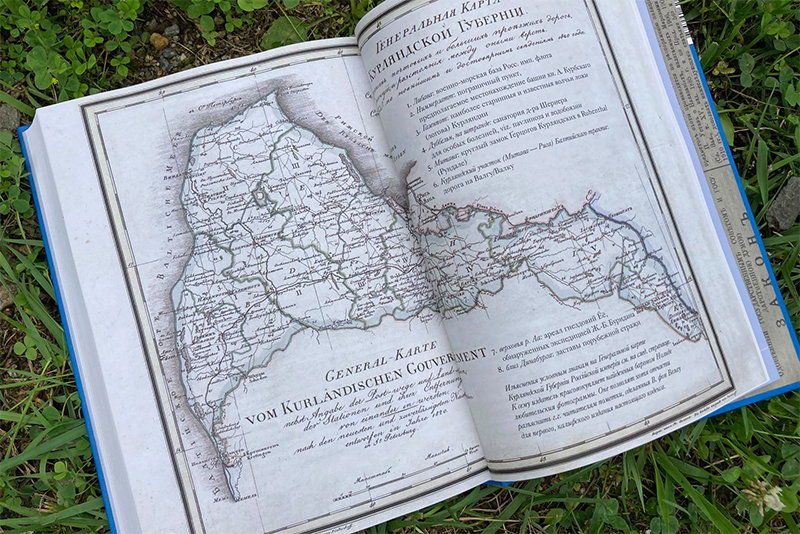
The very mysterious book of Grigory Zlotin, a literature teacher in California and Translator Rilke, Kafka and Hesse, makes us recall what literature did earlier - a careful, intelligent even creation of alternative worlds. Strange (or not so strange against the backdrop of an increasingly threatening and unsympathetic reality?) The genre has again become relevant - to recall at least a rustled “griffins protect the lyre” by Alexander Sobolev. But if there is a reconstruction of the domestic reality, in which the Reds lost, despite all the Kunshtuki, came to the elegant Nabokovsky stylization, the gloom, then Zlotin is more interesting.
And the point here is not only in the thoughtfulness with which the author turns his favorite toy in his hands - here is the index of the mentioned realities and names (we will return to it) and vocabulary explanations (the book is written as it were in the pre -reform language - because, say, Fita and Izhita are, but the ten are used occasionally), and cards, and illustrations and archival photos. And not even that in front of us, in fact, the book in the book is all this stylized archaic is packed in the materials of its own zoom-response (here is the contrast of the times!) Famous philologists like Danila Davydov, Mikhail Pavlovets and others, which makes him nostalgically sigh (or spit, who are already) in the golden times of postmodernism with his Khazar dictionaries, Reading from the end, beginning, in the male or female version. Before us, in general, one might say, a kind of painstakingly prepared artifact - illustrations of the artist Peter Peresentsev, beautiful paper ...
All this would be sweet, but optional bonuses, if it weren’t for the world’s world hidden in the main text - deep, unexpected, constantly deceiving with the next angles. Yes, in order to start and finish with spoilers, then the action (a whole spectrum of actions!) Does not occur here in Russia, but in a certain limitrophic Courland. At the end of the early - beginning of the last century, as in real history, the world powers were prompted, but the world was and became definitely different - the same Russia as such perished, a new France is based in America, and the settlements of New Courland can be found on the island of Tobacco in the Caribbean. In all this world, an almost Ozliki- harsh order, enlightenment (with separate jackets in the field) and such an advanced steampunk civilization reign.
The ethical, relatively speaking, presentation - that is, even rather, the surroundings of all this is already unusual. Yes, in individual short stories there are such poorly hidden references to the domestic modernity as clubs in the square, conquering an innocent people by mercenary Huns (here in the pandan, A. Terekhov’s curious novel “Germans” is recalled, where under the Germans he brought out a new class of effective managers, a kind of new nobility-re pretext), “unreliable laws, inaccessible wars, imaginary targets” and imaginary goals ” Some other "Easterks". But Grigory Zlotin is very far from the creation of the world in the patterns of any of the camps-whether it is the crazy and mediocent Russia from the worlds of the last novels of V. Sorokin or the powerful and brilliant empire from the Ukus of Angel P. Krusanov.
 © Publishing project "A and B"
The short stories of Grigory Zlotin have a completely different intention ... However, Stop. As in the book, in the report of it all terms need a separate mini-vocabulary. Formally, according to the notification at the beginning, we are not in front of us artistic novels, but the correspondence of two friends, at first glance, are the extent of those involved in the processes of the escape. You gradually understand that they are closer to the role of almost creeds: one stands for the active comprehension and transformation of the universe, the other is a pronounced follower of the ideals of the ataraxia, an epicurean with obvious elements of the Stoic and even a cinema. In fact, we just have a whole fan of genres - novels, sort of capaprichos, stories, parables, poems, plays, often in English, sometimes in German ...
But you should not be scared that the book is a pile of flowering diversity. If you look closely, everything is very well tailored, driven, and a hook from one short story with a high degree of probability will come to another. If one parachus-nellka about the nightingale, then in the next on the stage there will be a nightingale-warrior. Or even more elegant: in one text, the hero lived in a kind of nightmare, was looking for a way out of the house with numerous rooms and at the end walked from the door, behind which there was nothing under his feet, no support, and the next text begins with the “support of the nation”.
And this lack of support, let’s say, is almost the main distinguishing feature of the novel. There will be a lot of readers here in the course of action - and not all of them are destined to come true, by no means. After all, at first, you can, like in the Borkhesian bestiaria, almost get lost among the strange characters, the inhabitants of this world: the wolf is dragging a crowd of drilling to the execution, here is the account-hood, here are the flying old people, here is the puzzle-mandal, here the person is ready to go to the execution for the sake of an umbrella, for some reason forbidden in this world, here is a crazy retired clown or a person who has praised the disease. reduction in size ...
It is extremely interesting how these mysterious phenomena are decorated. Less often, we can read the finished narrative, most often we are loomed not by the proud inscription “end” and the credits, but “the end of the fragment”, “passage from the report”, “here the manuscript breaks off”, etc. All this seems to be taken out of context, but has a strong property of expanding this very context due to the elimination of borders. Each passage - its own world, refers to another, is part or just a rhyme to the whole, total - everything is almost infinite, like space.
In which each reader can feel, find his key. By the way, the possession of the key (a metaphor for registration?) Is the most status thing in one of the short stories, but the hero in the end does not save from expulsion for a distant kilometer - in the book there are a lot and for full absurdity pursue various characters. Therefore, it is easy to see a kafka here. Someone will feel Sigismund Krzhizhanovsky or Leonid prey. Household, crazy vignettes in the spirit of Daniil Harms in the book Bok on the side are adjacent to the subtle absurd grades of Vladimir Kazakov. Vaguely religious parables about the illusoryness of all things will make you recall the novels of Dmitry Deich, and the system of total control over the most, seemingly everyday like the same umbrella-the “speech therapist” Valery Vorin, where the linguistic norms of the Criminal Code are likely . Or the book of the author completely unknown to me, whose pseudonym (?) Also refers to Kafka, - “Bezlutniy wanderers” by V. Grakhov , on the example of which you understand that all these phantasmagories and absurdities are not such a pure fantasy game: here is a person in one of the novels of the coronavirus sympathized!
Thus, “Marienburg Snow” clings that you can suspect all these-and many other authors. Perhaps Kafka is the most. But let's look at his example how the encryption and deconstruction of it occur here. The author, as it is now fashionable, from Facebook to banking applications, uses the multifactorial identification system. So, only in the “ Vademecum , or a brief excursion into the history, geography and genealogy of Kurland,” we will read about the character previously remembered here and there:
Galk, Frantiseka (1884–1924): Familiar among his followers of TZH. Under the name of St. Francis Prague Great Bohemian philosopher-reformer of the first half of the twentieth century. Substantiated the inevitability of admiration, i.e. The uncertain disappearance of emigrants from the dolnyago Mira in his program manifesto "New France". He formulated, among other things, a temporary paradox (about the inability to hide to a neighboring village), as well as the imperative of the frequency (cutting) of the ice of the human inner sea as the main content of his spiritual search. The corps (Corvus?) Galka took into the country of the East, his faithful student, the arbitrariness and the first publisher Maximilian Hlaifs, who had saved them from destruction.
Kafka (“Galka”) and Max Brod are encrypted, although transparent, but twice. And such encryption, unraveling work becomes literally emblematic for the whole book. In which everything in fact turns out to be at all what it was imagining. Here, for example, the same wolves persecuted - “assumed. Sokr. From the “free masons”: the descendants of the Knight's clans of the Livonsk Order, which formed the basis of the educated class of Courland, the key to its honor and prosperity. During the Time of Troubles of 1918–21 They were subjected to cruel persecutions, from which many fled abroad, others even to New France, where they disappeared unless. ” And the mysterious Solovolk, which only the illustration helped, is a wolf, "at the same time consisting of the Order of the Nightingale (see," Nightingale ") , is called Solovolk (see present. Eastern) , and among these latter there are many patients with self -absorption."
It’s easy, however, guess that this is not the truth in the last instance, but only one of the nesting dolls that lurking the next wink of the author. After all, the “snow of Marienburg” claims to create not only an alternative world, but also a different logic. Take at least the logic of death: in one short story, no one even begins to distinguish the living and the dead, in another person subscribes to a long and expensive treatment in the hope of someday to recover, that is, to die, in the third most prestigious work it becomes depicting motionless monuments or dying with a pillar ... and even the same as it is in Moscow, September is not discussed with neighbors or on the network, but with the network, but with the network, but with the network. characters with an umbrella:
"Have you ever been like that?" -he asked, turning to a black umbrella, forgotten by someone in the front at the steering wheel: one, in an empty office, at the end of another, departed, as if in a dream, a day present. “You are standing at the clutches of the attic window. Autumn light lies on the floor, on the wall. This light inaudibly and untreated with the crowns of knitting in the empty yard. Come out of the house. Today is September. In the bottomless-high, transparent dome of the sky, a wedge of wild geese flies. ” “Have you noticed that the sky rings the sky in the fall? In the evening, clouds will gather, and on the explosion of its mining path the sun will pierce their blue highlands with a dazzlingly clean beam. The air is thin and timidly, which is here. He is not here. Rowan sparse borders the gardens. From moist land it blows the aroma of mushrooms and foliage pala. The flying impulse reports the knock of distant wheels. Dahl ... "
Are they talking to an umbrella in the end? Playing with quote references, speech in speech, it is not clear for sure who addressed, and creating a strange, sometimes frightening, but very nice for solving and even immersion of the world. Perhaps not so far.
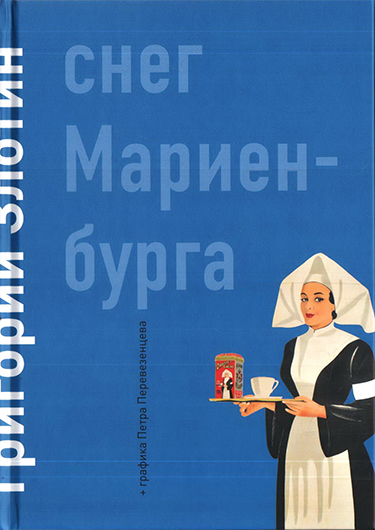
Grigory Zlotin. The snow of Marienburg. - M.: Publishing project "A and B", 2021. 432 p.