
Translated material
Grain growth
What kind of will you come from?
It is enough for at least a few minutes to walk along the street of any European city in order to stumble on carefully cherished signs of continuity. Here is a hairdresser, which says something like “ Since 1850”, here is a confectionery shop, which sells cakes prepared according to the recipe invented in 1822, here is the house on which the date of construction is laid out-well, for example, the 1675th. And so on and the like. These signs are carefully stored and stubborn. Strictly speaking, these are not just signs, it is, as they say now, consciously built “historical narrative”, or “narrative of continuity”. The point is not just that they cut it down for a long time, but the recipe is old. All these stones and signs seem to say: we remember how it all began, and appreciate that the one who has begun, born and built, can live in generations and centuries. The first confectioner, who founded it, remembered how he invented his recipe, is remembered in the confectionery shop, and they will definitely tell you about it if you ask.
Large and serious institutions in this sense do not differ at all from a tiny hairdresser. Oxford, one of the oldest and venerable European universities, consists of many colleges, each of which remembers and carefully stores the memory of who and under what circumstances were created. Bailiol-about John de Bailiola, Modlin-about Bishop William Waynflith, Kraist-Cherch-about Cardinal Thomas Walsey. In All-Souls, once every hundred years of Dona and students go to hunt a wild duck, which flew to King Henry VI on the day he founded a college. And this is not just memorable, not just a sentimental form of gratitude. The circumstances in which this or that institution was born, the goals and intenses of its founder are considered important as the constituting part of the structure; Their oblivion leads to loss from sight of the most important and puts under attack the correct functioning here and now. So genetic memory is information about the past, acting in the present. The history of the creation of the Cambridge Girton College, one of the first female higher educational institutions, and its founder, suffrazhist Emily Davis, remember all over the world-after all, this is the most important episode in the struggle of women for the right to receive higher education; To understand well how it works, we must remember how and why it began.
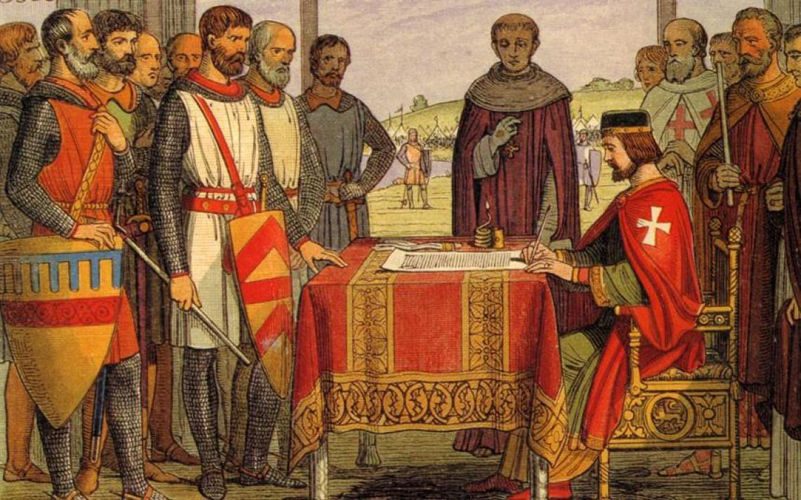
A striking case of a large-scale “institutional narrative” is the history of the Great Charter of Frequencies, the 800th anniversary of which is marked in the Anglo-Saxon world as a kind of Founding Myth of modern Western democracy. As Harvard historian Jill Lepur notes , the myth of the Charter is much more important than her real meaning for his time. She was not the first agreement of the king with barons, the “liberties” guaranteed by her applied primarily to know, and the actual democratic elements in it are quite difficult to find. But it was precisely the memory of the Early District in June 1215 in the meadow of 1215 that inspired the English parliament to struggle for their independence in the 17th century, and later influenced the formation of the US Constitution and the Universal Declaration of Human Rights.
When the idea of the need to remember the origins becomes something for granted, this leads to amazing examples of the ratio of “vertical” and “horizontal” sections. I will never forget how I once ended up in a small Lombard town of Sonchino. He is famous for the fact that the first full Jewish Bible was printed there in the 15th century. Of course, the main museum in the city is devoted to the history of printing. But most of all I was struck by the book that I discovered in the house where I happened to visit. In the thick volume, published, as I recall, with the participation of the municipality, it was described in detail about the history of the city since the time of Neolithic. Neolithic! In the town of Sonchino, seven and a half thousand inhabitants: this is four times less than in Dedovsk near Moscow.
All such cases are extremely interesting as examples of the origin of institutions, thereby leading to an important way of describing institutions in principle. After all, one of the ways to determine the phenomenon is to describe its genesis. “Still, tell me what kind you are, where? - the characters of Homer's poems ask each other. “After all, not from the oak, you were born old legends, not from stone.” Having called your family, the material from which you are made, you call yourself. In the same way, it is possible to define the nature of a person or animal by tracing the development of the embryo.
From private to general
It is customary to talk about institutions or as something bad and unstable, but existing (Russian civil society institutions, ownership), or as something called an institution, but they are not (party system, elections). In any case, the institute is taken as something ready. But after all, in view of the foregoing, no less, and possibly, is of greater interest is the process of birth from a private initiative, a way of institutionalizing a private one.
In order to go beyond their limits and gain great stability and greater effectiveness, the private attaches to universal in the form of rules and procedures. It is one thing to invent a cake recipe, it is completely different - to ensure reliable rental of the premises, stable deliveries of ingredients, establish sales and, finally, make sure that when you get sick (and ultimately you die), the case does not get up and the confectionery does not close. This transition from a private initiative to the institute is an unusually fragile and unstable process, it can easily stray, not develop. On this path there are many various kinds of dangers. The privilege of the private is fraught with the fact that instead of confectionery it will turn out either to anyone an interesting between the landscape, or a powerful network, controlled by the iron hand of the authoritarian owner and falling apart as soon as he does not become. The superiority of the general - by the fact that the initiative will degenerate into a faceless and also not interesting project, devoid of individual traits. And so that this weak sprout, which can break the wind and bad weather, has become stronger, turn into a firmly rooted tree, in the branches of which the birds of heaven can be hidden, it is precisely what we called the "narrative of continuity."
The schoolboy walking along the street of the Russian city, meeting the advertisement of the Euroset or entering VKontakte, hardly recalls Chichvarkin or Durov, and if he remembers, the worse for him.
When the society is arranged in such a way as to help the particular develop itself for the benefit of this very society, it is easy to be born to institutions, knowledge of this is worn in the air, speaking in the signs of SincE 1850, a wild duck hunt and the foundations laid out in the walls of the houses. This knowledge caught and expressed in order to bring a passerby to the idea of establishing something of his own, and there is the same narrative. A schoolboy with a thousand ideas in his head, seeing such a “since” , understands that ideas and fantasies should be tried to instill in reality - and they can turn out Google , Facebook , Tesla Motors or Spacex . Such a narrative leads to many other useful thoughts. For example, what is worth studying well, because if you achieve success as a scientist (for example, you can create a working economic theory as Keynes, or predict a great depression as von Mizes), you will be given an institute, you will be consulted when making important government decisions, or even call the government.
New on top of the old
In Russia, for many reasons, this is more difficult. Newton’s laws are acting even in a dark and musty room, and there are examples of institutionalized private initiatives here, but their fate does not always develop happily. RSU Yuri Afanasyeva, Museum of Kinoma Naum Kleiman, “Echo of Moscow” by Sergei Korzun, Kommersant Vladimir Yakovlev, Yandex Arkady Volozha and Ilya Segalovich, “VKontakte” by Pavel Durov, “Euroset” Evgeny Chichvarkin - all these are examples of this kind, and the fact that in this row, taken completely one, only one obstetric The undertaking has not yet been torn off by its creators, in itself eloquent enough.
The reasons why this is so, not only narrow -political, is not only a matter of “bloody regimes” regularly replacing each other for centuries. With the culture of continuity in Russia, it was always bad. The argument that our history is a series of wars and revolutions is not too convincing: in Europe with wars it was no better than ours. It's different. Art historians, engaged in the history of ancient Russian art, say that its specifics, unlike Western European, also in the fact that at every new stage of development, for example, fresco art, new frescoes were written on top of the old ones. Our cities were built on the same principle - Petrovsky, Catherine, Stalin, Khrushchevsky and Luzhkovsky “General Plans” were located on top of them, as in a clean field. In our homes, there are almost no things even pre -war things, and things are pre -revolutionary or even earlier - unique. Europe was bombed no less than Russia, but there the situation is fundamentally, blatantly different. We ourselves do not consider it necessary to store the juni, ourselves “write down” the old new, we build on the former before us, as in a clean field.
It is easy to say (and often said) that 1917 in a brutal way broke the course of tradition, “opened the vertebrae” of Russian time. It is much worse to assume that the unexpected success of the handful of the Bolsheviks is not least connected precisely with the fact that this screening was very well fallen into the logic of Russian history, united by her, and does not break out of it. The schoolboy walking along the street of the Russian city, meeting the advertisement of the Euroset or entering VKontakte, hardly recalls Chichvarkin or Durov, and if he remembers, the worse for him. A student who dreams of making an outstanding discovery and writing a brilliant book recalls examples of Andrei Gam and Alexei Novoselov, Grigory Perelman, Sergey Guriev or - completely fresh - Konstantin Sonin and begins to look for an opportunity to leave or goes to work as an official.
Even commercial mechanisms, in other cases, usually allowing one or another practices to stay afloat, graze before the resistance of the medium. Such a widespread narrative in the West and commercially successful and a commercially successful example of the narrative described by us, as the Bayopica genre (filmed biography, whose heroes are civil activists (Erin Brochovich), fighters for minority rights (Harvey Milk), inventors (Aviator), etc.), in Russian kinematographer occupies almost exclusively biographicals in Russian kinematographer canvases of Sergey Eisenstein. The only post -perestroika film of this kind - “oligarch”, taken based on the biography of Boris Berezovsky, was used as evidence against him in court, and the film adaptation of Nikolai Kononov’s book about the founder of “VKontakte” after the hero’s departure from Russia was postponed indefinitely.
The rejection of this very “narrative of continuity” in Russia is not just an extremely common practice, but an almost universal rule. My friend, a teacher of the Moscow Conservatory, engaged in the history of his department, came across an amazing story about a handful of like-minded people and enthusiasts who enthusiastically built their institution since the 1860s. But in parallel it turned out that almost all the pre -revolutionary archives of the conservatory were selected at one time and transferred to RGALI, so that there was no continuity, and the conservatory immediately turned out to be a noticeable state institution. Searching for information about their Lutheran ancestors, I found that all the church books of the Russian Lutheran communities were confiscated by the state and partly destroyed, and partly placed in the State Archives. What to say, even if the parks and lawns in Moscow annually clean the foliage from Pala, pouring specially bought peat instead of humus, instead of allowing a cultural layer to grow naturally.
Resistance and distortion
Where does such resistance to the culture of private initiative and continuity, what forces and why do they act with such energy and perseverance?
The point, obviously, is that the model, which involves the free germination of initiatives and their institutionalization, too clearly contradicts the traditionally formed model of the structure of society in Russia.
The institute is that which connects a person and society, individual and common. Thus, the family, state and business project gain the features of community; All these are institutions, one in this sense is not higher than the other, and in each case the rules, one or another system of regulations is higher than arbitrariness. A society in which everyone knows that an institution that claims to comply with the rules of all its members can build a society in relation to him is an aristocratic society. The idea that my family created by my grandfather is the same institution as the state, school, police or church - a serious challenge and a serious discipline factor for the state, and for the school, and for the police, and for the church.
With this structure of society, paternalistic and parasitic (or raider) strategies, building pseudo -artillery on the basis of proximity to power, respect for this proximity instead of respect for ability and success look with a sharp dissonance.
The main characteristic of the institute is the primacy of the rules and procedures over arbitrariness. This is his difference from an authoritarian structure, tied to a strong leader who knows how to hold the situation in his hands. The institute taken in the aspect of development from a private initiative can often be very similar to it and can often degenerate into it. In societies that are not used to be guided by universal laws and not knowing control mechanisms, this danger is especially great. The sect led by the charismatic leader, the authoritarian model of personal management in business or in politics are examples of quasi -vocationalization of private initiative.
Institute and authoritarian structure
Corporations holding on volitional management are often very effective. In Russia, this is especially noticeable. Many well -working institutions are tied to a strong or charismatic leader. It is best functioning today and at the same time relatively independent educational institutions in Russia are the Higher School of Economics, led by Yaroslav Kuzminov and RANEPA, led by Vladimir Mau, and among the media (until recently) - the Echo of Moscow radio station, headed by Alexei Venediktov. They are alive due to the fact that their leaders take on the costs of relations with the authorities, including with the leadership of the country. The decisive criterion that allows you to determine how much these are the institutions - their future after they will lose their leaders.
But how exactly is this very primacy of common over the private, rules and procedures over arbitrariness? Here is a vivid example from an unexpected, at first glance, sphere, additionally emphasizing the universal nature of the issues discussed. In the second half of the 20th century, the Sourozh diocese, the British unit of the Russian Orthodox Church, under the strong -willed and charismatic leadership of Metropolitan Anthony (Bloom) grew into a strikingly lively and independent organism, convincingly and adequately to the Western Europe of Orthodox Christianity. The appeal to Orthodoxy among the British under Metropolitan Anthony was a very frequent phenomenon, the diocese has become an important element of the British and Western European spiritual life, the influence of the produces of the Bishop experienced many in Britain and then in Soviet Russia and all over the world. Unfortunately, the diocese did not survive the death of Metropolitan Anthony, which was followed by a split, the scattering of flocks, the loss of previous inspiration and influence.
Does this mean that the Sourozh diocese could not grow into the institute? No, doesn’t mean. An important episode of the history of the Surozh diocese was the creation of its own charter, which was developed by all its active members and determined their rights and obligations based on the understanding of the nature of the Church as a collection of faithful around Christ. It was this charter that was called upon to ensure the viability of the diocese as institutions after the death of the "charismatic leader." And that is why Metropolitan Anthony considered it extremely important and necessary work on its creation, although the current charter of the Russian Orthodox Church could easily borrow. However, the natural consequence of the special and living path of the diocese was the difference between the charter born in its bosom from the principles by which the church lived in Russia. Therefore, in order to destroy the independence of the diocese and submission to Moscow, which occurred in 2006-2010, the abolition of the charter was necessary. It was it (and not the death of Metropolitan Anthony) meant the end of the existence of the diocese in its former form.
This kind of charter - the creation of which required not only volitional and organizational, but also creative and theological work - an example of the effort necessary to turn a private initiative into an institute.
From sprout to tree
Newton’s laws even act in the room with a dark and dodged, and the grass continues to grow, no matter how much it was mowed, while there is soil, water and the sun. The soil, water and the sun are always stronger than the lawn mower, because the living is stronger than the dead. That is why the institution is more stable than an authoritarian structure. Реагируя на известие об отъезде Константина Сонина, Максим Трудолюбов, многолетний руководитель отдела комментариев газеты «Ведомости», в котором я имею честь работать, написал в Фейсбуке о том, что, несмотря на отъезд автора, его колонка продолжит выходить, «ведь колонка — это институт».
Дерево, изображенное на эмблеме основанного в 2001 году Дмитрием Зиминым фонда «Династия», деятельность которого была заморожена решением его совета в июне после внесения фонда в список «иностранных агентов», как и само его название — ровно об этом. Дерево — это зримая преемственность от ростка к мощному стволу и кроне, в которой находят убежище птицы. Династия — это последовательность поколений, объединенная преемственностью, взятая в векторе преемственности. И важная особенность фонда «Династия», отличающая его от других фондов и частных благотворительных организаций, — целенаправленная деятельность по институциализации своей работы. Едва ли не большее удивление и уважение, чем масштаб благотворительной активности фонда, вызывает сознательно и кропотливо выстраиваемая им инфраструктура поддержки науки — экспертная, дискуссионная, исследовательская. Примечательно, что решение не спешить с закрытием было принято советом фонда при участии Зимина, хотя сам Зимин неоднократно говорил о намерении закрыть фонд. Совет сработал как институциональная структура, смягчающая порывы основателя.
В письме, зачитанном 29 мая на внеочередной сессии Конференции научных работников, Зимин говорит : «Я или мои наследники возобновят, а может, и расширят эту деятельность (по поддержке ученых. — Н.Э. ), как только в нашей стране наше существование станет более цивилизованным». Потому что выстроенный сегодня в России режим держится на произволе, а годами грамотно и самоотверженно выстраиваемый благотворительный фонд — это институт, перешедший от частной инициативы к самостоятельному и устойчивому существованию.
Режимы падают и сменяются другими, а институты живут и процветают. Нобелевская премия, «частная лавочка», созданная чуть более ста лет назад шведским инженером и изобретателем, сегодня воспринимается сильнейшими государствами как серьезная опасность: ведь, давая премию диссидентам, Нобелевский комитет способен подтачивать основания авторитарных режимов.
Открытое пространство
И все-таки что же необходимо для того, чтобы описанные механизмы работали, чтобы общество, говоря словами Зимина, стало более цивилизованным? Исторически объяснимая враждебность среды в России понятна, но останавливаться на фиксации этой враждебности, не пытаясь нащупать ключевые проблемы и способы их решения, значит предпочитать эмоциональную реакцию рациональной. Это понятный выбор, как рассуждения о том, что «здесь никогда ничего не будет», но неубедительный.
По-видимому, ключевым в данном случае оказывается понятие «публичной сферы» ( Öffentlichkeit Юргена Хабермаса и Ханны Арендт, public sphere Николаса Гарнэма и Джона Кина ) каксреды , в которой оказывается возможным взаимодействие частного и государственного. В этом его отличие от понятия «гражданского общества», которое представляет собой взаимодействие частных людей и для участия в государственной политике и контроля за государственными институтами нуждается в специфическом пространстве, связывающем разные типы отношений. Классический образ и архетип публичного пространства — Афинская агора, место пересечения социальных, экономических, религиозных и политических отношений. Интересно, что народное собрание (Афинская экклесия) как институт и публичное пространство (агора) как среда для его возникновения — не одно и то же, старая агора и Пникс в Афинах располагаются неподалеку друг от друга, но все же в разных местах.
Главный капитал Навального – не «харизматичность», а умение работать в публичной сфере.
Публичное пространство в России действительно не сформировалось так же счастливо, как на Западе. Частной инициативе негде раскинуться, показать себя, встретиться с другими. Все связи в государственно-политическом дискурсе выстраивались всегда строго вертикально, все остальное по разным причинам не вырастало, а робкие попытки выкорчевывались.
Но трава все равно прорастает сквозь асфальт. Важнейшее событие последних лет, отчетливо проявившее очертания нарождающегося публичного пространства, — московские протесты 2011—2012 годов. Именно это — их главный результат, и именно поэтому их нельзя считать провалом и неудачей. Многочисленные формы гражданской самоорганизации, родившиеся после 2011 года, от Координационного совета оппозиции и правозащитных проектов вроде «Медиазоны» до энергично развивающихся, несмотря на экономический кризис, горизонтальных благотворительных инициатив — следствие Болотной. И последовавшее затем закручивание гаек свидетельствует о признании властью серьезности запущенных тогда процессов.
Назовем только два примера работы в публичном пространстве, довольно красноречиво свидетельствующих о том, что здоровые процессы не только возможны, но неостановимы. Первый — кампания Алексея Навального на выборах мэра Москвы, когда кандидат, не просто лишенный какого бы то ни было административного ресурса, но противостоящий на всю катушку раскрученной против него административной машине, выйдя на улицу и включив сетевую стратегию агитации, за несколько месяцев увеличил свою поддержку вдвое, с 10 до 20%. В большой степени это произошло за счет охвата необычных аудиторий, которые, как выясняется, при таком невертикальном подходе могут реагировать вполне неожиданно. Главный капитал Навального — не «харизматичность», а умение работать в публичной сфере.
Второй пример — созданное по инициативе Михаила Ходорковского сетевое движение «Открытая Россия». Характерно, что проект не ставит перед собой непосредственно политических задач, его цель — создание возможностей для здорового политического процесса именно за счет выстраивания открытого публичного пространства, форума (не будем забывать, что это перевод на латынь греческой «агоры»), на котором возможно взаимодействие политологов и политиков, экономистов и бизнеса, правозащитников и граждан, социальных философов и гражданских активистов. По мнению Ходорковского, российское общество давно созрело для изменений, реализации которых мешает текущая политическая ситуация, но которые непременно произойдут, если живые силы получат возможность для взаимодействия.
* * *
Быть может, самый яркий образ рождения публичности в ситуации запрета политического высказывания, но при наличии публичной сферы — блестящее начало политической карьеры легендарного афинского законодателя Солона. По рассказу Плутарха, утомленные войной с мегарцами за остров Саламин, афиняне запретили законом призывы к возобновлению войны. Тогда Солон притворился сумасшедшим (интереснейший образ непростого выхода из частного пространства в публичное!) и, явившись в таком виде на агору, продекламировал согражданам свою элегию, в которой призывал отвоевать остров. Вдохновленные афиняне, избрав его предводителем экспедиции, отвоевали Саламин, а Солон получил возможность провести реформы, заложившие институциональные основания афинской демократии. Трудно придумать лучший пример институциализации частной инициативы, а та огромная роль, которую играют в европейской культуре предания о Солоне-законодателе, — еще одно подтверждение важности «нарратива преемственности».
Агору можно закатывать в асфальт, Солонов сажать в психушки, а Сократов казнить, но остановить разворачивание публичного пространства, когда оно уже началось, невозможно, как невозможно остановить рост зерна. А если Солону есть где продекламировать свою элегию, рано или поздно он это сделает — и будет услышан.