
Translated material
Shadow of default
Spain fights a crisis
The shadow of default above the Sun. Spain is increasingly called "New Greece": the economic situation in the country every day is harder. The other day, the Moody's International Agency lowered the ratings of 16 Spanish banks, including the two largest - Santander and BBVA. The Government of Mariano Rajoya makes a good mine in a bad game, stubbornly abandoning international assistance. The crisis, meanwhile, is increasingly paralyzing the country's economy, and the street does not stop protesting. How Spain is fighting with the European crisis, and citizens - with his government, The New Times watched in Madrid
In Spain on May 22, a universal strike of education workers and students began. According to El Mundo, 1 million teachers and more than 7.5 million students take part in it. A green tape was a symbol of the strike, the organizers called on teachers and teachers for a week to attach tapes to the windows of schools and universities. 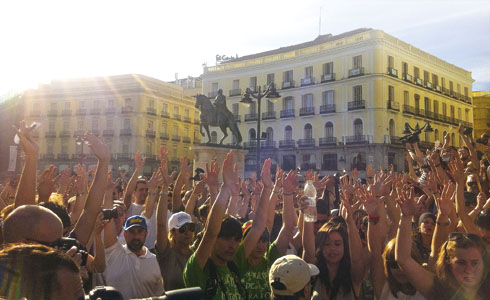
The right -wing people's party who came to power in November 2011 proposed reducing € 3 billion expenses and increasing the number of students in each class by about 20%. According to trade unions that organized the protest, such a sharp decrease in education costs will lead to a reduction in 100 thousand jobs.
Sand locks
Economists of the whole world are unanimousing that Spain stands next in the queue for default after Greece. “There are two factors that do not allow the economy to function normally,” explains the professor of economics of the University of Granado Santiago Carbo Valverde. “This is unemployment, reaching 24% among the working population and 50% among young people under 27 years old, as well as the crisis of the banking system that burst with the soap bubble of the real estate market.” In Spain in the early 2000s, a construction boom broke out. From 2001 to 2009, two -thirds of all European housing were built in this country. Everything would be fine, but it was not ensured by real demand, banks began to artificially stimulate construction with the help of loans. “The economy, therefore, was in a wild imbalance: it is impossible to build locks on the sand, turning a blind eye to the fact that sooner or later they will wash them out,” says Professor Valverde. "
Over the past four years, more than 500 thousand families have been evicted, but this did not save banks: they became owners of a huge amount of illiquid real estate
“Today, 80% of the Spaniards live in their apartments, however, their total debt on loans is more than € 700 billion.“ The market was unreasonably departed, ”explains Tatyana Roeva-Semaan, psychologist and activist of the Mortgage Victims Association.“ Apartments were sold two times more expensive than their real cost, banks issued 100 percent loans, but the rate was not fixed, but not fixed, but not fixed, but not fixed, but not fixed, but not fixed, but not fixed, but not fixed, but not fixed Attached to the EURIBOR (European interbank rate on loans). It is impossible: the cost of real estate fell by 25%, and in some places by 50%. ”
Over the past four years, more than 500 thousand families have been evicted, but this did not save banks: they became owners of a huge amount of illiquid real estate. In early May, the government announced the nationalization of Bankia, the third largest bank in the country, 80% of the business of which accounted for mortgage loans. “The Spaniards themselves are to blame for their troubles,” said Jose Pruss, an employee of Bankia. - They not just thoughtlessly got into debts, but, it seems, they were not going to give them away. A loan for an apartment, a loan for a car, a vacation loan ... If you spend someone else's money for so long, then once you have to pay for it! ”
Victims of the mortgage
The reckoning is really cruel: The New Times correspondent saw this with his own eyes. 11 in the morning, a sleeping area on the outskirts of Madrid. The family of Soledad Ramirez, a 55-year-old teacher, her three daughters and granddaughters, expects bailiffs. But soledad is not one. Under the windows - a man of 30 activists of the Association of Victims of the Mortgage, chanting: "How did it happen that we were left without home?"
“They bought this apartment in 2007 for € 280 thousand, today it will be very difficult to sell it for € 100 thousand,” explains Tatyana Roeva-Semaan. - Well, they will evict this family, and what's next? Nobody will return the remaining money to them, because the salary saved is too small to make automatic deductions out of it. We are trying to agree that the bank either rent an apartment at the price of social housing (€ 400 per month), or took it, but then he completely wrote off the remaining debt. ” 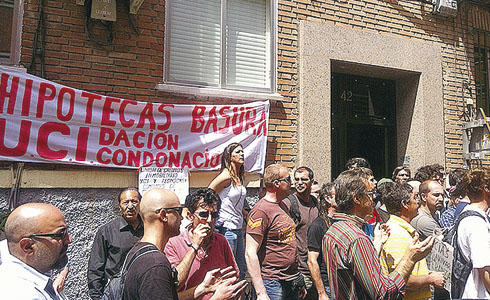
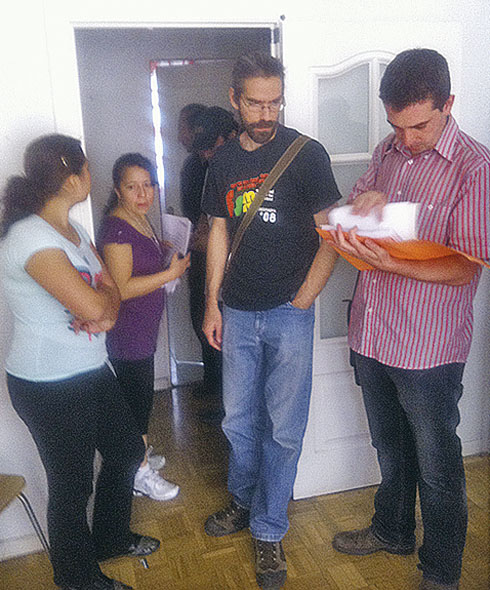
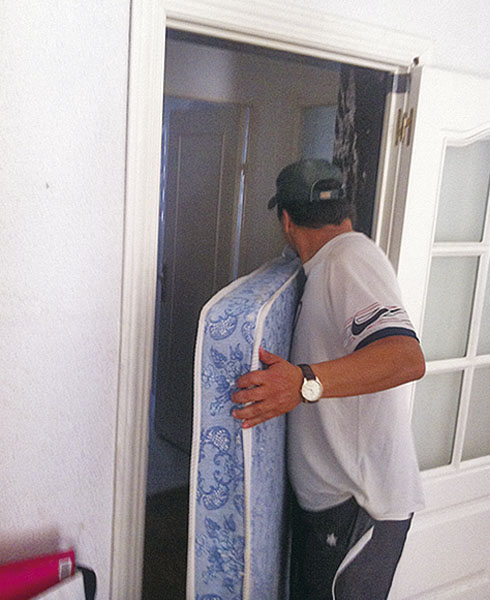
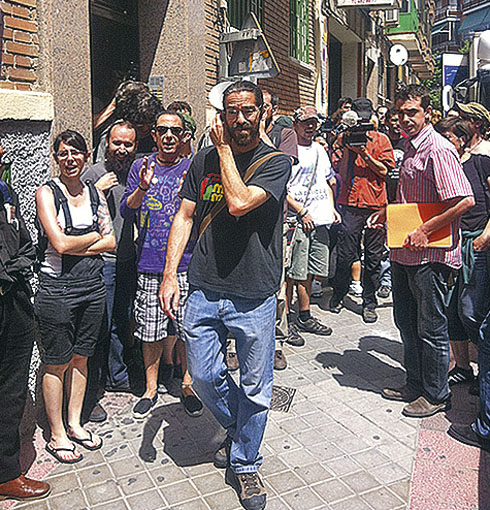
After two hours of intense expectation, bailiffs, accompanied by the police, finally come. While activists blocked the entrance to the entrance, continuing to chant the slogans, the lawyer is conducting tense negotiations with the bank representative. A lawyer surrounded by the police with the son-in-law Soledad first watch the papers, call somewhere, look at the papers again. The situation is heating up: everyone smokes, then they begin to wave their hands, call again. Finally, joyful news: the bank gave a month and a half a delay to find a solution. "Yes! We can! " - the crowd rejoices. Soledad Ramirez in tears goes to the loggia and in gratitude waves with all the sympathetic hand, her son -in -law cries below, hugging his wife and sister -in -law. "A neighbor, neighbor, you're not alone!" - the activists shout.
Unfinished
The end of the housing paper painfully responded not only to banks and their customers, but also on thousands of labor migrants who came to the Spanish construction sites. From 6 in the morning they gather for Plaza Eliptic in the south of Madrid in anticipation of customers. “We call this place an office,” says Rodrigo, who came here 12 years ago from Ecuador. - Only if until 2007 I came here every three months to find another project, now I’m standing idle for days. If you manage to find a job for 5-6 days a month, we can assume that it is more lucky. ” Ecuador, Bolivia, Dominican Republic, Morocco, Romania, Bulgaria - the geography of the inhabitants of Plaz Eliptic is extensive. Almost everyone has a residence permit in Spain, but everyone works in black because they are at the same time on the labor exchange. “You are constantly afraid of raids: if they catch work, stop paying benefits,” says Ukrainian Vasily, “I get € 900 benefits from which I give € 600 for the apartment. If you manage to earn € 250-300 per month on construction sites, this is good, otherwise it happens that you work for several days, they throw you, they don’t pay anything, and nowhere to complain. But I still need to pay for my daughter, who graduated from the institute in Ukraine, now I have come here, but so far it doesn’t work: it teaches Spanish mova. ”
“Every day it is getting harder for us,” Randol from the Dominican Republic complains. - There are more sets. Even those who did not officially work left medical insurance before, now this is not. They also say that now the government allocated money to deport illegal immigrants. ” “Maybe this is good,” Vasily thinks. - If only all the Romanians who work for a penny were kicked out of here and bring us prices! ”
Real democracy
The Government of Mariano Rahya changed the socialists in the Spanish parliament in November 2011, but it could not attract a street to its side, which creates its institutions that duplicate and often controlling the official one. Puerta del Sol Square in Madrid became the center of protests a year ago, when 50 thousand people took to the streets with demands to reform the country's economic and political systems. “Real Democracy is now” - became the main slogan of the protesters. After the demonstration, many decided not to disperse and occupy the square until the government heeds their requirements. "
On each action of the authorities, the opposition of civil society is immediately born: numerous associations help immigrants, unemployed, students, state employees
“However, the Spaniards do not just live in tents and sing under the guitar. In this and other Madrid squares, working groups on education, medicine, ecology, political and economic structure of the modern state are gathering daily: the meeting schedule is posted on the Internet.
The area is usually full in the early morning. On the one hand, the monument to Karl III is a rally on unemployment, on the other hand, the main information action of today: discussion of how to change the economic situation in the country. The host, Tom Cuhars, the leader of the economic working group, reads the program, distributes cardboard and umbrellas arriving students arriving at the sun to hide from the Sun, which is so much (Puerta del Sol in translated from Spanish means “gates of the sun”). Bottles of water and tubes with sunscreen cream are transmitted from hand to hand: the spirit of the brotherhood just hovered over the gathered. At first, everyone listens to Tom, applauding or simply raising both hands in approval, then little by little drawn into the debate. “Our most important achievement,” explains Tom Cuhars, “that we made the economy accessible not only for people with university education, but also for a common people, who began to understand how the modern world functions. They had not agreed with this system before, now they represent how it can be changed. ” Both Tom Kukhars and his protesting colleagues boycotted the latest elections: “That the left, that the right are on guard of capital and corrupt to the brain of the bones. I don’t know what will happen tomorrow, but it is quite possible that today's government will not live to the end of its term, if it continues not to notice us, because here we have our own government - folk. ”
Revolution of pots
On the evening of May 15, on the anniversary of the protest of the "indignant", Puerta del Sol suddenly transformed. In the hands of 3 thousand people, empty pots and pans appeared, with which the demonstrators began to rattle, interrupting the screamers: "We do not pay for your crisis," "This is not a crisis, this is a scam." Thousands of hands soared up, then to close in the thunder of applause. When asked whether it was difficult to obtain permission to hold a rally, one of his organizers Suzanne Sans replied: “But we did not ask anyone for permission and did not even warn anyone. We do not want any dialogue with the authorities, this is an act of civil disobedience. ” At the same time, the police, although it stood at all ways out of the square, but did not interfere in anything.
On Puerta del Sol are people of different ages and representatives of various social layers. Student Fernando does not even hope to find a job and dreams of leaving for the United States or Germany. The 35-year-old Clara, a teacher in kindergarten, reduced the salary, her husband replenished the army of Spanish unemployed, so there was nothing to pay a loan for the apartment. The elderly spouses Rodrigo and Marie-Lus protest against reducing the costs of medicine: for a modest pension they have to buy medicines that were previously free. “My acquaintances and I created a cooperative,” says Louise, who has lost the work of the Stewardess of Iberia, “everyone helps others: someone invites you to live, if there is a free room, someone helps out food if there are relatives in the province. In difficult times, you need to stay together. ”
The principle of "hold together" helps out these days many Spaniards. On each action of the authorities, opposition to civil society is immediately born: numerous associations help immigrants, victims of mortgage loans, unemployed, students, state employees. And while Mariano Rahoy is trying to save the country through the regime of rigid economy, the alternative government is sitting on Puerta del Sol, the unemployed create mutual assistance cash desks, and the army of volunteers of the-appropriate depositors floods with lawsuits banks, insurance companies and state institutions. The Spaniards had long hoped for the help of the authorities, and now, on the threshold of default, they learn to live without a state.