
Translated material
Colta.ru
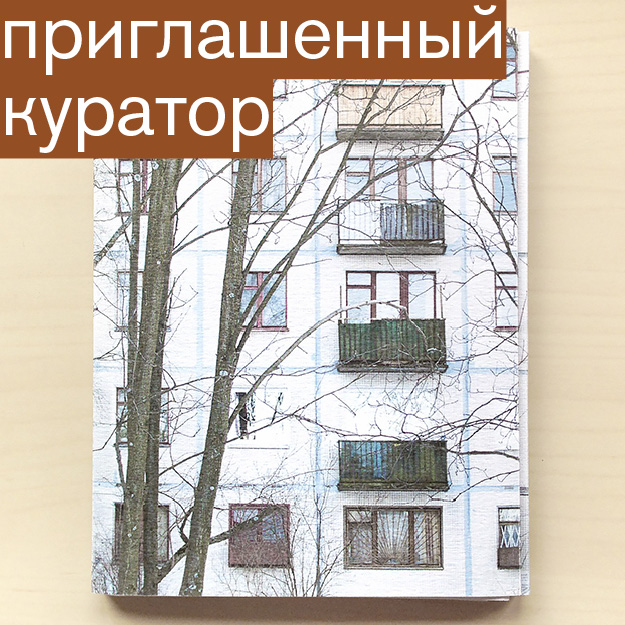
This year, Colta.ru decided to go to the experiment and invited to temporary curators over the section “Photo projects” of young and talented representatives of leading Russian photocurium. We divided the calendar year between six curators and asked them to select the most interesting samples of modern Russian photography for publication.
Invited curators
Katerina Zueva , center of photography named after Brothers Lumier
Nadezhda Sheremetova , "Femicip"
Sergey Lostev , "House of Metenkov"
Daria Tuminas , Freelance Curator, Amsterdam
Anastasia Bogomolova , The Blog This a Photobook
Svetlana Taylor , British Higher School of Design

Fifth resident: Anastasia Bogomolova. An artist working with photography, installations and performance. The circle of close interests includes topics of the mobile nature of memory and oblivion, the boundaries of the existence of the archive and document, as well as issues of mythology and self -identity. Curator and lecturer; researcher, collector and author of the photo book; Flog editor This is a Photobook. Graduate of educational programs "Photode Department". Participant of Savignano Immagini Festival and Bitume Photofest (Italy), Pingyao International Photography Festival (China), OBSCURA Festival (Malaysia), “Fashion and Style in Photography” (Moscow), “Month of photography in Minsk” (Belarusian). The works were also presented as part of group projects in St. Petersburg, Moscow, Kaliningrad, Rostov-on-Don, Norilsk, Perm, Yekaterinburg, Kazan and other cities. Personal exhibitions were held in Moscow, Yekaterinburg, Nizhny Tagil and Chelyabinsk. Lives and works in the Urals.
Preamble
“The Golden Age of Photo Books”, “The Decade of the Self-Pabiging”, “Photo Boom”-in such expressions, loudly or slightly more modest, describes one of the main trends in a photographic environment, which maintains the status of this for a decade. However, this phenomenon is quite sealed in nature. In the West, a festival and market culture formed around it, nevertheless, the framework of the existence of the photo-banking world remains still very narrow, concluding within themselves a crowd of authors, collectors and fans. In the European context, such closed industry, along with the general oversaturation of the field, has already generated discussion about its further development with the search for exits to a new audience (for this purpose, for example, the German curator Marcus Shaden created his Photobookmuseum in Cologne in 2014). In Russia, where a conditional boom of a photo-book publishing house can be observed in the last three years, one does not have to talk about a more or less established market. The number of places where you can see and purchase such publications can hardly exceed ten, there are practically no thematic exhibitions, festivals and fairs - and even more so. In addition, the very word “photo book” with us, as a rule, means collections of wedding or family pictures. In the best case, albums of individual masters released during the reporting period of creative activity.
This, however, does not stop more and more authors before trying himself in the publishing field, experiencing a photo book and as a form for their whole utterance, and as a promotion tool. Given the chamber of the domestic environment, perhaps it would not be worth talking about it, if it were not for the successful experience of a number of artists who have addressed international attention to them. In the short lines of competitions and bonuses, Russian names are more common, at European fairs they show considerable interest in the publications of our authors, and industry experts are constantly distinguished by those who are particularly distinguished in the final lists of the year.
Of course, with the help of several personalized publications, even such a modest -scale photographic field as Russian, therefore, as part of my curatorial session for colta.ru, I will try to at least outline some points and trends of the format, hoping that this will help to open it to the new viewer.
About photographs of Julia Borisse
The St. Petersburg author Julia Borissova, without a doubt, is the frontman of the photo -building samizdat in Russia. She has stably addressed this format since 2013 as a key means of her art strategy.
One way or another, all the main projects of Julia were imprisoned and did not go unnoticed.The Far Coast , which opened the bibliography of Borissova, visited the short list of the Dummy Award contest in Kassel. The “flight to the edge” and the “house” followed in 2014 received excellent reviews of European critics and fell into several expert ratings. The fourth “Address” (2015) not only repeated the achievement of Julia's debut book, again finding himself in the list of finalists Dummy Award Kassel , but also won the Unveil'd Photobook Award 2015 and was noticed at the Nopx Book Contest and Belfast Photo Photo and Belfast Photo Festival . The miniature-braid book “About men soaring in the air” (2015) has developed a good exhibition story, and “Dimitri” (2016), the sixth in a row, has been marching around foreign fairs and festivals since March, collecting compliments in the spirit: “Borissova continues to remain the Russian author, which should be followed.”
Julia's works demonstrate elegant design and accurate technical performance (in the domestic latitudes of such a combination, few can achieve such a combination) that are always in conceptual unity with content. Stable, I would even say - systematically approaching the topic of the elusive nature of human memory and its fragility, Borissov from the book to the book develops his own style, gradually moving away from direct image (as in the “far shore”) and entering into the field of creating new visual contexts due to physical manipulations with photographs (delicate color collages in “flight to the edge” were replaced by the result With catchy, juicy installations in the last “Demetrius” ).
About the photo book "House"
But, which is also important to know about Julia’s projects, her publication (by the way, who enjoyed the unchanged interest among collectors) are not just finished art statements. They often appear to art objects as such, and a vivid confirmation of this-the “house”, first released in 2014, but no further than in August of this year, overpowered by 75 copies (in rare cases, the Russian photographic samizdat overcomes the bar in more than 100 copies).
In essence, any book is a communicative tool inviting the viewer to interaction, but this work of Borissova, who also has the qualities of sculpture, encourages the audience to especially active participation. Not turning over, but opening and closing doors.
“House” (the abbreviation is deciphered as “Document. Object. Model”) is actually a home. The cover of the publication is the facade not only in a figurative meaning, but also in literal. It captures the disgusting monotonous Khrushchevs, who acted as the starting point of reflection on the theme of their native place, its perception and the desire to transform the usual space.
Types of five-story buildings served the artist with a material for creating small foals, which Borissova sent on a journey through icy and sandy expanses, and then planted with flowers, as if wanting to revive the intangible small-sized filling of first-and-first buildings. In the book, photo documentation of such transformations can be regarded as a kind of “porch”, which literally reveals its doors (the viewer needs to deploy long-clads) and exposes the tiny apartments collected from a bizarre mixture of archival frames. Moreover, in each book "The room" heroes are locked. A whole choir of voices from the leaf-liners vying shares his ideas about what the house is, and fills with living experience, it would seem, abandoned spaces from photographs.
Such a multi -part and interactive structure of Julia's publication relates him with Soviet propaganda albums, in particular, with the projects of El Lisitsky, Alexander Rodchenko and Varvara Stepanova (from direct analogies, the monumental work “Moscow is reconstructed”). However, this continuity is preserved, of course, only at the level of design decisions. Otherwise, Borissova’s “house”, despite the presence of invited characters in it, retains its exclusively individual, author's voice. Quiet, but hard.