
Translated material
Tumon of PG
On July 6, the Vermel club will host a joint concert of the Lenin Package group and the PG group in honor of the 20th anniversary of the release of the cassette of the REP 2000 group. However, the 20th anniversary is noted not only by the cassette, but also by the PG group itself-the art unit, which consistently avoided any clear self-identification, while knocking out 10 out of 10 points in each of its hypostases. As artists, they received the Kandinsky Prize, to the songs of their project-the pop groups of the “Doors” were dancing the entire Moscow Bohemia of the Zero, the samizdat released by them became a model of imitation among the new-fangled DIY coupling, and the same cassette “Rap 2000” recognizes the incoming Russian rap. With the ideologist of the PG group, the writer and artist Ilya Falkovsky, his old comrade, publisher Mikhail Kotomin, spoke.
- Ilya, you were not visible in Moscow for a long time. Tell me why you were not visible and in general what you have been doing these 20 years.
- I live in China, work at the university, teach Russian and culture. Well, therefore, in Moscow, I am on racing.
- When did you go there?
- Well, in principle, for the first time I settled there for a long time twelve years ago, but I have been constantly living for the past five years.
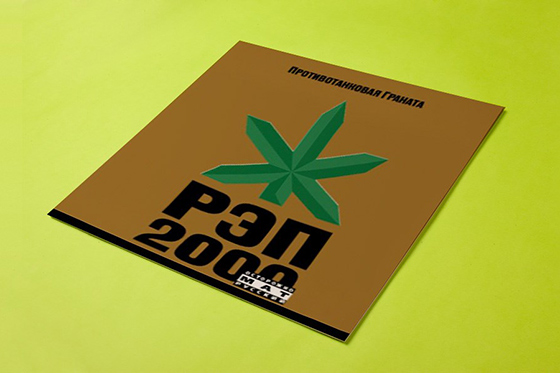
-Listen, and what is your Cambet? The Group of PG was engaged in artistic activity, samizdat, activism, music. What exactly are we celebrating from the entire cloud of activity of the PG? We celebrate 20 years since the release of the Rap 2000 cassette, right?
- As for the return - in fact, I did not leave anywhere. I'm not an emigrant, I just work there. I work at the university, we have a long holidays of winter and summer, that is, I spend from 12 months a year about five in Russia. Therefore, this cannot, of course, be called a real departure. This is good, I like to be so shit in an ice hole, a point in space - not here and not there. It is nice not to have social ties, to hang out so freely, freely. I never liked some kind of attachment to one place in time and space. There is an opportunity to be between the two worlds, absolutely alien in relation to each other. China is a completely different world. Being there for 12 years, I have been writing about China some articles, books, but I really can’t say anything and I don’t understand anything. It’s funny to me when a person went to China for a week or a month and releases an article or an opus. Because the more I am there, the less it is to me. For me, this is a certain psychedelic care, but not with the help of psychedelics, but with the help of staying in a strange geographical state. You can break away from the fact that here, being there, and from the fact that there, being here, that is, not to have any stable connotations and be completely free in a sense.
As for the anniversary of the PG and the concert of the coming, it was not offered by us, but by the Lenin Package group. And, accordingly, they wanted to stir up something for a very long time. But we had difficulties, because I was most of the time in China, our second participant - Katala - in America. And only after two (or even more) years of discussion now we will really be all together in Moscow, and such a celebration can be arranged.
These 20 years are actually 20 years of conceptual failure.
- What is these 20 years for you?
-For me 20 years-it is somehow strange, it seems that it just happened. But last summer, for example, the efforts of the two publishers - “Change” and “Living and working” - a book of my stories about the music festival, which the PG group in 1999 arranged in Tuva, was released. And I look at these stories about that trip, and three of their characters have already died: Filya from the Caribass group, artist Volodya Kostyukov from textiles and still recently Dyush Fanka. Everyone left quite young. It turns out that the whole eternity has passed. And let someone praise us now, recalls and calls somewhere, but for me personally these 20 years-in fact, 20 years of conceptual failure. Because nothing of what we wanted to do when we released this cassette did not work out.
- What did you want?
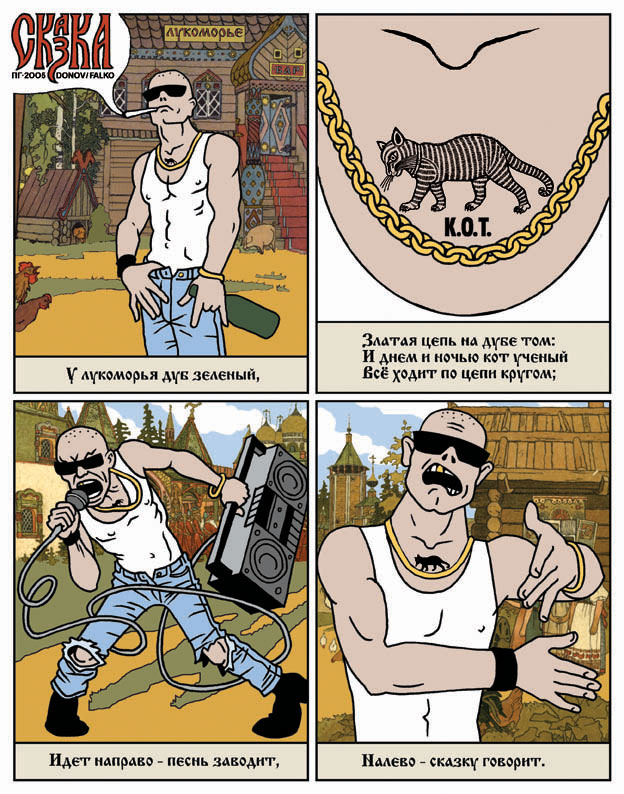
-Now, Lenin Package, about this event, issued a press release, where they called us the ancestors of a conceptual hip-hop, and he, therefore, the classics of a conceptual hip-hop. And there is still a promoted rapper of a purulent one who already calls them his teachers. And this is already such a mass rapper type Pugacheva, only in rap. And we, then, are already such grandfathers of hip-hop. But in fact, of course, we are no hip-hopers, but simply artists in the human sense: people who artistically perceive the world. And we, of course, wanted to change it. This is a long conversation: I still studied at school, I don’t remember, maybe at the institute, the course on the first. In general, when I was 16-17 years old, I had friends about five years older, and they arranged literary apartment. They collected the ruble for the entrance, and writers performed in these apartments: Sorokin, Rubinstein, Prigov, Erofeev. Of course, this influenced very much both my consciousness and the consciousness of my friends. And this is such a conceptual not only literature, but also a culture in general, because these writers were parallel to artists. This seemed to us a clear opposition: a high official culture and underground culture. It seemed to me and my friends that the underground would crush the official culture and then everything would change. And, when we started something, we probably also thought: that there is a certain official culture around, and we are representatives of the underground line that will destroy all this. That is, there are a clear top and a clear bottom, and we will turn this world, we will make some kind of revolution. But nothing, of course, did not succeed. Just over time, everything has changed, this opposition has disappeared, now all subcultures exist together: a high culture, such, sitting. No radical coup is possible. Well, I don’t know, the same thick magazines that were in the Soviet years are ridiculous to crush them, they themselves became such a small subculture. There is no center, no periphery, no top, no bottom, everything was mixed up.
- Maybe you wanted to mix everything? Because you and I have known each other for a long time, and you had a lot of different hobbies - or, in such an art history, you used different media. We met when you were a journalist who worked in the magazine Foreign Literature and in an independent newspaper. Then you took up modern visual arts, you made lightboxes, you published Samizdat PG, you had your own club - the famous Pushkin club in Gnezdnikovsky. That is, you tried yourself in different areas: from activism and visual installation to the actual cassett. I remember when she came out - it seemed a joke, and today, you see, time turned around, and now there is already such a musical genealogy. That is, you are already a classic - what have you been called? -Founder of conceptual hip-hop. Is this a switch between different media important for you? How did you choose when you work with a word, when-with the image when-with the organization of some activist movement, whether it is the Pushkin club, or the collection of things for Chechnya, or any form of activism or antifacia?
-While you asked, I somehow thought that the failure ended with the fact that I started working in the same media that I returned to. I realize this as a failure, because we wanted to somehow get out of this, create our own field. And what I have now finished: last year, after 20 years, I have been published in the same “foreign literature” or in the magazine “XG”, which for us were a certain opposition. For a modern person, it is natural to simultaneously listen to the conditional “civil defense” and read the books of the Council of City Publishing House. Because all this sticks together in a single lump. There is also a second aspect, probably economic: conditional “phalanxes” - I do not mean a bookstore, but as if cultural nodes - few. It is impossible for some to be left -handed, and others are liberal. All are accumulated, there are so few of them and these small nodes that it is impossible to build a distinction, so everything is mixed. And our, separate, the field was impossible to create.
As for me personally, we had all the art of narrative. I always perceived myself as a kind of narrator, and within the framework of artistic, musical, any activity, I have always built drama. Initially, we are people of book culture, but after some point we realized that through pure text it is difficult to speak with people now, there are some other ways. We have already strung music or video and video, but always wanted to tell something. That is, we did not have such just an abstract figurative vision, there was always a story about something. We used additional ways to influence the viewer or listener to convey some of our ideas through more relevant, more modern means of conversation. At that time, these means were a video sequence or music. We simply discussed with the guys, and someone said that the “fly agaric”, say, spoke the language of rock, because rock was in due time the language of youth; Let's talk in the language of rap. Well, we decided: let's try to talk in this language. So turned out rap.
And then finally I turned out to be in the role of the very real "stranger".
- How would you define your Identity ? You work at the university, but you are not part of the academic world. You recorded a breakthrough rap cassette, but you are certainly not a musician. You had an art group and some embedded in the art market, but at the same time you came out, as I understand it, from this field. How would you describe yourself and this fog of the PG?
- Well, we always had, on the contrary, the message from Identity , we believed that Identity leads to commercialization. That is, if you are identified with something, then you can sell you. Maybe it was a naive idea, but even in some kind of musical part we always changed the name. It was called the "anti-tank grenade", then the pop group "Doors", then the pop group "Drill", then still somehow. They masked as soon as stuck and the ability to identify us arose. We have friends-artists, and they, of course, became more famous artists than we are. We were with the musicians, they became wildly famous musicians, etc. There were both writers and poets among our comrades.
This is why, it seems to me, the experimental laboratory from the project. I do not like design. The project is when you do something and work to the reverse reaction, to the viewer or listener. You considered this reaction based on it, you built your image and continue to do something within the framework of this paradigm. And then you begin to earn money on this: 10 years, 15. This is very boring. You limit yourself and ultimately forced to talk not about what you want, but about what they expect from you. We are not a project, we are an experiment, but a direct reaction is important, not the opposite. You can talk with people, try to convey some of your ideas to them. And you always do this based on your own creative ideas: this is a conversation about what you want, about what has been sore. This is distinguished by the laboratory from the initially underground, but then becoming a commercial project. Therefore, we did not want to earn a recognizable identity. We tried to avoid recognition within the framework of cultural anarchism.
- But, you see, the twenty -anniversary of the PG cassette is strangely celebrated. That is, despite this tactics of elimination, the musical one is the easiest, as I understand it, and situational - the story that was made by the contour of the PG was overgrown with the greatest solidity. The next generation is listening to this cassette. You are from the whole variety of storytellers, art, organizing clubs or public spaces suddenly shortened to the level of Internet meme. Does it scare you or please you, how do you feel about this?
- Yes, there is an element of what we ran away from. It is impossible to finally get rid of this recognition. And with a cassette it is clear how a stump: youth listens more to music than they read books. But those who need it still know about our art projects. Someone knows books. That is, it is rather a cast of modernity. Since the music is listened more, you can suddenly be in the role of conditional musicians. This is not so important for us. Then, maybe someone will say that we somehow influenced in the art world. It happened differently. We had such a book “Give Pi”. And I met so many young people of anti -fascist profile, who said that they had grown on this book. Then I met quite a few people who said that they had grown on our art clips. Nevertheless, one changes, one, then the other comes to the fore. The culture is sinusoid, as Prigov spoke. According to him, the literature was ontological XIX century, now doing literature is like going on a horse.
Everyone read rap or shoot video. It's time to return to the texts.
I heard this from him when I was still very small. Probably, this in a sense influenced us. He said that from the texts he switched to sound poetry, performance, to some things that were as part of the experiment, but are consonant with the current round of culture. I saw the then poets, such overgrown, bearded men with lice in their hair, which no one needed: only the poets themselves went to poetic evenings. To whom do they carry their bright, beautiful truths, except themselves? The time of Mayakovsky irrevocably left. Therefore, for us, the modern language of poetry has become rap. But now he has turned into a common place. Pretty nasty. Godzilla flattered everything else. Everyone read rap or shoot video. It's time to return to the texts.
As a child, of course, I did not assume that when I grow up, I would meet again with the same conceptualists who grow up on, and they will already know our work: it couldn’t occur to me, for me it was generally as “fathers and children”. But, if we talk about them, it seems to me that Prigov from them was the most alive, long ago he continued to be interested in something new and relevant. I remember, he himself ran up and said: “Oh, I saw your clip “ Ilya Muromets ” there, it’s cool: all in one thing is a performance, and music, and video, and text.” And he was absolutely open. And Sorokin once at the meeting said about the PG magazine, which should be the underground magazine and he has it on the shelf. It was nice.
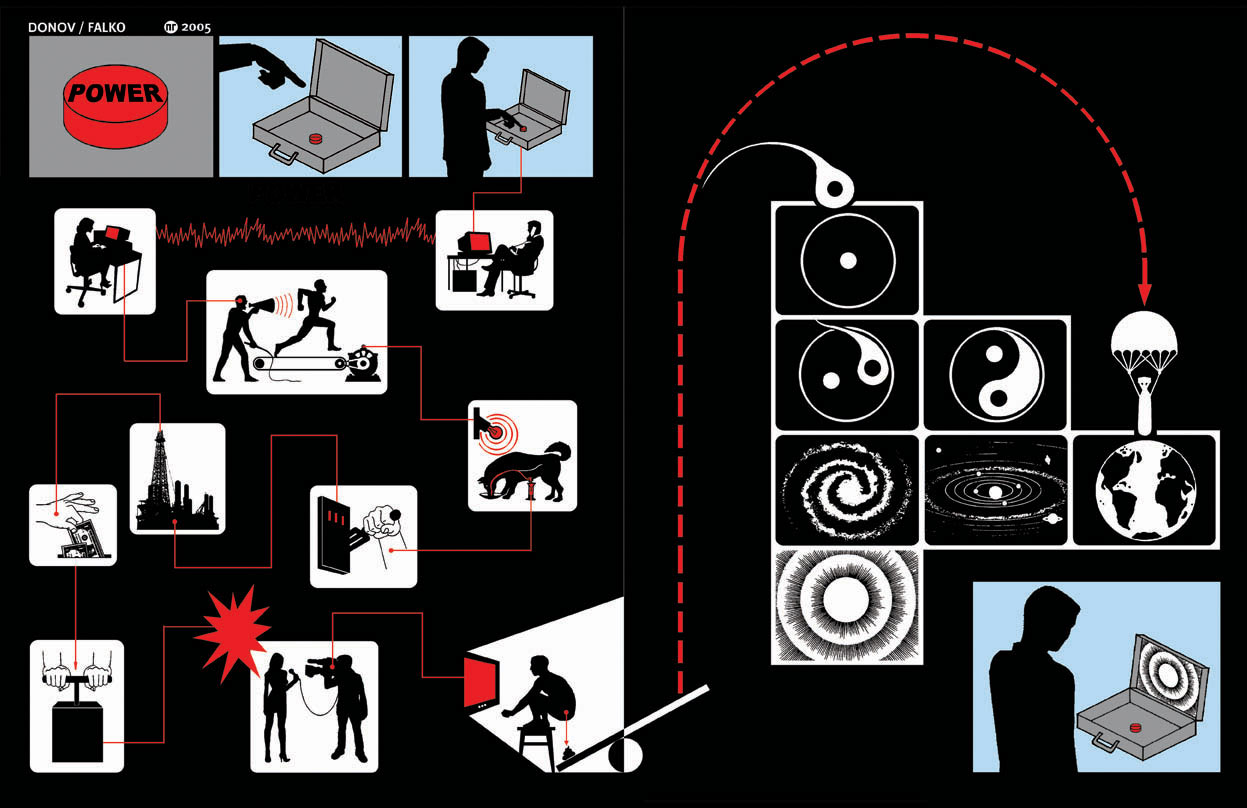
-I recently had a conversation with one artist. He promoted the story that for him the main figure of Russian art of the second half of the twentieth century in the sense that it continues the ambitions of the avant -garde - and his ambitions consisted in erasing all the autonomous boundaries between separately visual, text and music - these are prigas. That Prigov has the totalness that does not, for example, Kabakov, despite the name “total installation”. And you have always had energy in your projects to violate the autonomy of any form. On the one hand, you had a sensitivity to the new media, you first began to publish comics here, art-Samizdat, conducted the first slam ... But at the same time you had a very increased social temperament. What you call political engagement. You were interested in social bifurcations. Any: from fashionable subcultures to Antif, Chechen. What is perfectly conveyed in all four songs of the cassette, which became the reason for this conversation. You take the forms of different subcultures, you have sensitivity to social memes. Tell me: it seems to you whether you now have this scent on social bifurcations of the Moscow community or Chinese, do you note any new forms, sets?
- China for me was a more interesting care of the framework, because it made it possible to break out of any engaging, including political. That is, get away from those in which you are sticking here. Still, with all our desire to go beyond some circle, you still find yourself in some kind of circle. And suddenly, breaking into China, you find yourself outside these framework of social, political, framework of identities, subcultures. For so long, we performed on behalf of “strangers” - we sang, for example, the Chechen rap. Trying on the mask of a “stranger” is cool. And then finally I turned out to be in the role of the very real "stranger". For me, this is a completely new experiment, although maybe there I am also stuck in something.
“It seems to me that your seriousness failed you.” Because the last song that I heard before your departure is "I would have married a foreigner." And it happened. You all seemed to leave. That is, you coincided with your texts.
- As you joke, it will happen. Since then I am no longer joking (laughs) .
"PG - 20 years" in the club "Vermel" on July 6 from 19:00.
Subscribe to the COLTA.RU channel in Yandex.Zen to miss nothing