
Translated material
Passion for the executioner
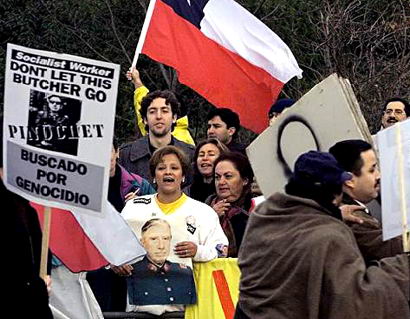
In a distant Latin American country, Chili retreated to another Augusto Pinochet - a general, a dictator, an executioner and a reformer. For the next, probably, the last time Chilean society decisively divided in its attitude to this person. Some sincerely mourn, others do not hide joy. And for most of the inhabitants of the planet, Pinochet is no more than one of the long series of authoritarian Latin American rulers, these “their bitch sons” of Washington (from which the United States suddenly began to be reopened). However, at the other end of the planet, in Russia, the Chilean dictator was destined to become a mythological figure.
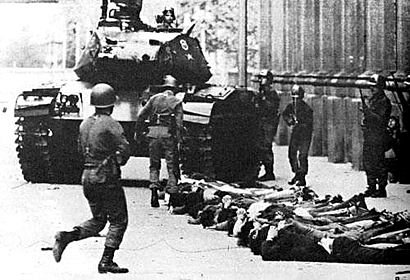
It is clear that under the Soviet regime he was not called a fascist. And not without reason. The general, as you know, led a bloody coup, which cost the lives of thousands of Chileans. Details of the Pinochetic rule are well known. The atrocities of the Chilean junta are not the fruit of the imagination of Soviet propagandists. The attitude to the dictator in our country for the time being did not differ too much from how he was treated in other states.
But in the mid-90s, just when the dictator's associates began to be against the first accusations in Chili, many Russians in the context of economic instability and criminal terror reimbursed about the Russian Pinochet, about the “strong hand”, which would restore order in the country. The most amazing thing is that many figures of the democratic camp, tired of endless discussions with annoying opponents from the camp of communists and nationalists, also indulged in these dreams. Some figures of the liberal camp even went beyond the ocean, directly to their ideal in order to join the wisdom of the ex-dictator. In their eyes, the authoritarian regime looked like the most rational government system in conditions when the population should survive painful reforms. The main thing in the assessment of Pinochet was not atrocities, but that, having crushed with the help of repressions any hint of protest, under the guidance of the famous “Chicago boys”, he carried out liberal economic reforms. Pinochet's epaulettes began to try on General Lebed, and even, it’s ridiculous to remember now, to Sergey Stepashin. As for the atrocities, the liberal politicians treated Pinochet exactly like Soviet historians to Stalin or Ivan the Terrible. Yes, alas, there were separate excesses, but everything was explained by the fierce of the struggle for historical progress. The forest, as you know, is chopped - chips fly.
There was no logic in these dreams. One can only guess why people who dreamed of the Russian pinochet believed that he should become a supporter of market reforms. Indeed, in Chile, the generals came to power at the time of the economic collapse of the existing government, when the population was irritated by the results of the economic activity of the socialists. Pinochet proposed, in addition to suppression, and the exact opposite economic model, which turned out to be more viable.
But we would have an alternative to the market economy a repetition of the old one, which showed its inability to both the USSR and the system of systems. Most of those who dreamed of a "strong hand" in Russia were expected from her of the usual equalization. The one with which the Chilean Pinochet so successfully fought. Not to mention the fact that the modernization of the country is inconceivable without the radical reform of the armed forces, which was simply ridiculous to demand from the immigrant from the Soviet military system.
I am not a fan of clicking famously while it is quiet. With all the lovely features of the Putin regime, he is still very far from Pinochetovsky (for which he is reproached with individual too consistent supporters). But the trend is obvious: the rejection of democracy has also become a rejection of economic reforms. The danger of attempts by the new nationalization of the economy, now the domestic “Chicago boys” who longed for their Pinochet shout shouting screaming. In a word, afraid to dream, dreams sometimes come true.
But let's go from the domestic specifics. The history of Pinochet raises the eternal question about the interdependence of targets and means. Even if we assume that all the atrocities of the junta turned into economic prosperity, then it should be stated: happy Chileans responded with black ingratitude. As soon as the general, confident in the response positive for the junta, decided to hold a referendum, the citizens who got rich during his rule immediately stated that they wanted civil rule. This, as the dictator later admitted, was a shock for him. And he, we will give him his tribute, in the end, he gave power. In order to be involved in endless trials in a few years. Only senile weakness defended him from prison, in which many senior officers were already sitting, who were too zealously fulfilled his orders. Even the death of Pinochet did not put the end of the claims: relatives of the tortured require condemnation even for the deceased dictator. And just this lesson, in my opinion, is very important for today's Russia.