
Translated material
Binded, businessman ... entrepreneur
At the end of the twentieth century, the Russian language system experienced a powerful impact of social changes, the most significant of which affected the sphere of economic relations. New phenomena of public life demanded new names. In the process of changes, to one degree or another, linguistic phenomena of several levels were involved - individual lexical units, speech stereotypes, and sociocultural ideas. The complexity and depth of what is happening is clearly manifested in the use of the word entrepreneur in the Russian language and Russian culture of modern times.
The story of the word
When in Russia the name of a person was again in demand, the professional field of activity of which is a non -state sector of the economy, it, according to the old Russian tradition, was found abroad. The English borrowing businessman, already known in Russia, had some attractiveness due to the lack of a negative associative background, gave the illusion of familiarization with the world economic space. But most importantly, it had an undivided, generalized significance-“the one who does the business, that is, conducts entrepreneurial economic activity that brings income, profit on something” [1] . Evidence of the active development of this word are derivatives recorded in colloquial speech: businessman, businessman, in business.
However, over time, there was a need for Russian nominations. Existing words serving this semantic region, for one reason or another, no longer satisfied the changed requirements. The word capitalist was weighed down by sustainable political associations, the cooperator was actively exploited at the beginning of the transition period, but quickly outdated and went out of everyday life, the collaps and the deeds pushed it off with a negative connotation, the merchant was limited to the trade sphere. Perhaps the most serious linguistic competition was made by the Russian businessman by a Russian entrepreneur, whose history goes deeper.
The first in the vast word -formation nest of the verb to undertake historical dictionaries is fixed the word EXCLUSION, which meant “biased opinion, prejudice in the XVI century; pre -conceived action, intent " [2] . This word acquired modern meaning only in the eighteenth century as a book tracing paper from the German Unternehmung [3] . In the Russian verb, to undertake, and then in the verbal noun, the original composition of semantic components was preserved: “To start; Decide to do a new business; Start making something significant " [4] . But in parallel, the derivative of the borrowed value was also approved - "the owner or master of pre -war" [5] . In the explanatory dictionaries of the Soviet era, the entrepreneur, first of all, is “a capitalist, ... a person inclined to the scams, a clever organizer of profitable enterprises” [6] ; "Entertaining person, businessman" [7] .
The entrepreneur of the time of perestroika, freed from political labels, is the owner and figure [8] . If before the revolution, the word entrepreneur on equal terms included in a large group of a number of other, more specialized names of economically independent figures, for example, a merchant, a manufacturer, a manufacturer, a breeder, today his meaning has become more generalized: “an entrepreneur is any business person who acts in the non -governmental sector of the Russian economy” [9] . In modern use, the entrepreneur, approaching in meaning with the word businessman, differs from him with the transparency of the internal form. This word revived in new social conditions basically retained its historically established meaning, but acquired new connotations. The entrepreneur calls a person according to character properties, by social position, by profession [10] . The human qualities of the entrepreneur are mostly negative: cunning, clever, unprincipled, greedy. In the semantic system of the language, the entrepreneur is located in the same group with such nominations as a deceiver, a fraud, a fraudster, a swindler, a rogue, a shieler, a businessman, a division, a careerist. According to the social situation, the entrepreneur in the Russian language consciousness belongs not only to historically privileged layers of society (bourgeois, capitalist, merchant), but also to modern ruling tops (oligarch). The professional field of activity of the entrepreneur, most often, is trade or processing and mining industry. Thus, a new meaning put forward by perestroika transformations is a business person acting in the non -state sector of the economy - the meaning of a high social status that has already existed in the linguistic consciousness, which has already existed in the field of trade, has encountered in the linguistic consciousness. Thus, the language system performed the depreciation of public pressure.
A significant role in the use of this word was played by the associative background of the connected concepts in which the historical dislike of the Russian people to enterprise, calculation, and commercial grip was manifested. In the Russian consciousness, trade is a disrespectful lesson. Those who are engaged in her are neglecting, and often disapproving (cf. Baryshnik, merchant, shopkeeper). It is no coincidence that the word merchant has traditionally preferred the word merchant, the internal form of which distinguishes the process of the purchase, but not sales [11] .
In a seemingly neutral word, the property is hidden by a negative emotive-evaluative connotation. Etymologically, it is associated with the return pronoun to itself and the word, which V. I. Dahl, which has disappeared from the modern language, interprets as “all its own, property, stomachs, belongings, wealth; Properties are moral, spiritual and all personal qualities of a person, person. All bad, all learned by bad inclinations, temptations, passions " [12] . For comparison, English Property (property) does not have such negative connotations and includes the conceptual components of property, estate, economy, as well as property, quality. And the adjective PROPER, from which it is formed, means, in addition, the correct, proper, decent, accurate, perfect, real, beautiful.
Many negatively colored words are associated in Russian and with the concept of profit: profit, hucksters, hucksters, kush, plot, bargaining, to make, fill up the pocket [13] .
In the etymology of a group of words related to wealth, the idea of self -restraint, property moderation is laid. Wealth is what God gives as the Head of Blags; Well -being - receiving benefits from above, not providing for any personal activity; wealth is a word related to such words as getting, that is, reach a certain line (enough, that is, enough, enough); Provision is just a lack of need, the opportunity not to bake about the daily bread; Sodiality - the position of a person holding on his feet [14] .
Changed social conditions affect the life of a language that adapt these changes to the national logic of perception and reflection of reality. The new name has not yet received an adequate conceptual filling: the phenomena of the linguocultural order became the obstacle to this, such as the image of a human owner who has developed in the minds of Russians.
Image and self -esteem
Entrepreneurs of the New Age had to form in a difficult cultural and historical situation. The need to liberate a private initiative was faced with public rejection and even rejection of this kind of activity. In the fiction, a tradition of negative image of rich and successful people has developed. The image of the entrepreneur was built on illegibility in achieving goals, exploiting people, faith in the omnipotence of money, viciousness. This artistic method has reached its heyday in Soviet times. Another reality, in which much of the Russian entrepreneurs have created much of what the country is proud of to this day is found in memoir literature and oral family traditions. However, the positive image of the entrepreneur does not take root well in modern society.
During all the years of perestroika and in post -perestroika time, the formation of the image of a business person followed a model of a “cool” guy replicated modern cinema. The television screen was filled with killers, racketeers and thieves in law (the series “Birthday of the Bourgeois”, “Next”, “Brigade”, “Gangster Petersburg”). As the sociologist Daniil Dondury noted: “Our businessmen still did not understand that if in a thousand films shot over the past 12 years in their homeland, they are shown in their own money, then they are shining little in their beloved country” [15] .
If an entrepreneur acting in the legal sector of the economy appears on the screen, then the main attention of the authors is concentrated, as a rule, on the external signs of his viability.
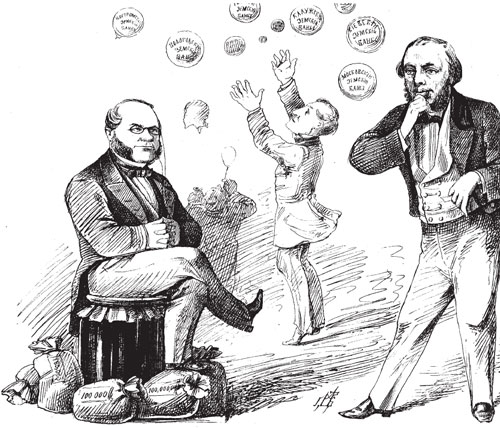
A similar picture is observed in electronic and print media. Is it about the perfume king or representative of the industrial business, the reader’s attention is focused on the brand of his car or the number of rooms in his mansion. Journalists are primarily interested in the level of welfare of entrepreneurs, often not hiding their negative attitude to the latter. As the host of the “school of slander” Avdotya Smirnova rightly noted, “the official position of the newspaper Komsomolskaya Pravda, which belongs to Potanin, is that if you are a businessman, already immediately a crook” [16] .
Such a displacement of accents contrasts sharply with the picture of the world of entrepreneurs themselves, in which the central place occupies the “business”.
The whole life of not only the entrepreneurs themselves, but also members of their families are subordinated to the cause. It reminds of itself even on vacation. So, at the charity auction where shoes traders are present, the artist’s picture is evaluated in this way: “People! Gentlemen! More actively! The battle went in earnest! 2250! 2350! Gentlemen! This is the cost of just one pair of boots! (from the audience: A couple of boots are cheaper!) " [17] .
Entrepreneurs do not advertise their income level. The subject of pride for them is the ability not to dwell on what has been achieved. And money is important only in order to continue the case.
Now I can’t give myself <this> / because I need to expand / so as not to stand on the spot // this is already starting - it sucks something / [18] .
In a corporate consciousness, the entrepreneur is personifying with his own business. He / Eva boutique // I / ANO / Autonomous Non -Profit Organization // I / Zhirkombinat // Entrepreneurs determine themselves through their own activities: I feed 70 people // I pay them a salary. They give each other specialized names: an alcohol, a brewer (owners of companies selling alcohol), a cap (owner of a private enterprise).
The meaning of private possession, free, non -state entrepreneurship is realized in the words the owner, hostess, owners of the enterprise, company: here I am the hostess myself // We are the hosts / we can afford it // I am the hostess of the Russian library. Modification of the concept of the owner finds an expression in the nomination, opposed to the hired manager, the employee: the owner / and not the hired manager / this is the difference is large // The owners of the enterprise are included in the businesses of the first persons / they lead joint-stock companies / that is, they are members of supervisory board / they / in general, as it were, they remove operational work // Top managers / these are managers of the full The contour / except one / they are not the owners / here // they are team coaches // And there are also the owner of the team // and this division has already become clearly clearly.
The specificity of the situation is that the entrepreneurs themselves, although they do not approve of the image created by the media (the word entrepreneur is now discredited completely / is almost / now this is a thief // I have to play somewhere / have to replace it with a leader), nevertheless, they realize that they are not quite adequate to this concept. That is why they often distance themselves from him, specifically stipulating: I am not a classic businessman-entrepreneur /but very conditional //; I am not a typical entrepreneur / as if now / in its purest form / my activity Probably / here for Western ones that are the standards by civilized Li / well, I can’t call entrepreneurship / I only go closer / well / to the swindler, let's say (laughs).
The ambiguity of the concept of an entrepreneur requires clarification: I am a Russian businessman / this is my specialty / there is no such specialty / neither in encyclopedias / not in any scientific work / all this is not studied in all apparently. Entrepreneurs with bitterness talk about the need to engage in cheese business through which they all went through the environment that many of them fell in the 90s and from which, according to them, few had a chance to get out.
They feel like a part of the social structure of society, a special group, the unification into which occurs, for example, by the presence of a clear qualification of strangers (officials, bandits), hostile to the entrepreneurial community. In fact, we now have two ruling classes / well / state-ownedics / here / that / which is now sitting at different levels / from the municipal to these on the budgets / all / that it can only steal and in general ... / This is enemies / these opponents // Conducted / what we call organized crime / it exists / it has been related to the whole boat of the bureaucratic / and / I already from them. It doesn’t work out / it united with them and / they have in general there / as if / one gang / ruling soldering.
This social group does not remain unchanged, which finds expression both in the self -awareness of its members and in their speech. In the early 90s, most entrepreneurs, even from an intelligent environment, used jargon. However, gradually jargon vocabulary began to disappear from their speech: I came to Moscow / I communicate with some person there and / I will use / there / wash / flap / he / as if / I will immediately put me lower.
"Bad rich" and society
Another myth of the “bad rich”, which has appeared in Russia in recent years and persistently introduced into the mass consciousness, exploits the eternal need for society in the form of an internal enemy. The benefits of this myth for the country are convincingly evidenced by the words of the Chairman of the Board of Vimmbil-Dann David Yakobashvili: “The negative attitude to the business that existed in Soviet times is also transferred to modern perception. Therefore, the attitude to Russian business in Davos is negative. Foreign investors directly say: “You have everything criminal there” ” [19] .
An ambiguous attitude towards entrepreneurs not only does not contribute to the consolidation of society, but, on the contrary, more and more polarizes public consciousness. The deputy of the State Duma V. Zvezhilo asks a reasonable question: “Why are the“ brigades ”on TV, where is the entrepreneur - a villain - occupies the lowest social situation? Society needs ideals. Maybe the state spend a few million dollars and make such a film? Not all entrepreneurs are villains " [20] .
Entrepreneurs make up the most promising layer of Russian society. Just like all over the world, these are the most initiative and energetic representatives of society. The tragedy lies in the fact that the circumstances of privatization, the acute injustice of the redistribution of state property, the crime of crime obscured the true essence of entrepreneurial labor. This situation is fixed by the media, mass literature, cinema, which, playing on traditional for our country, hostile to rich, successful and entrepreneurial, actively develop this topic.
Despite all this, the idea of entrepreneurship remains unusually attractive for many Russians. The folk memory stores the image of an economic figure today, although with huge costs, restores it. It is necessary not only wide state support for small business, state protection of enterprise, but also a change in the media vector, artistic consciousness, public opinion, the consolidation of all the forces of society, aimed at recognizing entrepreneurial activity. It is necessary to fundamentally change the stereotypes prevailing in our minds: rich means a thief, entrepreneurial means selfish. Stereotypes are not only harmful, but also baseless.
[1] Krysin L.P. Explanatory dictionary of foreign words. M., 2000.
[2] Dictionary of the Russian language of the XI - XVII centuries. Ext. 18. M., 1992.
[3] Fasmer M. Etymological Dictionary of the Russian Language: in 4 t. M, 1986.
[4] Dal V.I. Dictionary of the living Great Russian language: in 4 vol. M., 1956.
[5] Brockhaus F.A. and Efron I. A. Encyclopedic Dictionary. Tom XXV. St. Petersburg, 1898.
[6] Explanatory Dictionary of the Russian Language: in 4 volumes / Ed. D.N. Ushakova. M., 1939.
[7] Ozhegov S. I. Dictionary of the Russian language / Ed. N.Yu. Shvedova. 18th ed. M.: Russian language, 1986.
[8] Ozhegov S.I., Shvedova N. Yu. Explanatory dictionary of the Russian language. M., 2003.
[9] Busygin A.V. Entrepreneurship. M., 2000. S. 71.
[10] Russian semantic dictionary / Under the general ed. Н. Ю. Шведовой. М.: Азбуковник, 1998. Т. 1.
[11] Савельева Л. В. Языковая экология. Русское слово в культурно-историческом освещении. Петрозаводск, 1997. С. 98–99.
[12] Даль В. И. Указ. Op.
[13] Томашевская К. В. Антропоцентрические аспекты экономического текста // Текст — Дискурс — Стиль. Коммуникация в экономике. СПб.: Изд-во СПбГУЭФ, 2003. С. 192, 179–181.
[14] Савельева Л. В. Указ. Op. C. 95–100.
[15] Дондурей Д. Тотальное недоверие // АиФ. 2004. № 39.
[16] «Школа злословия». NTV. 18.12.04.
[17] Цитаты приводятся по материалам записей устной речи 30 саратовских бизнесменов, осуществлявшихся в течение 1992–2005 годов. Средний возраст предпринимателей в настоящее время 40–45 лет, это владельцы крупного и среднего бизнеса — торгового, ресторанного, аптечного, промышленного. Общий объем записей — 50 тысяч словоупотреблений.
[18] При записи устной речи паузу принято обозначать знаком /, а долгую паузу знаком //.
[19] «Времена». Первый канал. 30.01.05.
[20] «Версты». ТВЦ. 25.04.05.