
Translated material
A country without a face
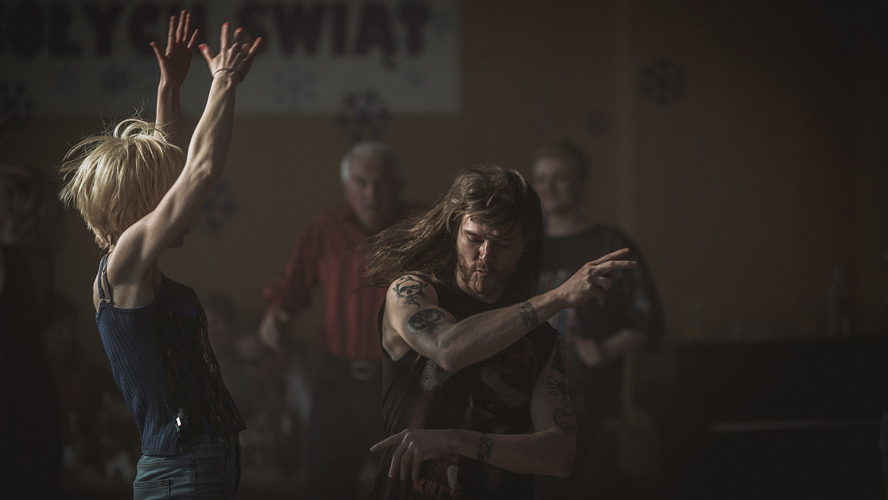
“Face”, one of the main films of the last Berlin festival, is a reference example of that cinema, which is ordered to expose flaws and mock anchronisms. Malgozhat Shumovskaya collects here together the most egregious manifestations of orthodoxy and ignorance. The protagonist of the "Faces" is the Polish province: Patriarchal, reveling in its own significance and God -chosen. A place where cynicism and the most disgusting manifestations of human nature are perceived as a given, and the slightest attempts of reflection immediately stop by going to confession.
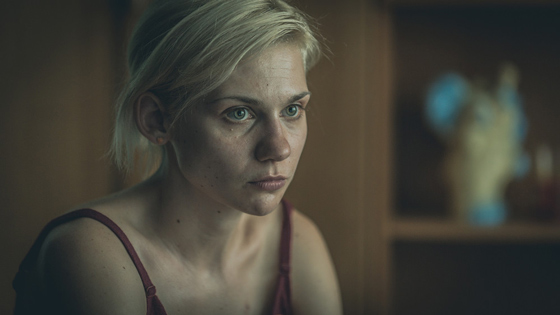
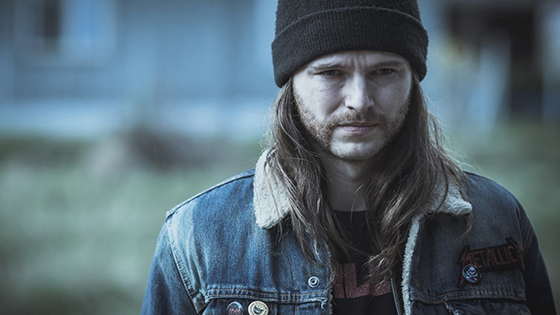
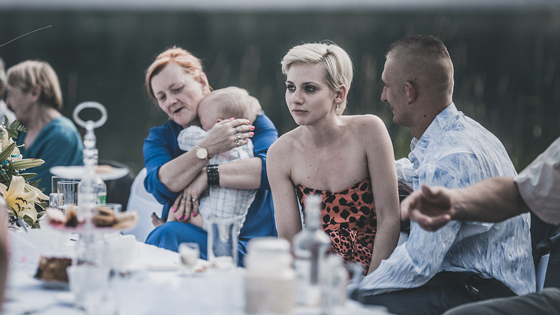
It is in such a place that Yatsek lives - a young hard worker, handsome. Long hair, jeans jacket, red car and Heve-metal as a soundtrack to life. Yatsek is thinking of leaving this small village - of course, to England, for which he listens to the reproaches of relatives. And the Jacek family is a real provincial bestiary. Ignorance, Xenophobic jokes at the Christmas table, hidden hatred of each other. The sister alone sincerely loves his brother. In Christmas Eve, when loved ones should wish each other happiness, the guy receives the next tips: cut off, take up the mind! And only the sister whispers quietly: "Do not listen to anyone, be yourself, run from here." Another outlet in the life of Jacek is the beauty of Dagmara, the queen of rural discos. He makes her a proposal on the bridge - like in a cheap melodrama. She agrees, then the couple goes to the local photo studio to capture herself as a souvenir in the image of camp lovers. The photographer is delighted, the young laughs.
 © Nowher
Yatsek works at a construction site by a mounter: among the virgin nature, the next pompous monument to the notorious Polish religiosity is erected -the gigantic statue of Christ the king (the monument is real and recently became the topic of news tapes, as it is used as an antenna for the transmission of a Wi -Fi signal). The local priest even boasts on the sermon that this Polish Jesus will be higher than what is in Rio de Janeiro. However, the leaders of the village do not particularly excite the leaders of the village: insensibility and apathy - this is what this collective body is saturated.
However, sometimes they come to life-as, for example, in a prologue, where the main directorial statement is hidden: the camera slides over the faces of the villagers, in the darkness of standing mournful bursts and peering somewhere concentrated. At first it is not clear why this moment is so full of sadness and fatality. A sharp turn: it turns out that everyone is waiting for a supermarket to open (in the yard "Black Friday"). The doors open, and the real consumer Saturnals begin. The crowd instantly undresses and enters the battle for plasma panels, simultaneously pulling underwear from hangers. It is this transgressive haze on the eve of one of the main Christian holidays that is the best illustration of how traditionalism enters into idyllic relations with any form of material progress.
 © Nowher
Once, cutting the reinforcement, the Jacecs stimulates and falls directly into the dark gut of the monument. This turning point of the plot is deliberately shown with special pathos - from a bird’s height, the camera fixes, as the body of Christ literally absorbs the hero. The result is a week in the clinic, where the Jacecs make the first transplantation of the head tissue in Europe, literally releasing it again (but not to the end-they put it out from the Yatsek hospital into one eye, almost dumb and with something like a cheap rubber mask instead of a face). The life of the hero, as expected, changes radically. At first he is the hero of the news: the operation is unique! Then - an object of ridicule of fellow villagers. A physical flaw as a catalyst for xenophobic gestures - the plot is beaten, but also effective. It should be noted that the new face of Jacek is not so monstrous compared to the mugs of fellow villagers, the phenotype of which is hopelessly spoiled by alcohol and hatred: to the gypsies, to the city, to Europe - to everything.
Schumovskaya plays the process of adaptation of the hero to new life circumstances as if this is a set of raw materials of sociological research. The villagers begin to bypass the young man, their mother calls the exorcist-it seems to her that after the operation, the devil dwells (in this episode the ironic Jaceck, obviously manages to show all the skills acquired at the Satanic Hebi-Metal concerts). A girlfriend, only once looking at the new Jaceck - through the glass in intensive care - also turns away from him.
 © Nowher
The rich filmography of Shumyskaya has a pronounced author’s accent: always acute topics, a critical view of the social being of post -communist Poland and a specific optics, when the narrative, the action goes into the background, giving way to psychological portraits, detailed and mobile. This method is concentrated in the "face". The visual measurement of the picture - the triumph of prudent creativity: part of the space in the frame is almost always in defocus - as if the camera imitates the eyes of Jacek, to which the doctors could not completely restore one eye. But still, the playwright of the “face” turns out to be somewhat naive, archaic, irrelevant in the challenges that modernity puts before the artistic and critical work. Gathering an assembly from idiots and disgusting heroes, Shumyskaya only visualizes the already obvious. In the era of the right Renaissance (and modern Poland - at the forefront of this shameful trend), such a satire no longer works. A parody of "backward" cannot scare or offend the object of mockery. Firstly, because he, full of confidence and complacency, is only glad to see his exact reflection; Secondly, because it is a “backward”-a product of modernity, and not the phantom of the past, not anthropological and ideological rudiment. And the former rhetoric (both in art and in politics) is powerless before his truly nasty face.