
Translated material
On the emotional mirror of the Internet
The attitude of people to something can be studied in many ways, in general, research is divided into two groups-observation and experiments. The observation of the “trace of society” is the study of “inscriptions on fences”, a replica in the crowd and the Internet, posters of single pickets and hundred thousandth demonstrations, the composition of the literature published on the Internet and, of course, publications in the TRV-hobby. Experiments are also classic surveys of all many types, from grabbing the elbow at the metro or a call to the most - let me work safely! -An inconvenient time, and focus groups, and leisurely conversations with an affectionate all-understanding interviewer over 300 questions (tea, coffee? You with cream?), And role-playing games that opened us the “garbage bucket” of our psyche and glorifying those who dared.
People related to any natural science will name the main advantages and cons of any methodology. The observation of the “trace of society” - the result of which is presented in this article - is better because there is no influence on the object of the experiment and the technique is cheaper. And worse in that we can poorly imagine which part of society we study. In general, we can study only those properties of society that are significantly expressed in the form of the reaction that we explore. The attitude to the construction of the "future ring collider" is poorly reflected in the fence.
Is the attitude to science in demotivators reflected? But first of all, what demotivators are and what part of society we study through them, who are our respondents.
Demotivators are a certain type of picture with signatures, in the Russian -speaking Internet - a type of amateur creativity of users. On the Internet, according to various estimates, from 100 to 160 thousand, as an object of sociology, they are convenient in that they are traditionally a rather sharply defined group. The theme of the demotivator can be any, and if it is quite popular, then the attitude of the respondents to it, a given object or their complex can be determined. Earlier (a report on the VI All -Russian Sociological Congress [ 1 ]), the attitude to the technique (five thousand demotivators) was studied, of which half are about transport), political aspects (politicians, countries, some groups and institutions - all together five thousand), to education (two thousand) and reading (1.2 thousand). First of all, we see that in the minds of the creators of demotivators (that is, our respondents), all these topics are not the main ones, each - no more than 5% of the massif. And what is the main thing in their heads and hearts? Highly generalizing, we can say that the main topics of demotivators are life and leisure, about 40%, as the average person should have.
Nevertheless, thousands of samples made it possible to notice a lot of interesting things, for example, differences in relation to domestic and imported cars, to secular and religious Jews, and fluctuations in attitudes towards some politicians. As for reading, it turned out that Lindgren is more popular, no matter how the school tries than Pushkin; Which, however, overtakes Rowling a little and significantly - Tolkien. It is more important, however, that their texts are perceived and remembered differently, in particular, the texts of Lindgren, Rowling and Tolkien are perceived through the characters, and Pushkin through the stage or quote.
The demotivator in theory and in practice, as well as in history and today are different things: the genre evolved and continues to do this. Historically, it arose in the West as a negative reaction to posting posters, calling for something or something promoting. From them, the demotivator borrowed a form - a picture in a wide black frame and a signature. At the ancestor-modifier, both the picture and the signature were positive, inspired. The classic demotivator contained a positive picture, and the signature consisted of two parts - a positive and corresponding to the picture in a large font, and the second part of the signature, in smaller print, was something opposite (negative, humorous or mocking), and the font and kegl were stipulated. Here are three examples, correct in design, but already local, - Fig. 1, Fig. 2, Fig. 3. As a result of further evolution, the division of the signature into two began to meet less often, options arose with a negative picture, as well as with a signature not divided into two parts. Now, on the Russian -speaking Internet, a demotivator (demo, demo) is called a carrier message that carries a picture in a wide black frame and with a signature. The signature is approximately equally often divided into two parts, and unrequited, and the separation is sometimes formal.
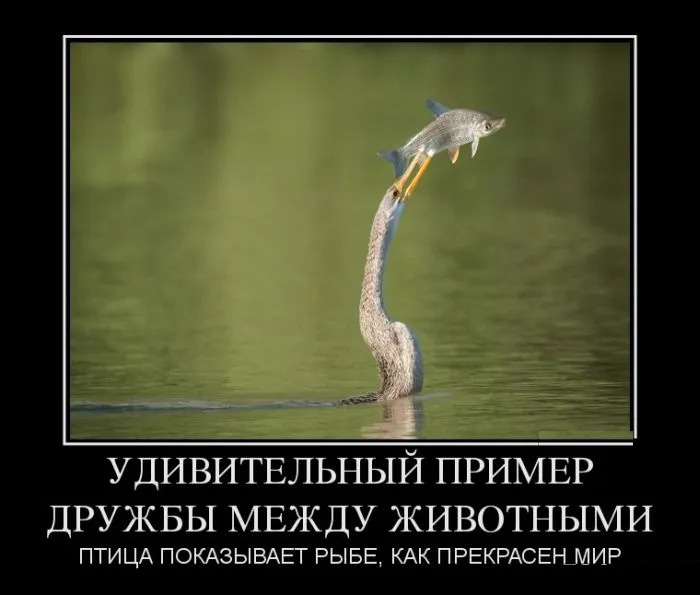
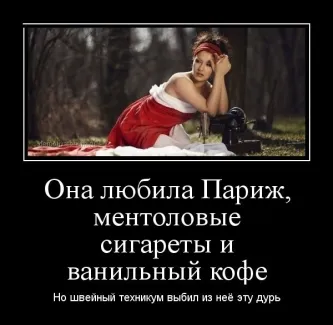 Rice. 2
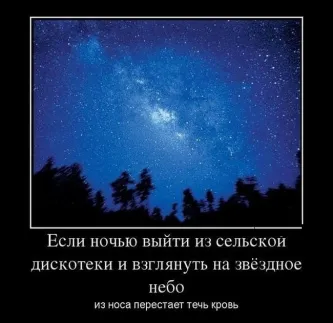 Rice. 3
The creators of demotivators can differ from the whole society in sociological parameters, but the most important difference is in another. Any spontaneous expression that requires work shifts a sample, increasing the share of actively approved or unchanging. The assessments of politicians received through the analysis of demotivators are on average more “cutting” than grades given by conventional polls. That is, if the poll politician is evaluated positively (Brezhnev), then by demotivators he is even more positive, if in polls negatively (Gorbachev, Yeltsin) - then, respectively, even more negative.
And what do demotivators say about the attitude of their authors to science? There were few demotivators related to science and science - 130 pieces, that is, 0.1% of the total array. And this despite the fact that mathematics, physics, chemistry, geology, geography, history, psychology, sociology, biology, medicine and economics were checked as sciences (the last two words are usually not used in the sense of sciences, this was taken into account).
“Offensive and unfair goal” - however, this judgment is partly subjectively, partly doubtful. The natural next question: how do science relate to education? Among demotivators about science, about 7% are associated with education (Fig. 4, Fig. 5), and this seems reasonable. But if you look from the other side, from the side of education, then there are two thousand of them, and 1% are related to science - very few. Summary: In the mass consciousness, education is in itself, and there are a lot of all kinds of gitics, but there is no science there in a magnifying glass. That is, we do not teach science, do not introduce to them, but ... what? We prepare for life, which does not exist, we dragged on the exam, the anti -which is cruel teachers and joyfully celebrate the end of the school.
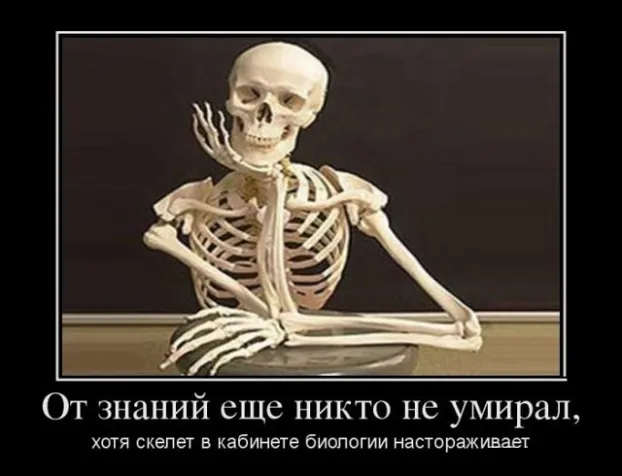 Rice. 4
 Rice. 5
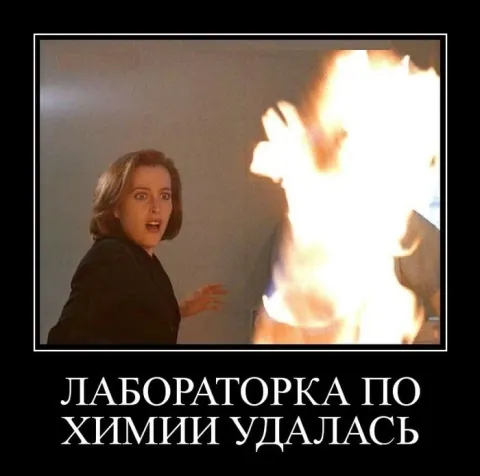
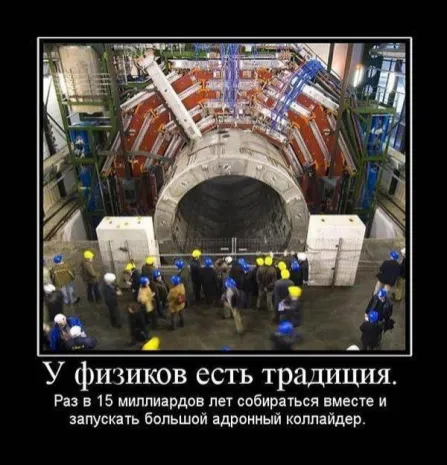
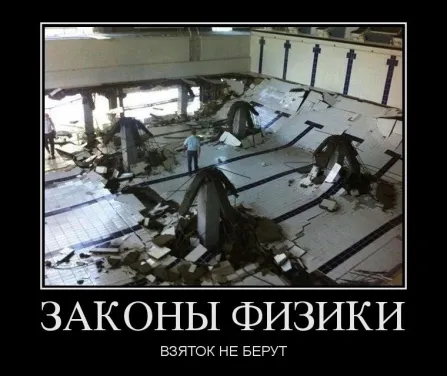
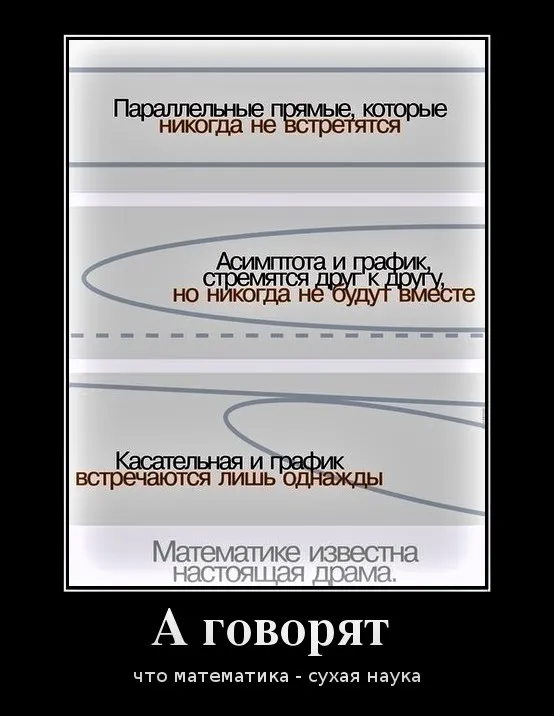
Now let's see how this frail array is divided by science. In the first place physics, 49% (Fig. 6, Fig. 7), in the second - mathematics, 18% (Fig. 8, Fig. 9), on the third - chemistry, 13% (Fig. 10, Fig. 11).
 Rice. 6
 Rice. 7
 Rice. 8
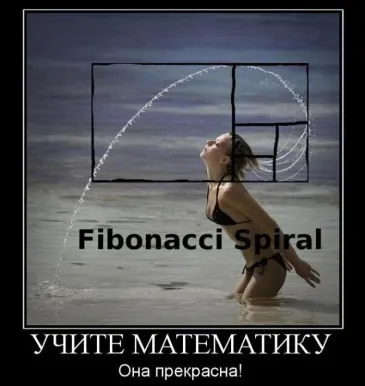 Rice. 9
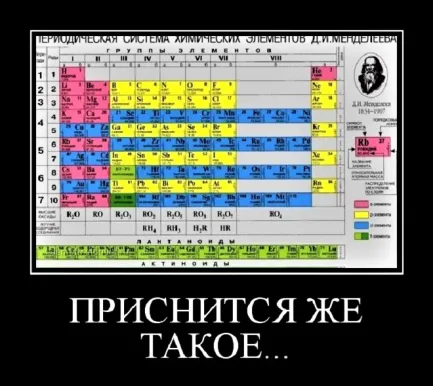 Rice. 10
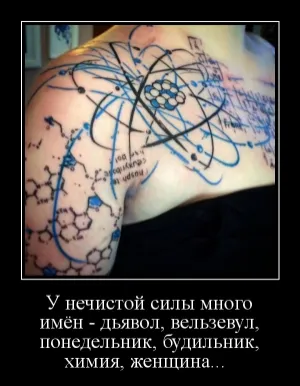 Rice. 11
The remaining 20%in the sestrian divide “science in general” (8%), history (6%), psychology, geography and sociology (2%each). This picture, in general, is expected: in the mass consciousness of “science” is a strange thing that physicists do; then incomprehensible what they do, again it is not clear why, mathematicians; And, it seems, chemistry; And something is put in products there. The remaining names are remembered with difficulty, and the question of content can offend.
The next question is what is the attitude to science? Something rational can be said about physics, mathematics and chemistry, the rest, you yourself understand, only “average in the hospital”. So, physics is (see above) compliance with laws, it is difficult and dangerous, as well as fascinating (Fig. 12) and useful (Fig. 13), mathematics is (see above) beautiful and emotionally, and also useful (Fig. 14) and incomprehensible (Fig. 15), chemistry - this (see above) is difficult and dangerous.
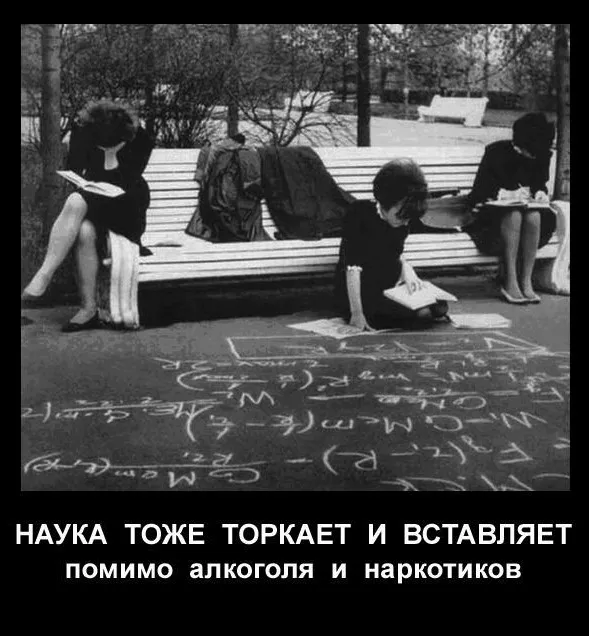 Rice. 12
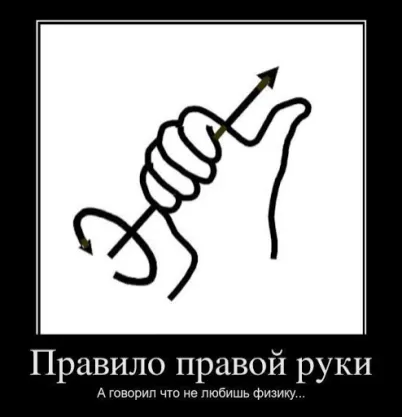 Rice. 13
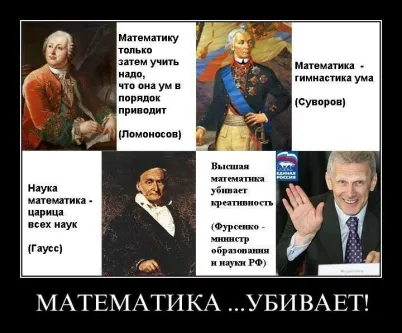 Rice. 14
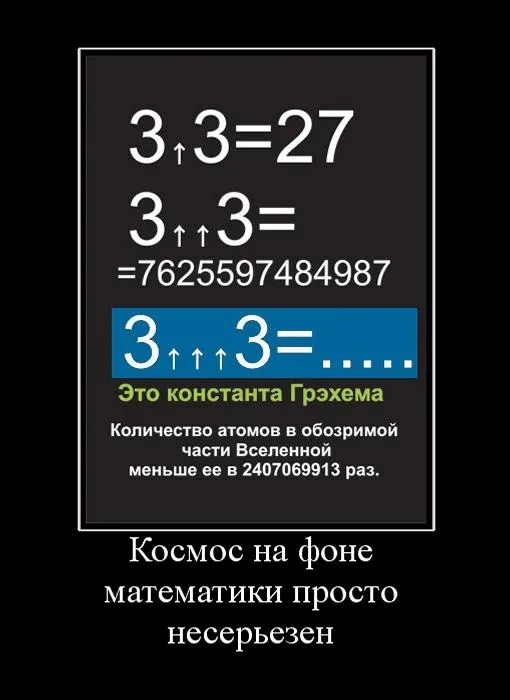 Rice. 15
All that is written above is the result of a study of society, but after a group, as already noted, a little more young and more prone to creativity on the Internet. There are other, relatively simple ways to access society through the study of the “trace of society” - but left by another group.
For example, if you look at the general array of popular science books printed in recent years on paper and laid out by enthusiasts on the Internet, we will see a slightly different picture. In the first place is physics again, but not 49%, as for demo, and 45% - that in this case the same thing. The second is the same mathematics, but not 18%, but 16%, in this case the same thing. Then the differences begin - in third place, not chemistry with 13%, but biology with 15%, and chemistry left in place below and gained 8%. When under the windows the consolidated choir of promoters, merchandisers and supervisors sings “without chemistry, without GMOs, at pure natural hydrogen oxide,” the publisher fears to publish books on chemistry - suddenly the typographic expenses are not for the lifting? About stamens, pestles, all this among animals and people - it is more reliable. Nothing personal, just a business. The publisher studies the market and approximately imagines that they will buy; The surviving publisher is a spontaneous sociologist.
Scientists often ask: what is the practical benefit of the 11th measurement? In this case, we can carefully assume that chemists, together with publishers with joint efforts (preferably with some support of the chemical industry), could try to change their attitude to “chemistry” and thereby double the market capacity for scientifically popular chemical literature. With the consequences arising from the rectification column.
Leonid Ashkinazi