
Translated material
Throw a cigarette
The classic film by Fritz Lang “M” (1931) became the canon of the genre of the police thriller about the search for a killer maniac. For a modern viewer, this tape can be interesting not only because of the brilliant game of actor Peter Lorre or the director’s innovative work. “M” starred in Weimar Germany, not constrained by either the Protestant chastity of the then Hollywood, nor Hitler’s future struggle for the morality of the nation and a healthy lifestyle. Therefore, the heroes in “M” not just smoke, but smoke a lot. Several key scenes of the film are held in continuous clubs of tobacco smoke.
Smoking tobacco in the social space of the Langa film is a male thing, closely related to the thought process and communication, at the same time egalitarian and deeply individual. This state of affairs is approved at the expense of two intersecting scenes, police meetings and meetings of the leaders of the criminal world. Both are busy with the search for a maniac who kills children. The police are criticized for the inability to catch the killer, and such a nervous situation does not allow criminals to work. Two male communities simultaneously sit at the tables in the manner of participants in the secret party to develop an action plan. Authoritative criminals, along with their henchmen, like the police authorities and their detectives, are all smoking.
This is a kind of tobacco democracy. The craving of smoke in the lungs becomes the basis for the pause that is required to think about the next phrase and tell it with the meaning. Individuality is emphasized by non -standardized variety of tobacco smoking methods. Here are thin curved smoking tubes, short straight tubes, oily cigars-traces, classic cigars, cigarillas, cigarettes. Only one maniac does not smoke in this story. He can be understood: he is a person of a great idea, devoid of our ordinary weaknesses.
This story is an occasion to ask two questions about smoking, which are discussed today less often than others. Firstly, how did it happen that the whole variety of practices associated with smoking tobacco was reduced to smoking cigarettes? Secondly, why was the discussion about smoking was reduced to the statements of doctors, and all other aspects of the issue-social, cultural, political and even economic-were marginalized and ignored?
The absence of these two issues in a conversation about smoking indicates that it was originally built around erroneous prerequisites. The conversation suggested that all smokers are certainly drug addicts in need of treatment, victims of tobacco capitalism, who, moreover, are ready to irresponsibly sacrifice public interests. Smoking from the romantic habit of the middle of the 20th century, symbolizing thanks to the efforts of commercial cinema and advertising masculinity and success, in the modern world turns into taboo practice. Smoking today means not only to increase the risks of chronic diseases, but also to experience a constant feeling of guilt.
Over the past ten years, many scandals have broken up related to smoking censorship in art or cultural objects. Sometimes they take completely absurd features. As, for example, a retouching photo of a sartre with a cigarette in the French National Library in 2005. The sarcastic title of the English press on this score: “Hell is others who remove your cigarette” [1] . It is amazing that the smoking tubes of Bilbo and Gandalf were not replaced by something more political correct in the last Hollywood adaptation of Tolkien. And the memories of smoking fathers and grandfathers from childhood, very strong and strong, modern science has not yet learned to retouch.
Politicians are forced to repent of the sins of youth and publicly abandon smoking. Refusal of smoking united, for example, Fidel Castro and Barack Obama. Castro, who, like Che Guevara, in the heroic era of the Cuban Revolution, rarely did without a cigar, posing on photographers, and to whose tastes a government brand of cigar Cohiba was even created, said his farewell to tobacco back in 1985. In 2013, journalists overheard Obama joke in a conversation with an official from the UN: “I haven’t smoked for six years, because I’ve been very afraid of a very wife” [2] .
Changing the attitude of society towards smoking is an example of the most radical transformation of the social norm over the past 100 years, perhaps, with the latest metamorphoses of the family institution. Reduction of the issue of harm to health both in practical and theoretically demonstrates the intellectual laziness of smokers who failed to compete for the language of describing the problem and offer some alternatives and clarifications. And this despite the fact that in the culture of the last two centuries the process of thinking was demonstrated in close connection with the smoking of tobacco. The tubes, for example, were smoked by Herbert Hoover, Bertrand Russell and Albert Einstein. And Sigmund Freud and Winston Churchill did not let out a cigar from his mouth. Modern studies show that perhaps there really is a positive connection between smoking and the activity of the adult brain [3] .
The problem of smoking in the first approximation breaks up into three components. Firstly, these are medical consequences in the narrow sense of the word and its economic consequences. We will provide medicine to discuss doctors, and the question of who should pay for the risks of smokers (the state or smokers themselves) seems interesting, but it seems that it does not differ from the question of, for example, who should pay for the risks of fatty fried foods. Secondly, this is the logic of paternalism, dictating to the state to take care of smokers, control their behavior and force to abandon the bad habit due to high prices for legal tobacco and banks for smoking in public places like transport and hospitals. This side of the political struggle around smoking looks, perhaps, the most dangerous. She demonstrates that society is ready to easily agree with any claims of the state to interfere with private life. Finally, the third component concerns the distinction between the rights of a non -smoker majority and smokers in the social space.
Unification of the smoking model and the medication of the social problem are directly related to each other. Smoking as social and partly as a medical problem is a consequence of the widespread spread of cigarettes. Cigarettes are cheap, easily accessible, suitable for use everywhere and at any time. Cigarettes do not require effort, a cigarette smoker does not waste time making another portion of his drug. Thanks to the frequent smoke breaks, the cigarette smoker receives a higher constant dose of nicotine in the body and a quick psychophysiological dependence on cigarettes. In the second half of the 20th century, cigarettes become a universal social medium. Men and women begin to smoke, around the clock, in private life and in public.
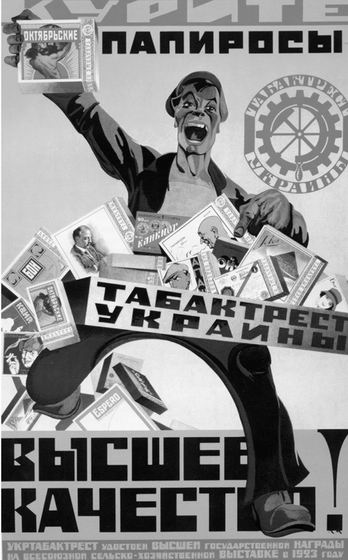
A cigarette is a product of universal insanity on efficiency (maximum nicotine at a minimum of time). A cigarette smokes non -free people. On the go, during a minute smokeless, without any pleasure. Tobacco, in general, can be an interesting gastronomic experience, no worse than wine or cheeses, unless, of course, you smoke cigarettes.
The cigarette, becoming the pleasure of the industrial world, the joy of a blue collar, forever in a hurry, always under threat of dismissal, turned out to be an instrument of disciplinary influence. The smoker of the pre -industrial era could not threaten to ban bun or reducing their number to a minimum. Anyone who is used to a cigarette will then easily get used to the fact that the state will demand a report on his state of health and take this issue under its control. Here we have a characteristic mistake: we look at the modern format of political relations between the state, smokers and industrialists and we assume that this format has always existed.
Smoking is becoming an increasingly common occurrence, because now it is no longer connected with the life of an idle class or with a harsh soldier's life. Smoking becomes a social problem precisely due to the onset of the era of cigarettes, and this is what provokes the growth of medical research on the dangers of smoking. Medical arguments become an instrument of the Opecun State, claiming total concern for its citizens not as legal entities, but bodies that need to normalize (of course, in full accordance with the general spread of biopolitics in the modern world).
In other words, the problem is not so much tobacco smoking as such as industrial, mass production and consumption of tobacco in the form of cigarettes. Smoking is not just an objective biochemical process of inhalation of tobacco smoke into the lungs. It is associated with a number of cultural and historical factors that are completely ignored in today's discussion on the legislative prohibition of smoking tobacco.
Cultural, not purely medical criticism would proceed from the fact that there are various types of smoking tobacco. For example, if you smoke one Cuban cigar per week, can you call you a smoker and a drug addict? What is the cultural and economic status of the former California IT specialist Gregory PEASE, who undermined health during intensive work in the main specialty, and then opened a private laboratory for mixing tubular tobacco as a rehabilitation course? How should you relate to a ban on smoking if you are a collector of Humidorov?
No matter how much tobacco costs, in any case it is harmful to health. But the measure of harm, probably, can also be different. To bring everyone to the norm of cigarettes means just destroying culture. For some reason, in the case of combating alcoholism and protecting winemaking as a craft and art, it is not necessary to recall this specifically.
Historically, there were two traditions of smoking tobacco. In the more humid and warm climate of Central and South America, the Indians smoked cigars, which in essence are simply twisted tobacco leaves. In dry and cold North America, tobacco leaves dry out, so the locals chopped tobacco and smoked it in stone tubes. Europeans, due to the same climatic features, unequivocally identified the smoking process and a smoking pipe.
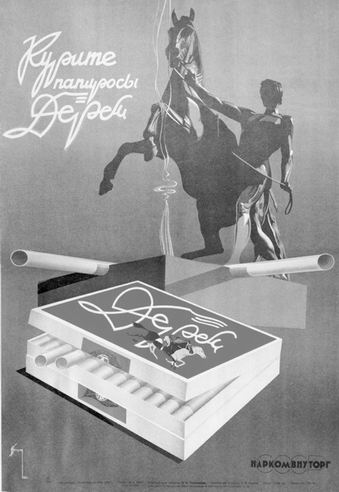
Cigarettes appear in the 18th century on the poor outskirts of Europe, primarily in Spain. We see cigarettes of specific brands in Goya's paintings. They become popular in revolutionary France. Fashion for cigarettes comes to the English-language world after the Crimean war, when British soldiers began to copy the habit of Russian and Turkish soldiers to wrap tobacco into old newspapers due to the lack of good tobacco sheets suitable for twisting.
In 1880, a cigarette gained a final advantage thanks to the invention of American Jamas Albert Bonsak, who created the first car to twist cigarettes. The Bonsak car can be compared with the printed press according to the gigantic effect that it had on the growth of the industry. Tobacco companies during the 1880s crossed from production 40 thousand to 4 million cigarettes per day.
In parallel, the phenomenon of the Egyptian tobacco industry, anomalous industrialization outside the traditional centers of the world capitalist economy arose. The only artifact of this phenomenon in the modern world is the brand of Camel cigarettes - one of the many imitations of original Egyptian brands. The low quality of Egyptian tobacco, after the invention of the machine for twisting, ceased to be a decisive factor, and on the territories of the Ottoman Empire, the Greek industrialists launched many tobacco factories. In the story of Conan Doyle “Pence in the Golden Rimp” (1904), special Egyptian cigarettes are mentioned on behalf of the connoisseur. The most popular brand of cigarettes in the world before the First World War and the emergence of fashion for the American tobacco "Virginia" were the Egyptian Kyriazi Frends.
The fight against smoking begins at the moment when the Europeans brought tobacco from America, that is, much earlier than the fight against most other narcotic substances. Obviously, this is due to the fact that a smoking person cannot be ignored, with respect to him it is simply necessary to develop some cultural policy.
Initially, the prohibitions on tobacco were not associated with medical reasons, but with religious considerations or the struggle against licentiousness. The pioneer was the Catholic Church, which in 1575 forbade smoking in the territory of its temples in Mexico. It was about competition for the flock with paganism, for which smoking was ritual. In 1624, Pope Urban VIII found the sneezing of smokers suspiciously reminiscent of sexual excitement and forbade smoking to all Catholics, and those who smoke or sniffing tobacco in holy places threatened with excommunication from the church. After a hundred years, Pope Benedict XIII, the avid smoker himself, canceled the ban, and in 1779 the Vatican even opened his own tobacco factory. In the Ottoman Empire in the 17th century there were also attempts to ban smoking, but soon tobacco becomes a typical form of leisure of the local elite. The Ottoman historian Ibrahim Efendi Pechevi (1572-1650) called the tobacco “one of the four pillows on the sofa of pleasure” - along with wine, opium and coffee.
Russian history of early attempts to prohibit tobacco is quite famous. Under Tsar Mikhail Fedorovich in 1634, Russian smokers promised public flogging, tearing out nostrils or a link to Siberia. In 1674, already under Alexei Mikhailovich, the death penalty was even introduced for smokers. And the legalization and popularization of tobacco as a European habit, of course, was associated with the personality of Peter. In general, tobacco quite often became a symbol of westernization. At the end of the 19th century, the Iranian Shah, with the support of part of the clergy, tried to ban the use of tobacco for Shiites, which led to the tobacco uprising of 1891.
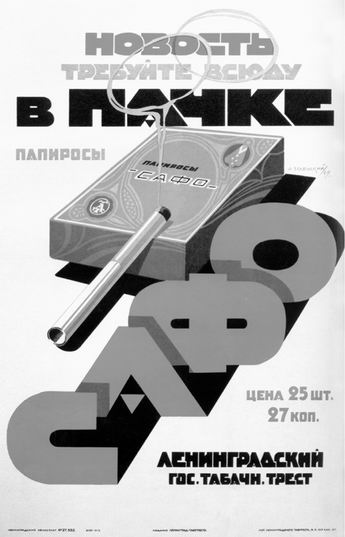
The most fierce critic of tobacco in recent history was Adolf Hitler, who in his inherent manner stated that tobacco is “the anger of the red man facing the whites, the revenge of the Indians for alcohol” [4] . The Nazis condemn smoking both from medical and scientific positions (they were the first to receive reliable data on the connection of lung cancer and smoking), and from the point of view of the struggle for the moral state of the nation. Moreover, these two lines are directly related to them: to destroy the health of the nation means to commit an immoral act. In the Third Reich, one of the most stringent anti -Babatic campaigns for the 20th century was held, which in 1933-1945 included high excise taxes, a ban on tobacco advertising and smoking in public places, and also - unlike the current liberal programs - a separate restriction on the sale of tobacco for women. After the Nuremberg Tribunal, the struggle against smoking in Germany for a while came to naught, and by the mid-1950s the domestic consumption of cigarettes in Germany exceeded the pre-war level.
The modern formulation of the issue of smoking was formed in a situation where the tobacco industry actively financed mass culture in its interests, so the front of doctors, society and the state built against it looked unambiguously progressive. It was at this moment that the cultural history of smoking was reduced to the question of the medical consequences of inhalation of tobacco smoke.
Let's try to imagine what the question of smoking in the world without cigarettes looked like. Before the occurrence of paper sticks with tobacco, smoking was more a matter of the correct ritual. They smoked in special rooms. They smoked men, after a dense dinner, when women and children left from the table. They smoked when discussing military and political issues, trade transactions. Smoking was respectable and determined fashion. It is enough to recall the classic example of a tuxedo, a jacket with silk lapels, which was supposed to fall, leaving no traces, ashes. There were different types of tobacco recommended for consumption in the morning and evening hours or at different times of the year. In other words, smoking was a special aristocratic culture.
Sociologists and economics historians have long noticed: what was previously considered a luxury available only to aristocrats, today is rather everyday practice [5] . Actually, today the rejection of cigarettes is possible both in favor of a completely healthy lifestyle, and in favor of the revival of some forms of smoking culture. To a certain extent, this already takes place in the world in the form of small private tobacco manufacturers, cigar clubs, Afisionado culture (lover of cigars) ... Residents of developed countries who have an automobile crew and their own house may well afford to borrow other habits of aristocracy. And smoking can degenerate as an enslaving people of everyday habit and return to their European roots, again becoming cultural, aesthetic and gourmet practice.
Everyone is still smoking in Russia, but this - unlike the Peter era - is no longer considered a sign of westernization, but, on the contrary, as an Asian. In Europe and the United States, smoking is clearly associated with poverty and lack of education. Курят сезонные рабочие, мексиканцы и люмпены. Это одно из явных и положительных следствий антитабачной кампании. Массовое повсеместное курение перестало ассоциироваться с хорошей жизнью. Культура курения выступает в этом смысле скорее частным феноменом — так же как, скажем, дегустация вина. Курить уместно далеко не везде и не всегда.
Сторонников антитабачных законов можно понять, причем без отсылок к сложным социальным конструкциям. Очень неприятно, когда люди начинают курить друг на друга без спроса. Это прямое нарушение прав и свобод, либералы так не поступают. Плохо, когда в кафе нет некурящей зоны. Часто в последнее время именно антитабачное законодательство приводит к массовому скоплению нежелательных курильщиков просто на улице, когда работодатель или владелец недвижимости полностью запрещает курение на своей территории.
Решение в духе индивидуальных свобод тут напрашивается очень простое. Курильщики должны никому не мешать и сами оплачивать свое сомнительное удовольствие, но и их права в этом отношении не должен никто ограничивать. Людей с горящими сигаретами на улицах городов быть не должно вовсе. Только специальные пространства и территории, за существование которых — будь то курительная комната в ресторане, кабинет с вытяжкой на рабочем месте или частное жилище, платит именно тот, кто курит.
Цель этого высказывания, конечно, не состоит в пропаганде курения. Более того, представителям табачной индустрии, чьи интересы обычно защищают апологеты курения как социальной практики, идея отказаться от сигарет определенно не понравится. Это приведет к резкому сужению рынка и потере львиной доли прибыли.
Задача лишь в том, чтобы предложить людям посмотреть на проблему курения и борьбы с ним с чуть менее наивной, нерефлексивной точки зрения. Нет причин считать, что медики обманывают нас и что продукты горения табачного листа не наносят никакого вреда легким и организму в целом. Минздрав совершенно справедливо предупреждает, что курение опасно для нашего здоровья. Но, к сожалению (?), взрослые люди вовсе не склонны отказываться от всех тех вещей, которые опасны для здоровья. Сам по себе этот аргумент не является достаточным. Именно поэтому он часто сопряжен с тезисом о том, что курильщик является наркоманом, не отдающим себе полного отчета в собственных действиях и нуждающимся в опеке со стороны государственных органов. Курение становится важным плацдармом для интервенции государства в частную жизнь человека.
В британском сериале «Шерлок», наделавшем немало шума в России, был примечательный момент. Когда два джентльмена — блогер Ватсон и частный детектив Холмс — находят пристанище на Бейкер-стрит, им категорически воспрещается курить в своей новой квартире табак. Так что для того чтобы раскрыть особо сложное преступление, бедняге Холмсу приходится обклеивать себя никотиновыми пластырями.
Действие сериала, напомню, происходит в современном Лондоне XXI века. Неясно, являются ли создатели «Шерлока» этакими криптоанархистами, но их месседж читается ясно: в эпоху высоких технологий мы лишены личных свобод, которые еще 100 лет назад казались неотъемлемыми и естественными.
В сущности, именно поэтому вопрос о запрете курения стоит столь остро. Курильщиков справедливо раздражает не только то, что государство видит в них малых детей, которым нужны постоянные «пугающие» напоминания на табачных упаковках, унизительная и навязчивая опека. Государство идет дальше и претендует на вмешательство в их личное пространство и в их телесные привычки. Дисциплина, накладываемая сегодня на курильщиков, является одной из самых суровых в истории. Примечательно в этом смысле, что в российских колониях для заключенных курить можно, а вот в общественных местах для «свободных людей» — нет.
Общая картина нынешней антитабачной кампании вырисовывается скорее безрадостная. Действуя как бы в интересах общества и как бы в интересах защиты курильщиков от их пагубной привычки, государство передало монопольное право выносить суждение о курении табака в руки медиков. Медики могут предъявить публике легкие курильщика, но в их задачу совершенно не входит задумываться об исторических корнях вытесняемого феномена, о его социальных функциях и уж тем более о самой попытке медицинской нормализации населения со стороны государства. Компромисс о допустимых формах курения в обществе легко обнаруживается в ходе исследования возникновения этой привычки. Но ни у борцов с курением, ни у его немногочисленных защитников нет никакого языка для того, чтобы обнаружить это.
В Московском университете в конце 90-х годов прошлого века понятие «курилка» еще не утратило своего первоначального смысла. Курилки представляли из себя задымленные пространства, набитые думающими людьми. Они разговаривали друг с другом. Некурящему человеку иногда было трудно перебраться с одного этажа на другой, потому что на лестницах в гуманитарном корпусе тоже дымили отчаянно. В ретроспективе понятно, что пресловутый дух университета в немалой степени состоял из этого табачного дыма. Теперь тот университет трудно представить себе в прежнем виде несколько противозаконного сборища вольнодумцев, над которыми за кафедрой царит Мамардашвили с трубкой в зубах. Люди, скапливающиеся там, где раньше были курилки, теперь поглощены своими гаджетами. Они больше не разговаривают.

[1] http://www.telegraph.co.uk/news/worldnews/europe/france/1485353/Hell-is-other-people-removing- your-cigarette.html
[2] http://www.huffingtonpost.com/2013/09/23/barack-obama-smoke_n_3977599.html
[3] Hurley Dan. Smarter: The News Science of Building Brain Power. 2013.
[4] Цит. по: Proctor Robert. The Nazi War on Cancer. Princeton University Press, 1999. P. 219.
[5] См., например: Кларк Грегори. Прощай, нищета! Краткая экономическая история мира. М., 2012.