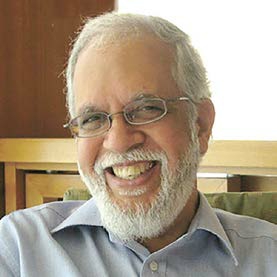
I read with interest a letter from Nikolai Kocherginsky in the last issue of your newspaper ( “Want to work in Singapore? Think carefully!” , The TRV-NAUK No. 178 of May 5, 2015), which gives a rather neat and balanced description of what happened to him. Since I was then the head of the Department at the National University of Singapore, where Nikolai worked before his return to the United States, I could add several details to this picture.
In a sense, this is a rather confusing story, but it is based on its basis. If very briefly, the intellectual property of Nikolai was represented as belonging to completely different people, and not to him, and the university refused to officially respond to this situation. I would not say that this is a standard practice in Singapore, but it is not too unusual.
I was against the fact that the Grant Nikolai was transferred to another researcher, but the university decided to ignore my objections and the grant was transferred to another professor in order to maintain funding within the university. This was done with the consent of the grant agency, but only on condition that the subject of research will remain unchanged, and the methodology can be changed so as not to violate the rights to the intellectual property of Nikolai.
However, the professor who was transferred to this project began to create the appearance that he was doing exactly what was proposed in the original Grant statement by Nikolai, to publish scientifically unreasonable articles (one of which was withdrawn), ignoring the requirements of scientific ethics to include Nicholas without his consent by the co -author and attribute his inventions to himself. The university would have to prevent such a development of events, apply a disciplinary sanction to the culprit and apologize to Nikolai. But none of this was done. Nikolai wrote letters to different authorities (without my participation). For my part, I also wrote letters, regardless of Nikolai. But they all did not cause any reaction. The fact that the false information about the withdrawn article was removed from the web page only after Nikolai’s appeal to the Ministry of Education Singapore, I learned only from his letter to the Trv-hunger.
There can be no excuse for this behavior of the university administration. They looked through their fingers at gross violations of professional ethics and generally accepted norms of behavior in the scientific community and did not react to this. In fact, the violator was not only not punished, but was also encouraged for his efforts to attract financing (according to projects not related to the ones being discussed here).
It seems important to me to confirm for your readers that the facts set forth by Nikolai really took place, exactly as he described them. I want to emphasize once again that not everything in Singapore is so bad, but at the National University of Singapore, there really is a conscious neglect of the norms of scientific professionalism and scientific ethics. Co -authors of joint applications for research grants are sometimes excluded by the main applicant from among the participants after the grant was supported, including thanks to the creative contribution of these very excluded participants. Often, university administrators allow themselves to enter their name among the co -authors of other people's publications. In some cases, such publications are also fabricated (see, for example, http://retractionwatch.com/2011/10/24/national-university-of-singapore-offcial-who-moled-molendez-papers-wont-part-of-in-innstigation /,,,,,,,,,,,, http://retractionwatch.com/?s=singapore and http://retractionwatch.com/category/by- Aburio-molendez/).
I welcome and highly appreciate your efforts to attract the attention of the scientific community to these issues of basic values of science and professional relations between colleagues. I hope that over time I will capture the Russian language sufficiently to read your newspaper more regularly!
Professor Raj Rajagopalan was the head of the department of chemical and biomolecular technology and the head of the department of science and environmental protection technologies of the National University of Singapore (NUS). He also for a number of years held high positions in the Academic leadership of NUS: deputy. director of a special integrative graduate program of sciences and technologies at the junction of physics, chemistry, biology, and engineering; directors of the university alliance between NUS and the Massachusetts Technological Institute in the USA; Director of the Cooperation Program with the countries of the Middle East (Saudi Arabia, Qatar, the UAE) under the President of the NUS; Director of the partner program with the Scientific and Technology University. King Abdullah (Kaust) in Saudi Arabia.
Currently, he occupies the post of professor and first vice -rector of the Skolkovo Institute of Science and Technology (Skoltha) in Moscow.