
Translated material
LDPR: For the fifth time in the Duma
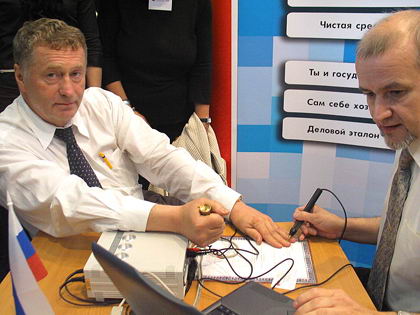
Something sensational must happen so that Vladimir Zhirinovsky is not in the State Duma for the fifth time. In the late 90s, the LDPR seemed to be buried-I was exhausted, tired, discredited itself. But Zhirinovsky not only survived as a politician, but also in the 2003 elections improved the result almost doubles - it was 5.98%, it became 11.45%. In June of this year, the Levada Center gives the LDPR 9% of the number of intentionally to take part in voting voters, which is enough to overcome the 7% barrier. Moreover, during the election campaign, the party usually adds in the ranking at the expense of the Zhirinovsky factor.
The usual argument of the authors of forecasts about the imminent collapse of the LDPR is a close and long -term connection of the party with the Kremlin. Like, voters will finally understand that this party is not a real opposition, but a political force actively playing on the side of the authorities. That behind the populist promises of Zhirinovsky hides a sober calculation of an experienced policy, interested only in passing into parliament. That in the list of the LDPR, which advocates for the interests of the poor, there are many millionaires - so, in the last elections in the passing places in it were Suleiman Kerimov and Ashot Egiazaryan.
However, many voters of the Liberal Democratic Party do not care who is included in the party list and is Zhirinovsky is friends with the authorities. It seems that the main electorate of the "Zhirinov" consists of two parts. The first is losers, social outsiders who are annoyed for the entire political establishment, anyway - domineering or opposition. For them, voting for Zhirinovsky, the most “wrong” and “cool” of all politicians is a kind of spit in the face of the elite. In ordinary life, these people are not interested in politics, and the arguments of the opponents of the LDPR - no matter how logical they are - do not act on this part of the electorate. The second group is, on the contrary, quite successful and loyal to power citizens who distinguish Zhirinovsky of all politicians as the most “cool” and bright. Among this part of the party electorate, there are many youth, for whom voting for Zhirinovsky is an shocking action.
The relative failure of the party in 1999 is explained by the fact that the most “cool” election list then became emphasized by the antielite “unity” with Alexander Karelin in the first three and Vladimir Putin as the patron saint of this project (most of the elite was then concentrated in the OVR). Some of Zhirinovsky’s voters went over to the side of “unity”, which put the party on the line of passage to the parliament. But four years passed, the “unity” agreed with the OVR and was transformed into the nomenclature “United Russia”. It is not surprising that part of the voters of Zhirinovsky returned to him. In addition, the ranks of the LDPR supporters were replenished by some former voters of the Communists who voted for the Communist Party of the Communist Party of the same considerations as the adherents of Zhirinovsky - to demonstrate their deep hostility to the elite. However, Zyuganov’s communists were too boring for them and “integrated” into the elite community - therefore, these voters voted for the LDPR. Hence the almost double improvement in the party result in 2003.
At the same time, by the end of the 1990s, the LDPR had turned from Anfan Territel into a party, from which it is not a shame to run for parliament, it is not necessary to make excuses to friends and acquaintances that entered its list. On the contrary, such a pragmatic step is highly rational. In the current composition of the parliament, this trend was strengthened-businessman Arsen Kanokov (Kabardinets, whose main business was in Moscow), was held in the Duma on the list of the LDPR), and now he is the president of Kabardino-Balkaria. They included Vladimir Churov in the list of the little “Sovereign” - which in itself is a sign of the Kremlin’s confidence of the party - and now he changed Alexander Veshnyakov as chairman of the Central Election Commission. In turn, Zhirinovsky himself understands the limits of the possible in relations with the authorities - while the nationalist Nikolai Kuryanovich simply shook the air with his Philippics, he remained in the LDPR, but as soon as he entered into a systemic conflict with the Kremlin, he was immediately exhibited from the faction. The same thing happens with politicians who, at different stages of existence, the party tried to compete with Zhirinovsky as a leader and, as it turned out, made a big mistake. Who now remembers the names of Vengerovsky or Kobelev, who were once quite famous deputies, but quickly dropped out of the Liberal Democratic Party - and, therefore, ceased to be serious political players.
In recent years, the LDPR has received two significant gifts. The first is the introduction of elections on party lists in regional parliaments. Previously, activists of local organizations of the Zhirinovsky party could only cord the hope of passing their chef to the State Duma in the retinue. As a rule, no more than one person could pass from one region, and a significant part of the subjects of the Federation did not have its own “Zhirinov” deputy at all. In single -mandate districts - where support from Zhirinovsky played an insignificant role and had to cost their own resource - candidates from the party usually did not win. Now, the party lists of the LDPR are held in the elections in many regions - and, therefore, several “Zhirinovites” in these constituent entities of the Federation acquire deputy status, although the local level. Thus, their incentives are increasing in order to remain in the part of the party’s election machine in the next Duma elections.
The second gift is the transition to a completely proportional electoral system at the federal level. Now, so inconvenient for the party, single -mandate districts are eliminated, and the number of "list" places has increased significantly. If the LDPR takes place in the Duma of the following composition, then its faction can become more numerous - and these are new opportunities, both for activists and for sponsors.
The main resource of the LDPR is Zhirinovsky, it not only permissantly heads the party lists in the federal elections, but also its decent results in the regions, primarily explained by the active participation of the party leader in election campaigns. But any plus can turn into minus over time. The political fate of the LDPR depends on the fate of the “first number” - while it is active, it has prospects when it leaves the political arena, the party has significant chances to “blow off”. Such is the fate of all leadership political projects that organically do not provide for the presence of “person number two”, ready to occupy the highest party post if necessary. So the LDPR functionaries remain to hope for the political longevity of his boss - by analogy with Le Pen, who, at the age of 80, was able to take fourth place in the presidential election in France.
Author - Deputy General Director of the Center for Political Technology