
Translated material
The results of the week. West and East
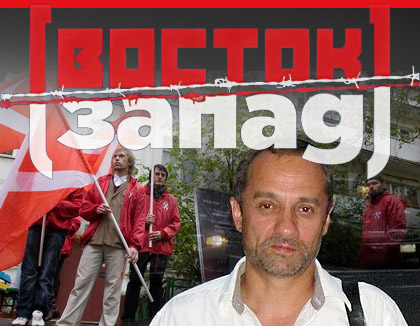
The acute conflict around the article by Podrabinka is far beyond the scope of a single "veteran" topic. We are talking about the value, civilizational choice that Russia faced. What values for her will turn out to be profiling - conditionally western or conditionally eastern. In other words, democratic or authoritarian. In a democratic society, the appearance of an article by a suburban - quite naturally, in an authoritarian one - is unacceptable. The very appearance of the article and the ugly campaign against its author indicate that the country is at a crossroads.
East and West in this case are not only geographical concepts. The recently died, the former South Korean president and Nobel laureate Kim De Jun, the Western man. A number of countries of Eastern Christian civilization-Greece, Romania, Bulgaria-are now components of the West. A citizen of the most “pro -Western” socialist country - Yugoslavia, who has long lived in the United States Slobodan Milosevich remained a man of the East. There are many similar examples.
In Russia, to the question of a value choice, they often answer words about the uniqueness of our experience, which is neither Western nor eastern, about the Eurasian character of domestic civilization. However, such reasoning is not related to practical policy. The Eurasian theory itself is the fruit of the cabinet thoughts of emigrant thinkers injured by revolutionary troubles. As for politics, it provides for the constant decision -making that demonstrate the essence of the state and society. This also applies to the article of the suburban, where it is almost impossible to find the “average” solution - you can either recognize the right to expression of his own opinion (at the same time, it is absolutely not necessary to agree with his position), or to refuse it with one or another rigidity.
The story with the article by the suburban shows that the modern West is often inconvenient. The West is not only the priority of the procedure on informal relations. Not only honest elections, real political competition, freedom of the media. Not only marginalization of corruption, protection of property rights, support for private initiative. The West is the protection of human rights in the broadest sense of the word. Including a person encroaching on the values that are saints for many people. The East by all possible means - up to the imprisonment of the camp and even stones in some countries - protects universally recognized authorities, such as the state (and, of course, sovereign), religion, army. In 1907, one of the deputies of the then Duma insulted the army, which had just lost the Russian-Japanese war, but successfully suppressing the revolution-and even the then liberals did not dare to defend it.
The East also protects the authority of the older generation, which is the guardian of tradition, loyalty to the establishments bequeathed by the ancestors. Of course, those representatives of the older generation that do not meet this criterion cannot serve as an example. A person who is knocked out of the general row-be he even three times by the hero of social labor and an academician-attorney-in the "eastern" tradition is subjected to ostracism and can at best count on a link somewhere in Gorky. The same, by the way, belonged to the young then the suburban, who had served in Brezhnev times for his beliefs in distant Yakutia.
Moreover, many people of the eastern tradition are personally bright and attractive characters that can arouse respect. Vladimir Dolgikh, who signed an absurd letter against the “anti -Soviet” barbecue is one of them. He was not the son of the Gulag general - his father died in this very Gulag. For Western man, a story worthy of Shakespeare: the son of a prisoner, who has become an independent at the age of 13, after the arrest of his father, defends the Soviet system. For an eastern person - nothing strange. The system is one, distortion is another. Separate abuses - even massive - cannot discredit it in the eyes of people responsible and patriotic. Moreover, patriotic without any irony - he fought longly bravely, went to war as a volunteer, was wounded twice, the second time he was hard, he was between life and death for several months.
Note that we are talking about the modern East and the modern West. The West of a hundred years ago was not so unlike the current East - in particular, with its traditionalism and rejection of strangers (with property rights in the West and then it was decent). However, there is no more returning to that West of the Gentlemen and rural priests, the well -known Russians by the novels of Agatha Christie, he ceased to exist after the Second World War. Accordingly, it is necessary to proceed from modern models, and not engage in utopias.
If you choose a western model, then you need to do much of the fact that society is rejected, or at least perceived with hostility or suspicion. For example, it is necessary to register with Scientologists if it is not possible to prove the specific facts of their criminal activity (this is about the decision of the European Court that has just been held). Now they are trying to ban the same Scientologists in France, but they will only do this if they can present irrefutable evidence. It is necessary to allow human rights activists to be interested in the fate of people living in the most benevolent abode of a traditional denomination such as the Holy Bogolubsky Monastery. Moreover, the word of the novice who fled from him in this case is no less authoritative than the word of the gray-beard confessor of his father Peter, Major, a fan of Nicholas II and Comrade Stalin, the opponent of the World Zionist-Masonic government. We must agree with the right of a suburban to publish articles, the content of which causes a protest in most of the company. Another thing is that if you choose the East, you need to come to terms with the arbitrariness of officials, with violence against personality, with discrimination.
In Western society there are two limiters for freedom of expression. The first is the impossibility of spreading extremist ideology, incitement to violence, xenophobia. This limiter is associated with the tragic experience of the Second World War and repentance in connection with the pre -war reconnaissance in relation to Nazism. The second is the possibility of protecting their legitimate interests in a fair court in the framework of the adversarial civil process. The last factor is especially interesting in the current situation. Absolutely eastern in their attitude, “ours” in the midst of persecution of Podrabinka are forced to behave, at least, outwardly, suing. And even Prefect Mitvol is forced to distance himself from picketing the house of the suburban. This may mean one thing - eastern stylistics in modern Russia, albeit slowly and contradictory, but goes out of fashion.
Author-First Vice President of the Center for Political Technology