
Translated material
"Late" scoop " - it was such an ass!"
Writer Vladimir Kozlov - The New Times
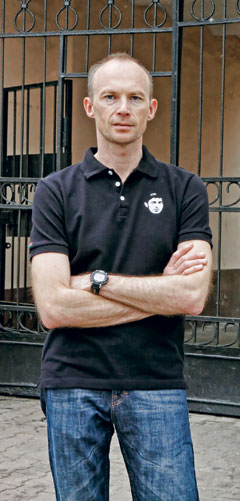 |
| Vladimir Kozlov was born in 1972 in Mogilev (Belarusian). He graduated from the Minsk Linguistic University and the Journalism School of Indiana University (USA). He worked as a translator, journalist, editor. Since 2000, he has been living in Moscow. The author of the collection of prose “Gopniki” (2002), Romanov “School” (2003), “Warsaw” (2004), “Plazkart” (2006), “POPS” (2007), “USSR. The kid’s diary from the outskirts ”(2009),“ Home ”(2010) and“ 1986 ”(2012), documentary books“ EMO ”(2007),“ Fans ”(2008) and“ Real Culture ”(2009). Screenwriter of the film "Motylov Games" (2004). Prose is published in France and the USA. |
"Late" scoop " - it was such an ass!" The writer Vladimir Kozlov, who at the beginning of the zero, became a popular author due to his trilogy “Gopniki”, “School”, “Warsaw” and books about youth subcultures, released a new novel - “1986”. Noir in Soviet scenery: investigation of a series of murders in the industrial Belarusian town. “Sex, violence and socialism”-this is how the book-trailer announces “1986”. The New Times asked the writer about genre experiments, two restructures and situations in Belarus
The novel “1986” is largely similar to your previous books: late “Socher”, the outskirts, the main character who feels a stranger. Nevertheless, formally you wrote a detective.
For a long time I avoided genre literature, but at some point I was interested in Noir, this is a rather interesting layer in Western literature and the cinema of the 40-50s. It is not very well known with us, those books that came, treated quite dismissively: they say, this is a detective, a frivolous genre. Everyone wants serious literature. This term is used, not quite understanding what it means. It became interesting to figure it out, I read some authors in the original, some research, now I am even preparing for a lecture on Nuar's literature. It seemed to me that there are many intersections between books about America after the Great Depression and the reality that is in my texts. In 1986, I deliberately took some features of this genre and applied by the mid-80s-the time that we have called “black-legged”. It turned out an interesting comparison of the words - “Noir”, after all, means “black”.
What is important to you in 1986?
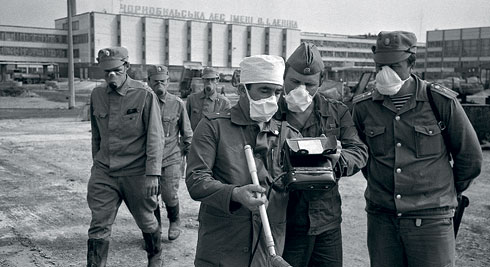
For the first time, the word "perestroika" sounded, a disaster in Chernobyl happened. I think it was 1986 - the lower point of the Soviet system, after which its final decay began. That "scoop" was already doomed. And this is a very interesting background for my story.
Why did you turn to perestroika time again?
I was recently asked in this spirit: "And not tired of delving into the Soviet trash?" But the "Soviet garbage dump", no matter how you treat it, is an extensive source of material. Although in my next novel that should be released this year, the action takes place already in the second half of the 90s in Moscow. This is the time that I practically did not write about, and there are the roots of many of what is happening now. People who are now in power rule the business-were formed in the 80s, and in the 90s they approached the positions that now occupied. Therefore, it is interesting to look back there, rethinking something, thinking about how we ordered freedom and why then exchanged it for sausage.
Great difference
Now the term "perestroika-2" has entered the circulation. Could you draw some parallels?
The parallels are quite understandable, but I see a rather great difference. I remember well the mid-80s, when the restructuring began, and I remember that then absolutely everyone was unhappy with the existing system-from ordinary people to communist functionaries. And now there are too many people who are satisfied with one degree or another, who are more or less satisfied. And this is a fundamental difference.
You did not go to the protest promotions of recent times?
No. I do not really believe in street policy. Although it cannot but rejoice that people woke up, went out and tried to express their opinion. In my texts, back in the middle of the zero, I spoke quite clearly about our reality and I do not feel that we must go outside to repeat it. And I would not like to use participation in promotions for self -patient.
How did you perceive the “control walk” organized by your colleagues?
I have an ambiguous attitude. Some of the colleagues, perhaps, did it quite sincerely, but for others this is an opportunity to remind of themselves.
What are your heroes, people of the late USSR, those who are not satisfied with the current situation?
Then it was impossible to live outside the system. No matter how much you are, it was impossible to exist beyond. In 1986 we are talking about this. And now the system allows this. In Moscow, and indeed, there are a lot of people in cities who, as it were, do not live in Russia. They live in their world, listen to their music, watch some kind of movie, by and large not in contact with either the state or with official culture. And of course, this is another reason why people are in no hurry to go to rallies.
But why aren't you looking for heroes in the present?
No, for example, the hero of the Book "Placksart" of 2004 is just a typical modern "outsider." A person floating against the current is not only and not so much against politics as such, but against the ideology of consumerism, which in zero became our only ideology. I think now a huge number of such "outsiders". And this, on the one hand, is good when the state gives you a chance to exist outside it. On the other hand, these are people who are forced to one degree or another to isolate themselves from society. And they will remain outside, even if there is some kind of positive energy. And this, probably, is no longer very good. "
Now the aesthetization of the “scoop” is engaged in the very generation that grew in the 80s, and are consumed by those who were born already in the 90s. For some, this is nostalgia, for others - a joke
" 
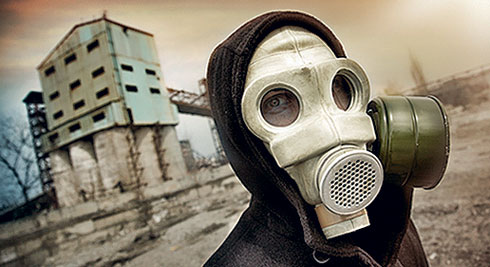
Aestheticizing the Soviet, including the attributes of the late “scoop”, but in your books from these attributes, a complete hopelessness arose in complete hopelessness.
Well, there are people who are trying to aesthetize absolutely everything. Moreover, now the same generation that grew in the 80s is engaged in this, and those who were born in the 90s consume. For some, this is nostalgia, for others - a joke. Late "scoop" - it was such an ass! I watched it in a rather typical form, since I grew up in the medium -sized industrial city in Belarus. Remembering, I definitely do not want to embellish anything. But those who have not seen this, of course, have another picture. The young guys write to me quite often: “Oh, was everything really so bad, hard, hopeless as you write?!” Yes, that was exactly what.
“1986” was published in the series “Russian Roman for Europe”, your two books were published in France. How do you perceive your prose?
Basically, attitude as exotic, to an alien reality. “Gopniks” is such a gesture about the 80s. The novel “Home” is also a tough portrait of modern Russia, with a criminal line and all sorts of exotic details like raider seizures for a European. But I take it soberly and I don’t really hope that the Western reader will understand our reality.
But in general, there is interest in modern Russian authors?
Practically no. We must admit this. There is some interest in the most massive authors who are well sold here. Plus the specifics of the market. In France, say, it is believed that such genres as a detective must be translated. Akunin knows quite well there, his books are sold ... „
In Moscow, and indeed in the cities there are a lot of people who, as it were, do not live in Russia. They live in their own world, listen to their music, watch some kind of movie, by and large not in contact with either the state or official culture
“ They just leave
From prosperous Europe - to your native Belarus. Are you there and read you there?
Having moved to Moscow, I in many ways burned bridges, but from time to time I come there. Yes, they read me there ... If you are talking about problems with the authorities, then my books, I think, are still quite harmless to them. Well, in one story I have a phrase: "Lukashenko in the ass!" “But I don’t think this is known to people upstairs.” In any case, I even performed at the State University, and no one repaired the obstacles.
That is, everything is not so bad?
Outwardly - yes. People who come from the same Moscow first have a feeling of “order”. Pure well -groomed streets, good cars are the first thing that catches the eye. But everything is very sad there now. Since the beginning of the 2000s, there was an increase in welfare, built on Lukashenko’s ability to play some games with Russia and the West, to blackmail. As a result, there was a certain “Belarusian economic miracle”. There, on a huge scale, goods were produced - albeit “soviet” quality, but not the worst, there was an increase in GDP. And after the 2010 election, everything collapsed, the miracle quickly ended. It seems to me that those who are in power here slightly looked at those who are there. Much took place in Belarus back in the 90s, and then the second time I watched the same here in Moscow. Strange sensation. I think that the Belarusian society used to conclude the same “freedom in exchange for sausage” with the authorities.
You probably communicate with Belarusian youth. They have the same request for changes as here?
According to my feelings, just now there is a period of significant apathy. Yes, after the presidential election there was a surge, but then everything came to naught. And I do not see any signs that there, for example, Moscow protests will be picked up. In general, people, especially young ones, prefer to simply leave from there - to Russia, Lithuania, Poland. There are already large Belarusian diasporas. I'm afraid that before the next elections the situation will not change there. Well, I meet many people who do not like Lukashenko, but they vote for him. They want stability, they are afraid of cataclysms, because the system holds on one person ...