
Translated material
Gene of maternal cunning
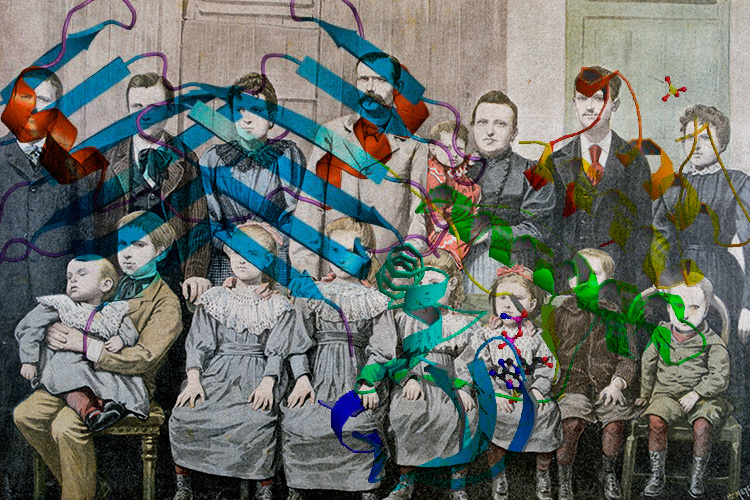
People are strikingly often found a genetic version, which reduces the likelihood of giving birth to a child. Such results were published last week in the journal SCIENCE, a team of researchers from Stanford. In the carriers of the discovered genetic version, pregnancy is more often interrupted in very early stages, due to which they produce significantly less children than they conceive. It would seem that having such genes are very harmful, and this genetic version should be eliminated by natural selection. Nevertheless, in different peoples it is found in 20-45 people out of every 100 - that you can’t call the result of the wems.
Scientists have analyzed the genomes of thousands of embryos (and their parents) to find out how often in the early stages of the development of the embryo there are anneuploidia , errors in the amount of chromosomes. Aneumupoliii is when chromosomes are smaller or, conversely, more than it follows. For example, the excess copy of the 21st chromosome is turned into a Down syndrome (therefore, by the way, for all those familiar with this fact, a well-known statement of the Minister of Culture of Medinsky “our people has one extra chromosome” sounds especially cynically).
Most women do not even have time to find out about the failed pregnancy; The exception is those who go through the IVF procedure, "conception in the test tube."
But most often, anneuploidy kills the embryo in the first days after conception.
Most women do not even have time to find out about the failed pregnancy; The exception is those who go through the IVF procedure, “conception in the test tube” (and thus two or three percent of children in the countries of the first world are born). In this case, doctors are firmly sure that the conception has occurred - since they organized it themselves - and carefully monitor the development of each fertilized egg before planting her mother. Statistics of 15 thousand successful and unsuccessful artificial fertilizers, collected on the third and fifth day (that is, even before the ambush, while the embryo develops in the laboratory), and became the subject of study.
And when biologists want to find out the role of genes in any question, it is important for them to immediately take into account the contribution of everything else. To prevent yourself from confusing.
First of all, the frequency of anneuploidies depends on the age of the mother - this can serve as some justification for Soviet doctors who introduced the term “old -born” for women in childbirth for 25. The older the woman, the higher the likelihood that the embryo will have the wrong amount of chromosomes. In this case, the failure usually occurs at the stage when the mother’s body produces an egg, and there is no sperm that fertilizes it even on the horizon. Such anuuploidies are easy to recognize, bearing in mind that in this situation only maternal chromosomes are in abundance or deficiency, and paternal ones as much as necessary.
But sometimes troubles also happen to paternal chromosomes (although in the sperm of the anneuploidii they occur extremely rarely). The most common reason is that the already fertilized egg took and shared incorrectly. And since all the cellular contents (not counting the DNA of the father) go to the embryo from the egg-and above all, this applies to the diverse microscopic technique that is blown up by DNA threads, pulls chromosomes in different directions and, as a result, makes two of the cell, then the discrepancy with the divergence of chromosomes in the early stages of the development of the embryo can occur only due to deeply hidden defects in egg.
The ability to get pregnant less often is another way to outwit men so that they bring more benefits.
And the frequency of such anuuploidies in the experiment on the age of the mother was no longer dependent. Nevertheless, in some women, anneuloid embryos formed much more often than in others.
Could it be that the high risk of failure is programmed genetically? Scientists began to look for some features in the DNA of mothers that predict the fetal anuupoline, and finally found a suspicious fragment of the genome in the fourth chromosome. The most likely culprit of the problems is the option of the PLK4 gene, located here and regulating the important stage of cell division.
As a result, in the bearers of such a genetic version, embryos with anuupolines were more often formed, which, as a rule, quickly died and did not even live up to five days of age.
Interestingly, the found genetic version, reducing fertility, belongs to those few DNA areas that distinguish us from Neanderthals and Denisovites - two extinct species of prehistoric people, replaced by Homo Sapiens . This means that the PLK 4 gene variant arose after our separation from the ancestor in common with Neanderthals, but even before the characteristic differences between different populations of modern people began to arise (that is, from 400 to 100 thousand years ago).
The theory of evolution seems to say: those genes that help leave numerous offspring win. The more children, the more copies of the gene in the next generation. Why do you need a gene that prevents the breed?
Now we live in a comfortable, safe and civilized world with developed medicine, and until adulthood there are almost as many children as it was born. But hundreds of thousands of years ago, when the life expectancy was lower, and it was possible to grow up to a smaller part of the children, “more newborn” did not mean “more offspring”. Whether the child will survive to maturity and whether the offspring will leave himself to a large extent dependent on parental care. The authors believe that the “harmful” version of Gene made humanity better take care of children. More precisely, he taught prehistoric men to be good fathers.
The gene that is winning from the point of view of evolution can be pulled along the generations of a harmless or small neighbor - this is called the “genetic hitchhiking”.
In a scientific article, this is called "confusing paternity." If not every conception ends with childbirth, it is more difficult to determine who the father of the next newborn (unless, of course, the woman had several partners). In this case, you can count on help in raising a child from a larger number of men, each of whom may turn out to be his father. It turns out that the team from Stanford argues that the ability to get pregnant less often is another way to outwit men so that they bring more benefits. Other female tricks fixed by evolution are hidden ovulation and the ability to give birth all year round (therefore, men do not know when you need to have sex in order to achieve conception; other mammals are wrong). Thanks to all of the above, children were protected from aggression of adult men (because I do not want to attack someone who can be your child) and even probably received some kind of support from them. And no support can be superfluous when growing a child with such a long childhood as people. Especially if you are a primitive woman.
In 2015, there is no benefit from the defective PLK4 gene for humanity, but it prevents the huge number of carriers to have children on time - or to start them in principle, if this is superimposed on other problems. In a word, there are reasons to get rid of it - and this can become a precedent in “improving a person” using genetics tools.
It is not necessarily about editing the DNA of human embryos, which made the recently invented CRISPR - CAS 9 method - while scientists are only discussing the ethics of such experiments. Already now, with IVF, they are screening genetic anomalies before the alignment and rejected part of the embryos. If the “harmful” version of the PLK 4 is recognized as a risk factor - that is, the chance to lose the whole set of options for those genes who are unlucky to be his close neighbors in the chromosome. Neighboring genes often go from parents to children with a whole package, according to the mechanism of “adhesive inheritance”, and the gene woned from the point of view of evolution can be pulled behind generations of a harmless or small neighbor - this is called a “genetic hitchhiking” . The authors do not exclude the possibility that the PLK 4 problematic version itself is a hitchhiker that an unknown gene that has been grabbed with him, which allowed Homo , grabbed the company with him Sapiens survive Neanderthals. And in this case, there is a risk of losing more than to purchase.