
Translated material
Prices for growth are ready
The central bank retained the key rate, but warns of the possibility of increasing it. What happened?
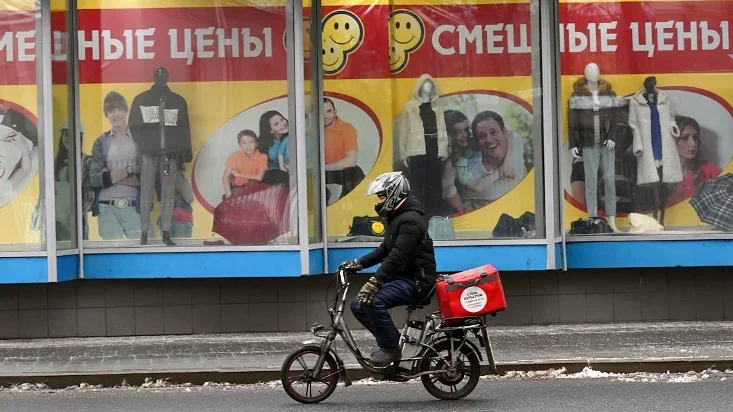
Photo: Alexander Kozakov / Kommersant
Sources of optimism
According to the results of his meeting, the Board of Directors of the Central Bank of the Russian Federation for the fifth time in a row retained the key rate at the mark of 7.5% per annum. Plus to this Central Bank announced the forecast of increasing economic growth, and by sharp - according to the assessment of the financial regulator, GDP could increase in the range from 0.5 to 2.0% (the previous forecast was in the range from minus 1% to +1%). “By the end of next year, the economy will return to the levels of the end of 2021 with growth rates of 0.5–2.5%. Then it will grow by 1.5–2.5% per year, ” said Elvira Nabiullina.
The middle of the forecast interval of the Central Bank is 1.25%. This is even more than the Ministry of Economic Development expects, which recently increased its forecast for GDP growth to 1.2% this year.
Where does such optimism come from?
Economic activity is growing faster than assumed, the CBO of the Central Bank of the Russian Federation says .
QUOTE
“This reflects both an increase in domestic demand and the ongoing processes of adaptation of the Russian economy. The expansion of internal demand helps to improve business moods, despite the preserved difficulties from external conditions. ”
About "difficulties"
“Saved difficulties on the part of external conditions” are not only sanctions, explains the head of the Central Bank of the Russian Federation. “For Russia, the influence of both positive and negative factors from external conditions is restrained by sanctions. Nevertheless, these effects will be broadcast primarily through demand for Russian export goods, its prices and volumes. ”
Interestingly, about the same time a few days ago was said by the director of the Institute of People's Economic Forecasting of the Russian Academy of Sciences Alexander Shirov in an interview with the magazine "Expert":
“... The main risk is a slowdown in the growth rate of the world economy. This hangs the demand for the key positions of our export. This is a more important factor than sanctions. ”
In essence, in demand for the “main position of export” a positive forecast is held. True, the Central Bank slightly worsened expectations for foreign trade: export forecast is reduced from -2.5–0.5% to -2.5–5.5%, imports from 12.5-15.5% to 8.5–11.5%. The surplus of the current account was reduced by 30% - from $ 66 to $ 47 billion.
Of course, the Central Bank knows data on the production and export of oil, which the government classified. Now the regulator expects that at the price of a barrel of Urals $ 55, export income will remain at $ 435–444 billion for three years, import expenses will amount to plus minus $ 330 billion. Thus, the annual surplus of a trade balance at the level of $ 115 billion is quite sufficient, so that it is not yet worried about the possibilities of continuing the “performing current tasks” without Loss of the stability of the foreign exchange market.
Well, in addition to the stability of export incomes, the regulator expects the growth of people's expenses - this year this year will add 3.5–5.5%, not 0-2%, as the Central Bank expected in February. The same driver identified the Ministry of Economic Development in its forecast.
However, government expenses will also support the economy: “... in general, the contribution of budget policy to expand aggregate demand continues to increase, including by expanding state investments.”
Even inflation slowed down: the annual according to the results of March amounted to 3.5%, weekly and monthly prices of prices remain moderate, inflationary expectations of the population decreased to 10.4%.
The reason for concern
It turns out that everything goes not only according to plan, but also good?
Then why the regulator is so worried about inflation and promises, in which case, “click on the brake”. Any shift of price dynamics can lead to an increase in the rate: “In conditions of a gradual increase in the current inflationary pressure, the Bank of Russia at the next meetings will evaluate the feasibility of increasing the key rate for stabilizing inflation near 4% in 2024 and further”.
What price pressure is so disturbing the Central Bank of the Russian Federation if the economy demonstrates signs of growth, and people are about to go to spend savings and take loans?
The fact is that both the Central Bank of the Russian Federation and the government perfectly understand not only form, but also the content of economic growth. As Alexander Shirov noted in an interview:

“If we talk about the contribution to the current formation of economic dynamics, then the contribution of the defense of the defense is one of the highest. But I would not advise using a high multiplier of the defense industry to solve purely economic problems. ”
That is, the production of various equipment and equipment paid by budget money pulls up the numbers of statistics, but at the same time pulls up and prices for the necessary material and human resources for this production and at the same time creates a shortage of these resources in industries that are not drawn into the “fulfillment of tasks”.
The deficit is compensated by rising prices - this is “inflationary expectations” in people, and in enterprises they, on the contrary, have grown. Moreover, not only manufacturers await the rise in prices - especially noticeable growth in inflation expectations is observed among retail outlets, the analytical department of the Central Bank of the Russian Federation in the ballot "What Trende is talking about." Acceleration of prices for consumer producers in February-March will over time turn into an increase in prices on store shelves.
What the government pays is in GDP statistics, but the consumer needs not statistics, but available goods that may simply not be. Of course, the gaps on the shelves of stores can be closed with imports, but with the "Nefteyuans" it can also be complicated - not just the chairman of the Central Bank and academic economists speak of "external risks."
The problem here is not even that the government spends money on “completing tasks”, but that it is impossible to calculate the optimum of such “special expenses” in the economy. If it is exceeded, this is already becoming clear post -fact.
And the main tool that can use the Central Bank of the Russian Federation to prevent imbalances in the economy is a key rate is a strong, but inoperative. If prices jump up, then they cannot be returned by raising the rate, you can only slow down their growth in the future - but this is not what voters expect.
The essence of the problem that the leadership of the financial regulator has encountered, the analysts of the Central Bank of the Russian Federation explain this: “... the factors and risks that determine the higher steady increase in prices in the future are intensified. This creates a dilemma for monetary policy: react preventively to the risks of strengthening the price pressure, taking into account the lags with which the DCP affects inflation, or wait for a clear confirmation that the index risks are realized to a large extent. ”
In this situation, the Board of Directors of the Central Bank of the Russian Federation actually “pauses” - just in case.