
Translated material
Andrey Bitov about Gogol and generally
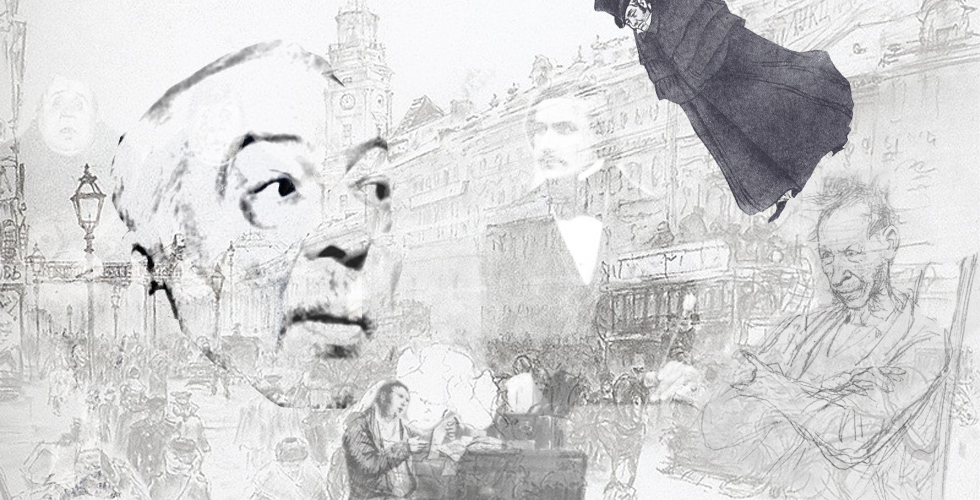
Colta.ru is happy to cooperate with the project of Katerina Gordeeva “Open Lecture”. Lecture by Andrei Bitov “About Gogol. And in general ”was read at the Gogol Center on February 27.
Katerina Gordeeva: Good evening. Thank you so much for waiting for our new date. I would like to say very strange thanks for him: on the one hand, Vladimir Vladimirovich Putin. And on the other hand, Kirill Semenovich Serebrennikov. Never before, as they say, the girl with such joy went away from one to another. With the decree of Vladimir Vladimirovich Putin on improving the effectiveness of the media, the RIA Novosti agency ordered a long time to live, and we, the Open Lecture project, remained homeless. And then we had a new house. In my opinion, he is beautiful. We are also grateful to the Gogol Center for the fact that our “open lectures” are still free for you, because we believe that human knowledge, all the more knowledge of those who have already entered and will always be in the history of the 20th and 21st centuries, should be accessible. It should be possible to touch him, ask questions and get answers.
Andrei Georgievich Bitov is one of the few of our contemporaries who can afford to turn to Pushkin, get answers from him. He recorded an amazing disk, these are Pushkin’s drafts accompanied by jazz music, performed by jazz musicians. About how this record appeared, and Andrei Georgievich will tell us about much more today.
If I understand correctly, your lecture, as you yourself called it, is “About Gogol. And in general. " But you asked to start with Pushkin. Please explain, please.
Andrey Bitov: I am not ready for what I will say. As it will suffer, so it will be.
Gogol had lectures - he tried very hard to be a scientist on all issues.
The first thing I thought today was that I could name this speech: "On Eatiness." About the satiety of the text. What is it? This will be my invitation to reading. Listening and reading is almost the same thing, but completely different things. So, I am publishing some kind of oral text here, about which I do not know what kind of text it is. And he will sound for the first time.
Since for the first time I received the concept of satisfying, which does not exist in literary criticism, I will talk about it. It was the heart of the text that always struck me in Pushkin, which I have been engaged quite stubbornly since the time when I mistakenly wrote the Pushkin’s house and had to give some profession to my hero. Then the hero-again, is not because I was going to do this,-wrote something about Pushkin, and I can agree that he writes about Alexander Sergeyevich. Wrote about the confrontation of Pushkin and Tyutchev. Whoever read the novel knows what is the matter. And all the time I wanted to write about drafts, because I did not understand why Alexander Sergeyevich deleted from Eugene Onegin and from poems some completely wonderful stanzas, poems and large pieces. But I could not understand his logic why he was so generous, or not so greedy, or so picky. Well, I had no reason to find why he preferred one another.
And so I thought about it for a long time and wanted to write about it as if with words with a smart look, but I could not find the approach until I had friends from jazz, and very high quality. And once, in their presence, I simply accidentally revealed a complete meeting and read Pushkin’s draft. And I saw how they started. And so the first concert in New York took place in 1998-without rehearsals, without nothing, in five randomly opened poems. And they immediately entered their main repertoire.
We proceed to satiety. Probably, it was a war that I remember from the first day, and the blockade. Well, in general, some inhibition and autism after this Great Victory nevertheless happened to me. However, probably before the war it was. I started talking late and began to read later.
In my house, oddly enough, most of the books turned out to be pre -revolutionary, which did not burn in the stoves in the blockade in the bourgeoisie, and I learned to read from the books of the old spelling. I read very stupidly and slowly, in the letter, according to. And that slowness, apparently, taught me the main property: that only very high-quality texts are possible to read so, because a poor-quality text cannot be read in such a weak-minded way.
What is the blessing of the student, the three -year -old, interrupted in such a way as not to upset mom? This, of course, when he gets ill, he does not have to go to school. Then my mother ran away to work and laid me - with a sore throat, which is characteristic of Leningrad - in the bed of her wide. And there I read these pre -revolutionary books. For some reason, Turgenev was the first, and then Gogol was. And Gogol was a complete works, a luxurious collective of works that I read with rapture very slowly and in detail.
I probably had been nine to ten years old when I got up before. “Little Russia” I must say, I missed - I didn’t really like these tales. And I didn't like Bulba. In his first lines, his mother fell dead. And I loved my mother so much that I decided that I was “dead” “died”. And I did not like the Bulba. Then he also killed his son - also not good.
But, oddly enough, I could read, as I now understand, into much more complex works, namely: I liked the "Old Foreigners" and "Petersburg novels". I missed, however, "Nevsky Prospekt." For some reason he did not go. Because slowly or because I was not ready, I do not know. This principle is not to read what does not go - I still save. But now I keep it for another reason - it means that you should not work.
Can you read the text of the Bible, the Qur'an in a row? So Pushkin cannot be read in a row. And Gogol cannot be read in a row. I myself gave such a moronic education, I learned to eat words in terms of sounds, in meaning. In general, completely eat the text.
And the absorption of the text can lead to such saturation that, frankly, I cannot read Gogol. Here is my recognition to you.
I have not read Gogol since then, with this mother’s bed. I was already a writer. There was some opinion about myself, and once I was in a hurry from Moscow to Leningrad. I pronounce this word consciously, because it was Leningrad, and there was a blockade, and there I was born, not because I love Vladimir Ilyich, but because historically this is right. Just as you can now avoid the words "Soviet", because the country was Soviet. There is nothing to be done.
In 1973, I was already 36 years old. I have already written quite serious texts, which still not only do not refuse, but maybe they are better than what I wrote later. And so, it means that in the Soviet country I went from Moscow to Leningrad, the most renamed city. And then I heard Gogol for the second time. I will read you about what I heard on the carriage of radio in 1973. The text is called "Gogol-1973". I will not read the whole, but two fragments.
Sorry, if I wheeze, but still in 2003, fortunately, I safely survived the cancer of the vocal cords, and this was connected with jazz-I torn my voice in jazz, because it was not set, and I had to work in full throat. I have a voice, but there is no production. Just as being able to read, you must also be able to sing and sing. When I read poorly, I set myself reading. And I did not set a voice for myself. Therefore, I tore it in 2003 and did not please Kashchenko, but - how is it? - On the kashirka.
So listen. Lenin and Gogol, the first head.
“It was December 31: the train arrived at twenty minutes of the twelfth: forty minutes to keep up with the festive table.
An hour before the arrival earned a radio sailor. Schulzhenko sang, someone else. The numbers followed without announcement, and what they would sing, what would play, one could only guess or not guess. The next number was a reader. The voice of a people's artist, replacing the skill with the extortion of the reaction, the dialect of grandfather Proskar, winking and waiting, began to “read the classics”. That it was the classic precisely, it was immediately understood by how much the artist attached the words to the words just insignificant: for example, he had the nouns were more strict than verbs, he identified the wrong words all the time, but with the confidence that only a very great glory could give these extra words, great power of the name. However, I just couldn’t guess the name, which somewhat hurt my professional honor. And the fact that I did not immediately guess the text, but only under the hint of my own names, such as Kyiv, Homa, I completely annoyed me. And even such a mental exclamation to the performer: they say, to what unrecognizability the text can be brought! - I did not measure this proud annoyance. I turned away, stopping listening.
There was nothing in the night window - the same car was reflected, the same I am. As always, the sixth, the last one, the hour of the journey was especially superfluous. People fumbled, approaching. Prematurely put things, prematurely put on a coat, prematurely crowded in the aisle.
“And suddenly there was silence: a wolf howling was heard in the distance, and soon the heavy steps sounded in the church. Looking in a spite, he saw ...” Still, it was strange, I thought, a train, New Year, Vii ... Nonsense is abstract.
The train began to sway more and jump on the arrows, choosing its own deadlock in the railway delta. And the reader continued, in a cheerful voice eliminating horrors and emphasizing the inexhaustibility of folk fantasy, its life -affirming power. How did he succeed? It was really skill. In any case, he deserved his title, he corresponded to him.
“With horror, Homa noticed that his face was iron,” the reader exclaimed joyfully, and then in the dynamics he clicked and this time that this time said such a natural railway, said:
-The train arrives in the hero city of Leningrad ...
Platform. Bombs of a mogyk at the end of the journey. 23:25 on the scoreboard. The monument that thrown out his hand. Here he is! And his face was iron on him. ”
Gogol has nothing to do with it. So, I miss the head of the next “external inspection of the book”, also a pre -revolutionary publication on which behind ... a very good publication, by the way, from a printing point of view. But behind the flower, and under this flower it is written “Assertive. government. " Do you understand? We are in Russia. “Approved. government ", flower. This is amazing. We have not gone anywhere, by the way.
(I will read this chapter entirely, because it is quite theatrical. [A child cries in the hall.] Poor child. This is my great -grandson, he is tormented. I have a great -grandson, by the way, born last year. He says: "Grandfather, stop." And I will tell him: "I do not read to you." But he does not understand.)
The next chapter that I want to read to you is significant for understanding the satisfaction of the text and Gogol's inability. "Casket in the box" is called.
“Actually, it always seemed to me, I am amusing myself that I easily find any place in the book that I needed. Even in a long -read book, in an unfamiliar edition. One or two, opened, looked-here it is, the only place! Difficulty is not to notice this chic.
There are authors whose waters immediately close behind the readership, there is an impression, even a shock, but almost the same immediately undivided as a closed book itself. As Dostoevsky - while I read, forgot the words that was written. So, even in Dostoevsky I will immediately find the place I need. The only problem is to remember what. Duel? Where is his duel? Not there, not there and not there. So “demons”. In the "Demons" - where? Not here and not here. It would seem that in Gogol we remember all the details. From childhood, it is distinct, every image is circled. Here I can never find him, open a volume where I need.
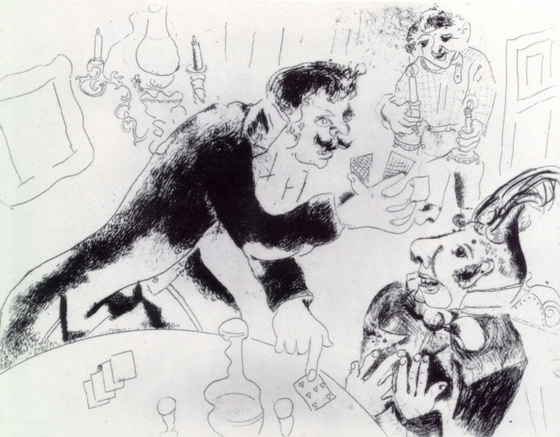 © Illustration M. Chagala to Dead Souls
Once I had the idea to take an epigraph a description of the Chichiki casket. What could be more distinct than this subject! Here she stands on my table, like a work of a Pop artist. The same will be an epigraph as a translation picture! I joyfully rushed to that distinct place of the “dead souls”, where the box stood. She was not there. There was only the word “casket” and it was neither wink that it was a wonderful box, or promised that it would be discussed more than once.
With difficulty abandoning the place in which she always stood for me, namely, Chichikov’s placement in the hotel Numer, I headed for the next, where she could be in the second place - but she was not there either. This already discouraged me and hurt me - reluctantly I suggested the third and was almost satisfied when it was not there.
I began to flip along and across, involuntarily carried away and re -reading individual chapters - there were no caskets anywhere! But I remembered her as I saw! I spent this fierce all day in this, never starting work. By evening, I already began to stumble only on re -read places, and where it was supposed to be, I already remembered almost by heart. There were no caskets, like through the ground, or rather, through the page, it failed between the lines.
I already began to think about an extraordinary artistic phenomenon, a kind of almost holographic (anticipation!) An effect, in which Gogol, having spent nothing, made us see literally, physically. And the reason to re -read “dead souls” at such an unusual angle, in such inconsistency - for this reason one reason could be thanked and not upset. Yes, and the day has passed.
Almost satisfied, I postponed the book, dreaming of the power of an artistic image. And, stretching to bed, he stuck a book like a card deck, like a nail on the keys. What's happened? Really? It cannot be! Living Gogol grinned from the sheet, but what was there, I heard him giggled, buried his long nose in his shoulder.
Box! A box was placed in the “box”! I don’t know why this “box” did not draw me to re -read, why could the caskets could not be for me? Exactly one thing that this was the only chapter I did not re -read on this wasted day.
But this is not enough - I say that I heard laughter in my room. For what did I finally read, finding ill -fated furniture?
"Ek is hilarious like a damned old woman!" - he said a little, and the author is sure that there are readers are so curious that they wish to even find out the plan and internal location of the casket.
Gogol giggled. "
The next head, which all ends, is “the remission of sins”. I will not read it, but I can tell you such a story. I already boasted that I managed to keep my voice. But in 1994 it was worse. I got into the hospital with a huge cerebral edema, and they made me the worst diagnosis that only exists and gave me two weeks to live. This is so, in absentia, that is, until a complete examination. But I prayed. But I must say that I am a believer, but not churching, so I did not know the prayers. And for some reason due to the fact that I wrote this text, I remembered what I brought from Gogol. These are his last words. He said this way: “Lord, what to do in such a way as to forever remember the lesson taught to me in my heart? What to do? " As if life is really continuous. I repeated this to myself, and, oddly enough, in general, I see, alive.
When I had this edema and a lot of things were working on me, I dreamed, a wonderful performance was bought. The nonsense was very bright. I saw the production of “Notes of a madman” in some kind of incomprehensible, unknown theater. And I was crazy, in fact, with cerebral edema, and I was generally suspected of white fever, and this was not so.
So I dreamed or raved that I was in the theater and watching a new production of “Notes of a Madman”. And in this wonderful performance, the Spanish embassy gives a note to our government that we return their king to them, that he really turned out to be the king and nothing more to hold him. It was in 1994, already, in my opinion, the king was returned in Spain. In general, it doesn’t matter what the political background was, but it was a very bright production that their king was released from our madhouse, because he is really a king, and this madman was not at all crazy, but a real king. Here was such a thing.
What is happening? Did I remember the “Learning Notes”? Again about Gogol. I continue not to read. After that I did not re -read the "Notes of the Madman." True, sometimes I wanted to write “Notes of a madman” myself, but I also stopped. After all, the word can then be scared and avenge. I wrote notes, but “crazy” - it would be too bold.
And suddenly in 2002 I read Pushkin at all, and not Gogol. And the Pushkinovs fed Pushkin by volumes as they consider necessary. And among what is attributed to Pushkin’s plans, not even over. And now I read Pushkin such a strange thing. Of course, before that I thought a lot about the fact that Pushkin so generously gave the ideas both the “auditor” and “dead souls” Gogol. But, let's say, Pushkin could not write “dead souls” - it seems to me clear. Gogol, perhaps, was the mythhora, maybe he exaggerated how sad our Russia was, but this impressed Pushkin, he realized that this prose of a different order. But the “auditor” Pushkin, by the way, did not forgive Gogol very much, because it was a favorite plan, and Pushkin was even offended by the familiar mention of his name in the “Examiner”. In general, I still thought: why did Gogol take these stories? After all, the ingenious writer, why did he take them? What is the chip, speaking the language of jazzists?
And because Gogol possessed a brilliant talent, but the base is like that of Pushkin, forgive me for my familiarity with great names, such a depth as Pushkin’s, Gogol did not. Следовательно, когда Пушкин ему предлагает замысел, там есть фундамент, который Пушкину показался важным, на этот фундамент можно встать, и к этому можно приложить свое волшебное дарование, которое у Гоголя было. Так это, на мой взгляд, происходило. Доказать я это ничем не могу, но тем не менее я так думаю.
Так, правда, считала Наталья Николаевна, а я всегда за нее. С ее слов записано воспоминание, что Пушкин говорил: «Этому малороссу нельзя палец даже дать, чтобы он его не ухватил». То есть хватит ему давать, слишком он сильно хватает. Пушкину чего-то было жалко.
Так вот, читаю я в замыслах, которые всегда в конце тома где-то, в примечаниях, ни к чему не относятся, следующий текст.
«Н (русская «Н», кириллицей, ну или «аш», если это латиницей, да?) избирает себе в наперсники Невский проспект. Он доверяет ему все свои домашние беспокойства, все семейственные огорчения. Об нем жалеют, он доволен». И это относится к замыслам Пушкина всеми пушкинистами. Но я смотрю: это же содержание «Невского проспекта», который я долго не читал, но в конце концов прочитал однажды. И был удивлен его невероятной живописностью, потому что Гоголь о живописи судил много хуже, чем сам умел написать это. Так что портрет слабее, чем некоторые пластические описания, не говоря там о плюшкинском саде. Но, в частности, в «Невском проспекте» это фантастически, когда герой проходит какой-то мост и что-то у него повисло на ресницах. Это так сказочно написано, что надо было бы зачитать. Это супервидение, всякое кино затмевает. В общем, умел человек писать.
Я тут же понял, что это «Невский проспект». Значит, третий замысел тоже принадлежал Пушкину. Я поторопился застолбить за собой это предположение, поскольку никто из гоголеведов и пушкиноведов к этому не обращался, и быстренько, пока шла книга, даже не успевал записать. Поэтому я продиктовал эту идею замечательной пушкинистке Ирине Сурат как более грамотному специалисту по той эпохе, и это было опубликовано в виде беседы. Пушкин, кстати, «Невский проспект» Гоголя очень ценил и сказал о нем как ни о каком другом гоголевском сочинении: «Наиболее полное его произведение». All. Они, между прочим, лишнего не говорили.
Почему я решил, что это так важно? Сейчас я перейду к анекдоту. Анекдот в старинном смысле — не замечательный советский анекдот, который развился у нас за советское время. Анекдот — это случай, за который можно зацепиться. Гоголь написал «Шинель» по анекдоту.
Я, кстати, написал свой «Пушкинский дом» тоже по анекдоту, который мне пересказали. Такой случай был и в моей жизни.
Был у меня старший друг, замечательный прозаик, гений конца 1950-х годов, по крайней мере, в ленинградских масштабах, абсолютно самобытная фигура — Виктор Голявкин. Он известен как детский писатель, но взрослые абсурдные его рассказы не были известны. И именно благодаря им-то узкий круг — потому что самиздат существовал и до самиздата, то есть когда все читали друг другу в своем кругу тексты, — и знал, что Голявкин, конечно, гениальный писатель. Ну, по нашим меркам, поскольку мы ничего не знали. Никто теперь не может оценить меру нашей просвещенности конца 1950-х — начала 1960-х годов. Это полный ноль, потому что не была известна ни американская литература, ни западная, ни запрещенная, никакая. Можно было немножко русскую классику почитать, и то минуя ее дурные объяснения в предисловиях и дурные комментарии в конце. Но, по крайней мере, какие-то тексты были, в частности, Гоголь был. И Пушкин был. Однако читать-то разучились. Плотность, или, как я сказал, сытность, чтения не все обрели, и тогда надо было жвачку какую-то. А жвачку никто, кстати, не хотел читать. Жвачкой было все вокруг, то, что было официально. И Голявкин на этом фоне очень здорово выглядел.
Раз Гоголь идет под буквой «Н» (или «аш»), приезжает, значит, из Москвы московский первый гений, и имя у него соответствующее — Евгений. Ну, назовем его «Н» (или «аш»). И он приезжает и со своим стремлением покорить Петербург сразу спрашивает: «Кто тут гений есть кроме меня?» Ему указывают, что кроме него есть такой Виктор Голявкин.
Гений приходит к нему, а Виктор Голявкин учится в Академии художеств как живописец. И в это время уже стал печататься как детский писатель, даже сразу накупил много красок (а это дорого) и стал пальцем размазывать всякие паруса. Он из Баку по происхождению, любил море. Он, кстати, оказался живописец неплохой — сейчас его картины вполне смотрятся.
Так вот этот Евгений, «Н» (или «аш»), приходит к Голявкину и высокомерно или снисходительно просит его почитать. Тот читает свои абсурдные рассказы. Гений соглашается, что это хорошо, и приглашает его в ресторан. Выпили они водки, конечно, для разговора, и поехали они в ресторан, конечно, в «Европу» или «Асторию» — по жанру московского гостя. И, конечно, Евгений остановил такси.
Остановил он такси и усадил Голявкина на заднее сиденье, сам сел впереди. И везет, и что-то, значит, выступает. А Голявкин замрачнел. Надо сказать, что это довольно интересный был персонаж. Мы с ним дружили. И поскольку я его никак не напрягал как гений, то, следовательно, он меня вполне терпел и никаких у нас конфликтов не было.
Я еще параллельно анекдот расскажу про Голявкина. Однажды мы подходим к Дому писателя в Ленинграде. Это замечательный совершенно особнячок, не сгоревший и опустошенный, кем-то захваченный. И он как раз напротив Большого дома, нашего КГБ, нашей Лубянки ленинградской. А у Голявкина в это время уже первая книжка вышла с успехом, а вторая — «Тетрадки под дождем» (кстати, очень хорошая — это диалоги детей) — вызвала, естественно, ревнивое отношение, и все сказали, что она слабее. И мы поравнялись около этой Лубянки нашей, около Большого дома, идя, по-видимому, с одной и той же целью — в буфет ленинградского Дома писателя. А в это время по Литейному трамвай еще ходил, сейчас его сняли.
Я долго думал, откуда у него такая манера. Оказывается, это манера бакинских русских так говорить. Вместо «вообще» он говорил «ваще». Он мне раз говорит: «Ваще, ты не представляешь, какие люди, ваще. Вот ты представляешь себе?» Трамвай идет. А он идет мимо Большого дома, он бежит и чуть под трамвай не попадает.
И он перебегает ко мне с радостным лицом, и трясет мне руку, и говорит: «Хуже! Worse!" Вот это я понимаю, вот о чем Блок писал: «Там жили поэты, и каждый встречал / Другого надменной улыбкой». Вот такая ревность происходила. Это же надо! Он мог под трамвай попасть, ваще. Ваще, он мог попасть под трамвай. А ему надо было сказать, что хуже.
И такой человек едет на заднем сиденье, и Евгений что-то разглагольствует, хвастается, по-видимому, в каких странах он бывал или еще что-нибудь. И Голявкин начинает напрягаться. Напрягается-напрягается-напрягается и потом вдруг говорит: «Женя, повернись-ка ты». Тот повернулся, и он ему дает плюху. А надо сказать, что в своем Баку скромном он был чемпионом города по боксу. Плюха была, по-видимому, увесистой.
И тогда Евгений, естественно, жутко возмутился, остановил такси и сказал ему: «Пшел вон из моего такси!» Вот что любопытно: «Из моего такси». Тот спокойно вышел. Потом я стал выпытывать у Голявкина: «Слушай, ну действительно не пристало так себя вести. За что ты его, собственно, ударил?» Он говорит: «Понимаешь, это трудно объяснить. Ты не поймешь». «Ну почему не пойму? — говорю. — Ну расскажи, как дело было». Он говорит: «Понимаешь, он говорит — “ты гений, и я гений”. Ну, я соглашаюсь. Ну, нормальный разговор с человеком. Ну, выпили, всё нормально, поехали в ресторан, нормально. А потом он вдруг подходит ко мне. А я к окну отошел. Подходит ко мне, сзади меня обнимает и поднимает меня». Я говорю: «Ну и что такого? Ну, приподнял он тебя». «Э, нет, — говорит. — Это если бы ты меня приподнял, это бы ничего не значило. А тут он меня приподнял. То есть в смысле, что ты гений и я гений, а я тебя еще и приподнял».
Как ни странно, именно с этой абсурдной, нелепой истории я начинаю свое исследование о том, что «Невский проспект» был передан Гоголю Пушкиным. Поскольку одно дело — передать, а другое дело — приподнимать. Это разные совершенно истории.
Чтобы закончить с Гоголем, что я еще могу сказать? Читать его невозможно. Но невозможно читать всю русскую литературу. Невозможно читать Пушкина, потому что это слишком сытно. Невозможно читать Евангелие. Невозможно читать, кстати, мысли Паскаля. Одну прочтешь — и хватит. Сыт уже, сыт, потому что это настоящий текст. В отличие от того, что можно хавать как информацию, простите меня, это не информация. Это совершенно другое занятие — побуквенное, позвуковое, когда вы научитесь питаться, действительно, орехами, а не макаронами. Хотя макароны Гоголь очень любил и готовил хорошо. И, кстати, это основа итальянской кухни. Итальянцы в искусстве тоже не слабы.
Но дело в том, что надо суметь поглощать слово, иначе никто читать литературу не будет. И чем нас дальше будут отдалять от возможности читать, тем хуже будет не только русской литературе, но и всей России, между прочим. Все эти разговоры о рентабельности, о массовости, о тиражах, о популярности, вся эта суета лишает нас сытности слова, которое все-таки гораздо важнее, потому что язык всего важнее. У нас нету нации, у нас есть только территория и язык. С территорией мы обходимся плохо, с языком мы тоже обходимся в меру того, как его понимает начальство. А это нельзя допустить.
Обучиться чтению можно самому — вот в чем суть дела. Надо как бы немножко тормозить в своем сознании. Иногда нельзя быть «мы», надо быть «я»: это я читаю, а не мы читаем.
И чтобы показать, как Гоголя не прочесть, я вам покажу сейчас еще одну книжку, которую я не смог прочесть. Я же уже упоминал «Записки сумасшедшего».
Есть у меня издательница любимая, Людмила Дорофеева. Она выпускает замечательную серию «Книжная коллекция» — это лучшие тексты, практически школьные. Но в лучших иллюстрациях. Недавно вышли «Мертвые души» в иллюстрациях Шагала — впервые их издали вместе, потому что отдельно существовали иллюстрации, отдельно тексты.
А вот Анатолий Зверев, гениальный художник нашего авангарда 1960-х годов, иллюстрировал Гоголя. Видите, какой Гоголь на обложке похожий? А здесь он еще лучше — он уходит в дверь какую-то.
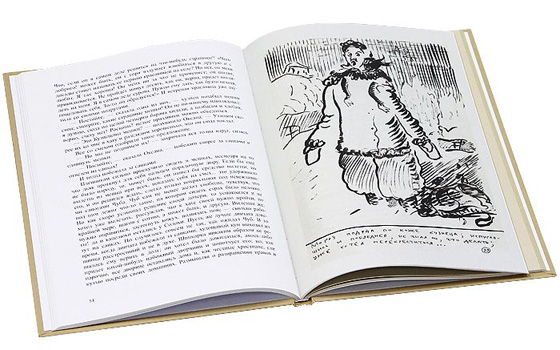 © Иллюстрации А. Зверева к «Ночи перед Рождеством»
Здесь две вещи: «Ночь перед Рождеством», которую я пропустил, и «Записки сумасшедшего». Ну, думаю, такими большими буквами с иллюстрациями моего любимого Зверева я прочитаю «Записки сумасшедшего» наконец. И вы знаете, я ее даже в метро брал читать. Прочитаю три предложения и больше не могу. До того это сытно. Как говорят, переедаю. А если так это прочесть, это пустой текст.
Между прочим, тексты, которые нам кажутся прозрачными, — это такая бездонность. Ну, Пушкин: «В чужбине свято наблюдаю седой обычай старины: на волю птичку выпускаю при светлом празднике весны». Ну что это такое? Some kind of nonsense. А вы попробуйте прочитайте каждое слово. И начинается погружение, вы начинаете тонуть.
Сегодня я писал текст. Я работаю над собранием сочинений, которое будет последним собранием, и решил дополнить последний раздел. Это пушкинский лексикон, состоящий из всяких мелких статей, поскольку три раздела крупных, а вот лексикон — дополнительный. И сегодня написал текст «Пушкин и компьютер». Ни с того ни с сего, надо сказать. Дело в том, что существует понятие единого текста. Вот Пушкин — это единый текст. Гоголь — это единый текст, а потом, кстати, переломленный по хребту текст. Может, Пушкин перестал ему помогать, знаете? It is quite possible. Они все были мифотворцы. Понятно, что нельзя на сто процентов их заявлениям верить, перебежал ли заяц Пушкину дорогу или не перебежал (это Пушкин сказал), чтобы не попасть на Сенатскую площадь. Но одну вещь, я думаю, Гоголь искренне сказал, в Италии находясь, когда узнал о гибели Пушкина: «Для кого я буду теперь писать?»