
Translated material
Remembering August ninety -first
In society
 Remembering August ninety -first
August 23, 2017 Elvira Osipova
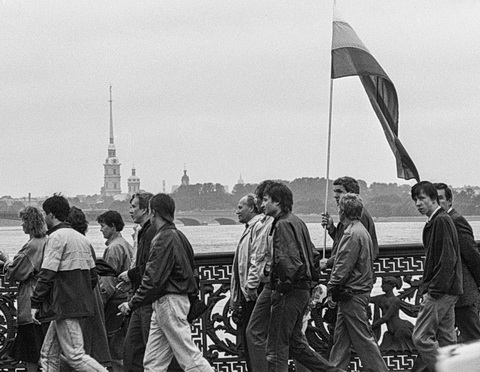
Today, most Russians are sick with apathy. No matter what injustice to happen, no matter how huge amounts they sail away from our treasury to other countries, condemning compatriots to poverty, the answer is one: what can we do? We are small people! It is useful to recall that the Russians were and others, actively opposed the disgusting power of the party, even reinforced by tanks. Do not forget these lessons!
These notes were written in hot pursuit of events that remained in the memory as one of the brightest and most expensive memories of my conscious life. They retain the heroic and anxious atmosphere of those days and - which is especially important - the names of people - active participants in events. Among them there are many deputies of the democratic Leningrad City Council of the 21st convocation, thanks to which the word "Lension" has gained a special meaning.
Almost a quarter of a century after those events, a lot has changed - the city, the names of the streets, the very name of the city, returned to it thanks to the power that we were able to protect. Many useful reforms were carried out. It was for those three and a half years of the existence of the Leningrad City Council (1990-1993) that we realized: the power elected by the people works effectively if it does not strangle it.
* * *
Early morning of the 19th, Monday. Alarming news arrives on Radio "Freedom": Elena Georgievna Bonner talks about a coup in Moscow and calls on citizens to take to the streets.
At 10 o’clock a speech was performed on the Leningrad radio and television of the commander of the Leningrad Military District, the military commandant of Colonel General Viktor Samsonov on the introduction of a state of emergency in Leningrad from four in the morning. He reads the statement that causes shock. A lot of prohibitions are introduced - to rallies, meetings, street processions, the use of multiplying and copying equipment, radio tender equipment and video descriptions, a ban on dismissal and strikes. Control of the media is established, a special mode of use of all types of communication, as well as restrictions on the movement of vehicles, is introduced, and the possibility of their inspection is provided. But that's not all. The newly -naked committee, which called itself very disgusting - the State Emergency Committee, the State Committee for Emergency Regulation - thought out everything to the smallest detail. He announced the suspension of the activities of political parties, public organizations, mass movements, amateur associations of citizens, which, as stated, "may impede the normalization of the situation."
Forbid everything is called “normalization” with them. Of course, on the islands of the Gulag, everything except slave labor was prohibited - and the situation was “normal”! Armed formations of citizens are prohibited (they have provided that citizens can rebel against this “new order”). And what is allowed? It is permitted to "attract able -bodied citizens to work at enterprises, in institutions and organizations, as well as to eliminate the consequences of emergency." In addition, it is allowed to “check documents in places of accumulation of citizens and conduct a personal search of things and vehicles.” All this is very reminiscent of the actions of the authorities in the occupied territories ...
We also recognized the names of those who should be included in the Extraordinary Regulation Commission in the city. Among them are famous: in addition to Samsonov himself, the first secretary of the regional committee of Gidasov, Vice Admiral Khramtsov (chairman of the City Hall Committee on Emergencies Prevention and Population), as well as the head of the KGB Kurkov department. The chairman of the Leningrad Regional Council Yuri Yarov and Vice Admiral Vyacheslav Shcherbakov, who at that time was the first deputy mayor of the city at that time, was also introduced there. By the way, both of them refused to participate. But the fact that their names were on the list helped to overcome the resistance of the head of the Leningrad television Boris Petrov, when in the evening they arrived on the Street of Chapygin 6 to speak to the townspeople. Sobchak, Belyaev, Shcherbakov and Yarov went on the air, the information blockade was broken ...
As we learned later, the head of the Main Department of Internal Affairs Arkady Kramarev did not obey the order of the military commandant and categorically refused to disperse people who went out into the street [1] . His firm position and civil courage played a decisive role in how events developed that day.
Shocking news does not allow you to stay at home. They need to somehow comprehend, decide what to do. Claudia Petrovna called the assistant People's Deputy of the USSR Nikolai Veniaminovich Ivanov. I learned that Gdlyan was arrested in Moscow that the police were for us, that the gathering near the Mariinsky Palace at 16.00. At this time, an extraordinary session of the Leningrad City Council was appointed. I'm going to Isaacievskaya Square. In the train, in the trolleybus, everything is calm, as if nothing had happened.
15.40. In front of the palace is three hundred people. Few. Will they not come, will not feel danger? But no, no matter how hard the CPSU tried to present the Lensolete as incompetent, to undermine confidence in him - it did not work out. In a minute of danger, many understood: the deputies elected by us will protect us from a well -organized and formidable enemy. And we went - more and more - to the heart of the city, the Mariinsky Palace. Deputies gather for an emergency session. At the sight of them, it becomes easier.
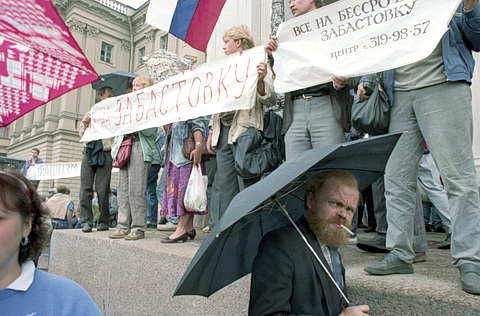
Install the speaker: the session will be broadcast to the square. Barricades begin to build - on Maiorov Avenue (now, as before, Voznesensky Prospekt), in the lane of Antonenko, on the sink embankment, on Herzen Street (which will soon be returned to its historical name - Bolshaya Morskaya). Well, at least part of the embankment is repaired, there is no technique there. They ravaged the surrounding construction sites, dumped reinforcement, iron gates, and coils of wire into a heap. Bending from severity, people drag some blocks into Antonenko lane. A detachment is formed on the blue bridge (mainly young men); They are directed to security for television. Their faces are decisive: danger highlights their character. Everything is genuine here. There are no sore slogans, fake calls, unnecessary bustle. 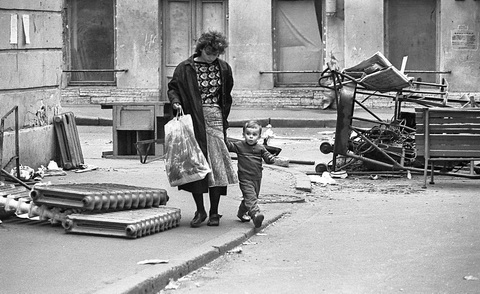
16.00-17.00. Overlapping the voices of deputies coming from the hall of meetings, the alarm is heard: “According to unverified information, the tanks passed by the meadows and head to Leningrad. You must know this and decide, stay here or leave. ” Someone leaves, but it does not become less to the people. On the contrary, new people arrive. There are already several thousand people in front of the palace. Observers climbing the roof of the house, on the corner of Maiorov Avenue and the Embankment Moika, shout: “Tanks are not yet visible. When they are, we will say. " And something else. For some reason, the people laugh, although, frankly, not laughing. Later there were evidence that the danger was quite real. “Hundreds of armed soldiers moved to the city, dozens of tanks, combat landing vehicles, trucks Garbolovskaya brigade performed at 12.30, and both Pskov groups of troops began a march on Leningrad at 14.00, when the deputies of the Leningrad City Council gathered in the White Hall of the Mariinsky Palace” [2] . 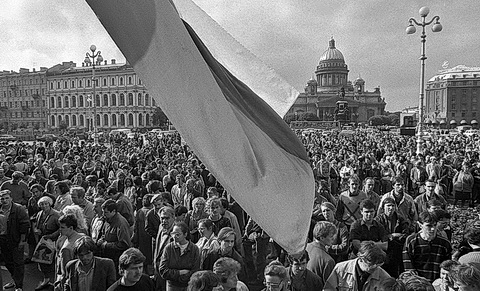
I see familiar faces: the ubiquitous Sasha Bogdanov, Peter Raush, who appeared at all rallies with the traditional black banner of anarchist, journalists, graduate philosopher, faculty colleagues, neighbors. A car drove up with Leningrad documentaries. I recognize Sokurov. I have no doubt: they will capture the next stage of our revolution for history [3] . On the bridge are several riot police in a gray form. A lot of police officers. But it’s not scary, as it was on February 25 last year, when they were afraid of provocations from the police and riot police during a rally at the sports complex. Today they are our defenders. How long, at the first democratic rallies, the danger came from them? A police car drives up. I see pleasant, calm faces. I say: "Please protect our deputies." In response, I hear: "But they can do it well." And that is true.
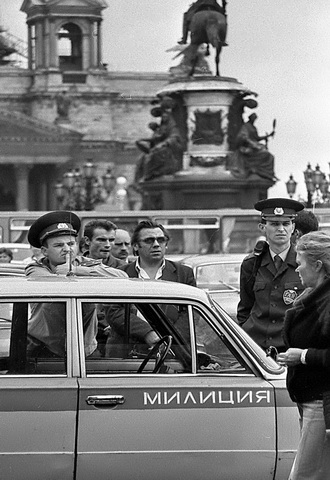
An emergency session of the Leningrad City Council begins. The meeting is clearly and confidently by Alexander Nikolaevich Belyaev. The deputies quickly, but in compliance with the necessary procedure, discuss the situation, the Yeltsin decree, express support to him. Create a permanent headquarters of the Leningrad City Council and the City Hall in terms of emergency. At it, at the suggestion of Kramarev, includes the chairman of the Leningrad City Council and members of the Presidium, the chairmen of the commissions, as well as the people's deputies of the Shchelkanov, Boldyrev, Salier, Lucinsky, Motorin, Golov, Snegirev, Moviation; From the city hall - Sobchak, Bolshakov and Khramtsov.
However, where is the mayor? They say that he flew out of Moscow at 14.20 and is about to be. But the point is already six, the session is almost over, but it is still not. (It turns out that directly from the airport, he went to the main headquarters to talk with the city’s military commandant and demanded that he not introduce troops into the city.) A familiar voice, an imperious tone, was finally heard. Sobchak informs the deputies about the situation in Moscow, the decrees of Yeltsin, offers to condemn the coup. He still does not know that they have already done it. So, the Lensok and the mayor are united in assessments, now the main thing is to organize the protection of the city and the Leningrad City Council.
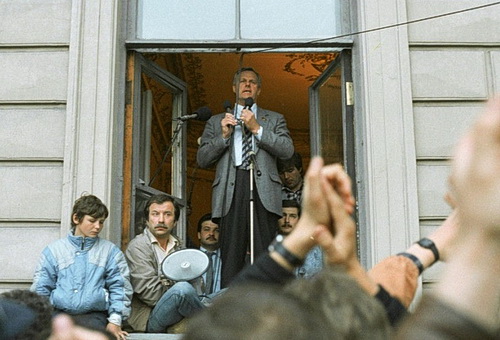
In the window of the first floor, Anatoly Aleksandrovich appears in full height. He speaks to the microphone, so everyone can hear. He calms St. Petersburg, promises along with Shcherbakov, Belyaev and Yarov to speak on TV shortly after the end of the meeting. He repeats what he said at the session. Now you can go home, relax. Deputies diverge. It was decided that the headquarters will remain at night in Mariinsky, the rest will distribute the decisions of the Leningrad City Council at the metro stations and in labor groups.
At the metro station on Sennaya Square, Sergey Alekseevich Popov, surrounded by a crowd of St. Petersburg, reads a decree of Yeltsin. He waves to suitable deputies so that they go to help. There is no megaphone, it’s hard to read. And on the other hand, the brass band plays on the steps, the tipsy peasants and some unfortunate woman dance. I wanted to come up, stop the musicians, but will they hear?
I return back in the evening, about ten hours. I penetrate inside, I say: "I am to Vitaly Skoibeda." I brought some food. I find out that we need coupons for products and money to buy food to the defenders of the Lensovet [4] . The people in front of the Mariinsky palace do not disperse. There is already the first sacrifice: a middle -aged man sits on the wall of the house, on the sidewalk, it is clear that he is very bad. The policeman stops all the cars in a row, asks if the drivers of Validol are finally finds. But the arrived doctor from among the audience determines: a heart attack. A person is taken to the hospital in someone’s car. Fear, uncertainty, tension do their job. A day later, they saved another, deep old man. He sat in front of an open window in the lobby of the palace, he looked like a dying man. A woman in a white dressing gown and some people bared nearby. These are unaccounted victims, unknown, whose hearts could not withstand emotional stress.
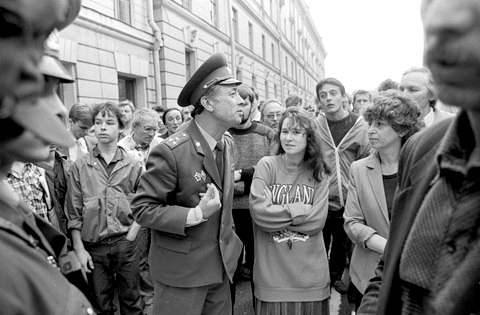
It is interesting to look at the people who came to the Mariinsky Palace. A lot of young people. Much more than at democratic rallies of the last one and a half years. Apparently, a sense of danger, a vaguely conscious threat of freedom, identifying the idea of justice with the actions of Yeltsin and Democrats in Moscow and Leningrad brought them here. It seems that we underestimated the need for young people in truth, when we doubted her ability to actively express their dissatisfaction. But there was a real threat to what is called human rights, and they defended the chosen, legitimate power. The most desperate, discarding considerations of common sense, suppressing the instinct of self -preservation, will remain here and at night.
After disconnecting the connection with Moscow, the phone earned again in the morning. Telegapypes work. Packs of leaflets from time to time are taken out to the square and distributed to the assembled. They ask to propagate in any possible way. Someone takes leaflets to stations, to the airport, to military units. It is felt that the headquarters of the defense of the Leningrad City Council and the city acts harmoniously and efficiently. In everything that happens, the ability of people to self -organization is manifested. Officials and generals, who constantly repeated about chaos and anarchy, could not - due to the limited worldview and for obvious reasons, did not want to admit that the people themselves could arrange their lives on a reasonable basis.
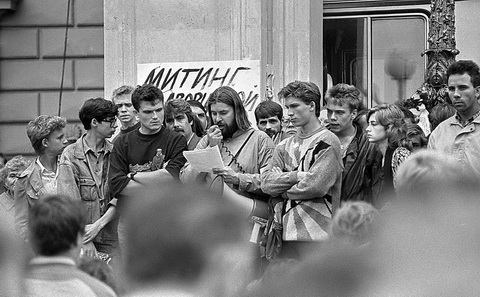
The entrance to the palace is guards with a powerful barrier from volunteers. Their faces seem to be familiar, apparently, according to the previous rallies. The captain of the second rank Viktor Drozdov, a deputy of the Lensovet, who headed the headquarters of the protection of the Mariinsky Palace, enters the balcony. He looks at the gathered below for a long time, or maybe he evaluates strategic approaches to the palace. In his opinion (he talked about this later on the radio), the city poorly responded to the call for help: at night there was a five hundred people near the palace. The bitterness of the deputy can be understood. The movement of civil resistance was born recently, after the March confrontation in Moscow, when tanks and landing troops were introduced into the capital. At the appeal of Galina Vasilievna Starovoitova, the Civil Resistance Committee in St. Petersburg was then organized, which included Tsytovich, Skiibeda, Soshnikov, other members of the Social-Democratic Party and the Democratic Union.
The attention of St. Petersburgs and foreign correspondents is attracted by a young lieutenant with a shepherd and a poster in their hands: “No junta!” The lieutenant is thanking, he is in the spotlight - his protest is symbolic. After all, resistance begins with a decisive step, the act of one person. This man in the form gives us confidence, and the friendly approval of people seems pleasant to him. On the central porch there is a man with an icon in his hands, as if blessing the defenders. I saw him during the day and late in the evening. Next to him, the speakers are constantly changing. They take turns reading out fresh information, report the events in the city and in Moscow. The chairman of the Christian Democratic Party Vitaly Savitsky, tearing his voice, reads the news report, makes ads. So leaflets were taken out, the crowd swayed to the left; But on the central porch, someone reads a new message, and everyone runs to the right to hear better. One of the ballots who came from Moscow through Volgograd (where the chairman of the City Council is the famous Democrat Maharadze) is read out. It is reported that the destruction of her losers has already begun, that Gdlyan and Urajtsev were arrested [5] . They read the appeal of Yeltsin, Silaev, Khasbulatov to compatriots. People listen, holding their breath. Many settled on the lawn near the palace, on a flower garden’s curb (it is amazing that flowers were almost not affected during these three days and three nights!). Many are constantly moving in the crowd: it is easier to endure the expectation.
The tired Oleg Basilashvili comes out of the palace. The day after tomorrow, the 21st, it should be at the session of the Supreme Council. What stress people have to withstand people who have devoted themselves to politics! Who could have said three years ago that our beloved Oleg Basilashvili, the BDT star, will become a brilliant politician whose speeches in parliament will become examples of journalism? How could we imagine that he would be granted honorary right to first make a speech in the solemn procedure for introducing the first president of Russia!
Twelve nights. It's time to go home, you need to have time until the metro closes. At half past five I pass by the barricade in Antonenko Lane, 3. Inverted van, garden benches, iron rods, building materials ... Grandma lays out sandwiches on the bench, takes out thermos. "Robi, I brought you a seagull of hot." This is perhaps the most touching scene that I had to watch for these three days and three evenings. The last thing I hear before leaving: “Samsonov gave me the word that the troops would not be introduced into the city. I'm just from him. " I look around. I see Vice-mayor Vyacheslav Nikolayevich Shcherbakov. His words can be believed. But will General Samsonov hold back the word?
August 20th. Today is a rally on Palace. Yesterday, in a television speech, Sobchak and Belyaev called on citizens to take part in the citywide protest campaign. He can become the beginning of a general political strike, the need for which Yeltsin spoke yesterday.
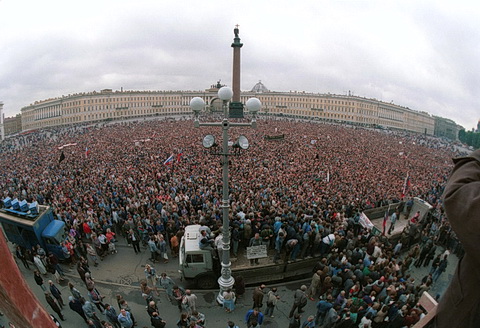
The area is filled to capacity, about five hundred thousand people gathered [6] . Joyful exclamations, greetings - this is a column of workers of the Putilov plant. Their good words had been waiting for a long time. What prompted them to perform in an organized manner? It turns out that Sobchak urged workers to go to the rally and support the Russian government.
On a truck at the central entrance to the winter there are speakers. Faces are not visible, but familiar voices are well audible. The first to be the chairman of the Leningrad City Council Belyaev and the mayor of Sobchak. The calm wisdom of one and the oratory of the second complement each other well. They stand holding hands, raising them above their heads in a symbolic gesture. The square is chanting: “Mo-lod-vzi! MO-LOD-TOSE! " Among the speakers, our beloved deputies are Mikhail Molotnitov, Victor Drozdov, Yuri Boldyrev. Yuri Yuryevich reads the joint appeal of the people's deputies of the USSR and the RSFSR from Leningrad, in which they condemn the puff and urge to provide disobedience to the Gekachepists. Alexander Dolsky approaches the microphone, whose poems and songs helped us stay in difficult days. He is replaced by Sister Olga Bergholz. Звучат неопубликованные стихи поэта, и до нас словно доносится голос той, что воспела мужество ленинградцев в суровые дни блокады. Собравшихся благословляет представитель митрополита Ленинградского и Ладожского Иоанна. Впервые выступают на митинге Дмитрий Сергеевич Лихачёв, писатель Виктор Конецкий, старейший депутат российского парламента Никита Алексеевич Толстой. Получают слово депутаты Марина Салье и Олег Гапанович. 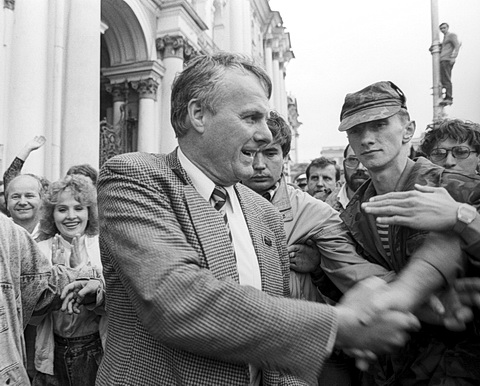
Рядом с политиками, военными, учёными — рабочие Кировского завода. Выступают представитель рабочего комитета завода и член стачкома докеров Морского порта. В тревожные мартовские дни докеры первыми объявили политическую забастовку. Единение столь разных социальных групп радует. В окне штаба Военно-воздушных сил, справа от здания Главного штаба, появляется плакат «ВВС с вами!». Он вызывает радостные возгласы, аплодисменты. Сейчас важен любой знак поддержки, даже одинокий плакат в окне. Не говоря уже о такой благой вести, что моряки Кронштадта не поддерживают хунту. Кроме российских флагов над трибуной развевается и литовский. Санкт-Петербург принимает эстафету сопротивления.
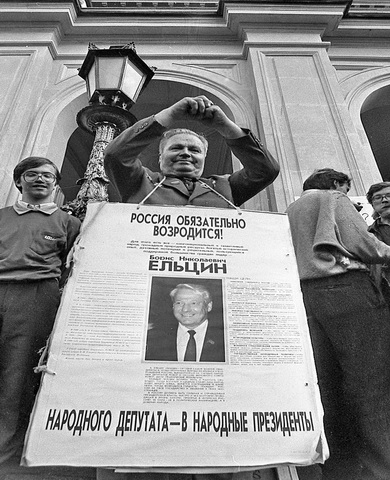
Митинг принимает резолюцию в поддержку Ельцина. Люди понимают смысл происходящего — в отличие о высокопоставленных политиков, членов Верховного Совета страны, которые 26-27 августа выглядели, мягко говоря, жалко, когда пытались оправдать свою пассивность в те тревожные дни. Большинство ленинградцев поняли (и это подтвердили данные проведённого тогда социологического опроса), что произошёл государственный переворот с целью вернуть страну к тоталитаризму, загнать народ в стойло, сделать его безгласным и бесправным рабом. Неужели организаторы всерьёз рассчитывали на то, что мы без сопротивления расстанемся с завоёванной свободой, какой бы ограниченной она ни была?
The rally is finished. Люди огромным потоком движутся под арку Главного штаба. Этот живой поток плавно перетекает на Невский проспект, заполняя всю его проезжую часть. На мосту через Мойку две машины с омоновцами. Приветствуем их, в ответ кто-то машет рукой, один поднимает сжатый кулак в знак солидарности.
Мощная демонстрация народной силы на площади вполне могла подействовать на заговорщиков — и вселить надежду в тех, кто наблюдал её по ТВ. Такого Питер ещё не видел... Значит, жива в нас любовь к свободе. Гэкачеписты рассчитывали, что людей парализует страх, но они плохо знали народ, отгородившись от него стеной лжи, самообмана и ненависти. В последние два года мы постепенно теряли страх, и на этом трудном пути освобождения нам помогало бесстрашие наших депутатов.
Когда через несколько часов я снова возвращаюсь к Ленсовету, меня не пропускают пикетчики: «Женщинам нельзя». Но знакомый журналист из моих бывших студентов проводит: «Это со мной». Проникаю внутрь дворца, хотя пропуска у меня нет. Очевидно, мой вид вызывает доверие у добровольцев, охранявших вход, а также у милиционеров на посту. Говорю, что принесла бумагу для листовок и еду. В комнате 127, где расположился штаб обороны, работают ксероксы, печатаются листовки. Stuffy. В соседней комнате на столе беспорядочно навалена немудрёная еда: буханка хлеба, варёные яйца, пакеты с кефиром, молоко. Усталый Савицкий подкрепляется после трудной смены. Депутаты Голов и Моторин читают последние сообщения, поступившие в штаб. Анатолий Григорьевич Голов — один из самых ярких наших депутатов. Его взвешенность, логика, способность находить выход из очень трудных ситуаций — черты настоящего политического деятеля. Революционные перемены последних двух лет позволили наконец прийти в политику таким людям — умным, высокообразованным, способным быстро и ответственно действовать. Алексей Романович Моторин — тоже человек замечательный. Сколько сил он приложил для того, чтобы расследовать, почему в город не поступали поставки продуктов. Alas! Его свидетельства не были услышаны [7] .
В коридоре рядом со штабом пристроился на диванчике Сергей Сергеевич Дегтярёв. Он что-то пишет, наверное, сюжет для своей очередной телепередачи «Альтернатива». В главном коридоре прохаживается Юлий Рыбаков, председатель комиссии Ленсовета по правам человека. Он входит в штаб обороны. Ночь предстоит трудная: чёрные дела обычно вершатся под покровом темноты. Вспомним Тбилиси, Баку, Вильнюс, Ригу... Вдали вижу двух омоновцев. Говорят, их здесь человек восемьдесят, по другим сведениям — шестьдесят. Всё равно мало. По сравнению с Вильнюсским парламентом в тревожные январские дни (а мне довелось побывать внутри через несколько дней после трагических событий) Мариинский дворец выглядит незащищённым. Да, опыт Литвы учли слабо. Не видно молодых ребят, которые — кроме ОМОНа — могли бы дежурить внутри, нет достаточных запасов еды для защитников... Кто тогда мог предвидеть, что придется готовиться к сопротивлению здесь, в России? В отличие от Вильнюса в здании нашего парламента не было громкоговорителей и собственной радиостанции, тем более, телевизионной установки, которая у литовцев обеспечивала независимое вещание после захвата «государственного» телевидения. Не оказалось и достаточных запасов бумаги для печатания листовок, не говоря уже о копировальных машинах. Но в трудную минуту их доставили во дворец столь часто ругаемые кооператоры.
21-е августа. 0.40. Иду мимо баррикады в переулке Антоненко. Рассказываю защитникам о последних новостях из Мариинского. В это время подходит старший пикета: «Всё, ребята. В Москве стреляют. There are victims. Женщин сюда больше не пускать. Только тех, кто живёт в этом районе». Значит, началось...
Утром разнеслась весть о том, что путчисты бежали. Но куда, неизвестно. К вечеру выясняется: они полетели в Крым, к Горбачёву. Да-а, неожиданное развитие событий... Во второй половине дня опять иду к Мариинскому. Там напряжение уже спало, но пикеты не расходятся, собираются дежурить всю ночь. Люди читают и списывают стихи Саши Богданова. Смеются. Приведу часть его немудрёного опуса: «… Дачу заняли друзья, / В туалет сходить нельзя. / Тут-то вспомнил Михаил, / Как он митинги давил! / Как охранкой и спецназом / Из Кремля руководил! // Он за действия спецназа / Не покаялся ни разу. / А теперь генсека с Раей / Оппозиция спасает! // Анархисты из ДС / Под портретами МС / Всюду строят баррикады / Против войск КПСС! //...» Грубоватый юмор передает отношение к путчистам, да и к Михаилу Сергеевичу, в «заточение» которого в Форосе не все верят...
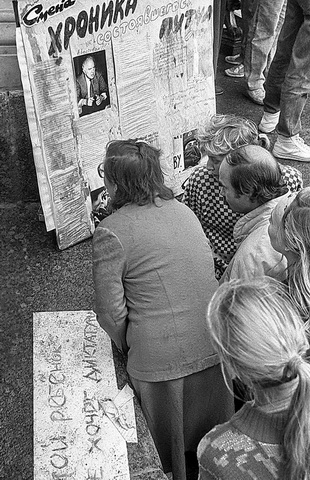
Люди беседуют в группках, толпятся у стендов с информацией. Там вывешены указы Ельцина, постановления Ленсовета, распоряжения мэра. Вижу рукописный листок с подписью Александра Беляева. Председатель городского совета обращался в нём с призывом ко всем мужчинам, готовым защищать Ленсовет, прийти на Исаакиевскую площадь. На листке дата: 21 августа, время — 3 часа 30 минут утра. Да, ночь была очень тревожная. Для того чтобы василеостровцы и жители Петроградской стороны смогли добраться до Ленсовета, разведение мостов было задержано на час. Ребята, проведшие на площади всю ночь, говорили мне, что самое страшное время было в половине четвёртого, когда стало очевидно, что танки всё-таки идут. Значит, генерал Самсонов не сдержал слова, данного Щербакову и Собчаку вечером 19-го... Они шли всю ночь, и с каждым новым сообщением напряжение возрастало.
Позже по ТВ мы видели эти бесконечные вереницы железных машин в Москве и на подступах к Ленинграду. Один из наших депутатов, Александр Сунгуров, сфотографировал танковую колонну в районе Сиверской. Это, пожалуй, зримый образ, знак системы, которую разработали для нас заговорщики, при молчаливом попустительстве высших органов власти.
В этот же день на Синем мосту я дала небольшое интервью Британской телевещательной компании. А вечером 19-го, когда не было ещё ясно, как будут развиваться события, тележурналист из США спросил меня о том, чем же это может закончиться. Времени на раздумья не было: «We shall overcome», — уверенно сказала я. «Мы победим» — эти слова из известной песни американского певца Дина Рида разнеслись далеко. Через три месяца мне довелось разговаривать с супружеской парой в городе Санта-Фе, штат Нью-Мексико. И, как оказалось, они видели этот репортаж и запомнили мои слова. Невероятное совпадение...
22-е августа. Вечер, шесть часов. Победа одержана, путч сорван. Можно вздохнуть свободней. Снова иду на Исаакиевскую площадь. Встречные обращают внимание на мои цветы. Да, сегодня праздник. На площади пусто, только одинокий турист пытается сфотографировать дворец с новым флагом. Но ветер стих, и флаг не развевается. Это трёхцветное полотнище — явный знак перемен. Ещё совсем недавно, в октябре, Собчак изгонял его из зала заседаний Ленсовета (трансляцию этого заседания мы смотрели по телевидению), а сегодня триколор поднят как символ победившей народной революции. Жаль, не поторопилась, могла бы попасть на митинг, посвященный подъёму флага. Гонитель и защитник трёхцветного символа на этот раз объединились. Флаг поднимал Виталий Скойбеда, речь на митинге произносил Анатолий Собчак.
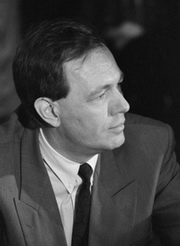 Пустота на площади кажется необычной. Так же, как и отсутствие охраны у входа. В окне кто-то поместил огромный рисунок — Пётр I во весь рост, с кубком в руках, а внизу подпись: «Виват, Россия!». Прошла внутрь. Без всяких расспросов нашла кабинет Александра Николаевича Беляева. Когда он вышел, поздравила с победой. Действительно, его роль организатора — человека с ясной гражданской позицией, хладнокровного, решительного, умеющего слушать других и настаивать на выполнении общих решений — трудно переоценить. Сейчас он направляется на Дворцовую, где откроет концерт «Рок против танков». Да, сегодня настоящий праздник...
* * *
Прошло двадцать шесть лет с тех памятных дней. Но утро 19 августа 1991 года воспринимается и сейчас — процитирую слова Александра Беляева — как «начало демократической революции в России». Эта революция, конечно, не закончилась. Хотя иногда кажется, что вернулось многое из того, чего хотели гэкачеписты. И всё же, во многих чертах нашей сегодняшней жизни мы видим продолжение — или результат — тех дней, тех усилий и дел, которые вдохновляли участников сопротивления государственному перевороту. Августовские события показали, что демократия как система, при всех её недостатках, может работать — хотя бы потому, что она лучше, чем какая-либо другая, обеспечивает право народа на свободу. И если в 1990 году мы смогли избрать депутатов, которые подвигли нас на то, чтобы сказать «Нет!» насилию и лжи, значит, и сейчас есть место надежде.
С тех пор изменилось многое. В ком-то из активных участников событий мы разочаровались, кто-то ушёл в тень, как Александр Щелканов, кого-то уже нет на этом свете. Но многие, даже после разгона Ленсовета в декабре 1993 года, продолжают действовать — в общественных движениях и организациях, в Законодательном собрании Петербурга, которое, увы, сейчас совсем не похоже на прежний Ленсовет. В печати, на радио «Эхо Москвы», на митингах и народных сходах мы слышим наших бывших депутатов — Михаила Амосова, Алексея Ковалёва, Юлия Рыбакова, Анатолия Голова, Юрия Вдовина, Леонида Романкова, Наталью Евдокимову, Бориса Вишневского, Александра Шишлова.
Чем же закончить эти заметки? Наверное, так: мы, свидетели тех событий, не забудем исторических дней в августе девяносто первого. Они показали, на что способны люди — думающие, чувствующие, свободные.
[1] «Он [Самсонов. – Э.О.] звонил примерно каждые полчаса. Каждые полчаса я отказывался это делать Генерал всё-таки требовал, чтобы была применена сила, хотя к тому времени это было уже совершенно невозможно. На улицах было, наверное, тысяч десять-пятнадцать» (А.Крамарев. Из интервью для пресс-центра Ленсовета / А.Веретин, Н. Милосердова, Г.Петров. Противостояние. Хроника трех дней и ночей 19-21 августи 1991 года. С.Пб.: Экополис и культура, 1992. С.32, 53).
[2] Противостояние. С.34.
[3] В самом деле: через четверть века, чуть меньше, выйдет на экраны документальный фильм об этих днях, «Событие» (2015). И создаст его с помощью снятого тогда материала известный украинский кинокинорежиссёр Сергей Лозница.
[4] Талоны тогда выдавались на основные продукты питания, не говоря уже о таких о таких вещах, как водка и хозяйственное мыло. Сейчас это звучит неправдоподобно, но сохранившиеся в дневниках кусочки бумаги с соответствующими надписями напоминают об этом.
[5] Если Тельмана Хореновича Гдляна в Питере, возможно, ещё помнят, то имя Уражцева наверняка забыто. А он был председателем Союза защиты военнослужащих «Щит» и депутатом Верховного Совета.
[6] Вячеслав Щербаков в воспоминаниях 1997 года называл другую цифру — сто тысяч человек (Новая газета №58. 18.08.2011. С.18).
[7] Кстати сказать, о своего рода экономический блокаде города упоминает депутат Ленсовета Людмиоа Ивановна Пониделко, занимавшаяся приемом гуманитарной помощи из Германии (Цит.по: Владимир Беляков. Август 1991-го как вершина демократии. СПб.: Полярная звезда, 2011. С.60). Процитирую одну фразу: «Бывая в лругих регионах, я слышала там от местных коллег, что им было запрещено осуществлять продовольственные поставкм в Ленинград».
Photo: USSR. Leningrad. 19 августа 1991 г. Демонстранты на у Мариинского дворца во время протеста. Белинский Юрий, Беркетов Николай/Фотохроника ТАСС