
Translated material
War without a trace
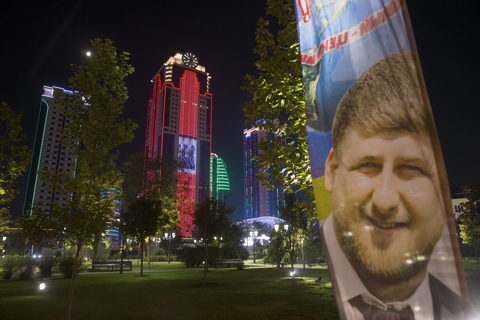
The theme of Chechnya has long gone to the distant plan in our information space. Today, few people are worried that everything is going on on the long -suffering Chechen land today, “as in a fairy tale”: the further, the worse ...
Perception is dull, and someone believes that everything is already good in Chechnya, and someone seriously believes that the Chechens have finally achieved independence. It is increasingly difficult for human rights activists to shout to society, convey the cutting truth about egregious events in this enclave of totalitarianism. And there are fewer publications that are not afraid to raise this topic.
Last fall, the French journalist and documentary director Manon Luaso finished shooting the film “Chechnya. War without a trace. "
How did it happen that the freedom -loving people have lost the will to resist, live in fear, not daring to fight the cult of personality? These questions are asked by the author of the film, having arrived in Chechnya "20 years after the start of the First Chechen War, 10 years after the last visit to the republic."
Manon Luaso worked in Chechnya as a journalist during the first and second Chechen wars, shot several films, has been in situations that threaten life more than once, but this time she does not recognize Chechnya. Gradually, she opens a shocking picture. The types of formidable in ruins are carried in the memory. In the place of those ruins, luxurious buildings, but they are empty and cannot conceal that tears and pain are hidden behind the ostentatious well -being.
In the eyes of women who are looking for relatives for years, there is an inexhaustible widow sorrow, frozen despair. They still hope to find sons, brothers, husbands, once detained by armed people and missing. And in bureaucratic offices they say: forget it. As in the direction, everyone pretends that there was no war.
A spacious house with fresh brickwork, with a solid atmosphere - the family was rebuilt, settled after all the destruction. But sorrow does not leave: both daughters of the hosts are stolen. In deep despair, the old man, the seal of orphanage in young children. Now not only men, but also women are missing. And nowhere to look for protection.
The author of the film finds people whom she once shot under the rumble of falling shells-and learns about life in constant fear, of once taken away and not returned to relatives, about the elderly in a stroke after "laid", about prohibitively cruel torture ...
The only legal norm in the republic is "Ramzan said." There are no other laws here. And portraits of Putin and Kadyrovov in full growth in squares. And the inexorable glory to the "Big Brother."
Manon Luaso does not find an answer to the question of what happened to this freedom -loving people.
In early March, the film was shown by the Franco-German television channel Arte, then his presentations were held in Geneva, at the Festival “The Unified World” in Prague, at the International Festival of Documentary Films on Human Rights “One World” in Brussels, where the film was recognized as the best.
In Russia, the film “Chechnya. War without a trace ”was first shown recently, on July 22, as part of regular viewing of documentary cinema in the Moscow Memorial - in French, with subtitles. It is unlikely that today in Russia there is a more spacious platform for such an event.
Soon after the autumn of 2014, Manon Luaso completed regular trips to Chechnya to shoot her film, the office of the committee against torture in Grozny was defeated, whose activity occupies a noticeable place in the picture.
Igor Kalyapin, one of the heroes of the film, a week earlier, on the day of Memory of Natasha Estemirova, told why the committee against torture is so difficult to initiate criminal cases on the fact of the crimes of the security forces in Chechnya. Incorrect decisions on the refusal to initiate criminal cases in defense of those who were tortured are in packs. More recently, one of the victims asked the committee to not defend him anymore.
Ayub passed just a witness in a criminal case. But his testimony did not suit investigators, they needed others, and as a result of the Ayub was subjected to tortures.
“They put them on a chair ... They tied the package on their heads ... They beat with electric shock, struck the head, body and feet ... When the pain became unbearable, agreed to sign any documents, but they demanded that he tell everything himself. But he had nothing to tell, he did not know anything, so they continued to beat him and tortured all night, ”Kalyapin read excerpts from statements in the checkpoint. Interrupting the tortures, the tormentors took Ayub to a high -ranking rank from the Chechen Ministry of Internal Affairs, he shouted at him, humiliated, scolded, threatened to deteriorate the situation if he did not testify. Doctors confirmed the injuries and traces of the electric shocker on their backs. But Ayub turned to a written request to stop working in his defense, and verbally said that the high police officer sorry to destroy his entire family, including the children, if he did not pick up an application for torture. Ayub withdrew his notarial power of attorney, and human rights activists can no longer investigate these torture, protecting Ayub as a victim.
Manon Luaso worked on her first films about Chechnya in the conditions of war, when a mine lied at her at every step, could hurt a random shell or get a sniper bullet. However, she did not have to be afraid of surveillance of herself. This time, in the conditions of the ostentatious world, she constantly had to hide her camera, leave Grozny and come again, because she noticed surveillance.
The guidance of the “constitutional order” by the unconstitutional methods was the sign of the First Chechen War, which began more than 20 years ago. Even then, in the so -called filtration points, the torture conveyor began to emerge. In the second Chechen campaign to torture, torture, abduction of people, the breath of the abducted to death became almost the main methods of suppressing resistance in the republic. After the so -called leaky of the conflict, the prerogative of torture and sleepless executions smoothly flowed from federal security forces to local. Lawlessness and cruelty from the methods of combating resistance gradually turned into a lifestyle.
Women in black scarves, in the eyes of which despair frozen, are indifferent to what nation were the security forces who once abducted their sons. It makes no difference whether they were in masks either without masks, federals or local ones. Soldiers' mothers who came to Chechnya to look for missing sons, more understandable to them and closer than fellow tribesmen who torture their brothers ...
After watching the film “Chechnya. War without a trace ”Svetlana Gannushkina told more about this misfortune. Years pass, there are no hopes, but people believe that a person is alive, and do not allow thoughts about his death. Life in the unknown and constant expectation turns into torture.
But the abduction of people is not yesterday of Chechnya, this is happening today, and not only in Chechnya itself. Svetlana Gannushkina spoke about the fate of Zaurbek Zhamadaev, abducted two weeks ago in Moscow and missing. “It sounds wildly, but relatives say:“ Thank God, he is in prison, ”when the missing person is suddenly discovered there.”
The human rights activist spoke about the total absence of a law in Chechnya, about how a person can be evicted from his home at any moment and nothing will be provided to him in return. Once she presented a certificate of a member of the Council for Human Rights under the President of the Russian Federation and tried to explain to people who carried out massive families from the hostel, which is incurrent. And in response she heard the peremptory: "This is the order of Kadyrov."
In this regard, I remembered the eviction of poor families who lost housing as a result of the war, from one hostel in the Staropromyslovsky district of Grozny. "Do you really not understand whose order is this?" - The commandant of the hostel asked me then. Women cried - winter, children were not allowed to study until the end of the school year. They had to go uninvited guests to distant relatives in the village ... For some reason, I remembered thick green vegetation in tubs, which was divorced in the loggia one poor woman with a child. “Look, here my peppers grew up. But they haven't ripened yet. I have nowhere to take away all this from here ... "
In the film, Manon Luaso feels not only sincere grief about what is happening in Chechnya. Obviously, the French journalist managed to love this land and this people.
“Chechnya in my heart” was the name of the collection , published by the “Memorial” together with the Committee of Soldiers' Mothers shortly after the end of the First Chechen War. So many journalists, human rights activists, peacekeepers, just people felt, in one way or another in contact with grief of Chechnya.
Today is not the time to fade away this feeling.
Photo: Russia. Chechnya. The complex of buildings "Grozny-City" in Grozny. Ilya Talev/TASS