
Translated material
Bacteria against plastic
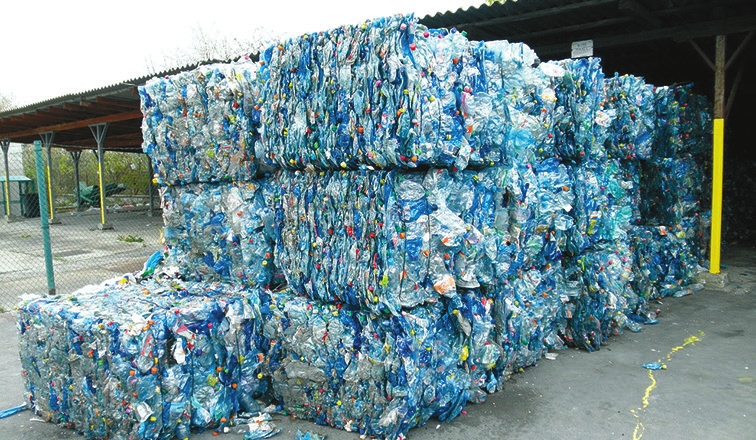
Japanese researchers from the Keot Institute of Technology and the University of Keo, who are involved in the problem of environmental pollution with plastic waste, have identified a new type of bacteria that can decompose polyethyleneterftalat (PET) - this thermoplastic is used mainly for the manufacture of plastic bottles [1]. The bacterium Ideonella Sakaiensis 201-F6 was found as a result of an examination of natural microbial communities found on plastics. The dedicated organism can use PET as the main source of nutrition. When growing on a PET, a bacterium produces two enzymes capable of decomposing the substrate in stages: at first, the Patase enzyme decomposes plastic to an intermediate product-mono-hydrolysis, which is then hydrolyzed with other enzyme, turning into environmentally friendly monomers: treftal acid and ethylene glicol.
All this opens up new prospects in the fight against plastic pollution of the planet, which is one of the most important global environmental problems of our time.
Previously, mushrooms of Fusarium Oxysporum and Pestalotiopsis Microspora were identified as organisms suitable for biological decomposition (biological) plastic, the first of which is also capable of decomposing PET and the second to cope with polyurethane.
In connection with this news, the plot of the English scientific and fantastic novel “Mutant-59” (Mutant-59: The Plastic Eater) of China Pedler and Jerry Davis is recalled. The main character of the book, biologist Luke Jerrard, works in a laboratory for the production of new types of plastics. Understanding the reasons for the robot breakdown in the supermarket, it discovers inexplicable deformations of the plastic mechanism. Shortly before this, a number of technogenic disasters are taking place in the country, as if not interconnected, but all accidents have the same reason - a defect in the insulation of wires. Soon, “plastic disease” makes itself felt in the London metro, from where it spreads in the center of the city. Observing what is happening, Davis makes the assumption that there is some kind of special type of bacteria that eats plastic. Subsequently, it turns out that the ill -fated microorganism brought biologist Simon Eli at home - with his help he hoped to destroy plastic garbage. Unfortunately, due to the sudden death of the scientist, the mutant-59 fell into the sewer and spread in a large territory. As a result, everything ends safely: Jerrard finds a way to stop the bacterium - to spray the substance poisonous for her.
The novel takes place in December 1975; In the same year, he was first published in Russian in the journal “Science and Life” (the original was written four years before). Ironically, after 45 years, the scientific community learned that the “mutant” still exists.
Svyatoslav Gorbunov
1. Yosida S., Hiraga K., Takehala T., Taniguchi I., Yamaji H., Maeday., Toyoharak., Miyamoto K., Kimury., Oda K. a Bacterium That Degrades and Assimilates Poly (Ethylene TerePhthalate) // Science. 11 MARCH 2016. Vol. 351. ISS. 6278. R. 1196–1199. http://science.sciencemag.org/content/351/6278/1196 ; Doi: 10.1126/Science.aad6359
Additionally:
RUSSEL JR, Huang J., Anand P., Kucera K., Sandoval AG, Dantzer KW, Hickman D. Jeee J., Kimovec FM, Koppstein D., Marks DH, Mittermiller Pa, Nhangez SJ, Santiago M., Townes Ma, Vishnevetsky M., Williams Ne, Vargas MP Boulanger La, Bascom-Slack C., Strobel Sa Biodegradation of Poly Exchanne by Entophytic Fungi // Appled and ENVIRONMENTAL BIOTECHNOLOGY. 2011. Vol. 77. No 17. R. 6076–6084.