
Translated material
Book for Moscow
In society
 Book for Moscow
August 2, 2011 Vladimir Kolosov
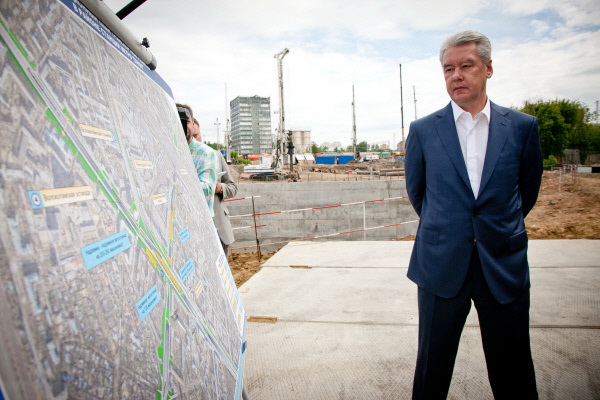
The recent radical decision to expand Moscow almost two and a half times caused a surprisingly sluggish reaction in the country. A dozen or two information messages, mostly neutral, but with a shade of some admiration for the “truly Russian” scope of the planned transformations, several caustic comments on the “liberal” sites-that's all. Maybe the hot July is the fault? Or universal disbelief in the implementation of a superpoption, which is too noticeably dependent on the results of the upcoming presidential elections? No wonder one of the Duumvirov has not yet publicly expressed his position on this issue.
The weak reaction of the society to the redrawing of the map of the metropolitan region is all the more striking that the matter in one way or another applies to every Russian. Giant investments, in comparison with which even the Sochi Olympics will seem like a local construction, pulling out new and new millions of people in the capital in the conditions of its obvious hypertrophy - this is only part of the possible consequences.
It would not be bad to ask about the attitude to the reform of experts, and the inhabitants of Moscow and the region themselves. After all, this is not about the sale of "villages with slaves" to one barin to another. In democratic countries, especially in countries with a federal state structure, the redistribution of borders between the subjects of the Federation would require not only a qualified majority in parliament (we will not have a business), but also approval on local referenda.
The creation of a large London or reform of the administrative-territorial division of the Paris region did not take months-years. In England, the question of the unification of neighboring municipalities with the county of London stood back in 1919. For his detailed discussion in 1921, a special royal commission was convened, whose members could not come to an agreement. As a result, her report, published in 1923, did not lead to significant changes in the life of the city.
The next attempt to build a new management system of one of the largest urban agglomerations of the world at that time was undertaken only in 1957 with the formation of a new royal commission on local self -government in Bolshoi London, which was famous as a Herbert Commission. She needed to hold 114 meetings and 70 public hearings (!), Before she could publish her final report in 1960. In particular, the exact criteria for the inclusion of settlements in Bolshaya London were developed. The report relied on a fundamental study carried out in the famous London Higher School of Economics. He underwent a further long discussion, and the Law on Big London, developed on his basis, was adopted by parliament only in 1963. Its implementation began even later - since 1965.
The reform of the Parisian region has taken about 7 years. It began with the creation in 1961 of the Paris District ( District de la Ré Gion Parisienne ) within the boundaries of three then departments. This step caused the fierce resistance of many municipalities and political figures. As a result of long debate at the end of 1964, the law was adopted on the creation of eight new administrative-territorial units covering the Parisian agglomeration-seven departments instead of three, as well as Paris itself. Unlike London, its boundaries, drawn on a ring road, cut off the city of Intro Muros from the suburbs. This, however, did not prevent the main task of the reform by the year later - to accept the general scheme for the device of the territory and urban planning of Greater Paris. The 1964 law completely entered into force only from January 1, 1968
In both European capitals, the most important problem of management reforms were not so much administrative boundaries and the creation of a “vertical of power”, but a detailed differentiation of competencies between two levels of self -government, ensuring a single urban planning and participation of residents in the activities of the lower municipalities, and the elimination of differences in the provision of different parts of urban agglomeration by public services.
Indeed, in developed countries, the real boundaries of urban agglomerations as holistic social formations are taken into account in management not by redrawing borders and expanding cities as they grow, but due to coordination of the activities of municipalities, delegating certain competencies to a higher level while maintaining independence in other areas. In France, national legislation is obliged to cooperate the communes that are part of the city agglomeration. It regulates the areas and institutional organization of such cooperation. The redistribution of borders is only an extreme and rare measure. This approach is not only a tribute to traditions, respect for the historical experience and the originality of territorial communities, which are often existing for several centuries, but also a reflection of the development trends of modern society - the desire of many layers to live in a homogeneous social environment that meets their specific needs. Administrative fragmentation of urban fabric enables municipalities to attract the functions they need and regulate the use of the territory within certain limits, and entrepreneurs - choose those communes in which the conditions seem to them the most suitable. But this requires a democratic, pluralistic society. Cooperation between the center and the periphery of agglomeration cannot depend on the personal relationship between the mayor and the governor, as it was recently in Moscow.
Finally, there is a long -standing commandment well known to experts: if there is an opportunity not to change administrative borders, it is better not to touch them. "Measure seven times, cut off once!" - So ultimately it is better for everyone.
What arguments in favor of the dramatic expansion of the borders of our capital have we still heard? In addition to the unity of the problems of the city and the region, there are, in essence, two of them.
1). MKAD - "BOOD" for the capital. This is not a stray: Moscow, like other large cities, naturally splashes out beyond its borders for a long time. Housing has long been built in suburbs for a long time than in the city itself, and now the turnover of retail trade per capita is growing there faster. As can be seen in the example of many countries, the discrepancy between the administrative boundaries of the central city and its agglomeration is a completely normal phenomenon, which in itself does not interfere with the effective solution of general problems. Administrative borders should not interfere with the economy, turning into separation lines, as between the feudal principalities, each of which lives its own life. Well, we will be one stroke of the pen every 20 or 30 years to further push the borders of the city, as in Soviet times? The old Russian tradition of unity of mind and the desire to solve all problems by the centralization of power exclusively tenacious. But in modern conditions, it works worse - such giant social systems as metropolitan agglomeration are too difficult, the variety and autonomy of their elements are too important for successful development.
2). Transport collapse and other problems of Moscow - a consequence of its monocentric organization. It is necessary to create alternative centers specialized on different functions outside the MKAD - government, financial, etc.
Indeed, polycentrism is considered one of the most progressive principles of the territorial organization of society. In the EU, he became fundamental in territorial planning at all levels - from pan -European to the city. The rational idea of creating subcents for unloading quarters inside the garden ring entered the 1971 general plan. After 1991, the territories with important business functions gradually began to spont spontaneously form around large transport units and significant objects (for example, near the VVC and a television center in Ostankino), along the main highways. This process, however, is slow, and the center of the capital still concentrates many times more jobs compared to its share in the territory and population.
City systems are commonly called polycentric, including at least three or more relatively closely located, independent and comparable in terms of population and the economic potential of the city, which have developed or potentially intense ties that contribute to their specialization, complementarity of functions, coordinated development strategy and cooperation. Polycentrism is opposite to the monocentrism, in which the dominant center provides all types of services for the area of its influence. Polycentrism is also incompatible with urbanization by the type of “oil spot” - urban development, the functions of which are distributed unevenly and randomly.
The question, therefore, is whether it will be possible to build two or at least one new city next to the “old” Moscow - if not equivalent to it, then, in any case, capable of becoming comparable to it. In other words, is it possible to break the radial-confentric structure of the city in a short time in a short time?
In the history of large cities in the world there were only a few cases of their total reconstruction. The French urbanist Philip Erinzhe called this phenomenon Refondation , i.e. "The foundation is again." He gives examples of Shanghai, which disappeared from the face of the earth, as the previous generations knew him, and Tehran, the new part of which occupied a high plateau over the city, previously considered inconvenient for development.
As for Moscow, the answer seems obvious. Confirmation-the experience of great Paris, in which only now, more than forty years after the adoption of the first general scheme, daily “chord” movements of people to the places of work between the suburbs, to some extent comparable to centripetal flows, begin to form. This is understandable: the historical cultural environment of the Center, saturated with architectural monuments and museums, theaters and exhibition halls, cannot be replaced, no matter how radically innovative the representative and office buildings in the subaches outside the Moscow Ring Road. The business get is surrounded by well-guarded cottage villages for top managers or senior officials, they are unlikely to seem quite a diverse and attractive environment even for a significant part of their inhabitants. And to leave the Kremlin, the main representative object and the great -power symbol of Russia, the authorities will not be easy. It is impossible to quickly lead out of the center beyond the Moscow Ring Road, ministries, agencies, parliamentary structures - except that “secondary” social departments, and then without a leading composition. It is better not to remember the “price of the issue”.
Therefore, the existing centripetal and transit flows in the new part of Moscow will remain. News will be added to them: employees of state institutions, service personnel, builders are unlikely to live exclusively near the new places of work, and members of the “immigrants” families will go to “Old” Moscow to work and study. At the regional level, Moscow, like London or Paris, will remain monocentric agglomeration.
This means that revolutionary transformations are needed in the transport system, which should provide a quick and relatively cheap movement of hundreds of thousands of people at distances up to 120 km or more-for example, from the borders of a “skirt” sewn to Moscow with an area of 144 thousand hectares somewhere in Medvedkovo or Mytishchi. In the meantime, communications in the metropolitan region are in the same state as 50 years ago. Despite the multiple increase in the number of cars, new roads have not been built over the past 20 years (with the exception of the reconstruction of the long -overloaded Moscow Ring Road and the segment of the Kyiv highway). It is necessary not only a cardinal reconstruction of the flight highways, but also the construction of many chord, intra -sector tracks, new intersections with MKAD, multi -level interchanges. Meanwhile, it took about five years only for the reconstruction of the Leningrad highway, which was not completed to this day, and this construction was one of the most expensive for the city’s budget. The electric trains have changed little in comfort, fullness and speed from the beginning of the 1950s. -As before, only 40-45 km are with difficulty overcome in an hour. They cannot move faster. Back in the Soviet five -year plans, the construction of third and fourth ways on the approaches to Moscow was the construction of, but this was never done. The extension of most metro lines for the Moscow Ring Road is impossible, since they are already working at the limit of throughput. The transport system that meets the needs of expanded Moscow, in fact, needs to be created again, which will require a long time and multi -millionaire investments. The outflow of funds from the budget of the "old" Moscow, which has enough worries, is inevitable.
New construction sites will require a massive influx of workers, whose reserve is not in the capital. People will reach in Moscow from all the surrounding areas, which will lead to depopulation of not only small and medium, but also many large cities. This, however, is clearly not enough: the capital has to accept thousands of migrants from the Caucasus and Central Asia with all the ensuing problems of their resettlement, adaptation, and socio-territorial polarization.
The Moscow region will lose tens of thousands of hectares of the most productive lands. It is known that the effectiveness of agriculture in our country is the higher the closer to the city. Many agricultural enterprises will close, because it will be more profitable to sell land than to grow something on it. Only fragments will remain from the forest -park protective belt of Moscow (LPZP), which performed important environmental and recreational functions. Bright contrast with the so -called green heart of Ranstad - located along the arc along the coast of the Netherlands of the third urban agglomeration in Europe, including the largest cities of the country (Amsterdam, Gaga, Rotterdam, Utrecht, etc.). For decades (!), The Dutch manage to restrain the development of the most tidbitous pieces of land between the main cities. However, on the LPZP, the preservation of which was provided for by the first socialist general plan of the city (1935), had long waved his hand, unable to stop the expansion of cottage and summer cottages. However, now garden partnerships located near comfortable roads or in environmentally attractive places are at risk of demolition.
“Based on the Russian capital, the authorities exacerbate the old problem of Moscow hypertrophy. Typically, after being so expensive as the transfer of the capital, the central government pursues certain political and economic goals - to move the country's leadership to a new city, equivalent from the old "power centers" - specific in the ethnic composition of the population of districts or away from borders, contribute to the rise of the areas of new development, etc. But I heard about the creation of an actually new capital near the already overloaded old world for the first time.
The capital already accounts for more than 20% of the total GRP of all regions, 25-30% of the volume of paid services and trade, 80-90% of banking capital. The purchasing power of Muscovites is three times higher than the average in the country, which makes Moscow the most attractive area of labor migration in most of the post -Soviet space. A high concentration of financial resources and an ongoing flow of migrants determine the speculative nature of the Moscow real estate market and a sharp social polarization.
It is hoped that the creation of the “Russian Brazilia” will drag on next to historical Moscow, and in the near future the case will limit yourself to the construction of new quarters of mass development, cottage villages, office complexes and God forbid! - New roads.
Author - Doctor of Geographical Sciences, Professor
Photos of RIA Novosti