Translated material
Games with cannibals
In uniform
 Games with cannibals
June 22, 2011 Alexander Golts
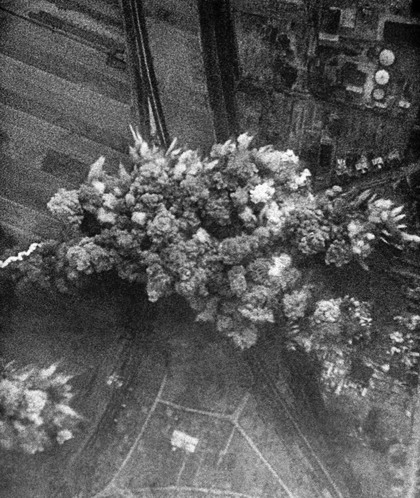
As expected, the 70th anniversary of the beginning of the Great Patriotic War caused a considerable number of thoughts and comments in the media. It is clear that most analysts want to give their explanation of the tragic defeats of the Red Army. And since Russia is a country with an unpredictable history, everyone offers its interpretation of those events. Liberal historians set out a rather dubious (at least, in my opinion) version that Stalin was preparing an attack on Germany and Hitler only dealt a preventive blow. This theory is based on the fact that in 1939-1940 several command and staff games were held, during which a blow was worked out on the Third Reich. Meanwhile, it is more or less clear that in the archives of the General Staff you can find any plans and descriptions of command and staff exercises, including the occupation of Australia. This is the specificity of Russian military culture, which requires a pre -prepared plan for conducting hostilities at any theater. It seems incredible (referring to the degree of development of the transport system of the USSR) that Stalin, planning a blow in August, did not declare mobilization in June.
The so -called patriots offer versions that turn on the father of all peoples. Everyone is to blame. Military with their chap -keeping moods. Scouts gave fragmentary information. In the most idiotic version, someone already proves that the defeats of 1941 are caused by the conscious sabotage of the generals who participated in the "conspiracy of Tukhachevsky" allegedly taking place.
Finally, conscientious researchers, such as academician Andrei Kokoshin, are trying to explain why, having a serious quantitative advantage for almost all the main types of military equipment: tanks, aircraft, artillery tools - the Red Army with terrible losses retreated to Moscow. Kokoshin quite rightly indicates that Soviet industry was concentrated on the production of “report -like” types of military equipment - the same tanks and aircraft, a brave report on an unprecedented number of which can shake the imagination of the authorities. At the same time, excellent equipment was not equipped with means of communication: out of eight hundred of the latest T-34, only two hundred tanks had radio stations. Aviation and radio engineering intelligence did not develop in the same way. Plus, the highest authorities ignored how the military strategy is changing. Kokoshin quite convincingly proves that the German strategy of the “deep operation” was not a secret for Soviet military specialists. However, fulfilling the will of Stalin, they were preparing for a completely different war.
It should be recognized that these lessons turned out to be unhappy and now, in the missile and nuclear century. It is universally recognized: combat control systems remain a weak place in our armed forces. Contrary to sounding promises more than once, there are neither modern communication systems in the troops, nor the intelligence facilities of today. However, gigantic agents are supposed to be spent on a “reported” heavy liquid -fuel rocket. After all, military strategists are still under the influence of magic of numbers. We, well, just blood from the nose, we need to have the number of nuclear warheads comparable to the one that is located in the United States. But, constantly looking back at the Americans, Russian generals until the very recent time ignored their experience in conducting military operations. All the past decade, at least before the beginning of the Serdyukov reforms (so annoying many military), the military leadership preferred not to pay attention to the fact that a revolution in military affairs was taking place around the world. The revolution, which, thanks to information technology, fundamentally changes the nature of hostilities.
However, it should be recognized: in contrast to the situation of 1941, the unresolved of these extremely serious problems does not pose threats to the security of our country. Almost for the first time in its history, Russia has neither real nor potential military opponents. This was partly due to the possession of a missile-nuclear weapon (and reliable deterrence can be provided with much less potential than the one that our country has now). Partly-due to the colossal changes that occurred in the world.
Globalization, with all its contradictions, led to the fact that the war between large powers became absolutely unprofitable. Well, tell me, the same China (it is this country that many of our analysts suspect of aggressive intentions) will fight with America or Russia if all its prosperity is associated with the possibility of selling its industrial products to the outside world? Why should Beijing and Washington try to seize our natural resources by force (and only they can interest a potential aggressor) when you can buy them, simply printing the required amount of dollars, euro or yuan? And do not risk anything at the same time. All conversations on the topic “If tomorrow is war”, in my opinion, frank demagogy. Moreover, in most cases, uninhabited.
The lessons of the 41st, which are quite relevant for today's Russia, are by no means in the military sphere. The main one is that you cannot flirt with the cannibals. The beginning of the war was the collapse of the Stalin Realpolitik, when endless, seemingly cunning, combinations were made, hints of the possibility of creating unions were built absolutely unprincipled, and scrap negotiations were carried out immediately with all future participants in the inevitable world war. As a result, it all ended with the Molotov-Ribbentrop and an agreement with the cannibal on the division of the world. Moreover, “real politics” began much earlier than the Nazis coming to power.
Soviet Russia did everything possible to help the Reichswehr circumvent the strict conditions of the Versailles agreement. In Russia, those types of weapons that Germany had no right to production were made for the Reichswehr. Under Kazan, a tank school was opened, and under Lipetsk - aviation. In order to break through what was called the imperialist blockade, the Soviet government made contact with the very reactionary part of the German society. What ended this Realpolitik is well known. The German chief lieutenants who studied in the 20s at the tank school near Kazan, twenty years later commanded the divisions that were torn to Moscow.
They will object to me: Western democracies were also flirted with Hitler, they will definitely remember the Munich conspiracy. Everything is so. Only now the British had the opportunity to get rid of the failed Chamberlain. And the Russian people had the only right: it is joyful to listen to the Generalissimu, who cynically thanked for patience and faith in leaders.
The most amazing thing is that the atavistic traces of this very Realpolitik are easily found in the policy of modern Russia, a state that, in theory, should have nothing to do with the Stalinist regime. Of course, the current cannibalists crushed and for the most part mock only over their own peoples. But with what passion, domestic politicians rush to protect all these Gaddafi, Assad and Kim Jong Irov. How they worry when the peoples strive to free themselves from this bastard. What suspicion of attempts by Western powers (rather inconsistent) relate to the elimination of dictators. The current Russian chiefs are still sure that the independence, which boils flirting with the outcasts, in some strange way strengthens the international situation of our country. And they do not want to understand that games with cannibals always end poorly.
Photos of RIA Novosti