
Translated material
Mediastorm: ripples on water and ripples under water
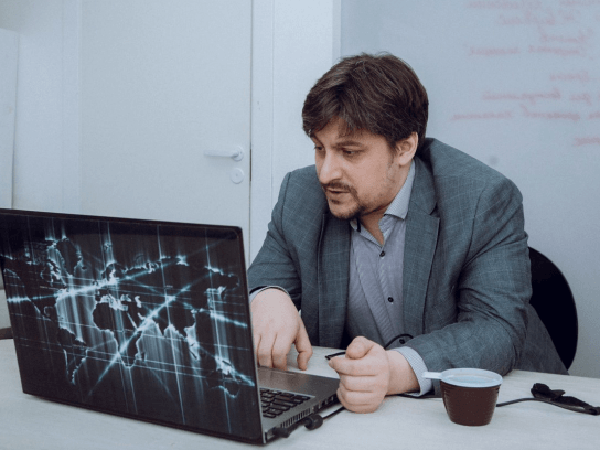
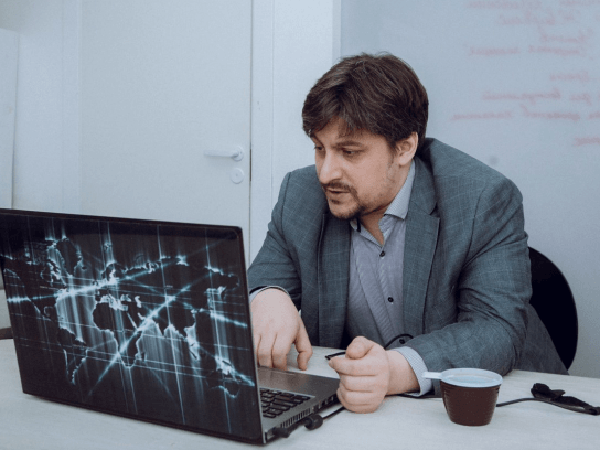 Ivan Belytin photo of Maria Borisenok
The coronavirus epidemic is undoubtedly tragic, extremely harmful and uncomfortable for everyone, but it gives us a unique chance to learn a lot about ourselves. I would like to believe that it is time for breakthroughs in the field of sociology and social psychology. One of the most interesting consequences of pandemia is the emergence of a single topic, which for a long time illuminates almost all media in all languages and continents, without exception. In Polit.ru, we see in this a good opportunity for a metaurnalist investigation and try to describe a mediastorm born of a pandemia.
This is what the project “Transformation of the picture of the world in global online space under the influence of the Covid-19 epidemic”, which we conduct together with the Faculty of Communications, Media and the Design of the Higher School of Enterprise, is devoted.
Today is a continuation of a conversation with Ivan Begtin. Read the first part here .
Ivan Flytin - director of the ANO "Information Culture", one of the leading Russian experts in the field of open data (Opendata) and an open state (Opengovernment). The author of public projects is public campaign, the school of open data, the School of Information Culture, the open police, understandable Russian, digital preservation, it is convenient to monitor its work using a separate blog .
Voskresensky: Let's get back to the current situation: instead of developed robe-journalism, we still have journalism, to which everyone-even those who work in this profession-are quite dismissive. But these media form the flow of information. Can we analyze this stream with the methods of the date-journalism, are there any tools that would allocate patterns in the stream and reach a new level of understanding?
Fitty: Of course, they are. But, as I understand it, are you talking about an event stream rather?
Voskresensky: You started with the fact that you should not mix mediastorm and date-journalism. This is understandable, but now we are facing a specific task: to describe the development of an inframory caused by a pandemia. We started working with some tools, we had hypotheses. But, firstly, the tools were not so good (or we did not learn how to use them); Secondly, we found out that the information that goes in a wave is repeated and pumped, in fact has a limited number of source. As if small pebbles had thrown into the water, and huge circles went from them. How to work with this, how to find an objective picture here?
Fitty: To find it, of course, is always difficult, even if there are tools. Continuous monitoring of social networks and media is a multi -billion dollar market with a large number of players both in the world and in Russia. For several decades, many companies have been developing that the algorithms of news clustering, the identification of named entities, etc.
All this is quite expensive tools, but they have great demand. Relatively speaking-how to catch the very beginning of the info ones against some oligarch or his large holding, when instead of a media flow is there only a shaky ripples in the water? For example, as a public lobbyist of normative changes in the state, it is always interesting what laws will be adopted. This can be understood in advance when you see ripples on the water-as a rule, some deputy declares: "Oh, we offend children in digital space." That's it: it is morally prepared for the fact that in the near future the presidential administration either through this deputy, or will directly introduce some law to protect children in digital space. That is, the event begins to occur before it becomes visible. Therefore, there is a request to see forecasts and trends globally in the world.
Voskresensky: You say that you use information about trends in your lobbying activity. Are you resorting to instruments such as “Mediaology” or “Analytics brand”, or do you still monitor yourself using search skills and your team?
Fitty: I read a lot and make my tools that collect the stream of news from the sources I need, mainly Diges. But these are very personified solutions. I do not use “mediaology” and “brand analysts”, they are focused on a PR market because there are customers. They also have a request for monitoring “future” events, but it is difficult to solve. If such tools existed, they would be at the disposal of reconnaissance agencies.
There are a huge number of various kinds of insights. Here, for example, is a story that can already be told publicly. American scientists connected by a military contract received a stream of data from which they saw a certain number of people at first gathered at the Arkhangelsk nuclear training ground, and then someone went to Cuba, some in Azerbaijan, some in Armenia, some in several closed cities of Russia. The source of these important data for exploration was ordinary mobile applications such as Tinder.
This is not ripples on the water, it is ripples under water. This is a kind of event that has not yet been described in the media. But there are facts for which an analyst or an appropriately designed algorithm can see an event.
Intelligence agencies monitor a huge amount of information in open sources to know about events and trends before they arise. Agencies are able to predict and predict events on the volume of the supply of steel, Uranus, on concluded transactions, by casually past news about a particular person or company that is under supervision. But it is very expensive, billions of dollars, and this is a very closed market. I suspect that in Russia such tools should also be. But even if I knew about them for sure, I would say that I don’t know. Therefore, I do not know.
Voskresensky: Cool. I will ask a "loose" question. We are all the time about things of rather “hard” - about electoral cycles, about reconnaissance data, and so on. But now, studying the information, we hope to see trends that have not yet been “hardened”. For example, have mutual support increased in the pandemic months or, conversely, people began to hate more? The virus caused not only an emotional reaction, but also a rational one: a search for solutions in an unusual situation that contains both threats and opportunities. These trends, which have not yet become "solid", then turn into politics, into social behavior.
Fitty: There are a lot of nuances. For example, due to legislative restrictions or because of public discourse in Russia and in the world about some things, people ceased to speak publicly even on social networks. Everything that happens publicly is no longer a real life of a person. Unfortunately, analyzing public information, it is very difficult to find the line between natural statements and those that caused various kinds of manipulations. As I understand it, you-Media-loves-are certainly sure that everything is manipulated and that we live in constructed reality.
Therefore, to be honest, I do not know until the end of the answer to this “loose” question. I believe that citizens are slowly developing some immunity for a media imposition. Confidence in the media is reduced annually, and in Russia the trust index of anything and has always been low. But what will be replaced by traditional media? Now these are semi -anonymous and anonymous telegram channels, but they are also imposed on the requirements of at least minimal reliability. And all the media that are engaged in state propaganda so spoil their reputation that they go into the category of inaccurate, even giving quality content.
Voskresensky: This is obvious, yes. But we still have a hypothesis that under the influence of the templators guided by editors, mono-sets arise. For example, there are three publications about fakes related to coronavirus. And suddenly, on their basis, a huge wave of publications arises, which lasts months. Mass respected publications refer to each other, chew and pump this mono-stem, and it is difficult to understand how it all began. And when you begin to analyze this, it turns out that stories as such are actually or not, or it is insignificant.
Fitty: Let's be honest: the mass publication is not a synonym for the respected. Mass publications are mainly engaged in exploiting the main fears of a wide audience - to die, get sick, become disabled. In the case of coronavirus, clickable headlines replaced real news. The logic of the actions of these media has not changed in connection with pandemia. It’s just that the topic for objective reasons turned out to be long in time, so you so clearly see these all the texts not confirmed by Prufflinks. In general, there is nothing new here.
Voskresensky: What do you think, how can work with data in media affect the development of journalism in terms of returning the profession of rationality and humanity? That is, can it benefit her?
Fitty: Of course, maybe. But the mass audience is objective truth or many reliable information is simply not needed. There is no consumer request for this. You can post cats, you can publish news about how the next star appeared somewhere in a swimsuit, and so on; This is all - work with passions, it is not related to objective and rational decision -making. Of course, there are publications-as a rule, not the most popular, applying for an intellectual audience-which are seriously engaged in data verification and fact-Chek. Here you can give an interesting example with Donald Trump. There were several projects for checking each Trump statement. Several media filmed his tweets, for each tweet promptly gave fact-chock and published either by tweet or on their website. But Trump works for the masses, and the publications that convicted him of a lie - on an intellectual audience. And therefore, the number of people who read Twit Trump, and the number of those who read refutations is not comparable.
The use of data for rechecking or to publish reliable information is the scope of investigative journalism. As for working with data precisely as with databases, it all depends on the reliability of the information source. For example, one of our politicians calls the numbers in mortality or birth rate, and you look at the data of Rosstat and say: "This is not true." And why do we think that the data of Rosstat is true? Maybe the data of Rosstat is also not true? Or not the whole truth.
This is the main limitation of the Russian date-journalism-we do not have reliable data or sources of information.
Voskresensky: Let's try to abstract from the terrible reality of our world, in which there are solid fakes, and imagine that there is still some objective picture. How could we trace a change in discourse or a change in the tongue in the media by working with data? Is there a suitable tool for this?
Fitty: In your wording, no one will be interested in anyone but researchers-scientists. Because in practice, everyone, of course, analyzes the texts and content of media, social networks, but with other goals - either commercial or political.
The tasks are to identify named entities, that is, the mention of certain objects, people, companies, concepts. And in the appendix to them is a negative or positive form of presentation. It may be interested in the emergence of some trends before they become relevant. The identification of events in the early stages is of interest to everyone, especially when this concerns catastrophic events or diseases. For example, a special Google service made it possible to predict the spread of ZIK disease - this is very relevant. And changes in the language of anyone but the institution of the Russian language are not interested.
Voskresensky: Isn't the main editors of large publications that the language is not interested in a change in the language from the point of view of what is possible, what is impossible and what will happen in fashion in two to three years?
Fitty: I don't think. In general, three years are a rather strange planning horizon for Russia. In Russia, the planning horizon is one year, more often - to the nearest vacation, if a boy was born - then 18 years old.
Voskresensky: Well, the transformation of the language is too academic, but the change of discourse is, in fact, a direct impact on politics and the formation of a public contract, and can have some important practical consequences.
Begin: Are you not joking about a public agreement in Russia now? You say some such revolutionary things. We have been behind Belarus by an average of five years. In five years, what will be a public contract? Putin with a machine gun?
Voskresensky: Okay, let's even more practical questions. Semantics, content analysis, the creation of semantic nuclei, that is, what specific things, what specific tools, approaches could we use in order to work with these arrays now and in the near future?
Fitty: first, you must nevertheless clearly decide on the tasks that you want to solve. To track the level of changes in the language is one task. The measurement of the permissible - for example, what the publication can afford and what is not is another task. The identification of some trends is the third task.
Voskresensky: This is the task of identifying trends, from my point of view.
Fitty: Yeah. For starters, I would find at least 50 million dollars somewhere, at least one or two teams that are professionally engaged in this, and would try to agree with them and create an appropriate startup if they agree.
Voskresensky: Wow!
Fitty: I repeat: what you describe is a good commercial story in the correct implementation. I understand that you have an interest in a different kind now. But people who do this professionally receive a lot of money. All teams of computer linguists who are able to solve this level of problem, as a rule, have work.
An alternative path is academic research. But it is very difficult to find technologies and form a team from scratch - you need good motivation. The easiest way to rent a laboratory and conclude partnerships with those players who have databases and technologies. And go! Search markers, keywords, expressions, semantic core, changes in language, correlation, clusters, monitor information waves. And so on.
Voskresensky: I have now come to mind such a story: there are tools of marketing analysis - the search for affinitiveness, for example, what Gallup was doing, later TNS and others. How close are these tools, how are they similar and different?
Fitty: All these tools are derived of the same products. Most scientific research in the world is based on Twitter analysis as the most open platform, to a lesser extent - Facebook and Instagram (but also due to their availability). There are almost no such studies on Chinese and Russian platforms - primarily because they are more closed and less interesting for researchers (in the world, not in Russia).
Information is taken by a stream of social networks and a variety of incisions are made. For example, Twitter. They look at the number of tweets on hashtags for a certain period in a certain territory, catch anomalies: when some kind of tag is used much more often, or it is used by people from different countries, or it is very localized, or there was a sharp non-skilled surge.
The mechanisms of such an analysis exist. I saw several dozen studies in which scientists tried to build forecasts based on such monitoring. There are prediction mechanisms that Google makes - an early reaction to various disasters like tsunami, earthquakes, etc.
But this has either a humanitarian, non -profit nature and is made by large players to demonstrate their social significance, or a very commercial nature. Much less often - academic, and that with proper quality of analysis, it still eventually goes into a commercial one.
Voskresensky: Do I understand correctly that this market is still not developed enough to talk about any specific instrumental things?
Fitty: This market is quite developed, but only at a commercial level. He has a research academic part - you can search, for example, by keywords Facebook, Twitter, Instagram on Semantic Scholar or Web of Science and find a large number of one -time research. As a rule, researchers use basic data analysis tools: Jupyter Notebook, Stata, various kinds of data processing tools. And commercial services are either very expensive, or designed by special order.
You describe the problem you are interested in very widely: "We want to identify common trends." The study of the general problem is expensive. But there are more local and focused solutions - various kinds of companies that are engaged in innovation or development of products in specific industries. When we narrow the problems, the solution is located. It is still worth a lot of money, but it becomes clearer what to do and who is doing this. We see a good example of this approach among large companies.
Some time ago, Rusnano was very interested in the monitoring of everything regarding the spectrum of the technology that they are engaged in. First of all, it is clear, in Russia: suddenly something interesting will slip through, then it is necessary to quickly pick it up so that the money comes to us. Therefore, there monitoring includes not only news, but also any changes in activities, in the economy of interest to organizations and people. If, for example, a new specialist appears, who was previously unknown, it must be found out immediately. If a person, on the contrary, changed the specialization, was engaged in nano-particles and suddenly wrote an article on Romanesque philology-this also needs to be monitored-it is impossible to lose specialists. Monitoring of patents is also underway. At the same time, many large foreign holdings, unlike Rusnano and other Russian state corporations, have been playing it for a long time. They invest a lot of money, especially in those sectors that are at risk. Подобным мониторингом всех трендов много лет занимаются компании энергетического сектора: им нужны прогнозы, где и как изменится потребление электроэнергии или закупка электроавтомобилей. Эти прогнозы включаются в проспекты для инвесторов, там расписываются планы от 3 до 15 лет.
Воскресенский: Наш «Росатом» этим тоже вовсю балуется.
БЕГТИН: В России этим занимаются только крупные госкорпорации, и то не все: из тех, кто понимает, зачем это нужно, я знаю только «Росатом» и «Роснано». Какой-нибудь «Роскосмос» уже не попадает в этот список.
ВОСКРЕСЕНСКИЙ: Спасибо вам большое!
The material used information obtained in the implementation of the project "Transformation of the picture of the world in global online space under the influence of the Covid-19 epidemic."