
Translated material
Euromonets: What are dedicated - 4
Continuation. For beginning, see the TRV-HOWN No. 256–258 .
Finland
On the largest Finnish coin, 2 euros depicts merchants with berries (Fig. 1), and for 1 euro - two flying swan (Fig. 2).
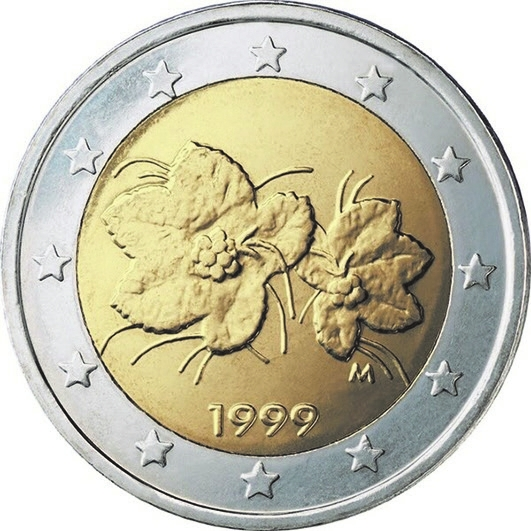 Rice. 1
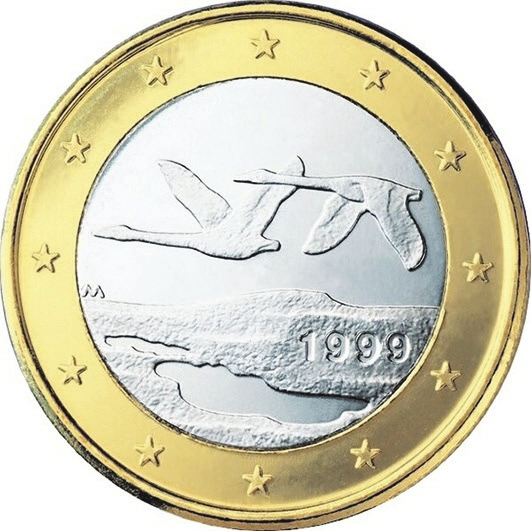 Rice. 2
Swan is one of the symbols of Finland, “National Bird”. This drawing by Perty Myakinen before the introduction of the euro won the national competition for the best drawing for a commemorative coin, which was intended to release to the 80th anniversary of the independence of Finland.
On all smaller Finnish coins - the heraldic lion (Fig. 3). Different images of the heraldic lion were previously on many Finnish coins, for example, on the nickel coin of 1930 with a face value of 1 brand (Fig. 4).
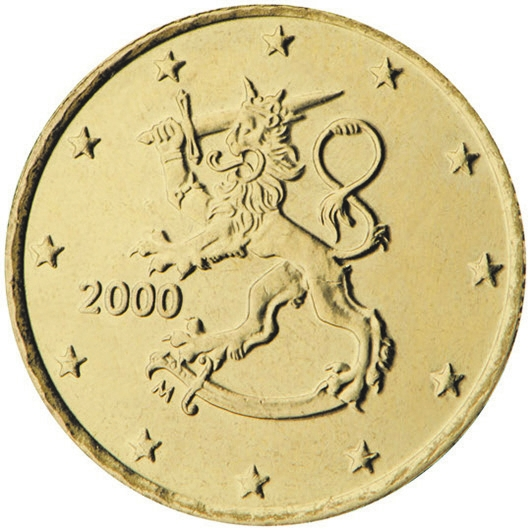 Rice. 3
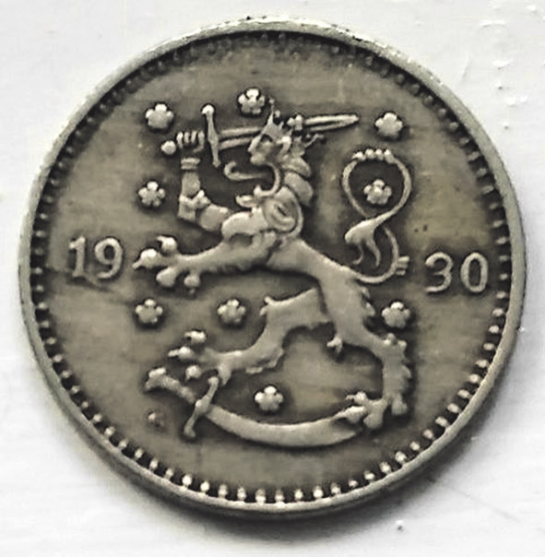 Rice. 4
France
On the obverse of each French Euromonets there is an abbreviation RF - République Française (French Republic). On the largest coins, 1 and 2 euros, a stylized image of a tree in a hexagon: France on the map resembles a hexagon (Fig. 5). And a tree is a symbol of life, changes in generations and growth. The motto of the French Republic is also drawn on the coin: Liberté, égalité, fraternité (“Freedom, equality, fraternity”).
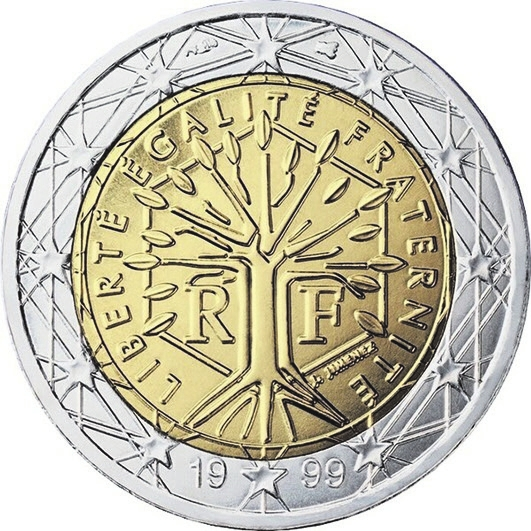 Rice. 5
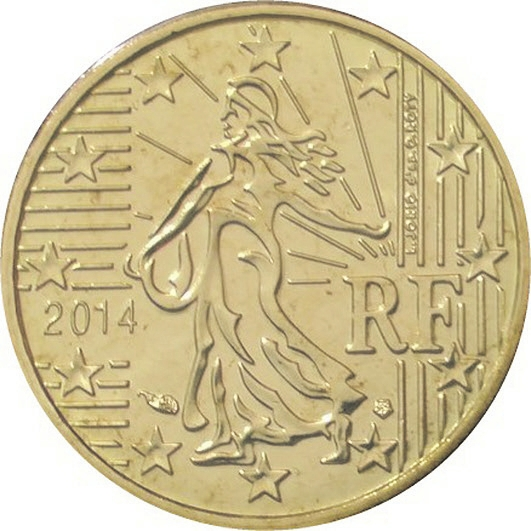 Rice. 6
On coins of 10, 20 and 50 cents - the image of the sower (Fig. 6). This image is traditionally for French coins (Fig. 7); On the back of the coin we see an olive branch. It is curious that this drawing is essentially a mistake.


For the first time, a younger girl in the Phrygian cap depicted in 1896 a young schedule and sculptor Louis Oscar Roti (his surname was placed at the bottom of the drawing and remained on coins). The mouth of the mouth has repeatedly won in various competitions. In 1897, he first appeared on the French coin of 50 centics, and in 1903 - on French postage stamps (Fig. 8).
The image of the sower on coins has been used for more than a hundred years.
For more than half a century, postage stamps were also printed with different variations for more than half a century with multimillion -dollar circulations. And only many years after the first appearance of this image, after the death of the artist, one old peasant, gluing the brand on the envelope, drew attention to the fact that with the north, grain was never thrown against the wind with manually! Indeed, the girl’s fluttering hair, undoubtedly, indicate that she sows “wrong”! To save the symbol of France, they decided that it was an allegory: the grain should be understood as ideas, which should just be sown “against the wind”. It is interesting that in the French Euromonets the image of the sower (its author is Laurent Zorio) is so stylized that it is difficult to consider a basket of grain on it, but fluttering hair is clearly visible.

On coins of 1, 2 and 5 cents - the image of a young woman, which the French call Marianna (Fig. 9).
For the first time, Marianne as a symbol of the republic appears in 1792; “La Marianne” is the name of the political secret society during the Second Empire (1852–1870), the purpose of which was the restoration of the republic. A bust of Marianne with a Phrygian cap on his head is an obligatory protocol attribute that adorns all French city halls, courts, and police sites.

From time to time, busts change to new ones, and famous Frenchwoman serves them with the model: Brigitte Bardo, Katrin Deneuve, Mireira Mathieu and others. “Marianne” is also depicted on the standard issues of modern French postage stamps (Fig. 10).
The designer of the modernized image "Marianne" on the French Eurocent - Fabyen Kurgayad, a young employee of the Paris Mint, the engraver in the specialty. According to her plan, a young girl symbolizes strong and prosperous Europe.
In conclusion - a few words about coins, which very rarely come across in circulation.
Vatican
On all coins - a portrait of dad. In 2002–2005 This is John Paul II; In 2016–2013 - Benedict XVI, since 2014 - Francis.
Monaco
On the coin of 2 euros - the profile of the Prince Rainier III (1923–2005) from the Grimaldi dynasty, then Albert II. On coins of 10, 20 and 50 cents - the seal of the founder of the principality of Monaco Admiral Rainier Grimaldi (1267–1314) and the first lord of Monaco Karl I Grimaldi (? - 1357).
On coins of 1, 2 and 5 cents, the coat of arms of the Grimaldi family is depicted.
San Marino
At 2 euros, we see the Palazzo Palace of the public, in which the government was located in the 19th century; Since 2017 - St. Marin, the legendary founder of the state (IV century), in honor of which the country is named.
1 euros: the coat of arms of San Marino; Since 2017 - the second serf tower.
On a coin of 50 cents: three towers San Marino (Guaita, Cesta, Montale); Since 2017 - St. Marin.
20 cents: St. Marin; Since 2017-Mount Monte-Titano (the highest point in Sant-Marino) and three towers.
10 cents (old design): Basilica San Marino, the main temple of the city, built in the 19th century in the form of a medieval temple (an elongated rectangle with two longitudinal rows of columns inside; since 2017-the Church of St. Francis (Fig. 11).
2 euros (new design). (Photo 12.)
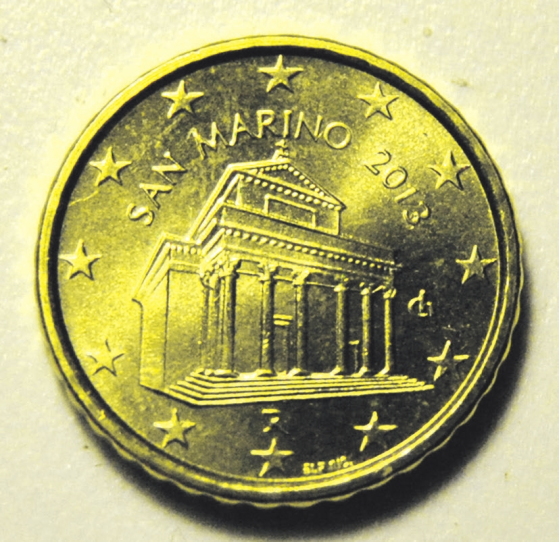 Rice. 11
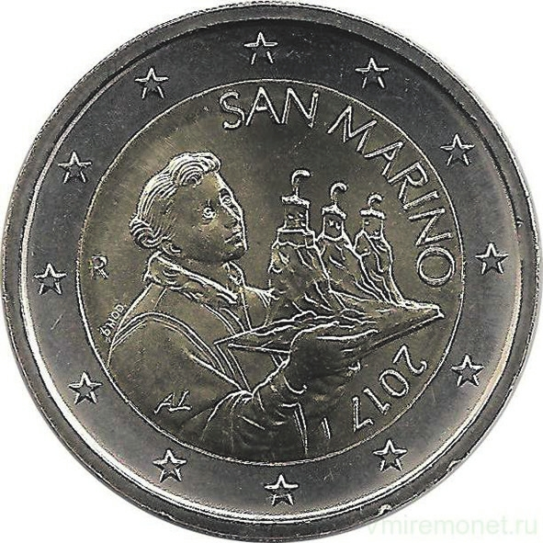 Rice. 12
5 cents: the first tower; Since 2017 - the Church of St. Quirin.
2 cents: statue of freedom; Since 2017 - City Gate.
1 cent: third tower; Since 2017-the coat of arms of San Marino.
Separate topics are coins of countries that have joined the euro zone after 2002, as well as a huge number of anniversary and memorable Euro -monots. The latter have only large denominations (from 2 euros and above) and they are often minted from precious metals (in Austrian coins 25 euros, the central insert is made of niobium (see the article “Monetary metals: niobium and tantalized” [1]). The circulations of such coins are small, they do not come in circulation, but cost, are much more expensive than the face value. Silver Austrian “Philharmonicire”) is minted in large circulations and sold by banks of many countries as investment coins (Fig. 13).

Ilya Lenson,
cand. chem. sciences, associate professor of the Higher Chemical College of RAS