
Translated material
Not so peaceful?
The Russian “Greenpeace” response to an article in “New. Europe "On the advantages of atomic energy
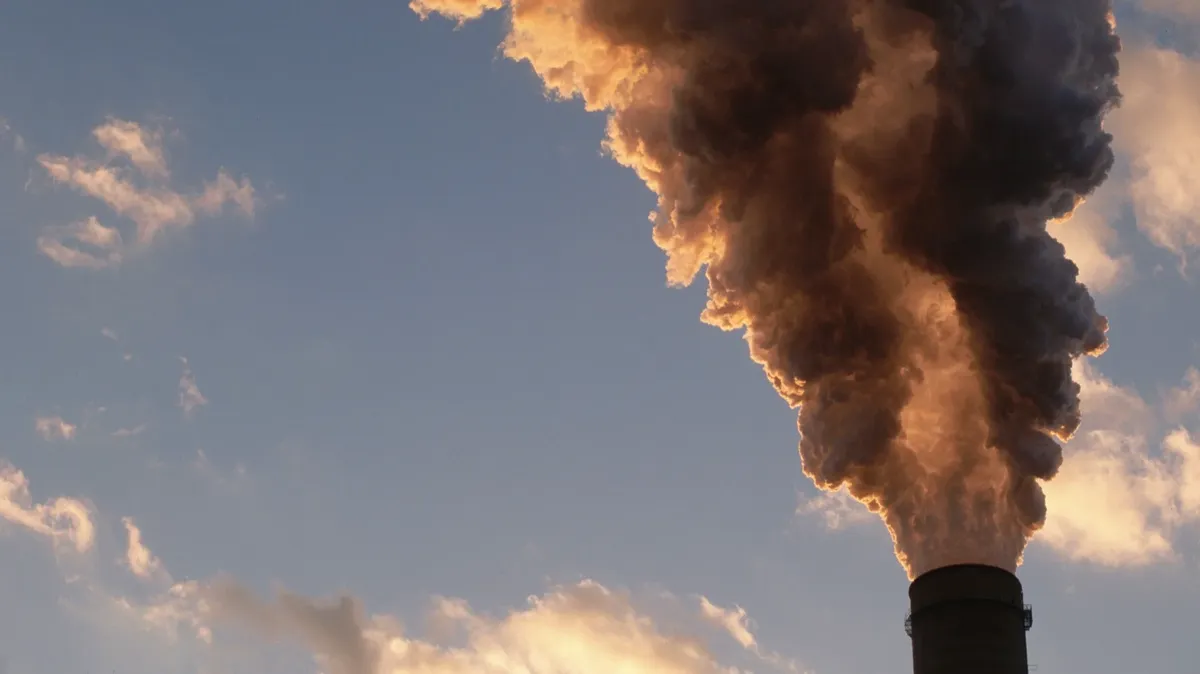
At the end of June in Novaya Gazeta. Europe ”has been an article on the advantages of a“ peaceful atom ”. It was about the fact that the shortcomings of atomic energy in the public consciousness are exaggerated, and it is this method of generating energy that can become a transitional stage in the abandonment of developed countries from fossil fuel. However, not all environmental experts agree with this assessment. We publish the analysis of the Russian Greenpeace, which offers an alternative look at the atom.
This material is written as an answer to the article “Peace, Friendship, Atom”. Read the original source here .
Why does the share of atomic energy fall?
The share of nuclear power plants in the power generation of the world is today about 10%. It is important that this share, although slowly, is reduced - in 1996 it was at a peak and occupied 17.5%. According to one of the scenarios of the UN intergovernmental group by changing the climate (MGEIK), to save the climate, atomic generation should grow 6 times by the middle of the century.
If you consider the MGEIK report in more detail, it turns out that among scenarios there really is as maximum - providing for a six -fold growth of the nuclear sector (the author of the article refers to it), and the minimum ones - including a multiple reduction (!) Atomic generation. Moreover, the latter also ensure the salvation of climate, simply due to other solutions and technologies.
Assessing the median or average values of combinations of dozens of different scenarios of external experts and institutions, MGEIK calculated that atomic generation in the same electric base in absolute values by the middle of the century will increase by 2 times, while the share of nuclear power plants in the production of electricity will fall from 11%to 9%, and the share of renewable energy sources (VIE) will be 77%.
How many nuclear power plants do you need for this?
The implementation of such a scenario of MGEIK will require increasing the established capacity of all nuclear power plants from the current 360 GW 2 times - up to 720 GW by building about 1000 GW atomic generation by the middle of the century.
Why 1000? Closer to 2050, it will be necessary to get out of operation more and more out of operation that have served, but still working atomic power units today. At the same time, it will be necessary to replace almost the entire current NPP park with a capacity of 360 GW - because they will not be used more for safety reasons.
Thus, in order to doubling the power of atomic generation over the next 30 years, at least 30 GW will have to be introduced annually. But even in the golden age of the development of atomic energy-from the mid-1960s to the mid-1980s-all over the world entered only about 10 GW per year. Today this indicator has fallen significantly. It must be said that now the entry of renewables is hundreds of GWs per year, for example, in 2020 230 GW of wind and solar generation were introduced .
One of the reasons for this situation is the timing of the construction of the nuclear power plant.
According to statistics, the construction of one atomic power unit needs 10-19 years . The timing of construction of the generation based on renewables is an order of magnitude shorter.
The difference in construction rate is due to the fact that for renewable renewals are not needed by such complex safety systems as for nuclear power plants, and safety requirements for nuclear power plants are only increasing. In addition, the renewable power transmission does not depend on the complex fuel cycle, as in the nuclear energy, where you need to not only build a reactor, but also the fuel loading system, pools for exposure to expanded nuclear fuel, dry storage facilities and infrastructure for transportation.
Simultaneously with the construction of new nuclear power plants, it is necessary to build a new infrastructure in parallel for the disposal of radioactive waste, and also dismantle the discharge of atomic power units. Dismantling is a complex project comparable in terms of terms and required resources with the construction of new nuclear power plants.
The requirements for the construction of nuclear power plants are created by another “bottleneck”: not all energy companies have admission to the construction and production of equipment for nuclear power plants. There are relatively few of them in the world, and not everything that reduces competition, and can also contribute to tightening construction, can receive a license for the right to build a nuclear fuel cycle.
Atomic stations is it really low -carbon?
The impact on the climate by the nuclear power plant is not limited to the construction of stations. Superior emissions are formed as a result of the use of a large amount of equipment working on fossil fuel, and when mining, processing and transporting uranium, which largely ensures a climatic trace of atomic generation during its operation. At the same time, taking into account the exhaustion of rich reserves of uranium deposits, this will be a factor in the growth of greenhouse atomic energy emissions.
Depending on the content of uranium in ore, as well as other factors, the climatic trace of the nuclear power plant can vary significantly. MGEIK estimates are based on sources that give the following scatters: from 9 to 110 and from 1 to 288 grams of CO2 equivalent at the KW*h produced electricity. In the latest assessment, the average release is estimated at 66 grams of CO2 equivalent at the KWh of the generated electricity.
If you take as the basis of 11, but 66 grams of the CO2 equivalent at the KW*h, then the climatic trace of atomic generation will be slightly higher than the climatic trace of wind ground and sea power plants - 16 (± 14) and 12 (± 7.3) grams of the Equivalent of the Equivalent on the KVT*h, respectively, and we compare with trail of solar power plants - 57 grams on kW*h.
What is more profitable to build - nuclear power plants or renewables?
The cost of atomic generation is growing, and the wind and sunny - falls. For the electricity market in North America, it looks like this .

The diagram shows that the cost of wind and atomic electricity was equal in 2010, and the solar and atomic electricity in 2013. Since then, the gap has only grows not in favor of atomic generation, which can rightfully be called the most expensive electricity generation technology.
Global Energy investments show that today investments in renewables, whose annual market is estimated at about 300 billion dollars, are more attractive than investments in nuclear power plants.

Is there enough Uranus in the world?
The author of the article honestly talks about the problem of the exhaustion of cheap and affordable uranium reserves. Every year, the world consumes about 59.2 thousand tons of uranium raw materials , and, according to 2018, about 53.5 thousand tons are covered by extraction from uranium deposits. The difference of about 10% is closed, including due to the so -called secondary sources of uranium - already mined and impoverished in the production of nuclear fuel of uranium and uranium, which was in the reactor. This indirectly indicates that the market is felt on the market.
Theoretically, according to the Magate , intelligence and promising recovered reserves for more than 135 years. However, this is not enough with a six-fold increase in the atomic generation power to provide even one life cycle (this is 40-60 years) of the alleged NPP park.
But even forecast resources that can provide the current level of nuclear energy for 135 years is just a theoretical value.
As the author of the article correctly notes, the development of these reserves and resources is limited by the presence of mining infrastructure. According to Russian experts , “by 2035, due to depletion of reserves and closing mines, the production of primary uranium on existing mines will fall by 30%, and the production facilities of new mines will only be enough to compensate for the capacities of those that have already been developed.”
Infrastructure restrictions are due to the fact that the construction and launch of new mines depends on many factors. The main negative factor is protracted periods of low prices for uranium, which carries financial risks for mining companies. The situation is burdened by the fact that in order to put into operation and begin production in the uranium deposit, it takes 10-15 years.
In addition to economic restrictions, companies are also faced with political, social and environmental problems. According to experts , these restrictions have already prevented the development of several uranium projects in Australia, Canada, Kazakhstan, Russia and a number of African countries. In our opinion, political risks confirm the January events of 2021 in Kazakhstan, in a country that is today the first place in the production of uranium in the world and, according to 2020 data , which ensures the production of 40% of the natural uranium in the world.
And finally, it is important to remember that on the uranium market in the direction of its decrease leading to protracted periods of low prices, radiation accidents can influence, as happened after an accident at the Fukushima nuclear power plant. And such events are not excluded in the future.
Is it possible to use plutonium instead of uranium?
The article proposes as a solution to the problem of a lack of uranium (we are talking about the isotope of Uranus-235 for the so-called thermal reactors, which today are mainly represented by world nuclear energy) to use plutonium.
Plutonium fuel does not have such resource restrictions as the “traditional” fuel, since the world has accumulated a significant amount of impaired uranium, which theoretically can become raw materials for large -scale nuclear energy based on plutonium fuel. However, at the same time, according to scientists , the number of technologies for obtaining plutonium from depleted uranium raw materials is limited.
At the heart of Plutonium energy are the so -called fast neutron reactors (RBN), which are proposed to reproduce plutonium. But this technology is extremely complicated in the technical design, and the consequences of the accident in the case of its use can be more significant due to the high content of plutonium isotopes in nuclear fuel.
The history of fast neutron reactors is a half -century story of failure. At the international level, many programs for the construction of fast neutron reactors were curtailed or frozen. In the world, reactors on fast neutrons still continue to build in the world. According to the same data from the World Nuclear Association, in the next 10 years it is planned to launch 10 reactors with a total capacity of about 5.4 GW (excluding experimental and low -power reactors).
This is not a very impressive result after almost 70 years since the development of this technology began. For comparison, we recall that the reactors on thermal neutrons, which are represented by almost the entire park of modern nuclear power plants, today have a total installed capacity of over 360 GW.
Does the NPP really take up much less space than the renequation?
We often hear about comparing the areas that occupy nuclear power plants and wind or solar parks. At first glance, the numbers are impressive. But the details are important here.
Firstly, when taking into account the area occupied by nuclear power plants, it is necessary to add the area of mines, uranium processing plants, fuel factory and storage facilities. VIE, on the contrary, does not have a fuel cycle that requires such territories.
Secondly, the territories must be added to the territories borne by the occupied nuclear power plants as a result of radiation accidents.
Thirdly, it is important to consider the availability of territories. If nuclear power plants and other nuclear fuel facilities are closed regime objects with military protection, then solar and wind power plants, as a rule, do not require such restrictions.
Wind turbines can stand in the field, and the types of land use do not change around them. Solar stations can be placed on the roofs of buildings without negative consequences.
Where do radioactive waste go?
Judging by the fact that after decades, so far only a few countries began the construction of burial grounds, there are unresolved problems here. And the first of them is that there are no guarantees that the burial grounds will remain in a safe condition for hundreds of thousands of years. Earthquakes, the penetration of water, unauthorized autopsy, and so on - there are too many scenarios.
Legally radioactive waste is displayed into a separate legal field, which is spelled out in very detail, including from the point of view of determining the areas of responsibility.
But in reality, in the world and in Russia there are many ownerless radioactive waste, known for resonant stories related to radioactive pollution, which there is no money, technology or which they simply forgot about the liquidation of which.
- nuclear power plants uninterrupted and reliable?
The article provides a traditional thesis about the uninterrupted nuclear power plant. Here it is worth putting forward an antithesis - atomic power units can stop unscheduled or lower the power as a result of the operation of emergency protection. In such cases (and this is an unpleasant feature of nuclear power plants) from the network, high power can fall out at once. The reasons for the operation of emergency protection are very different - a failure in the operation of electrical equipment, radiation accidents, and so on.
The reliability of nuclear power plants often does not undergo strength testing in conditions of climate change, since to cool most reactors you need a lot of water of a certain temperature, which is not enough due to more frequent waves of heat. Being located near water bodies, nuclear power plants in many regions will be vulnerable to more frequent and powerful floods and storms.
Terrorism and military conflicts are additional factors that carry qualitatively new risks of the safety of nuclear power plants, and they should also not be discounted.
***
For more than half a century, many scientific, financial, labor and other resources have been invested in atomic energy. At the same time, nuclear energy has not solved many of its problems, but I met new challenges that do not allow you to name this technology effective and safe. Therefore, in conditions when there are alternative, economically more efficient and environmentally friendly technologies, such as renewables, to bet on atomic energy is erroneous.