
Translated material
On the road Proust, Proust
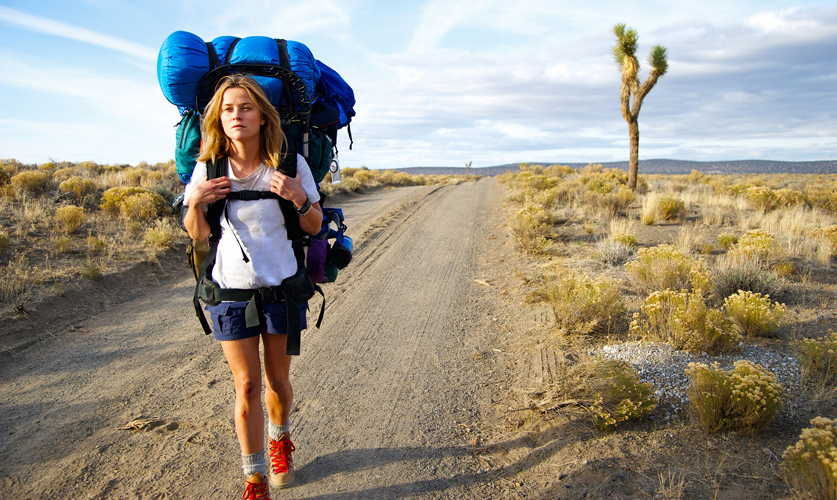
1994. A girl named Sheril Strade, a former student, a former waitress and a former heroin drug addict, decides to walk along the Pacific Range on foot, simultaneously dealing with her past and proving to others that she is not homeless.
It would seem that everything is simple. Diligent directing Jean-Mark Valle, better known for the "Dallas Club of Buyers." Diligent transferring to the screen of the Books of the Real Cheryl Streid “Wild. A dangerous journey as a way to find yourself ”, chosen poll for your book club. The diligent game of Reese Witherspoon, who bought the rights to film adaptation of Strand’s book three months before its publication, providing a festival benefit in advance. Diligent installation, slowly but surely revealing the inner world of the heroine. Everything is too diligent and too much gives out that type of potentially an Oscar -winning drama that academics especially like it: does not move the movie language, does not destroy the foundations, but maybe it will enter the history of cinema.
It would be easiest to just wave his hand, leaving a showdown with the film fans of Reese Witherspoon, but “wild” is more complicated than it might seem at first glance.
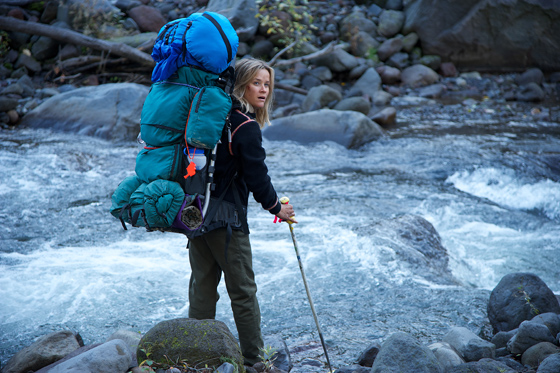
Here the film begins. Cheryl painfully pulls out a nail in himself, and then with a scream throws a shook boot from the mountain. There are only stones and trees around her. Everything is realistic and portends us a story about the difficulties of mountain transitions. But suddenly the action is interrupted. The views of the mountains are replaced by a quick mounting cut: people have sex, a dictionary open on the word “Strayed” , a fist of a little girl’s face, a woman with a knocked eye, a horse, a fox, the face of a dead woman, a burning roadmap. All this flashes in a matter of seconds, without any explanation, until it is replaced by a black frame with the name of the film.
There is nothing more boring than a campaign that you did not commit. Especially if you tell you about this campaign in the cinema. Sometimes, however, it happens that the main character of such a film has to cut off his hand. Or a bear eats it. Or he meets a snowy man. This is somewhat reviving the action, slowly translating the narrative of other people's attempts for the first time put the tent into the saving channra. But what if the bears were not enough?
 © Fox Searchlight Pictures
Valle knows for sure: Scheryl’s campaign is only an occasion, an embodied metaphor that allows you to tell about the search for himself, about the eternal struggle with himself. Therefore, he so methodically uses remote installation, interrupts the action with short personnel, the essence of which is disclosed gradually. In the initial cut, all the most important topics of the "wild" are already given. A similar technique was used by Harold Pinter in the rushed script according to the epic of Proust, which he wrote to Joseph Laws. Trying to show the features of the Pristovsky attitude, the Pinter after a brief scene with Marseille, who came to the library of the Duke of German, came up with a whole mounting poem consisting of short personnel, each of which was important for understanding the subsequent action.
The similarity of the Pinter and Valle methods is not accidental. Although Cheryr Streid is hardly claiming the laurels of the American Marseille Proust, her mental look is also directed into the past. In fact, during the campaign, she makes two trips: along the Pacific Range and deep into her memory; It is the second route that contains a real drama. The whole “wild” is tailored from endless hints of the past of the heroine, it consists of rhymes and roll calls, one flows into another, unrelated facts are combined into predetermination, which makes the heroine do this and not otherwise. The lifting of Cheryl into the mountains seems to be the opposite of her existential fall after the death of his mother. In the film, the details are scattered, which are for the heroine the same as for Marseille were Madel's cookies or composed of two stamps of the German.
Just as the Pristovian cycle is rooted in the French culture of the time of b elle époque , the history of Strand is part of the American culture. This is not just a journey through the mountains and not just a trip inside yourself, but also a trip in context.
 © Fox Searchlight Pictures
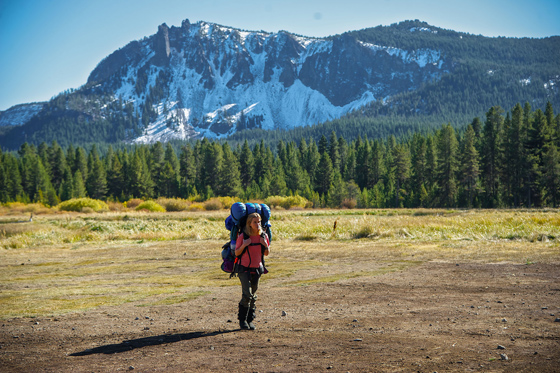
First of all, it would be seductive to talk about the connection of the Jourli's trip to the tradition of the 1960s, especially since during one of the stops she faces a modern hippie head (and what could be more than sixtiethly than endless wandering in search of revelation?). However, hippies leave the stage too quickly. In addition, they do not at all claim to the role of teachers or satellites on spiritual searches. No, the true context of this trip is the whole American culture. On the way, the heroine is inspired by the verses of Emily Dikinson, Robert Frost and Adrienna Rich, the prose of Flannery O'Connor, the songs of Bruce Springstin and Joni Mitchell, in the frame refer to Walt Whitman.
Along with American nature (and the Pacific Range stretches from the Mohave desert to Washington) and the memories of the heroine, the measurement of culture plays the "wild" most important role. Quotes from poets and writers, which the heroine enters into travel magazines, become milestones on her journey.
At the same time, this is not about a high, emphasized the heroic tradition (like the “mobility of Dika” Melville with his romantic God -fighting and constant pessimism), but about tradition, in its intonation very human. She at the same time elevates the journey of Streid, and emphasizes his private character, since the Schelry route is the path of a particular person who is trying to solve specific problems.
In the last consideration, perhaps, the main problem of the film and the main difference between the experience of Cheryl Streid from the experience of Marseille Proust. Based on the experienced personally, Proust created not only his own portrait; He talked about what each of his reader experienced in one way or another. “Wild” tells about perhaps an important, but unique and in no way applicable to us the experience that one American received, having passed a complex and picturesque mountain path.