
Translated material
The squadrons of death. How the regimes use the secret police detachments acting in the methods of bandits

The squadrons of death. How the regimes use the secret police detachments acting in the methods of bandits
Victor Haifets
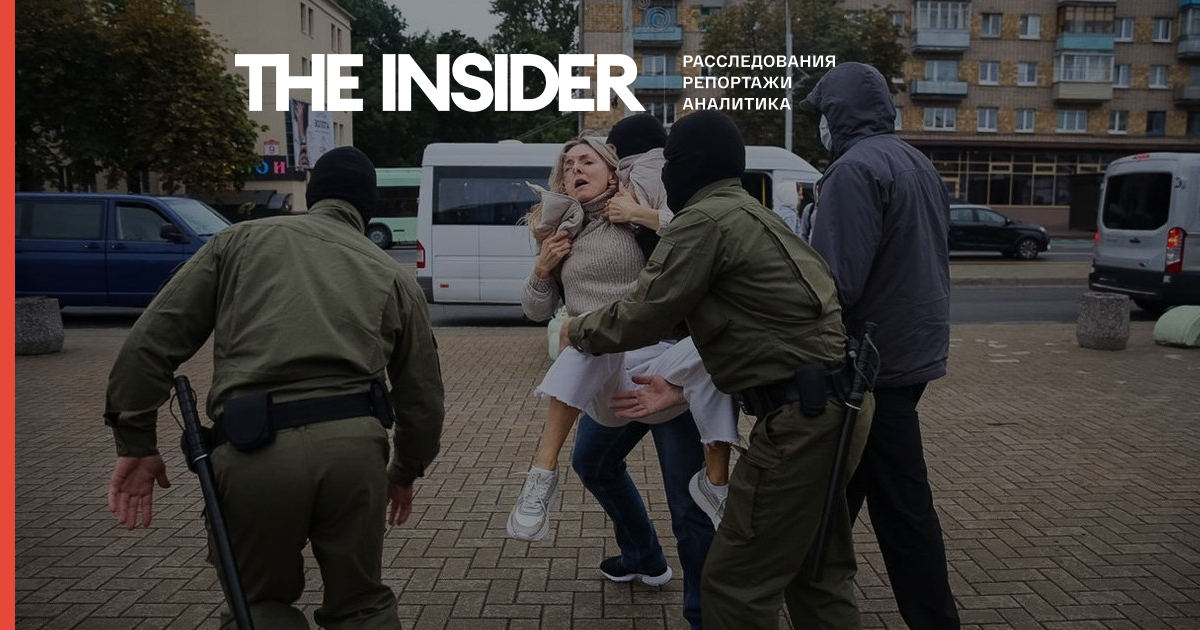
September 15, 2020 At a meeting with the security forces before a trip to Putin, Alexander Lukashenko openly stated that he was "not up to the laws," since "we must stop all sorts of rubbish." Lukashenko’s losing presidential election openly declared what is happening on the streets of the cities of the country: punishers who do not have identification marks attack citizens, can defiantly beat or abduct them; Without explanations and legal grounds, to take to the country's border, as was done with the actual leader of protests by Maria Kolesnikova.
In the history of world dictatorships, illegal, anonymous and cruel power groups, performing hidden or open will of the state, left themselves the most vivid memory in the countries of Latin America, where the expression “squadron of death” appeared. The director of the Center for Iber American Research by St. Petersburg State University, Viktor Haifets, recalls a brief history of death squadrons and tonon makuts both in South America and far beyond its borders.
Ivan the Terrible, who invented the oprichnina, did not hide the connection of his punishers with the state, but built it to the Absolute. The authorities of the Ottoman Empire quite officially used the Bashibuzuki detachments, famous for unlimited cruelty, to intimidate the population. Neither Hitler, nor Francisco Franco needed unofficial punishers: the special services, the police and the courts dealt with objectionable, and this was done publicly. But in the 1960s, a special phenomenon appeared in the countries of the Latisfly of America-these countries were flooded with numerous non-state armed detachments, which proclaimed their goal to prevent the victories of the left and the creation of the “Second Cuba” in their countries. They were called differently: “purple rose”, “anti-communist alliance”, “white hand”, but soon the name of one of them-“the squadron of death”-turned into a common term, which denoted such structures. In fact, they became a branch of the secret police, which adopted the methods of organized crime: taking hostages, blackmail, intimidation and physical destruction of opponents. The victims were indicatively killed, often cruelly and in the presence of witnesses specially driven to the place of execution. In Spanish there is an expression that you can’t directly translate into Russian: Lo Desaparecieron (“He was forced to disappear”).
There was no one to complain about the actions of the “squadrons of death”: the police were not able to, and did not want to investigate such things. In the case of particularly loud scandals, ordinary performers were held accountable. In Brazil, the “death squadrons” (in the ranks of which were former, and at times the current army officers and special services) effectively coped with most local criminal groups in order to ensure peace and order on the streets of cities, but at the same time launched a real hunt for communists, trade union figures and any critics of the authorities. In the bodies of the victims disfigured, the militants began to leave their “business cards” - paper leaflets with the letters “E. M. " (port. "Squadroons of death").

Organized by the Mexican police of the Los HalCones group (“hawks”) and Brigada Blanca (“White Brigade”) in the 1970s. used to disperse student rallies, beatings and murders of opposition activists. In the 1970-1980s. South American military dictatorships in Argentina, Chile, Uruguay and Paraguay unleashed a coordinated “dirty war”, engaged in the elimination of left -wing activists, not particularly paying attention to the floor and age. The young children of the dead fell into other families under other people's names, many of them only now learned who their real parents were. One of the many episodes of this unsightly story was the plot of the famous feature film “Garage Olympus” with Antonio Banderas in the title role.
During the years of the Civil War, tens of thousands of people disappeared in Guatemala. The disappearance of most of them is the work of the “squadrons”. Cleaning quickly turned into genocide: suspecting the rural residents of the support of partisans, the militants destroyed almost 75 thousand Majah Indians; Almost the same number of Guatemal Indians managed to escape, running to the neighboring Mexico.
Salvador Order (“Organización Democráptica Nacional, ORDEN in Spanish-order), created by the Commander of the National Guard Jose Alberto Medrano, took the Machiavelli Principle“ the end of justifies the funds ”and launched the widest network of militants in the country (up to 100 thousand participants), pursuing critics of power (mainly left). In Salvador, there was already experience in mass reprisal with the opposition - in 1932, the authorities drowned the peasant uprising in the blood. But now the work turned out to be more filigree: the blows were applied pointily, and often on those whose actions did not violate Salvador legislation in any way. The activities of the order quickly turned out to be so terrifying that the authorities were forced to officially disband it. In fact, nothing has changed, the militants simply moved to other structures. Their new boss, the ex-head of military intelligence, Major Roberto d'Oobusson, aimed the “squadron” not so much to war with the left rebels from the front of national liberation. Farabundo Marty (the army was engaged in this), how much on the systematic destruction of “undesirable elements” - activists of legally acting opposition parties (from communists to Christian democrats), trade unions, Catholic priests suspected of helping left. At the hands of the improvised d'Oobusson on March 24, 1980, the prominent figure of the “Liberation Theology” was the archbishop of San Salvador Arnulfo Romero.
The Languages of the Tonton-Makuts became the parables in the tongue, the division of which was created by personal order of the dictator Francois Duvalier, who doubted the loyalty of the army and the police. Tonton-makuts were distinguished by ostentatious cruelty against any opponents of the authorities, but quickly went beyond the fight against the political opposition and took up a banal racket. However, when the protests against the Duvalier regime (by that time his son Jean-Claude was ruled by Haiti), even the readiness of tonton makuts could no longer save the regime. In February 1986, Jean-Claude Duvalier fled, and the new authorities dismissed the Haitian "Squadron of Death."
The democratization and end of the Cold War eliminated the severity of the ideological confrontation and ended with most Latin American internal armed conflicts. This made the existence of "death squads." But by that time, armed groups have gained their own logic of existence. In Salvador, the “heirs” of the Order was transformed into the National Republican Alliance (Arena), who managed to vyudin the country. Former right -wing “death squads” switched to the destruction of organized crime, with which the army and police have been unsuccessfully trying to cope with years. The most interesting that right-wing militants were not at all embarrassed by the fact that the war against crime was the beginning of the left government of Salvador Sanchez Seren (the ex-team of Lionel), which decades ago almost became a victim of the “squadrons of death”. Nobody is shy in the funds: neither the bandits, nor representatives of the law and order, nor the “death squadrons”, with pleasure laying out photos of the corpses of opponents on social networks and posing the dead in the bodies. Surveys of public opinion, however, show that ordinary Salvadors are not outraged by cruelty - they are tired of street crime and they are ready to support anyone who can handle it. It doesn’t matter how.
The militants of other countries were nowhere to go away, and the historical split of society was preserved, fueling in the existence of armed groups. Despite the signing of a peace agreement between the Government of Colombia and the left revolutionary armed forces, the far -right militants continue to methodically destroy former partisans trying to move on to ordinary life. For the Colombian "death squads", nothing has changed: they are not ready to recognize the right of residents to criticize the authorities in any aspect of the life of society. And they are not going to allow the existence of at least some power that will try to challenge their authority and influence at the local level.
In Spain, an analogue of the “death squadrons” was created during the years of existence of a very democratic cabinet of socialist Felipe Gonzalez. “Anti -Terrorism Liberation Groups” (GAL) destroyed the militants of the Basque terrorist organization ETA. True, Gal acted not in their homeland, but in neighboring France. The sanction for the creation of the Spanish "death squads", which eliminated 27 people, was personally given by the Minister of the Interior. The “liquidators” were not limited to the point elimination of terrorists, but specially intimidated the local population, opening fire on visitors to cafes and bars. Their task was twofold - to hit the ETA and undermine tourism in the region, forcing local residents to abandon the support of the Basque movement. In the end, the case ended with a grandiose scandal: the French authorities arrested several killers, after which it turned out that GAL mainly consisted of veterans of the French foreign legion, ultra -right militants, and ordinary bandits met among them. After the leakage in the press about GAL relations with the authorities, Prime Minister Gonzalez had to say goodbye to the post of head of government. However, in Spain there are enough people who believe that Gal has achieved their goal (the French authorities abandoned the neutrality in relation to the Basques and began to cooperate with the Spanish special services against terrorists), justifying the use of illegal methods.
Many residents of Thailand, tired of the activities of drug dealers, in 2003 were ready to almost applaud unknown, arranged real hunting for small drug dealers and large collars of illegal drug business. They were shot on the streets and right in luxurious houses, and near the bodies of the dead they invariably left packages with white powder. The police were reluctant to investigate, stating that gangs are simply fighting among themselves. But as soon as the Prime Minister Taksin, Chinavatra, was accidentally mentioned that the government was not going to actively intervene, how a significant part of the drug business chose to abandon the “case” that became too dangerous. The intimidation of criminals with the help of their own methods was fruit. And the mysterious "hunters" seemed to be dissolved.
At the Philippines, President Rodrigo Duterte has repeatedly been accused of opposition and the media of creating units from civilian volunteers (led by current or retired security forces) who took up the physical elimination of opponents of the government or persons associated with drug dealers. Almost 8 thousand people became the victims of the Philippine “death squadrons”, and not only real criminals, but also random people fell among them. Among the dead were even several mayors, previously publicly accused by the president in connection with drug dealers.
After the collapse of the USSR, the “death squadrons” were repeatedly talked to several post -Soviet countries - however, the scale does not compare with Latin America. Alexander Lukashenko did not particularly hide that in the fight against crime the authorities used the power destruction of the suspects. In an attempt to create Ukrainian “squadrons” (the so -called “Titusies”), the former president of Ukraine Viktor Yanukovych was accused.
With the democratization and departure of military dictatorships, the “death squadrons” should also go into the past. Reality was more complicated. Somewhere, political violence was calmly transformed into criminal political, as in Mexico and Colombia. Some “left” regimes also picked up the practice: in such actions, opponents have repeatedly accused the current president of Venezuela, Nicholas Maduro.

All of the above examples demonstrate one sad trend - the “death squadrons” are not at all tied to ideological battles (although at first many of them arose for reprisals against political opponents). The powerful ground for them is the powerlessness of the authorities in the fight against crime and the desire of society in order for the order to bring "at least someone." Another factor in the appearance of semi -nuclear structures that take on dirty work is the non -control of the law enforcement agencies to society, their hypertrophied influence on the government. This is mainly the trouble of unstable transition regimes and semi -authoritarian regimes. Frank dictatorships in most cases are less embarrassed and do not need improvised ones. But the democratic countries, as the experience of Spain shows, are not at all safe from the desire of politicians to go beyond “tedious” legal procedures, just to quickly achieve the result. However, Dante also determined the direction of the road paved with good intentions.